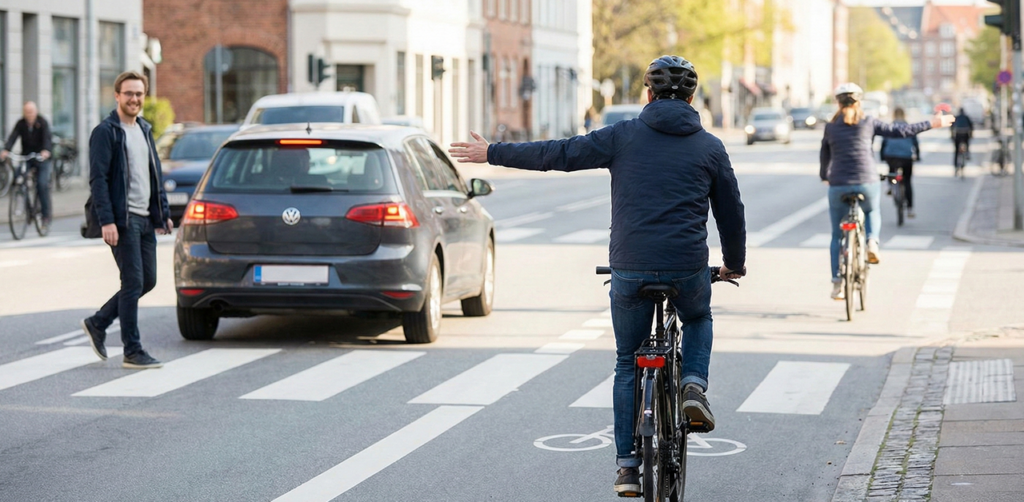
The Importance of Hand Signals for Cyclists
As a cyclist, you’re well aware of the thrill and freedom that comes with riding on two wheels. But with that freedom comes responsibility, especially when sharing the road with other vehicles and pedestrians. One crucial aspect of safe cycling that often gets overlooked is the use of hand signals. These simple yet effective gestures can significantly improve communication and safety for cyclists, making your rides smoother and more enjoyable. Let’s dive into the world of hand signals and explore how they can enhance your cycling experience.
Hand signals are a universal language on the road, allowing cyclists to communicate their intentions to drivers, pedestrians, and fellow riders. By using these signals, you’re not only improving your own safety but also contributing to a more harmonious road environment for everyone. Whether you’re a seasoned cyclist or just starting out, mastering hand signals should be a top priority in your cycling journey.
Understanding the Basics of Hand Signals
Before we delve into the specifics of how hand signals can improve communication and safety for cyclists, it’s essential to familiarize yourself with the basic signals. These fundamental gestures form the foundation of cyclist communication on the road. By mastering these signals, you’ll be well-equipped to navigate various traffic situations with confidence and clarity.
The Left Turn Signal
To indicate a left turn, extend your left arm straight out to the side, parallel to the ground. This signal is crucial when you’re planning to make a left turn or change lanes to the left. It alerts drivers and other cyclists behind you of your intention, giving them time to adjust their speed and position accordingly.
The Right Turn Signal
For a right turn, you have two options:
- Extend your right arm straight out to the side
- Bend your left arm upward at a 90-degree angle, with your hand pointing towards the sky
Both methods are widely recognized, so choose the one that feels most comfortable and visible in your current riding position.
The Stop or Slow Down Signal
To indicate that you’re slowing down or coming to a stop, extend your left arm downward at a 45-degree angle, with your palm facing backward. This signal is particularly important when you need to brake suddenly or when approaching an intersection.
How Hand Signals Enhance Communication on the Road
Now that we’ve covered the basics, let’s explore how these hand signals can significantly improve communication between cyclists and other road users. Effective communication is the key to preventing accidents and ensuring a smooth flow of traffic for everyone.
Clarity in intentions: By using hand signals, you’re providing clear and unambiguous information about your next move. This clarity eliminates guesswork for drivers and other cyclists, reducing the likelihood of misunderstandings that could lead to accidents. Imagine you’re approaching an intersection with a vehicle behind you. By signaling your intention to turn left, you’re giving the driver ample time to slow down or prepare to pass you safely.
Non-verbal communication: In noisy traffic conditions or when riding at higher speeds, verbal communication can be challenging or impossible. Hand signals bridge this gap, allowing you to convey your intentions without relying on sound. This non-verbal aspect of communication is especially valuable when interacting with drivers in enclosed vehicles who may not be able to hear you.
Universal language: Hand signals are widely recognized across different countries and cultures, making them an effective means of communication even when language barriers exist. This universality is particularly beneficial if you’re cycling in a foreign country or participating in international cycling events.
Enhancing Safety Through Proper Hand Signal Usage
The primary goal of using hand signals is to improve safety for cyclists on the road. By incorporating these gestures into your cycling routine, you’re taking proactive steps to protect yourself and others. Let’s examine how hand signals contribute to a safer cycling environment.
Increased visibility: Hand signals make you more visible to other road users, especially in low-light conditions or when you’re riding in a pack. The movement of your arm draws attention to your presence, helping drivers and pedestrians take notice of you. This increased visibility can be lifesaving, particularly when navigating busy intersections or changing lanes on multi-lane roads.
Predictability: By consistently using hand signals, you’re making your movements more predictable to those around you. This predictability allows drivers to anticipate your actions and adjust their own behavior accordingly. For example, if you signal a right turn well in advance, a driver behind you can begin to slow down or move to the left to give you space to make your turn safely.
Accident prevention: Many cycling accidents occur due to miscommunication or sudden, unexpected movements. Hand signals help mitigate these risks by providing clear indications of your intentions. This advance warning gives other road users time to react appropriately, significantly reducing the chances of collisions or near-misses.
Integrating Hand Signals into Your Cycling Routine
Now that you understand the importance of hand signals, it’s time to incorporate them seamlessly into your cycling routine. Consistent practice and proper execution are key to maximizing the benefits of these gestures.
Start early: Begin signaling well in advance of your intended action. This early warning gives other road users ample time to process and respond to your signal. As a general rule, aim to signal at least 100 feet before making a turn or changing lanes.
Be confident and deliberate: When making hand signals, use clear and purposeful movements. Avoid timid or half-hearted gestures that might be misinterpreted or overlooked. Remember, the goal is to communicate your intentions with certainty.
Maintain control: While signaling is important, it’s equally crucial to maintain control of your bicycle. Practice signaling while keeping a steady course and speed. If you’re uncomfortable taking your hand off the handlebar, consider using a bike mirror to increase your awareness of surrounding traffic.
Advanced Hand Signals for Experienced Cyclists
As you become more comfortable with basic hand signals, you may want to expand your repertoire to include more advanced gestures. These additional signals can further enhance communication and safety, especially when riding in groups or participating in organized cycling events.
The “Debris on Road” Signal
To warn cyclists behind you of obstacles or debris on the road, point down and to the side of the hazard with your corresponding hand. This signal helps prevent accidents caused by unexpected road conditions.
The “Car Back” Signal
When riding in a group, use this signal to alert other cyclists of an approaching vehicle from behind. Extend your arm behind your back, palm facing backward, and wave it back and forth.
The “Move Over” Signal
To indicate that you’re moving over or that others should move over, extend your arm to the side you’re moving towards and wave it in a sweeping motion behind your back.
Teaching Hand Signals to New Cyclists
If you’re a parent, coach, or experienced cyclist mentoring newcomers to the sport, it’s essential to emphasize the importance of hand signals from the beginning. By instilling good habits early on, you’re setting the foundation for safer cycling practices in the future.
Start with the basics: Begin by teaching the three fundamental signals – left turn, right turn, and stop. Ensure that new cyclists understand the importance of these signals and can execute them confidently.
Practice in a safe environment: Before venturing onto busy roads, have new cyclists practice their hand signals in a controlled setting, such as an empty parking lot or quiet residential street. This practice allows them to focus on proper technique without the added stress of traffic.
Lead by example: When cycling with new riders, consistently use hand signals yourself. This demonstration reinforces the importance of the practice and provides real-world context for their use.
The Role of Technology in Enhancing Hand Signal Effectiveness
While traditional hand signals remain the cornerstone of cyclist communication, modern technology can complement and enhance their effectiveness. Let’s explore some innovative solutions that work in tandem with hand signals to improve safety and communication for cyclists.
Smart bike lights: Some advanced bike lights now incorporate turn signal functionality. These lights can be activated by buttons on your handlebars, providing an additional visual cue to supplement your hand signals. This feature is particularly useful in low-light conditions or when your hands need to remain on the handlebars for stability.
Wearable indicators: Innovative wearable devices, such as LED-equipped gloves or jackets, can enhance the visibility of your hand signals. These products illuminate when you extend your arm, making your intentions even clearer to other road users.
Helmet-mounted turn signals: Some high-tech bicycle helmets now come equipped with built-in LED turn signals that can be activated by a wireless remote mounted on your handlebars. These signals provide an eye-level indication of your intentions, which can be especially helpful in heavy traffic or when riding among taller vehicles.
Overcoming Challenges in Using Hand Signals
While hand signals are invaluable for improving communication and safety, cyclists may encounter some challenges when implementing them. Being aware of these potential obstacles and knowing how to overcome them can help you use hand signals more effectively.
Weather conditions: In rainy or cold weather, wearing bulky gloves or jackets can make hand signals less visible or more difficult to execute. To address this, consider using exaggerated movements or supplementing your signals with verbal cues when possible. Additionally, investing in high-visibility, weather-resistant cycling gear can help ensure your signals remain visible in adverse conditions.
Balance concerns: Some cyclists, particularly beginners or those with balance issues, may feel uncomfortable taking a hand off the handlebars to signal. If this is a concern for you, start by practicing in a safe, traffic-free environment. Gradually build up your confidence by signaling for shorter durations and at slower speeds before progressing to busier roads.
Fatigue during long rides: On extended cycling trips, consistently using hand signals can become tiring. To combat this, try alternating between different signaling methods (e.g., using your left arm for right turns instead of your right) to distribute the effort. Remember, even a brief signal is better than no signal at all.
The Legal Aspect of Hand Signals for Cyclists
Understanding the legal requirements surrounding hand signals is crucial for cyclists. While specific laws may vary depending on your location, many jurisdictions require cyclists to use hand signals when turning or stopping. Familiarizing yourself with local regulations not only keeps you compliant but also reinforces the importance of these safety measures.
Know your local laws: Research the cycling laws in your area to ensure you’re using the correct signals and following proper procedures. Some regions may have specific requirements for when and how to signal.
Legal protection: In the event of an accident, having used proper hand signals can provide legal protection. It demonstrates that you were following traffic rules and taking necessary precautions to communicate your intentions.
Educating others: By consistently using hand signals and encouraging others to do the same, you’re contributing to a culture of safety and awareness on the roads. This collective effort can lead to improved cycling conditions and potentially influence future cycling-related legislation.
The Psychological Benefits of Using Hand Signals
Beyond the practical advantages of improved communication and safety, using hand signals can have positive psychological effects on cyclists. These mental benefits contribute to a more confident and enjoyable cycling experience.
Increased confidence: Mastering hand signals and effectively communicating with other road users can boost your confidence as a cyclist. This increased self-assurance allows you to navigate various traffic situations with greater ease and composure.
Sense of control: By actively signaling your intentions, you’re taking charge of your safety and interactions on the road. This sense of control can reduce anxiety and stress, particularly in challenging traffic conditions.
Community connection: Using hand signals connects you with the broader cycling community. It’s a shared language that fosters a sense of belonging and mutual respect among cyclists, regardless of their skill level or riding style.
In conclusion, hand signals play a crucial role in improving communication and safety for cyclists. By mastering these simple yet effective gestures, you’re not only protecting yourself but also contributing to a safer and more harmonious road environment for all users. Whether you’re a casual rider or a dedicated cyclist, incorporating hand signals into your riding routine is an essential step towards becoming a more responsible and confident cyclist. So, the next time you hit the road on two wheels, remember to let your hands do the talking – your safety and the safety of those around you depend on it.
Give us a call today at 1-877-777-6086 or fill out our contact form to become a retail
distributor of our top-of-the-line safety lights.