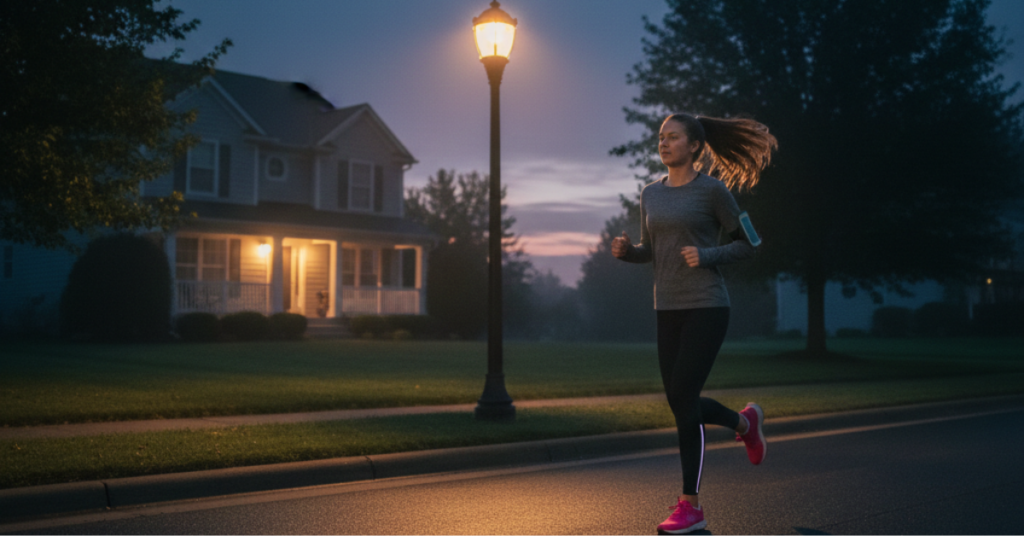
As a dedicated runner, you know that sometimes your schedule or personal preferences might lead you to jog during low-light conditions. Whether it’s early morning runs before the sun rises or evening jogs as dusk settles in, these times can offer a peaceful and invigorating experience. However, it’s crucial to recognize the unique challenges and potential risks associated with running in reduced visibility. By understanding these factors and implementing proper safety measures, you can continue to enjoy your runs while minimizing potential hazards.
Low-light conditions can significantly impact your visibility to others, particularly drivers, cyclists, and even other pedestrians. This reduced visibility goes both ways – not only are you less visible to others, but your own ability to see potential obstacles or uneven surfaces is also diminished. Additionally, depending on your location, you may encounter wildlife or face increased risks of personal safety concerns during these hours. But don’t let these factors deter you from your running routine! With the right approach and safety gear, you can confidently tackle your low-light jogs and reap the benefits of your dedication to fitness.
Essential Gear for Low-Light Jogging Safety
When it comes to staying safe while jogging in low-light conditions, having the right gear is paramount. Investing in proper equipment not only enhances your visibility but also provides you with the tools to navigate potential challenges more effectively. Here are some must-have items for your low-light running arsenal:
Reflective Clothing: Opt for running attire with built-in reflective elements or add reflective tape to your existing gear. This includes shirts, shorts, jackets, and even shoes. The reflective material catches and bounces back light from various sources, making you more visible to others.
Headlamp or Chest Light: A good quality headlamp or chest light is essential for illuminating your path and making you visible to oncoming traffic. Look for options with adjustable brightness settings and a comfortable fit.
LED Armbands or Clip-on Lights: These versatile lights can be attached to various parts of your body or clothing, providing additional points of visibility from different angles.
Safety Whistle: A small but powerful tool, a safety whistle can be used to alert others of your presence or call for help in case of an emergency.
Smartphone with Safety Apps: Carry your smartphone with running safety apps installed. These can track your route, send alerts to emergency contacts, or even connect you with local safety services if needed.
Remember, the key is to make yourself as visible as possible from all angles. By layering different types of reflective gear and lights, you create a moving beacon that’s hard to miss, even in the dimmest conditions.
Choosing the Right Route for Low-Light Runs
Selecting an appropriate route is crucial when jogging in low-light conditions. Your usual daytime path might not be the best choice when visibility is reduced. Here are some factors to consider when planning your low-light running route:
Familiarity: Stick to routes you know well. Familiarity with the terrain, potential obstacles, and general surroundings can help you navigate more safely when visibility is limited.
Lighting: Opt for paths with adequate street lighting whenever possible. Well-lit areas not only improve your visibility to others but also help you see potential hazards on your route.
Traffic: Choose routes with minimal vehicle traffic. If you must run near roads, select those with wide shoulders or dedicated pedestrian paths.
Surface Quality: Prioritize routes with even, well-maintained surfaces. Avoid areas with known potholes, loose gravel, or other potential tripping hazards that may be harder to spot in low light.
Population: Consider running in areas that are moderately populated. While you don’t want overcrowded paths, having some people around can provide an added sense of security.
Tips for Route Planning
- Use online mapping tools to scout potential routes and check for street lighting
- Vary your routes occasionally to avoid becoming too predictable, especially if running alone
- Consider joining a local running group for some of your low-light runs
- Inform a friend or family member of your planned route and expected return time
By carefully selecting your route and staying aware of your surroundings, you can significantly enhance your safety while enjoying the unique atmosphere of low-light runs.
Proper Running Technique for Low-Light Conditions
When jogging in low-light conditions, it’s not just about what you wear or where you run – how you run matters too. Adapting your running technique can help you navigate challenging visibility with greater confidence and safety. Here are some key adjustments to consider:
Shorter Strides: Take shorter, more frequent steps instead of long strides. This gives you better control and allows for quicker reactions to unexpected obstacles or uneven surfaces.
Foot Placement: Focus on landing mid-foot rather than on your heel or toes. This provides better stability and reduces the risk of slipping or twisting an ankle on unseen hazards.
Arm Position: Keep your arms slightly lower than usual. This lowers your center of gravity, improving balance and stability on potentially uneven terrain.
Posture: Maintain an upright posture with a slight forward lean. This helps you stay balanced and ready to react to sudden changes in your path.
Pace: Consider running at a slightly slower pace than your usual daytime speed. This gives you more time to process your surroundings and react to potential hazards.
Remember, the goal is to run smoothly and efficiently while remaining alert and adaptable to your environment. Practice these techniques during daylight hours first to get comfortable with the adjustments before applying them to your low-light runs.
Enhancing Situational Awareness
One of the most critical skills for staying safe while jogging in low-light conditions is maintaining heightened situational awareness. This means being constantly alert and attentive to your surroundings, potential risks, and changes in your environment. Here’s how you can sharpen your situational awareness:
Use Your Senses: While vision might be limited, rely more on your other senses. Listen for approaching vehicles, animals, or people. Pay attention to changes in air movement or temperature that might indicate you’re approaching an open area or body of water.
Scan Your Environment: Regularly scan your surroundings, looking ahead, to the sides, and occasionally behind you. This helps you spot potential hazards or approaching individuals early.
Be Predictable: Make your movements clear and predictable to others. Signal your intentions when changing direction, especially near roads or shared paths.
Trust Your Instincts: If something feels off or unsafe, trust your gut feeling. It’s better to alter your route or cut a run short than to push through an uncomfortable situation.
Techniques for Improving Situational Awareness
- Practice mindful running by focusing on your immediate environment rather than getting lost in thoughts or music
- Play mental games like trying to remember details of objects or people you pass
- Periodically stop and do a full 360-degree scan of your surroundings
- Vary your routes to avoid complacency and keep your senses sharp
By cultivating strong situational awareness, you’ll be better equipped to identify and respond to potential risks, ensuring a safer and more enjoyable low-light running experience.
Understanding and Mitigating Weather-Related Risks
When jogging in low-light conditions, it’s crucial to consider how weather factors can compound the challenges of reduced visibility. Different weather conditions can significantly impact your safety and comfort during these runs. Here’s what you need to know:
Rain: Rainy conditions not only reduce visibility further but also make surfaces slippery. Wear water-resistant gear with extra reflective elements and choose routes with good drainage to avoid puddles.
Fog: Fog can drastically reduce visibility for both you and others. In foggy conditions, it’s even more critical to wear bright, reflective gear and use lights. Consider shortening your route and staying in well-lit areas.
Snow and Ice: Winter conditions present unique challenges. Wear traction devices on your shoes, stick to plowed paths, and be extra cautious of black ice, which can be nearly invisible in low light.
Wind: Strong winds can affect your balance and make it harder to hear approaching vehicles or people. Run into the wind on your way out so you have it at your back on the return journey when you’re more tired.
Temperature Extremes: Whether it’s a chilly morning or a warm evening, dress appropriately in layers. Remember that your body temperature will rise as you run, so start slightly cool.
Always check the weather forecast before heading out for a low-light run and be prepared to adjust your plans if conditions are unfavorable. It’s better to opt for indoor exercise or reschedule your run than to risk your safety in severe weather conditions.
Leveraging Technology for Safer Low-Light Runs
In today’s digital age, technology can play a significant role in enhancing your safety while jogging in low-light conditions. From specialized running apps to smart wearables, there are numerous tech solutions designed to provide an extra layer of security. Here’s how you can leverage technology for safer runs:
Running Safety Apps: Apps like Road ID, Strava Beacon, or RunSafe allow you to share your real-time location with chosen contacts. Some even have features that can detect if you’ve stopped moving for an extended period and automatically alert your emergency contacts.
Smart Watches: Many modern smartwatches come with built-in safety features such as fall detection, emergency SOS calls, and real-time location sharing. They can also monitor your heart rate and alert you if it reaches concerning levels.
GPS Trackers: Dedicated GPS tracking devices can provide accurate location data and often have longer battery life than smartphones. Some models include panic buttons for emergencies.
Smart Lights: There are now running lights available that can automatically adjust their brightness based on your surroundings or even project a safe zone around you.
Tips for Using Technology Effectively
- Familiarize yourself with your devices and apps before relying on them during a run
- Ensure your devices are fully charged before heading out
- Don’t let technology distract you from maintaining situational awareness
- Regularly update your emergency contact information in your apps and devices
While technology can provide valuable tools for enhancing your safety, remember that it should complement, not replace, basic safety practices and common sense. Always prioritize your awareness of your surroundings and trust your instincts.
Building a Support Network for Low-Light Running
Creating a support network can significantly enhance your safety and enjoyment when jogging in low-light conditions. This network can provide both physical companionship during runs and peace of mind for solo outings. Here’s how you can build and utilize a support network:
Running Buddies: Find a friend or join a local running group that meets during your preferred low-light hours. Running with others not only increases visibility but also provides safety in numbers.
Virtual Running Partners: If you can’t find local running partners, consider using apps that connect you with virtual running buddies. These apps allow you to share your run in real-time with friends or family members who can monitor your progress.
Local Community: Get to know the regulars in your neighborhood who are out during your running times. This could include early morning dog walkers or night shift workers. Familiar faces can provide an extra sense of security.
Emergency Contacts: Establish a system with friends or family members where you inform them of your running plans and expected return time. Agree on a protocol for what they should do if they don’t hear from you by a certain time.
Local Authorities: Familiarize yourself with local law enforcement patrol patterns in your area. Knowing when and where police are likely to be can help you plan safer routes.
Remember, building a support network is not just about safety; it’s also about creating a community that shares your passion for running. This can provide motivation, accountability, and a more enjoyable running experience overall.
Preparing for Emergencies During Low-Light Runs
While we hope to never face an emergency situation during our runs, being prepared can make a crucial difference if the unexpected occurs. When jogging in low-light conditions, it’s especially important to have a plan in place. Here’s how you can prepare for potential emergencies:
Carry Identification: Always run with some form of ID. This could be a driver’s license, a specialized runner’s ID tag, or even a smart device with medical and emergency contact information.
Know Your Route: Familiarize yourself with landmarks, street names, and potential safe spots along your route. This information can be crucial if you need to communicate your location to emergency services.
Carry a Phone: While it might seem cumbersome, having a phone with you can be a lifeline in emergencies. Consider using an armband or specialized running belt to carry it comfortably.
Learn Basic First Aid: Knowledge of basic first aid can be invaluable. Consider taking a course that covers common running injuries and how to handle them.
Prepare for the Weather: Carry a lightweight emergency blanket if you’re running in cold conditions. In hot weather, know the locations of water sources along your route.
Emergency Action Plan
Develop a personal emergency action plan:
- Program emergency numbers into your phone for quick access
- Learn the locations of 24-hour businesses or safe spaces along your route
- Practice scenarios in your mind: what would you do if you twisted an ankle? If you felt unsafe?
- Consider carrying a personal alarm or whistle to attract attention if needed
By preparing for emergencies, you’re not being pessimistic – you’re being smart and responsible. This preparation can give you the confidence to fully enjoy your low-light runs while knowing you’re ready for whatever might come your way.
Give us a call today at 1-877-777-6086 or fill out our contact form to become a retail
distributor of our top-of-the-line safety lights