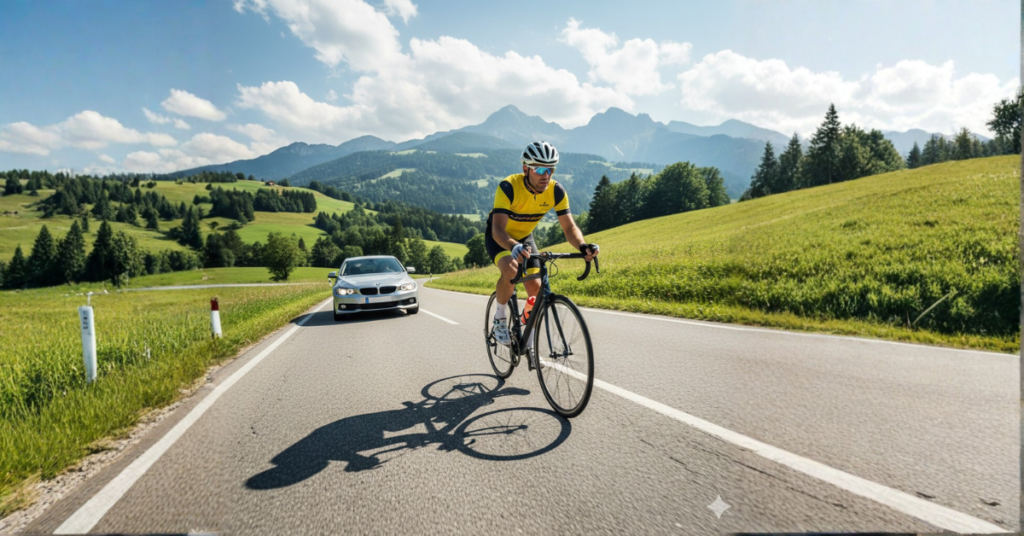
You lace up your running shoes, check the time, and head out for your morning jog just as the sun begins painting the sky with soft hues of orange and pink. There’s plenty of natural light, so you figure you’re safe from traffic concerns, right? Wrong. This common misconception puts thousands of runners, cyclists, and pedestrians at risk every single day. Understanding why daylight doesn’t mean you’re visible to drivers could literally save your life during your next workout.
The science behind visibility is far more complex than simply having sunlight present. Your brain processes visual information differently than you might expect, and drivers face numerous challenges that compromise their ability to see you—even when you think you’re standing out like a sore thumb. Many fitness enthusiasts and parents who run or walk with strollers assume that daytime activities automatically guarantee safety, but the statistics tell a different story entirely.
How the Human Eye Processes Movement and Contrast
The human visual system relies heavily on contrast to distinguish objects from their surroundings. When you’re running along a tree-lined street wearing earth tones or dark athletic wear, you essentially blend into the background scenery. Your eyes might see yourself clearly when you glance down at your outfit, but from a driver’s perspective traveling at 30-50 miles per hour, you become just another shadow among many. The rods and cones in the human eye respond to different wavelengths of light, and in certain conditions, even bright daylight fails to create sufficient contrast between you and your environment.
Peripheral vision, which drivers rely on constantly to monitor their surroundings, is particularly poor at detecting objects that don’t stand out visually. You could be running parallel to a vehicle, maintaining a steady pace, and the driver might genuinely not register your presence because your silhouette doesn’t trigger their peripheral awareness. This isn’t about negligent driving—it’s about the biological limitations of human vision under specific circumstances.
The Role of Background Complexity
Urban and suburban environments create visual noise that your brain must filter constantly. Think about the typical morning commute: storefronts, parked cars, trees, signage, other pedestrians, traffic lights, and countless moving elements compete for a driver’s attention. When you’re jogging through this complex visual landscape, you’re essentially asking drivers to pick out one specific moving object among hundreds of visual stimulate. The more complicated the background, the less likely you are to be noticed, regardless of how bright the sunshine might be.
Weather Conditions That Compromise Daytime Visibility
You might think rain or fog are the only weather concerns, but numerous atmospheric conditions reduce visibility even during daylight hours. Glare from the sun ranks among the most dangerous factors affecting driver awareness. When the sun sits low on the horizon—typically during morning and evening workout times—it creates blinding conditions that can completely obscure a driver’s vision for several seconds at a time.
Overcast days present their own unique challenges. The diffused light on cloudy days eliminates shadows, which your brain uses as visual cues to judge distance and movement. Without these depth perception aids, drivers have a harder time accurately assessing how far away you are or how quickly you’re moving toward or away from their vehicle. This explains why daylight doesn’t mean you’re visible to drivers even when cloud cover provides soft, even illumination.
Seasonal weather patterns compound these issues substantially. During winter months, when many runners train in the limited daylight hours available, the combination of low sun angles, potential precipitation, and dirty windshields creates a perfect storm of visibility challenges. Morning frost or condensation on windows can persist even after drivers think they’ve cleared their glass, leaving obscured patches that turn pedestrians into invisible hazards.
The Windshield Factor
Most people don’t realize how much their vehicle’s windshield affects what they can see. Accumulated dust, pollen, water spots, and microscopic scratches scatter light in ways that reduce clarity, particularly when the sun shines directly on the glass. Even a recently cleaned windshield can create visibility problems when light hits it at certain angles. As a runner or walker, you can’t control the condition of every vehicle’s windshield, which means you can’t assume drivers have an unobstructed view of you.
The Psychology of Driver Attention and Expectation
Human brains are prediction machines, constantly anticipating what they expect to see based on past experiences and current context. When drivers navigate familiar routes during their daily commute, their brains shift into a semi-automatic mode where they process information based on patterns and expectations. If they don’t typically encounter runners on a particular street, their brain literally filters you out as unexpected or irrelevant information. This phenomenon, called inattentional blindness, means drivers can look directly at you without consciously seeing you.
The psychological concept of “looked but failed to see” accidents explains countless collisions between vehicles and pedestrians or cyclists. The driver’s eyes physically register your presence, transmitting that information to their brain, but their conscious mind doesn’t process it as important or actionable. You become background noise in their mental processing, dismissed as quickly as their brain registered you. Understanding why daylight doesn’t mean you’re visible to drivers requires acknowledging these cognitive limitations that affect everyone, regardless of how careful or conscientious they try to be.
Distraction and Cognitive Load
Modern drivers juggle multiple demands on their attention simultaneously. They’re monitoring traffic flow, checking mirrors, watching for traffic signals, navigating to destinations, and often dealing with passengers, phones, or navigation systems. This cognitive load means their brain has less processing power available for unexpected visual information—like a runner who suddenly appears from between parked cars. Even hands-free phone conversations reduce a driver’s visual awareness by up to 50%, according to some research studies.
Speed, Distance, and the Visual Angle Problem
The faster a vehicle travels, the narrower a driver’s effective field of vision becomes. At highway speeds, drivers focus primarily on what’s directly ahead, with dramatically reduced peripheral awareness. But even at neighborhood speeds of 25-35 mph, the visual angle at which drivers can effectively detect and process information shrinks considerably. You might be clearly visible to someone standing still, but to a driver approaching at even moderate speeds, you don’t enter their effective visual field until they’re dangerously close.
Distance perception plays a critical role in driver awareness that most runners and walkers never consider. When you’re approaching a vehicle from the front or rear, you present a much smaller visual profile than when you’re perpendicular to the driver. This smaller visual signature, combined with the difficulty in judging closure rates, means drivers consistently underestimate how quickly they’re approaching pedestrians. The physics of relative motion create optical illusions that even experienced drivers can’t overcome through attention alone.
The Specific Challenges of Intersections
Intersections represent the most dangerous locations for pedestrian-vehicle interactions, even in broad daylight. Drivers making right turns focus primarily on traffic approaching from the left, often giving only cursory glances to the right where you might be crossing or running along the sidewalk. Left-turning drivers face even more complex visual tasks, scanning for oncoming traffic, checking for pedestrians in multiple crosswalks, and timing their turn—all while other vehicles behind them create pressure to complete the maneuver quickly.
Clothing Color and Reflective Material Science
The science of visibility extends far beyond simply wearing bright colors. Different wavelengths of light reflect off materials at varying intensities, and the human eye has different sensitivity levels across the color spectrum. Fluorescent yellow-green registers as the most visible color to the human eye during daylight hours because it reflects light in wavelengths our eyes detect most readily. However, simply wearing a yellow shirt doesn’t guarantee visibility if the material doesn’t have the right reflective properties or if surrounding environmental factors compromise contrast.
Reflective materials work through retroreflection, bouncing light back toward its source rather than scattering it in all directions. While most people associate reflective gear with nighttime safety, modern reflective technologies include materials specifically designed for daytime visibility. These materials incorporate microprisms or glass beads that catch and return light even when the sun is high in the sky, creating a shimmer or glow effect that attracts driver attention far more effectively than standard bright colors alone.
The placement of reflective or high-visibility materials on your body matters tremendously. Motion-based visibility capitalizes on the fact that the human eye detects movement more readily than static objects. Placing reflective strips on your ankles, wrists, or other joints that move through large ranges of motion creates a biological motion signature that drivers’ peripheral vision picks up instinctively. This explains why daylight doesn’t mean you’re visible to drivers unless you’re actively working to create visual cues that trigger their attention.
The Limitations of Standard Athletic Wear
Most running and athletic apparel prioritizes fashion, comfort, and performance over visibility. Those sleek black leggings and navy tech shirts might look great and wick moisture effectively, but they render you nearly invisible against many common backgrounds. Even white or light-colored clothing provides less contrast than you’d expect, particularly against cloudy skies, light-colored buildings, or sun-bleached pavement. Athletic brands have made strides in incorporating reflective elements, but these additions often remain minimal—a small logo here, a thin stripe there—insufficient for genuine daytime visibility enhancement.
The Unique Risks for Parents and Children
Parents running with strollers or walking with children face compounded visibility challenges. Strollers sit low to the ground, often below a driver’s natural sight line, especially when approaching vehicles with high front profiles like SUVs and trucks. Your child in that stroller is even less visible than you are, and drivers making turns at intersections frequently fail to see strollers until the last moment. The responsibility of ensuring your child’s safety means you can’t afford to assume daylight provides adequate protection from traffic hazards.
Children themselves present additional visibility challenges when they’re running, biking, or walking alongside you. Their smaller stature means they disappear behind obstacles more easily—parked cars, bushes, mailboxes—and their unpredictable movements make it harder for drivers to anticipate their paths. Teaching your kids about traffic safety includes helping them understand that drivers genuinely might not see them, even in broad daylight. This isn’t about scaring children; it’s about instilling healthy caution grounded in physical reality.
School Commute Concerns
Morning school commutes coincide with some of the worst visibility conditions: low sun angles, rushed drivers, and complex traffic patterns around schools. If you’re walking or biking with your children during these peak times, you’re navigating an environment where drivers are frequently distracted, stressed, and operating on autopilot through familiar routes. The combination of these factors means visibility becomes even more critical, yet many families don’t take special precautions because they assume daylight equals safety.
Vehicle Design and Blind Spot Evolution
Modern vehicle design has actually made pedestrian visibility worse in many respects. Larger A-pillars (the posts on either side of the windshield) create substantial blind spots that can completely obscure a pedestrian or runner, particularly at intersections. As vehicles have grown larger and safety standards have required stronger roof support structures, these blind spots have expanded significantly. You could be standing in a crosswalk in broad daylight, and a driver looking in your direction might have you completely hidden behind their A-pillar.
The trend toward higher-riding SUVs and trucks has elevated driver sight lines, which sounds beneficial but actually creates dangerous blind zones immediately in front of and beside vehicles. A driver in a large SUV might not see an adult jogger until they’re well into the vehicle’s path, and children or people in wheelchairs can disappear entirely from view. Front-over accidents—where vehicles strike pedestrians directly in front of them—have increased partly due to these design trends, with daylight offering no protection against blind spots created by vehicle geometry.
The Technology Gap
While newer vehicles increasingly incorporate pedestrian detection systems and automatic braking, the vast majority of cars on the road lack these technologies. Even in vehicles equipped with such systems, the technology isn’t infallible and can fail to detect pedestrians under certain conditions, including specific lighting situations. You can’t rely on vehicle technology to keep you safe, regardless of how advanced modern safety systems become. The human factor—driver attention and capability—remains the primary variable in pedestrian safety.
Environmental and Urban Design Factors
The built environment significantly impacts your visibility to drivers. Tree-lined streets, while beautiful and pleasant for running, create dappled lighting conditions where sunlight and shadow alternate rapidly. This high-contrast environment makes it extremely difficult for drivers to process visual information effectively. Their eyes must constantly adjust to changing light levels, and you can easily disappear into shadow patches, even during midday when sunshine is abundant.
Urban furniture—bus shelters, utility boxes, waste bins, planters, and signage—creates visual obstacles that hide pedestrians from driver view. You might step out from behind a mailbox or trash receptacle directly into traffic, with drivers having no opportunity to see you approach. Parking regulations that allow vehicles to park close to intersections reduce sight lines substantially, turning every corner into a potential conflict point where neither driver nor pedestrian can see each other until they’re dangerously close.
Suburban and rural environments present their own unique challenges. Roads without sidewalks force runners and walkers to share space with vehicles, often on routes where drivers travel at higher speeds and expect minimal pedestrian traffic. The lack of street lighting, even during daytime, might seem irrelevant, but street lights and other vertical infrastructure actually help create visual reference points that drivers use to navigate and maintain attention. Without these, long stretches of similar-looking roadway can induce highway hypnosis, reducing driver alertness substantially.
Construction Zones and Temporary Hazards
Temporary situations like construction zones, special events, or utility work create unusual traffic patterns and visual distractions that compromise driver attention. If your regular running route passes through an area experiencing construction, drivers are focusing on changed traffic patterns, construction workers, equipment, and barriers—you become an unexpected element in an already complex visual environment. Why daylight doesn’t mean you’re visible to drivers becomes especially apparent in these situations where cognitive overload prevents drivers from processing all the visual information their environment presents.
Practical Strategies for Enhancing Your Daytime Visibility
Improving your visibility during daylight runs requires a multi-layered approach. Start with clothing choices: opt for fluorescent colors in yellow-green or orange tones, which provide maximum daytime visibility. Layer reflective gear over your regular athletic wear—reflective vests, sashes, or belts designed specifically for running add minimal weight while dramatically increasing your visibility profile. Look for products with 360-degree reflectivity so you’re visible from all angles, not just when directly facing traffic.
Motion-activated lights and wearable LEDs have become increasingly popular among safety-conscious runners and cyclists. These devices work even in full daylight, creating additional visual signals that attract driver attention. Blinking lights trigger the human brain’s threat detection systems more effectively than static reflective materials, essentially hijacking drivers’ attention mechanisms to ensure they notice you. While it might feel excessive to wear flashing lights during the day, the science supports their effectiveness in reducing conflicts with vehicles.
Route selection plays an enormous role in your safety during daytime workouts. Prioritize paths with dedicated pedestrian infrastructure—sidewalks, trails, or protected bike lanes—that separate you from vehicle traffic. When you must run on roads, choose routes with lower traffic volumes and slower speed limits. The extra distance of driving to a safer running location is worthwhile when compared to the risks of running along busy roads where visibility concerns are highest.
Adjusting Your Behavior and Awareness
Assume you’re invisible to every driver, regardless of conditions. This defensive mindset should guide all your decisions when running or walking near traffic. Make eye contact with drivers before proceeding through intersections, even when you have the right of way. If a driver doesn’t acknowledge your presence, treat them as if they genuinely don’t see you—because they probably don’t. Remove headphones or keep volume low enough to hear approaching vehicles, using your hearing as an additional safety sense that compensates for drivers’ visual limitations.
Position yourself as far from traffic as possible while still maintaining safe footing. When running on roads without sidewalks, face oncoming traffic so you can see vehicles approaching and react if drivers drift toward you. Avoid running during peak sun glare times—typically the hour after sunrise and the hour before sunset—when blinding conditions make you genuinely invisible to drivers looking into the sun. If you must run during these times, take extra visibility precautions and choose routes with maximum separation from vehicle traffic.
Teaching Visibility Awareness to Your Children
Children naturally assume that if they can see someone, that person can see them. This cognitive development stage makes young children particularly vulnerable to traffic accidents because they don’t understand why daylight doesn’t mean you’re visible to drivers. Teaching visibility awareness should start early and include concrete demonstrations. Stand with your child at an intersection and point out how parked cars hide pedestrians, how drivers look different directions, and how someone could be looking toward you without actually seeing you.
Model good visibility practices consistently. When your children see you putting on reflective gear, using crosswalks, and making eye contact with drivers, they internalize these behaviors as normal safety practices. Explain your decision-making process aloud: “I’m waiting because that driver is looking at their phone,” or “I’m waving at that driver to make sure they see us before we cross.” This narration helps children develop their own safety awareness and decision-making skills.
Make visibility gear appealing rather than a chore. Let children choose reflective accessories in their favorite colors or with fun designs. Many companies now produce kid-specific visibility products that look cool while serving serious safety functions. Frame these items as empowering—they give you “superpowers” that make you visible—rather than as scary reminders of danger. The goal is building habits that will protect them throughout their lives as they run, bike, and navigate traffic independently.
School and Activity Coordination
Coordinate with your children’s schools, sports teams, and activity groups to promote visibility awareness across all settings. Many schools conduct pedestrian safety programs, but these often focus on basic rules rather than the science of visibility. Volunteer to present information about why daylight doesn’t mean you’re visible to drivers, perhaps arranging a demonstration where children can sit in a vehicle and experience firsthand how difficult it is to see pedestrians under various conditions. This experiential learning creates much stronger understanding than abstract rules alone.
The Role of Community Advocacy and Infrastructure
Individual actions only go so far when infrastructure design fails to prioritize pedestrian safety. Advocating for better pedestrian infrastructure in your community creates lasting safety improvements for everyone. Attend town council or planning board meetings to speak about visibility concerns on specific routes. Many local officials don’t run or walk regularly in their communities and remain genuinely unaware of the hazards pedestrians face, even during daylight hours.
Request specific infrastructure improvements backed by safety research. Leading pedestrian intervals at traffic signals give pedestrians a head start before vehicles get a green light, increasing visibility and reducing conflicts. Curb extensions at crosswalks shorten crossing distances and increase visibility by moving pedestrians out from between parked cars. Speed reduction measures, including traffic calming devices and reduced speed limits, give drivers more time to detect and react to pedestrians while reducing the severity of accidents when they occur.
Organize community awareness campaigns that educate drivers about pedestrian visibility challenges. Many drivers genuinely don’t understand why daylight doesn’t mean you’re visible to drivers, and education can change behavior. Coordinate with local running clubs, parent organizations, and school groups to create visibility awareness events. Distribute reflective gear at community events, conduct pedestrian safety demonstrations, and work with local media to share information about visibility science and practical safety strategies.
Seasonal Considerations and Changing Conditions
Different seasons present unique visibility challenges that require adjusted strategies. Spring brings rain, which reduces visibility through water on windshields and creates reflective road surfaces that cause glare. Pollen accumulation on vehicles compounds these issues, leaving films on windows that scatter light and reduce clarity. Your spring running wardrobe should account for these conditions with particularly bright, reflective clothing that cuts through the visual obstacles spring weather creates.
Summer’s bright sunshine might seem to solve visibility problems, but intense light creates harsh shadows and glare conditions. Early morning and evening runs—popular during summer’s heat—coincide with low sun angles that blind drivers. Summer also brings increased outdoor activity, meaning more visual complexity and distractions competing for driver attention. Don’t let summer’s beautiful weather lull you into complacency about visibility concerns.
Fall introduces rapidly changing light conditions as days grow shorter and sun angles lower. Fallen leaves create visual camouflage, and harvest dust in agricultural areas reduces air clarity. If you typically run or walk at a consistent time, remember that the same clock time means very different lighting conditions as seasons change. What started as a comfortably lit route in September might occur in near-darkness by November, requiring significant adjustments to your visibility strategy.
Winter demands maximum attention to visibility factors. Short days, low sun angles, precipitation, and dirty road conditions combine to create the worst visibility circumstances of the year. Snow cover actually improves contrast for dark clothing but can make light-colored athletic wear blend into the landscape. Ice on windshields, fogged windows, and reduced driver visibility through bundled clothing and vehicle condensation all contribute to increased pedestrian risk during winter months.
Give us a call today at 1-877-777-6086 or fill out our contact form to become a retail
distributor of our top-of-the-line safety lights.