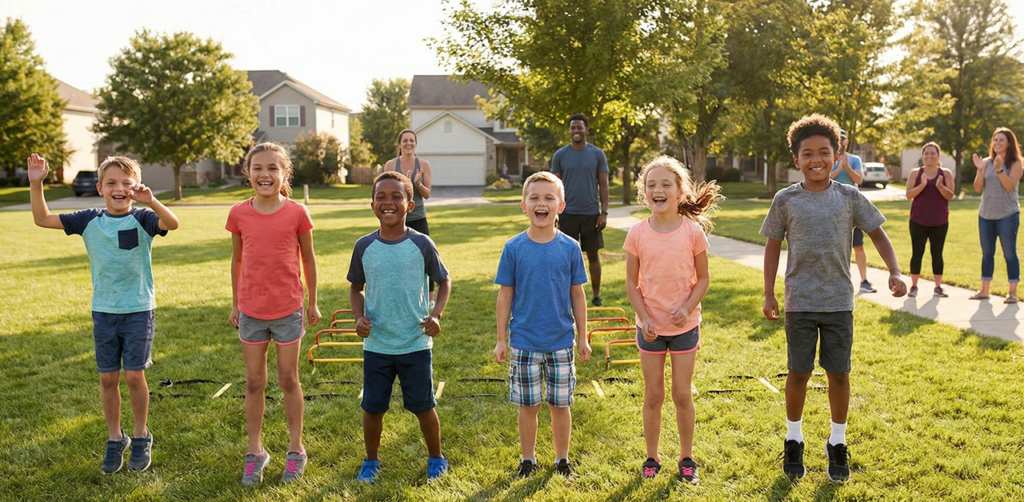
Getting your children moving and active has never been more important than it is today. With screens dominating entertainment and sedentary activities becoming the norm, you might find yourself searching for creative ways to keep your kids engaged in physical activity. That’s where neighborhood group fitness for kids comes into play—a fantastic solution that combines exercise, social interaction, and community building all in one package.
As a parent juggling work, household responsibilities, and your own fitness goals, you understand the challenge of finding time to prioritize your children’s health. The beauty of neighborhood-based fitness programs is that they’re typically accessible, affordable, and conveniently located right where you live. These programs transform ordinary parks, community centers, and even driveways into dynamic spaces where kids can develop healthy habits while making lasting friendships.
Understanding the Benefits of Neighborhood Group Fitness for Kids
When you enroll your child in a neighborhood fitness program, you’re giving them much more than just an exercise class. You’re providing them with a foundation for lifelong wellness that extends far beyond physical health. Children who participate in regular group fitness activities develop stronger cardiovascular systems, improved coordination, and better bone density—all critical factors for growing bodies.
Beyond the physical advantages, these programs offer incredible social and emotional benefits. Your child learns teamwork, communication skills, and how to work toward common goals with peers. They discover how to handle both success and setbacks in a supportive environment where every achievement is celebrated. The neighborhood setting adds another layer of value, as children form bonds with kids they’ll see around the community, creating a stronger sense of belonging and connection to where they live.
Mental health benefits shouldn’t be overlooked either. Regular physical activity has been proven to reduce anxiety and depression symptoms in children while improving self-esteem and cognitive function. When you watch your child participate in neighborhood group fitness for kids, you’re witnessing the development of confidence, resilience, and a positive self-image that will serve them throughout their entire lives.
Types of Neighborhood Group Fitness Programs Available
The variety of programs available for children in neighborhood settings might surprise you. From traditional sports leagues to innovative movement classes, there’s truly something for every interest and fitness level. Understanding your options helps you make informed decisions about which programs align best with your child’s personality, goals, and your family’s schedule.
Traditional Sports and Recreation Programs
Your local parks and recreation department likely offers classic sports programs like soccer, basketball, baseball, and flag football. These structured leagues provide consistent practice schedules and game opportunities, teaching children the fundamentals of specific sports while emphasizing teamwork and sportsmanship. Many neighborhoods also host running clubs specifically designed for kids, where they train for fun runs and learn about pacing, endurance, and goal-setting.
Swimming programs at community pools represent another excellent option for full-body fitness. Whether your child is learning basic water safety or training for competitive swimming, aquatic activities build strength and cardiovascular endurance without putting stress on developing joints. Tennis programs, volleyball clubs, and martial arts classes round out the traditional offerings, each bringing unique benefits to your child’s physical development and character building.
Movement and Dance-Based Activities
If your child gravitates toward creative expression, dance-based fitness programs might be the perfect fit. Many neighborhoods offer hip-hop classes, ballet, jazz, and contemporary dance programs that combine artistic expression with serious cardiovascular work. These classes develop rhythm, coordination, and body awareness while allowing children to express themselves through movement.
Yoga classes designed specifically for kids have become increasingly popular in neighborhood settings. These sessions teach children about breathing techniques, mindfulness, and body awareness while improving flexibility and strength. Some programs combine yoga with storytelling or games, making the practice accessible and engaging for even the youngest participants. Neighborhood group fitness for kids that incorporates yoga gives children valuable tools for managing stress and emotions that they’ll carry into adulthood.
Obstacle Course and Adventure Programs
For children who crave excitement and challenge, obstacle course programs deliver intense workouts disguised as play. These classes often incorporate elements inspired by parkour, ninja warrior courses, and adventure challenges. Kids climb, jump, balance, and problem-solve their way through courses that build strength, agility, and confidence in their physical abilities.
Boot camp-style programs adapted for children provide structured workouts that include bodyweight exercises, relay races, and team challenges. These high-energy sessions develop overall fitness while teaching children that exercise can be fun and social. The group dynamic pushes kids to challenge themselves while supporting their peers, creating a positive association with physical exertion and personal growth.
Finding the Right Program in Your Neighborhood
Locating quality neighborhood group fitness for kids requires some research and networking, but the effort pays off when you find the perfect fit for your family. Start by exploring your city or county’s parks and recreation website, where you’ll find comprehensive listings of youth programs, registration information, and facility locations. These municipal programs often offer the most affordable options and maintain high safety standards.
Community centers, YMCAs, and Boys & Girls Clubs serve as fitness program hubs in many neighborhoods. These organizations typically offer sliding-scale fees based on income, making programs accessible to families with various budget constraints. Visit these facilities in person when possible—you’ll get a feel for the environment, meet staff members, and observe other programs in action.
Don’t underestimate the power of social networking within your neighborhood. Join local parent groups on social media platforms where members regularly share information about kids’ activities and programs. Other parents can provide honest reviews, insider tips about registration timing, and recommendations based on their children’s experiences. Neighborhood apps and websites often feature classified sections where program organizers post about upcoming sessions and special events.
Evaluating Program Quality and Safety
Not all fitness programs are created equal, and as a parent, you need to ensure that any program you choose maintains appropriate safety standards and quality instruction. When evaluating potential programs, you should investigate instructor qualifications first and foremost. Ask about certifications in youth fitness instruction, CPR and first aid training, and background checks. Quality programs employ instructors who understand child development and can modify activities for different age groups and ability levels.
Observe the instructor-to-child ratio in programs you’re considering. Smaller groups allow for more individual attention, better supervision, and reduced injury risk. Most experts recommend ratios of no more than one instructor for every ten to twelve children, though younger age groups benefit from even smaller ratios. Watch how instructors interact with children during a session if possible—effective youth fitness instructors maintain enthusiasm while providing clear instructions and positive reinforcement.
Safety protocols and emergency procedures should be clearly communicated to parents. Ask about the program’s policies regarding injuries, emergency contacts, and weather-related cancellations. Well-organized programs have documented procedures, maintain first aid supplies on-site, and ensure staff members know how to respond to various emergency situations. The facility itself should be clean, well-maintained, and free from obvious hazards that could cause injuries during active play.
Preparing Your Child for Success
Setting your child up for a positive experience in neighborhood group fitness for kids starts before they attend their first session. Talk with them about what to expect, emphasizing the fun and social aspects while being honest about the physical challenges they might encounter. Frame the experience as an adventure and opportunity to make new friends rather than another obligation or chore on their schedule.
Proper gear and clothing make a significant difference in your child’s comfort and performance. Invest in good-quality athletic shoes that provide appropriate support for their chosen activity—running shoes for general fitness classes, cleats for field sports, or specialized footwear for activities like dance or martial arts. Dress your child in moisture-wicking, breathable fabrics that allow for full range of motion. Avoid cotton clothing that becomes heavy and uncomfortable when wet with sweat.
Nutrition and hydration play crucial roles in your child’s ability to perform and enjoy physical activity. Send them to programs well-hydrated and with appropriate fuel in their systems. A light snack containing carbohydrates and protein about an hour before activity provides energy without causing stomach discomfort. Pack a water bottle for every session, and teach your child to drink regularly throughout activity rather than waiting until they feel thirsty.
Overcoming Common Challenges and Obstacles
Even with the best intentions and preparation, you’ll likely encounter challenges as your child participates in neighborhood fitness programs. Understanding these common obstacles and having strategies to address them helps you maintain consistency and keep your child engaged in healthy activities. The most frequent hurdle parents face is resistance from children who initially feel nervous, tired, or simply would rather stay home and relax.
When your child expresses reluctance to attend sessions, dig deeper to understand the root cause. Are they genuinely exhausted and in need of rest, or are they experiencing anxiety about performance or social dynamics? Sometimes children need encouragement to push through initial discomfort as they build stamina and confidence. Other times, they’re communicating legitimate concerns about program fit or interpersonal issues that require your intervention and problem-solving.
Scheduling conflicts create ongoing challenges for busy families juggling multiple commitments. You might find yourself negotiating between different children’s activities, work obligations, and household responsibilities. Consider programs that offer flexible drop-in options rather than rigid seasonal commitments when your schedule is unpredictable. Some neighborhoods have parent cooperatives where families take turns supervising group activities, reducing the transportation burden on any single family.
Creating a Supportive Environment at Home
The habits and attitudes you model at home significantly influence your child’s relationship with fitness and physical activity. When children see you prioritizing your own health and approaching exercise with enthusiasm rather than dread, they internalize these positive associations. Share your own fitness journey with your kids, talking about both the challenges you face and the satisfaction you feel when you accomplish your goals.
Create a home environment that encourages movement and active play. Keep sports equipment easily accessible in a garage or mudroom where kids can grab a ball or jump rope spontaneously. Designate outdoor space for active games and provide equipment that supports the skills they’re developing in their organized programs. When weather keeps everyone indoors, have backup options like dance parties, exercise videos, or obstacle courses made from household items.
Celebrate your child’s participation and effort rather than focusing exclusively on performance outcomes or competitive results. Notice when they demonstrate good sportsmanship, persistence through challenges, or improvement in specific skills. This approach builds intrinsic motivation and helps children develop a healthy relationship with fitness that’s based on personal growth rather than external validation or comparison to others.
Building Community Through Youth Fitness
One of the most valuable aspects of neighborhood group fitness for kids extends beyond the children themselves—these programs strengthen entire communities by bringing families together around shared values of health and youth development. As your child participates in local programs, you’ll naturally connect with other parents who share similar priorities and challenges. These relationships often evolve into genuine friendships and support networks that enrich your family’s life.
Get involved in the programs when opportunities arise. Many organizations welcome parent volunteers to help with equipment setup, event coordination, or team support roles. Your participation demonstrates to your child that their activities matter to you while giving you insight into their experiences and development. Volunteering also allows you to contribute to the community infrastructure that benefits your family and neighbors.
Consider organizing informal neighborhood fitness activities to complement structured programs. Weekend family walks, impromptu soccer games at the local park, or neighborhood bike rides create additional opportunities for kids to stay active while strengthening community bonds. These casual gatherings remove the pressure of organized sports while maintaining the social and physical benefits that come from group activities.
Adapting Programs for Different Ages and Abilities
Children’s fitness needs and capabilities vary dramatically across developmental stages, and effective programs recognize these differences through age-appropriate modifications and groupings. Preschool and early elementary-aged children benefit from programs that emphasize fundamental movement skills like running, jumping, throwing, and catching. Activities for this age group should be game-based and fun rather than focusing on skill refinement or competition.
As children enter middle childhood, typically ages six through twelve, they’re ready for more structured skill development and can handle increased complexity in games and activities. This age group thrives in programs that balance skill instruction with plenty of active play time. They begin to understand strategy and can participate in modified competitive activities that emphasize personal improvement alongside team success. Neighborhood group fitness for kids in this age range should challenge developing abilities while remaining inclusive and encouraging for children at all skill levels.
Tweens and early teens need programs that acknowledge their growing independence and emerging athletic abilities. This age group often gravitates toward training that feels more “grown-up” while still being developmentally appropriate. Programs might incorporate elements of sports conditioning, strength training with bodyweight exercises, and more sophisticated team strategies. The social component becomes increasingly important during these years, as peer relationships heavily influence program satisfaction and continued participation.
Inclusive Programming for All Children
Quality neighborhood fitness programs create welcoming environments where children of all abilities can participate and thrive. If your child has special needs, learning differences, or physical limitations, don’t assume neighborhood programs won’t work for your family. Many programs offer accommodations and modifications that allow for full participation, and federal laws require publicly funded programs to provide reasonable accommodations.
Communicate openly with program directors about your child’s specific needs and what types of support might help them succeed. Instructors trained in inclusive practices can modify activities, provide additional instruction, or pair children with buddies who can offer peer support. Some neighborhoods offer specialized adaptive sports programs designed specifically for children with disabilities, providing expert instruction and appropriate equipment for various conditions.
Children who are new to fitness or feel less coordinated than their peers also deserve consideration and support. Look for programs that explicitly welcome beginners and emphasize skill development at individual paces. Multi-level classes that group children by ability rather than strictly by age often provide better experiences for kids who need extra time to develop confidence and competence in physical activities.
Measuring Progress and Setting Goals
Helping your child set appropriate fitness goals and track their progress builds motivation and demonstrates the value of consistent effort. Goals for children should focus on skill development, participation, and personal improvement rather than competitive outcomes or comparisons to other children. Work with your child to identify specific, achievable objectives related to their program—perhaps mastering a particular skill, attending a certain number of sessions, or trying a new activity.
Many neighborhood group fitness for kids programs incorporate recognition systems that acknowledge various types of achievement. Participation awards, skill progression badges, or milestone celebrations help children see their growth over time. These external markers of progress can motivate continued engagement, especially for children who struggle with self-motivation or feel discouraged by more naturally athletic peers.
Regular conversations about what your child is learning and enjoying in their fitness activities help you gauge their experience and identify any emerging concerns. Ask open-ended questions about favorite parts of class, friendships they’re forming, and challenges they’re working to overcome. Listen without judgment, and resist the urge to immediately solve problems or offer unsolicited advice. Sometimes children simply need to process their experiences aloud with a supportive listener.
Managing Costs and Budget Considerations
Financial constraints shouldn’t prevent your child from accessing quality fitness programs in your neighborhood. Municipal programs through parks and recreation departments typically offer the most affordable options, with seasonal registration fees often ranging from minimal to moderate amounts. Many of these programs also provide scholarships or reduced fees for families experiencing financial hardship—inquire about these options even if they’re not prominently advertised.
Equipment costs can add up quickly, especially if your child participates in multiple activities or sports. Start with basic essentials and purchase additional gear only as needed and when your child demonstrates sustained interest. Many neighborhoods have equipment exchange programs or secondhand sports gear sales where you can find quality items at fraction of retail prices. Some programs also maintain equipment lending libraries that allow families to borrow items for the season.
Consider the hidden costs beyond registration fees when budgeting for children’s fitness programs. Transportation expenses, snacks, special events, and end-of-season celebrations all contribute to the total investment. Factor these elements into your decision-making process, and don’t hesitate to discuss cost concerns with program organizers who may have suggestions for reducing expenses or alternative programs that fit your budget better.
Balancing Multiple Activities and Avoiding Burnout
In your enthusiasm to provide your child with diverse fitness experiences, you might be tempted to enroll them in multiple programs simultaneously. While variety can be beneficial, overcommitting children to too many structured activities can lead to exhaustion, decreased performance, and eventual burnout. Pay attention to signs that your child is overwhelmed—increased complaints about attending programs, decreased enthusiasm, changes in sleep patterns, or declining academic performance.
Quality matters more than quantity when it comes to children’s activities. One or two well-chosen programs that align with your child’s interests and provide positive experiences deliver more value than a packed schedule of activities that leave your child exhausted and stressed. Protect unstructured time in your family’s schedule for free play, relaxation, and spontaneous adventures that allow for creativity and child-directed activity.
Seasonal participation rather than year-round commitment in multiple programs gives children opportunities to explore different activities while maintaining balance. This approach also allows for natural breaks where kids can rest, pursue other interests, and come back to fitness activities with renewed enthusiasm. Remember that childhood should include plenty of space for boredom, imagination, and simply being a kid without constant structured programming.
Leveraging Technology and Online Resources
While neighborhood group fitness for kids focuses on in-person community connections, technology can enhance and support these experiences in valuable ways. Many programs now use apps or online platforms for registration, scheduling, and communication with families. These tools make managing your child’s activities more convenient and keep you informed about cancellations, schedule changes, or special events.
Fitness tracking technology designed for children, like kid-friendly activity watches, can motivate some children by gamifying movement and allowing them to set and track daily activity goals. These devices provide tangible feedback about their activity levels and can create friendly competition with family members or peers. However, be mindful that tracking can become stressful or obsessive for some children, so monitor how your child responds to these tools.
Online resources and video demonstrations can supplement skills your child is learning in neighborhood programs. When children want to practice at home between sessions, having access to instructional videos or activity ideas keeps them engaged and accelerates their development. YouTube channels dedicated to youth fitness, program-specific online portals, and apps with kid-friendly workouts all provide additional opportunities for practice and learning.
Weather Considerations and Year-Round Options
Weather can significantly impact outdoor fitness programs, and having strategies for dealing with seasonal challenges helps maintain consistency in your child’s physical activity. Many neighborhoods offer indoor alternatives during extreme weather months, transitioning outdoor programs to gyms, community centers, or school facilities. Ask about these contingency plans when enrolling in programs so you understand how weather-related cancellations or relocations are handled.
Dress your child appropriately for outdoor activities in various weather conditions. Layered clothing for cold weather, moisture-wicking fabrics for hot conditions, and proper rain gear for wet days allow programs to continue even when weather is less than ideal. Teaching children that physical activity can happen in all seasons builds resilience and prevents the mindset that fitness is only a fair-weather pursuit.
Some neighborhoods maintain robust year-round programming that transitions between different activities across seasons. Fall soccer gives way to winter basketball, which transitions to spring track and summer swimming. This approach keeps children consistently active throughout the year while providing variety that maintains interest and develops different physical skills. Look for programs that offer this type of comprehensive annual programming when planning your child’s long-term fitness involvement.