Getting your children moving in today’s screen-dominated world can feel like an uphill battle, but establishing healthy exercise habits during childhood sets the foundation for a lifetime of wellness. The best workout routines for kids and teens aren’t just scaled-down versions of adult programs—they’re specifically designed activities that match developmental stages, build fundamental movement skills, and most importantly, keep young people engaged and having fun. Whether you’re a parent looking to get your family more active or a fitness enthusiast wanting to share your passion with the next generation, understanding how to create age-appropriate, effective workout routines is essential.
Physical activity requirements vary significantly between children and teenagers, with different age groups needing different approaches to exercise. Young children thrive on play-based movement, while teenagers can handle more structured training programs. The key is finding that sweet spot where physical development meets genuine interest, creating sustainable habits rather than forced compliance.
Understanding Physical Development Stages
Before diving into specific workout routines, you need to understand how children’s bodies develop differently than adult physiology. Kids aren’t miniature adults—their bones are still growing, their nervous systems are developing, and their ability to regulate body temperature differs from yours. This means the best workout routines for kids and teens must account for these developmental differences to prevent injury and promote healthy growth.
Children ages 6-12 are in what experts call the “golden age of motor skill development.” During this period, their brains are incredibly receptive to learning new movement patterns, making it the perfect time to introduce fundamental skills like running, jumping, throwing, and catching. Their cardiovascular systems develop rapidly during these years, but their musculoskeletal systems are still maturing, which means high-impact activities should be balanced with adequate recovery time.
Teenagers, particularly those aged 13-18, experience dramatic physiological changes during puberty. Boys typically see significant increases in muscle mass and strength, while girls often experience earlier maturation of their cardiovascular systems. These changes affect how teens respond to training stimuli, and the best workout programs acknowledge these differences. During adolescence, young people can begin incorporating more structured strength training, but proper form and appropriate loading remain critical considerations.
Fundamental Movement Skills Every Young Person Needs
Before your kids jump into specialized training programs, they need to master basic movement patterns that form the foundation of all athletic activity. These fundamental movement skills include locomotor movements like running, hopping, and skipping; object control skills such as throwing, catching, and kicking; and stability skills including balancing, twisting, and landing. When you focus on developing these basics, you’re giving your children tools they’ll use in every sport and physical activity they encounter throughout life.
The best workout routines for kids and teens always incorporate skill development rather than just conditioning. Think about it: a child who never learns to land properly from a jump is at risk for ankle and knee injuries later in life, regardless of how much cardiovascular endurance they build. Similarly, teens who develop strength without proper movement patterns often compensate in ways that lead to chronic pain or acute injuries down the road.
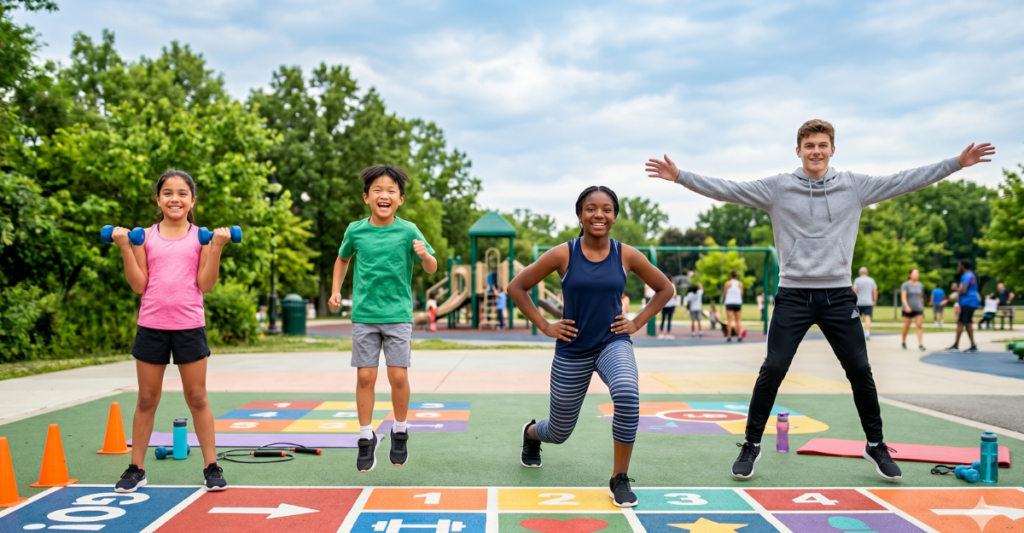
You can integrate fundamental movement skills into regular play and structured exercise sessions. Create obstacle courses that require crawling under objects, jumping over barriers, balancing on narrow surfaces, and throwing at targets. Set up stations in your backyard or local park where kids rotate through different movement challenges. Make it competitive if that motivates your children, or keep it collaborative if they respond better to working together toward common goals.
Age-Appropriate Workout Guidelines for Elementary-Age Children
Children between ages 6 and 10 need at least 60 minutes of moderate to vigorous physical activity daily, but this doesn’t mean they should run on a treadmill for an hour. The best workout routines for kids in this age group are varied, playful, and naturally incorporate rest periods through activity changes. Their attention spans are shorter, and their motivation comes from enjoyment rather than long-term health goals you might find compelling.
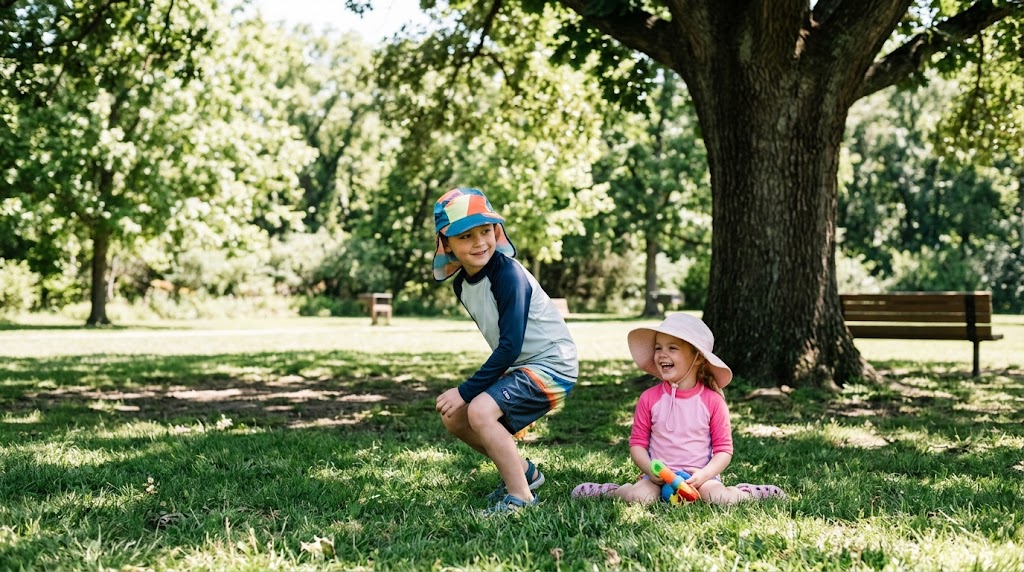
For this age group, think “active play” rather than “working out.” Tag games provide excellent cardiovascular conditioning while developing agility and decision-making skills. Climbing activities—whether on playground equipment, trees (with proper supervision), or indoor climbing walls—build upper body strength, grip strength, and problem-solving abilities. Dance parties in your living room offer aerobic benefits while improving coordination and rhythm. The key is removing the “work” mentality and replacing it with genuine play.
Sample Weekly Activity Plan for Elementary Kids
Monday: Park playground circuit—spend 45 minutes rotating through monkey bars, slides (climbing up the slide!), swings for core engagement, and various climbing structures. Add in some tag games or hide-and-seek to keep energy high.
Tuesday: Backyard obstacle course—set up stations including jumping rope, bear crawls, crab walks, hopping between markers, balancing on a low beam or line, and throwing balls at targets. Complete the circuit 3-4 times with water breaks between rounds.
Wednesday: Swimming or water play—whether at a pool, lake, or running through sprinklers, water activities provide resistance training while being incredibly fun. An hour of active water play burns significant calories while developing coordination.
Thursday: Family bike ride or nature hike—explore your neighborhood or local trails for 30-60 minutes, adjusting distance based on your children’s fitness levels. Bring along a nature scavenger hunt list to keep kids engaged and moving.
Friday: Sports skills practice—spend time working on throwing, catching, kicking, or hitting balls. Set up different stations focusing on various sports skills, letting kids rotate through based on interest rather than forcing extended practice of skills they find boring.
Weekend: Unstructured active play—give kids opportunities for self-directed physical activity, whether that’s pickup games with neighborhood friends, exploring new parks, or creating their own backyard adventures. Aim for at least 2-3 hours of active time across the weekend days.
Structuring Workouts for Pre-Teens and Middle Schoolers
As children enter the 10-14 age range, they can handle slightly more structured exercise programs while still needing variety and fun. This transitional phase is perfect for introducing basic strength training concepts using bodyweight exercises, light resistance bands, or medicine balls. The best workout routines for kids in this age group start incorporating elements of adult training while maintaining the playful aspects that keep them engaged.
Pre-teens experience wide variations in physical maturity—you might have a 12-year-old who looks and moves like a 15-year-old training alongside a peer who’s barely started puberty. This variability means you need to individualize intensity rather than applying one-size-fits-all approaches. Focus on relative effort rather than absolute performance metrics. If you’re coaching a group or training multiple children, emphasize personal improvement over comparison with others.
This age group benefits enormously from learning proper exercise form without heavy loading. Teaching a 12-year-old perfect squat mechanics with bodyweight or a PVC pipe sets them up for safe, effective strength training as a teenager. Similarly, introducing proper push-up form, plank positioning, and basic core exercises creates a foundation for more advanced training. You’re essentially teaching movement literacy that pays dividends throughout their athletic careers.
Bodyweight Training Circuit for Pre-Teens
Create a circuit that takes 20-30 minutes to complete, performing each exercise for 30-45 seconds with 15 seconds of transition time between movements. Complete 2-3 rounds total with 2-3 minute rest periods between rounds. Remember, the best workout routines for kids at this age emphasize quality movement over quantity or intensity.
- Bodyweight squats focusing on depth and keeping knees tracking over toes
- Modified push-ups (on knees if needed) with emphasis on keeping body straight
- Mountain climbers performed at controlled pace
- Plank holds starting at 20 seconds and progressing as strength improves
- Jumping jacks or similar total body cardio movement
- Walking lunges with focus on front knee staying behind toes
- Bear crawls forward and backward
- Side plank holds (15-20 seconds per side)
- High knees running in place
- Superman holds for back extension strength
Developing Training Programs for Teenagers
Once your child reaches true teenage years—roughly 14 and older—they can participate in more adult-like training programs, though supervision and coaching remain important. The best workout routines for teens begin incorporating progressive overload principles, periodization concepts, and sport-specific training if they’re involved in competitive athletics. This doesn’t mean immediately loading them with heavy weights; rather, it means applying systematic progression to their training stimuli.
Teenagers need to understand the “why” behind their training more than younger children do. Take time to explain how specific exercises benefit their goals, whether that’s improving performance in their sport, building confidence through physical capability, or establishing lifelong fitness habits. This age group responds well to data and tracking—consider using training logs, fitness apps, or simple notebooks where they record workouts and monitor progress over time.
The psychological aspects of teen fitness deserve special attention. Many teenagers, especially girls, face immense pressure regarding body image and appearance. Frame fitness conversations around capability, strength, and health rather than aesthetics or weight loss. Help your teens understand that bodies come in different shapes and sizes, and that fitness goals should focus on what their bodies can do rather than how they look. This mindset shift can prevent disordered eating patterns and establish healthier relationships with exercise.
Foundational Strength Training for Beginners
If your teenager is new to structured strength training, spend 4-6 weeks building foundational strength and learning movement patterns before adding significant resistance. These workout routines for teens should occur 2-3 times per week on non-consecutive days, allowing adequate recovery between sessions.
Start each session with a 5-10 minute dynamic warm-up including:
- Light jogging or jumping jacks
- Leg swings forward/back and side to side
- Arm circles and shoulder rotations
- Bodyweight squats
- Lunges with rotation
- Inchworms or walkouts
The main workout includes these compound movements focusing on perfect form:
Goblet Squats: Using a light dumbbell or kettlebell held at chest level, perform 3 sets of 10-12 repetitions. Focus on sitting back into the squat, keeping chest up, and driving through heels to stand. This movement teaches proper squat mechanics while loading the pattern safely.
Push-ups or Bench Press: If your teen can perform 10 proper push-ups, great—have them do 3 sets of 8-12 reps. If not, use an elevated surface like a bench or stairs to reduce difficulty. Alternatively, introduce bench press with just the bar or very light dumbbells, focusing on controlled lowering and pressing.
Inverted Rows or Assisted Pull-ups: Upper body pulling movements are crucial for balanced development. Use a bar set at waist height for inverted rows, or assisted pull-up machines if you have gym access. Perform 3 sets of 6-10 repetitions.
Romanian Deadlifts: This hip hinge pattern is fundamental for athletic performance and injury prevention. Start with a PVC pipe or very light barbell, teaching teens to push their hips back while maintaining a neutral spine. Progress to 3 sets of 10-12 reps once form is solid.
Plank Variations: Hold standard planks for 30-60 seconds, side planks for 20-30 seconds per side, and add variations like shoulder taps or leg lifts as stability improves. Perform 2-3 sets of each variation.
Single-Leg Deadlifts: Balance and unilateral strength are essential for athletic performance. Practice single-leg deadlifts with bodyweight first, then progress to holding light dumbbells. Complete 3 sets of 8-10 reps per leg.
Cardiovascular Training Approaches for Young Athletes
While strength training gets significant attention in fitness discussions, cardiovascular fitness remains crucial for overall health and athletic performance. The best workout routines for kids and teens include varied cardiovascular activities that develop both aerobic base and higher-intensity capacities. The mistake many parents and coaches make is prescribing adult-style steady-state cardio—having kids run at constant pace for extended periods—which bores most young people to tears.
Children and teenagers naturally move in intervals—bursts of activity followed by rest or lower intensity movement. Watch kids play at recess: they sprint, stop, walk, sprint again. This natural movement pattern actually aligns perfectly with high-intensity interval training (HIIT) principles, though you shouldn’t call it that when working with younger kids. For elementary-age children, gamify interval training through relay races, sprint challenges between landmarks, or tag variations that create natural work-rest intervals.
Teenagers can handle more structured interval training, which offers enormous benefits for both athletic performance and general fitness. Research shows that interval training improves cardiovascular fitness more efficiently than steady-state cardio, while taking less total time—a compelling argument for time-crunched teen athletes. However, intensity matters tremendously; truly high-intensity intervals should be limited to 1-2 sessions per week to prevent overtraining, especially if your teen is also participating in team sports or other activities.
Fun Cardiovascular Activities for All Ages
Family Fitness Challenges: Create weekly or monthly fitness challenges that everyone can participate in regardless of fitness level. Examples include total step counts for the week, number of flights of stairs climbed, distance biked, or creative challenges like “burpee pyramid” where family members work together to complete a cumulative total.
Sport Sampling: Instead of specializing early in one sport, encourage your children and teens to try various activities throughout the year. Soccer provides excellent aerobic conditioning, basketball develops anaerobic capacity and agility, swimming builds total-body endurance, tennis improves hand-eye coordination and movement patterns, and martial arts develop discipline alongside fitness.
Trail Running and Hiking: Nature-based activities offer physical challenges while providing mental health benefits that gym-based cardio often lacks. Variable terrain improves proprioception and ankle stability, while hills provide natural interval training. Make these activities social by inviting friends or other families, turning fitness into community connection.
Cycling Adventures: Whether mountain biking on trails or road cycling through your area, biking provides low-impact cardiovascular training while developing leg strength and balance. As your kids’ fitness improves, gradually extend distance or incorporate more challenging terrain.
Flexibility, Mobility, and Recovery for Growing Bodies
The flexibility and mobility component of youth fitness is often overlooked, yet it’s absolutely crucial for long-term athletic development and injury prevention. The best workout routines for kids and teens always include dedicated time for flexibility work, though the approach differs from adult flexibility training. Young children are typically naturally flexible, but as they enter rapid growth phases during adolescence, muscle tightness often develops as bones grow faster than muscles can adapt.
Teaching proper stretching techniques early establishes habits that serve athletes throughout their lives. However, avoid static stretching before activity with young people—research clearly shows this can temporarily decrease power output and potentially increase injury risk. Instead, emphasize dynamic stretching and movement preparation before exercise, saving static stretching for after activity when muscles are warm and pliable.
Recovery practices deserve special attention in teen athletes, particularly those involved in year-round competitive sports. Many young athletes play the same sport across multiple seasons without adequate rest, leading to overuse injuries and burnout. Help your teens understand that rest and recovery aren’t laziness—they’re essential components of training that allow adaptations to occur. Encourage at least one full rest day per week, teach basic self-massage techniques using foam rollers or balls, and emphasize sleep as the most powerful recovery tool available.
Daily Flexibility Routine for Teens
This 10-15 minute routine can be performed daily, ideally in the evening when muscles are naturally warmer and more pliable. Hold each static stretch for 20-30 seconds without bouncing, breathing deeply and relaxing into each position.
- Standing quad stretch—balance on one leg while pulling opposite foot toward glutes
- Standing hamstring stretch—place one heel on low surface, hinge at hips keeping back straight
- Hip flexor stretch—half-kneeling position with back knee on ground, gently press hips forward
- Butterfly stretch—seated with soles of feet together, gently press knees toward ground
- Seated forward fold—legs extended, reach toward toes keeping spine long
- Figure-four stretch—lying on back, cross ankle over opposite knee and pull toward chest
- Doorway chest stretch—arm against doorframe at 90 degrees, gently rotate body away
- Overhead triceps stretch—reach one arm overhead and down back, use opposite hand to gently press elbow
- Neck stretches—gentle lateral flexion and rotation in all directions
- Cat-cow stretches—on hands and knees, alternate between arching and rounding spine
Nutrition Fundamentals to Support Active Kids
You can design the perfect workout routine, but without proper nutrition, your kids won’t have the energy to execute it or the building blocks to recover and adapt. The best workout routines for kids and teens are supported by age-appropriate nutrition that provides adequate calories, protein, carbohydrates, healthy fats, and micronutrients. Unfortunately, youth nutrition has become unnecessarily complicated, with parents worrying about every ingredient while kids subsist on processed foods between sports practices.
Keep youth nutrition simple: focus on whole foods most of the time, ensure adequate protein intake to support growth and recovery, include plenty of fruits and vegetables for micronutrients and fiber, don’t fear carbohydrates (active kids need them), and normalize treats without guilt or restriction. The biggest nutritional mistake parents make is either being too controlling—creating forbidden foods that become obsessions—or too permissive, allowing unlimited access to nutrient-poor options.
Active teenagers, particularly those training seriously for sports, need substantial calories to support both training and normal growth. Teen athletes who restrict calories risk delayed growth, decreased bone density, disrupted hormones, and increased injury rates. If your teen is training hard but not eating enough, performance will suffer regardless of how well-designed their workout program is. Watch for signs of underfueling: persistent fatigue, frequent illness, declining performance, mood changes, or in girls, menstrual irregularities.
Pre and Post-Workout Nutrition Guidelines
Before Morning Workouts: If your teen trains early before school, they need some fuel even if they’re not hungry. Try easily digestible options like a banana with nut butter, toast with jam, a small smoothie, or even just juice if solid food feels unappealing. Aim to eat 30-60 minutes before activity.
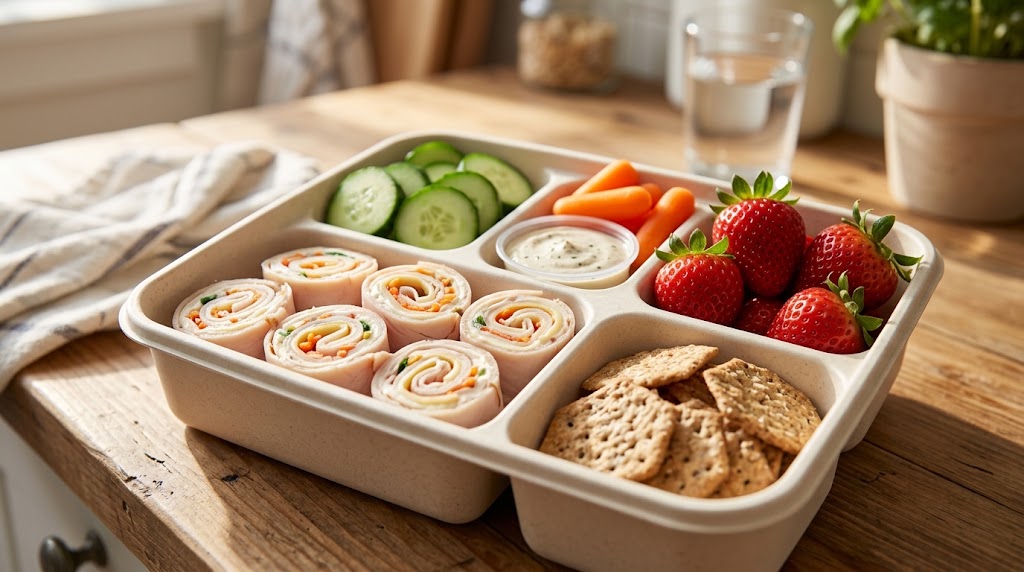
Before Afternoon/Evening Workouts: A meal 2-3 hours before training or a snack 30-60 minutes prior ensures adequate energy. Good options include turkey sandwich on whole grain bread, Greek yogurt with granola and fruit, trail mix with nuts and dried fruit, or crackers with cheese and apple slices.
After All Workouts: The post-workout window is crucial for recovery, particularly after intense or prolonged exercise. Aim for a combination of protein and carbohydrates within 30-60 minutes after finishing. Chocolate milk is actually an excellent recovery drink, or try a protein smoothie, turkey wrap, eggs with toast, or peanut butter and banana sandwich.
Hydration Strategy: Many young athletes are chronically dehydrated without realizing it. Encourage drinking water throughout the day, not just during practice. A simple hydration check: urine should be pale yellow; dark yellow indicates dehydration. During activity lasting longer than 60 minutes or in hot conditions, consider sports drinks to replace electrolytes lost through sweat.
Making Fitness a Family Priority
The single most powerful influence on children’s exercise habits is parental modeling. If your kids see you prioritizing fitness, talking positively about physical activity, and genuinely enjoying movement, they’re far more likely to adopt similar attitudes. The best workout routines for kids and teens happen in families where fitness is a shared value rather than something parents lecture about while remaining sedentary themselves.
Create family fitness traditions that everyone participates in regardless of age or ability level. Maybe it’s Saturday morning hikes, evening bike rides after dinner, backyard fitness challenges, or active vacations focused on outdoor adventures rather than sitting by pools. When fitness becomes part of your family identity—”we’re a family that moves”—it stops being a chore and becomes simply what you do together.
Remove or reduce barriers to physical activity in your home and schedule. Limit screen time not through constant battles but by offering compelling alternatives. Keep sports equipment accessible—balls, jump ropes, frisbees, bikes—so active play.
Give us a call today at 1-877-777-6086 or fill out our contact form to become a retail
distributor of our top-of-the-line safety lights.