Understanding the Importance of Tracking Fitness Progress
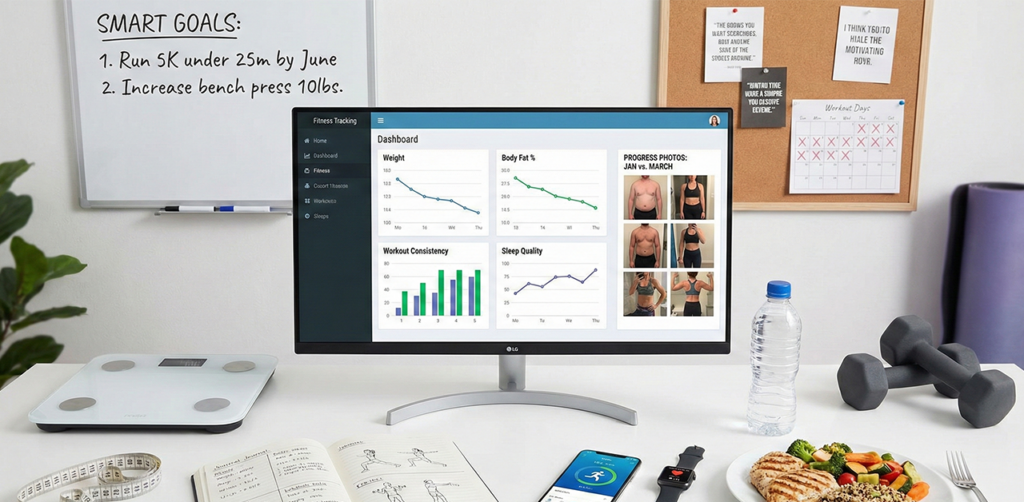
Tracking your fitness progress is a crucial aspect of any successful wellness journey. It’s not just about seeing numbers change on a scale or watching your muscles grow; it’s about understanding how your body responds to different exercises and routines. When you effectively track your fitness progress, you’re able to make data-driven decisions about your workouts, nutrition, and overall health strategies. This empowers you to optimize your efforts and achieve your fitness goals more efficiently. But how can you track your fitness progress effectively? Let’s dive into some top methods that will help you stay on top of your game and make the most of your fitness endeavors.
Setting Clear and Measurable Fitness Goals
Before you can track your progress, you need to know what you’re working towards. Setting clear and measurable fitness goals is the foundation of effective progress tracking. Whether you’re aiming to lose weight, build muscle, improve endurance, or enhance overall health, your goals should be SMART: Specific, Measurable, Achievable, Relevant, and Time-bound. For instance, instead of saying, “I want to get stronger,” you might set a goal like, “I want to increase my bench press by 20 pounds in the next three months.” This specificity allows you to track your progress more accurately and adjust your strategies as needed.
Remember, your fitness journey is unique to you. What works for others may not work for you, so it’s essential to set goals that align with your personal aspirations and lifestyle. Consider factors such as your current fitness level, available time for workouts, and any health considerations when setting your goals. By doing so, you’ll create a roadmap for success that’s tailored to your individual needs and circumstances.
Utilizing Body Measurements for Comprehensive Tracking
While the scale can be a useful tool, it doesn’t tell the whole story of your fitness progress. Incorporating body measurements into your tracking routine provides a more comprehensive picture of how your body is changing. Here are some key measurements to consider:
- Waist circumference
- Hip circumference
- Chest measurement
- Bicep and thigh circumferences
- Body fat percentage (using calipers or a bioelectrical impedance scale)
Taking these measurements regularly, perhaps every 2-4 weeks, can reveal changes in your body composition that the scale alone might not show. For example, you might find that your weight remains stable, but your waist measurement decreases and your bicep measurement increases, indicating a positive shift in body composition.
When taking measurements, consistency is key. Use the same technique and measure at the same time of day (preferably in the morning before eating or drinking) to ensure accurate comparisons over time. By tracking these measurements alongside your weight, you’ll gain a more nuanced understanding of how your body is responding to your fitness routine.
Leveraging Technology: Fitness Apps and Wearables
In today’s digital age, technology offers a plethora of options for tracking your fitness progress effectively. Fitness apps and wearable devices have revolutionized the way we monitor our health and physical activity. These tools can provide real-time data on various aspects of your fitness journey, including:
- Daily step count
- Calories burned
- Heart rate variability
- Sleep quality and duration
- Workout intensity and duration
Popular fitness apps like MyFitnessPal, Strava, and Nike Training Club allow you to log your workouts, track your nutrition, and even connect with a community of like-minded fitness enthusiasts. Wearable devices such as Fitbit, Apple Watch, and Garmin watches offer continuous monitoring of your physical activity and vital signs, providing insights into your overall health and fitness levels.
When choosing a fitness app or wearable, consider your specific needs and goals. Some devices are better suited for certain activities, like running or swimming, while others offer more comprehensive health tracking features. By integrating these technological tools into your fitness routine, you can gain valuable insights into your progress and make data-driven decisions to optimize your workouts and recovery.
Keeping a Detailed Fitness Journal
Sometimes, the most effective methods for tracking fitness progress are also the simplest. Keeping a detailed fitness journal can be an incredibly powerful tool in your fitness arsenal. A journal allows you to record not just the numbers, but also the qualitative aspects of your fitness journey. Here’s what you might include in your fitness journal:
- Workout details (exercises, sets, reps, weights used)
- Duration and intensity of cardio sessions
- Energy levels before and after workouts
- Mood and motivation
- Sleep quality and duration
- Nutrition information
- Any aches, pains, or injuries
By consistently logging this information, you’ll be able to identify patterns and trends in your fitness journey. You might notice, for example, that you perform better in your workouts when you’ve had a certain amount of sleep or eaten particular foods. This kind of insight can be invaluable in fine-tuning your fitness routine for optimal results.
Moreover, a fitness journal serves as a tangible record of your progress over time. On days when you’re feeling discouraged, you can look back and see how far you’ve come. This can be a powerful motivator to keep pushing forward towards your goals.
Assessing Performance Metrics: Strength and Endurance Tests
While body measurements and weight are important indicators of fitness progress, they don’t tell the whole story. Regularly assessing your performance metrics through strength and endurance tests can provide valuable insights into your functional fitness improvements. Here are some tests you might consider incorporating into your tracking routine:
- One-rep max tests for key lifts (squat, deadlift, bench press)
- Timed mile run
- Push-up test (maximum number in one minute)
- Plank hold for time
- Flexibility tests (sit-and-reach)
These tests allow you to track improvements in your strength, cardiovascular endurance, muscular endurance, and flexibility. By performing these tests at regular intervals (perhaps every 4-6 weeks), you can see how your fitness is improving in real, functional terms.
Remember, when performing these tests, it’s crucial to maintain proper form and technique to ensure accurate results and prevent injury. If you’re unsure about how to perform any of these tests safely, consider working with a certified fitness professional who can guide you through the process.
Utilizing Progress Photos for Visual Tracking
They say a picture is worth a thousand words, and when it comes to tracking fitness progress, this couldn’t be more true. Progress photos can provide a visual representation of your journey that numbers alone can’t capture. Here’s how to effectively use progress photos:
- Take photos from multiple angles (front, side, back)
- Wear the same or similar clothing in each set of photos
- Use consistent lighting and backdrop
- Take photos at regular intervals (e.g., every 4-6 weeks)
- Strike the same poses in each set of photos for easy comparison
Progress photos can be particularly motivating because they provide concrete visual evidence of your hard work paying off. Sometimes, day-to-day changes are so gradual that we don’t notice them, but comparing photos taken weeks or months apart can reveal dramatic transformations.
Moreover, progress photos can help you identify areas where you’re making the most progress and areas that might need more attention. This information can be invaluable in adjusting your workout routine to ensure balanced, overall progress.
Monitoring Nutritional Intake for Holistic Progress Tracking
Your fitness progress isn’t just about what happens in the gym; what you eat plays a crucial role in your overall health and fitness. Tracking your nutritional intake can provide valuable insights into how your diet is supporting (or potentially hindering) your fitness goals. Here are some ways to effectively monitor your nutrition:
- Use a food tracking app to log your meals and snacks
- Keep a food diary in your fitness journal
- Track macronutrients (protein, carbohydrates, and fats) as well as total calories
- Note how different foods affect your energy levels and workout performance
- Monitor your hydration by tracking water intake
By tracking your nutrition alongside your workouts and body measurements, you’ll be able to see how your diet impacts your progress. You might notice, for example, that you have more energy for workouts when you eat a certain balance of macronutrients, or that increasing your protein intake helps with muscle recovery.
Remember, nutrition tracking isn’t about restriction or judgment. It’s about gathering data to help you make informed decisions about your diet that support your fitness goals. Be honest and accurate in your tracking, but also be kind to yourself. Occasional indulgences are part of a balanced lifestyle, and tracking can help you find the right balance for your body and goals.
Tracking Recovery and Rest: The Often Overlooked Aspect of Fitness
When it comes to tracking fitness progress, many people focus solely on their active time – the workouts, the runs, the lifts. However, your recovery and rest periods are equally crucial to your overall progress. Effective recovery allows your body to repair and strengthen itself between workouts, leading to improved performance and reduced risk of injury. Here’s how you can track your recovery and rest:
- Monitor sleep quality and duration using a sleep tracking app or wearable device
- Track your resting heart rate – a lower resting heart rate often indicates improved fitness
- Note your perceived recovery level before each workout
- Keep track of any muscle soreness or fatigue
- Monitor your stress levels, as high stress can impede recovery
By paying attention to these factors, you can ensure you’re giving your body the rest it needs to make optimal progress. If you notice that your performance is plateauing or declining, it might be a sign that you need more recovery time. Remember, progress doesn’t just happen during workouts – it happens when your body repairs and adapts during rest periods.
Seeking Professional Assessments for Comprehensive Progress Tracking
While self-tracking is incredibly valuable, there’s also significant benefit in seeking professional assessments periodically. Fitness professionals and healthcare providers can offer specialized tests and measurements that provide a more in-depth look at your progress. Consider incorporating some of these professional assessments into your tracking routine:
- Body composition analysis using DEXA scans or hydrostatic weighing
- VO2 max testing for cardiorespiratory fitness
- Functional movement screenings to assess mobility and stability
- Blood work to monitor health markers like cholesterol, blood sugar, and hormones
- Fitness assessments with a certified personal trainer
These professional assessments can provide more accurate and detailed information about your fitness progress. They can also help identify any potential health concerns or areas that need special attention in your fitness routine. While these tests may not be necessary for everyone or feasible to do frequently, incorporating them occasionally can give you a more comprehensive understanding of your overall health and fitness.
Embracing the Journey: Celebrating Non-Scale Victories
As you track your fitness progress, it’s important to remember that not all progress can be measured numerically or seen in the mirror. Some of the most significant improvements in your fitness journey might be things that are harder to quantify but equally important. These are often referred to as “non-scale victories” (NSVs), and tracking them can be incredibly motivating. Here are some NSVs to pay attention to:
- Increased energy levels throughout the day
- Improved mood and mental clarity
- Better sleep quality
- Clothes fitting differently (even if the scale hasn’t changed)
- Increased confidence in your abilities
- Being able to keep up with your kids or grandkids more easily
- Improved posture and reduced back pain
Keep a section in your fitness journal dedicated to these NSVs. Whenever you notice a positive change, no matter how small it might seem, write it down. These victories are a crucial part of your overall progress and can be incredibly motivating, especially during times when other metrics might not be changing as quickly as you’d like.
Remember, fitness is a journey, not a destination. By tracking your progress effectively across all these areas – from body measurements and performance metrics to nutrition, recovery, and non-scale victories – you’ll gain a comprehensive understanding of your fitness journey. This holistic approach to tracking will not only help you stay motivated but also enable you to make informed decisions about your fitness routine, leading to more sustainable and enjoyable progress over time.
Give us a call today at 1-877-777-6086 or fill out our contact form to become a retail
distributor of our top-of-the-line safety lights.