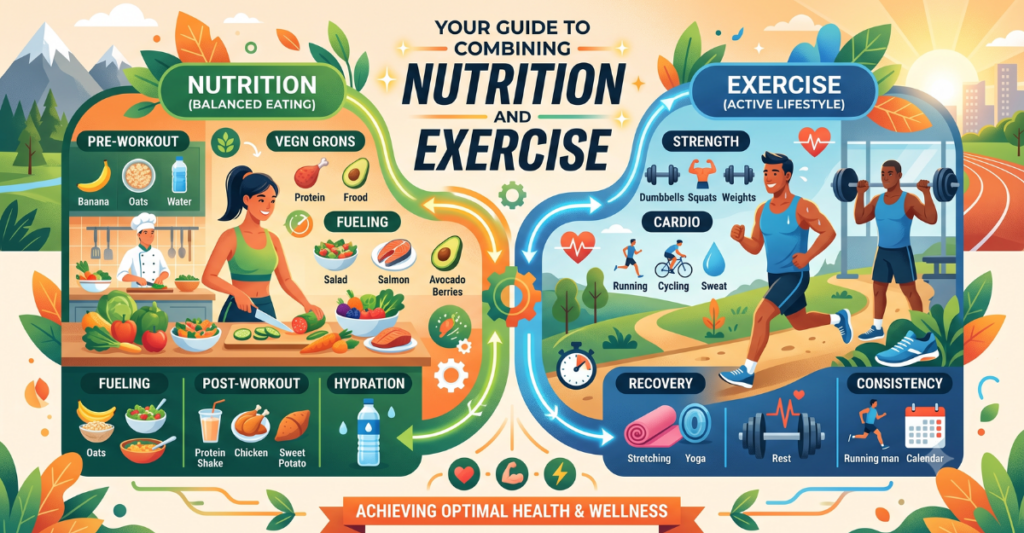
When you’re juggling work deadlines, family responsibilities, and trying to squeeze in a workout, it’s easy to treat nutrition and exercise as separate checkboxes on your wellness to-do list. You grab whatever’s convenient to eat, then hope your gym session will somehow compensate for less-than-ideal food choices. But here’s the truth that transforms results: how to combine nutrition and exercise for better results isn’t just about doing both—it’s about synchronizing them strategically to amplify their individual benefits.
Think of nutrition and exercise as dance partners rather than solo performers. When they move together in harmony, the performance is spectacular. When they’re out of sync, even your best efforts can feel frustratingly ineffective. You’ve probably experienced this disconnect firsthand—working out consistently but not seeing the muscle definition you want, or eating well but feeling exhausted during your runs. This comprehensive guide will show you exactly how to align what you eat with when and how you move, creating a synergy that delivers the results you’ve been working toward.
Understanding the Fundamental Relationship Between Food and Movement
Your body operates like a sophisticated machine that requires specific fuel at specific times to perform optimally. Exercise creates demands on your system—breaking down muscle tissue, depleting energy stores, and triggering inflammation that needs management. Nutrition provides the raw materials to meet these demands, but timing, composition, and quantity all matter tremendously. When you understand this cause-and-effect relationship, you stop thinking about food as simply “good” or “bad” and start viewing it as functional fuel with specific jobs to do.
The metabolic processes happening inside your body right now are constantly shifting based on what you’ve eaten and how you’ve moved recently. After a strength training session, your muscles are primed for protein synthesis for up to 48 hours. Following an intense cardio workout, your glycogen stores need replenishing to maintain your energy for tomorrow’s activities. Meanwhile, if you’re sitting at your desk for hours, your insulin sensitivity changes, affecting how your body processes the lunch you just ate. Learning how to combine nutrition and exercise for better results means recognizing these windows of opportunity and metabolic states.
Most people approach fitness with an oversimplified calorie-in, calorie-out mentality that ignores these nuances entirely. They might eat the same breakfast whether they’re planning a heavy lifting session or a rest day, missing opportunities to optimize performance and recovery. Or they might restrict calories so severely that their workouts suffer, creating a frustrating cycle where they’re too tired to exercise effectively but convinced they need to eat even less. This disconnection between nutrition strategy and training demands explains why so many dedicated people plateau despite their commitment.
Pre-Workout Nutrition: Fueling Your Performance
What you eat before exercise directly impacts your energy levels, focus, endurance, and strength during your workout. The ideal pre-workout nutrition depends heavily on the timing, intensity, and type of exercise you’re planning. A morning run requires different fueling than an evening strength session, and a casual walk needs less strategic eating than a high-intensity interval workout. Understanding these distinctions allows you to customize your approach rather than following generic advice that might not match your specific situation.
For workouts happening within one to two hours, you’ll want easily digestible carbohydrates paired with a moderate amount of protein. A banana with almond butter, Greek yogurt with berries, or oatmeal with a scoop of protein powder all provide quick energy without sitting heavily in your stomach. The carbohydrates raise your blood sugar to fuel your muscles and brain, while protein begins the process of protecting muscle tissue from breakdown during training. Avoid high-fiber or high-fat foods this close to exercise, as they digest slowly and can cause gastrointestinal distress when you’re moving vigorously.
If you have three to four hours before your workout, you can eat a more substantial meal that includes complex carbohydrates, lean protein, and healthy fats. Grilled chicken with sweet potato and vegetables, a turkey sandwich on whole grain bread, or salmon with quinoa and roasted Brussels sprouts all provide sustained energy. This longer digestion window means your body can process these more complex nutrients and have them available when you need them. For busy parents squeezing in lunchtime workouts, this might mean planning your morning breakfast strategically or packing a proper mid-morning snack.
Early morning exercisers face a unique challenge since many people don’t want to eat immediately upon waking. If you’re heading out for a moderate workout within 30 minutes of rising, you might perform just fine on water alone, especially if you ate adequately the night before. However, for intense sessions or longer duration activities, even a small amount of easily digestible carbs—like a few dates, a small glass of juice, or a couple of graham crackers—can make a significant difference in your performance and help preserve muscle mass.
Post-Workout Recovery Nutrition: The Critical Window
The hour following your workout represents one of the most important nutritional windows for anyone serious about results. Your muscles are essentially sponges during this time, extraordinarily receptive to nutrients that will repair damage, rebuild tissue, and replenish depleted energy stores. Missing or mishandling this opportunity doesn’t just slow your progress—it can actually impede recovery, leaving you sore longer and less prepared for your next training session. How to combine nutrition and exercise for better results hinges significantly on mastering this post-workout period.
Protein takes center stage in recovery nutrition because exercise creates microscopic tears in muscle fibers that need amino acids to repair and grow back stronger. Aim for 20-40 grams of high-quality protein within an hour of finishing your workout, with the higher end for larger individuals or those who’ve completed particularly intense strength training. Whey protein shakes offer convenience and rapid absorption, but whole food options like eggs, cottage cheese, chicken breast, or Greek yogurt work excellently too. For plant-based eaters, combining sources like rice and pea protein or pairing beans with quinoa ensures you get complete amino acid profiles.
Carbohydrates in your post-workout meal or snack serve to replenish glycogen—the stored form of glucose in your muscles and liver that fuels high-intensity activity. The more glycogen-depleting your workout was, the more carbohydrates you need afterward. A moderate-intensity 30-minute jog might only require 30-50 grams of carbs, while a 90-minute long run or intense CrossFit session could necessitate 80-100 grams or more. Combining protein and carbohydrates together actually enhances the uptake of both, making combinations like chocolate milk, protein smoothies with fruit, or chicken with rice particularly effective.
Don’t fear this post-workout nutrition adding to your waistline—this is actually the time when your body is least likely to store calories as fat and most likely to shuttle them toward recovery and adaptation. The metabolic processes triggered by exercise create an environment where nutrients are partitioned preferentially toward repair rather than storage. For busy moms grabbing a quick post-workout snack before shuttling kids to activities, having portable options pre-prepared—like protein bars paired with fruit, hard-boiled eggs with crackers, or pre-made smoothie packs ready to blend—ensures you don’t miss this window due to time constraints.
Hydration Strategies That Complement Your Training
Water doesn’t just quench thirst—it’s involved in virtually every metabolic process in your body, from nutrient transport to temperature regulation to joint lubrication. Even mild dehydration of just 2% body weight loss through fluid can impair exercise performance, reduce cognitive function, and increase perceived effort, making workouts feel harder than they should. Yet many people, especially busy parents focused on everyone else’s needs, chronically under-hydrate throughout the day, then wonder why their energy lags and their workouts feel exhausting.
Your hydration strategy should begin long before you lace up your sneakers. Starting exercise already dehydrated puts you behind from the first minute, forcing your cardiovascular system to work harder to maintain blood volume and deliver oxygen to working muscles. Aim to drink consistently throughout the day—a good baseline is half your body weight in ounces, so a 160-pound person would target 80 ounces daily. Increase this for hot weather, intense exercise, or if you’re nursing. The color of your urine provides a simple assessment tool: pale yellow indicates good hydration, while dark yellow or amber suggests you need more fluids.
During exercise lasting less than an hour at moderate intensity, water alone typically suffices. However, longer or more intense sessions require electrolyte replacement, particularly sodium and potassium, which you lose through sweat. Sports drinks, coconut water, or electrolyte tablets added to water help maintain the mineral balance necessary for muscle contraction and nerve function. Failing to replace electrolytes during extended exercise can lead to muscle cramps, fatigue, nausea, and in severe cases, dangerous conditions like hyponatremia. For endurance athletes or those exercising in heat, this becomes critically important rather than optional.
Post-exercise hydration continues the recovery process by helping flush metabolic waste products from your system and supporting the delivery of nutrients to damaged tissues. Weigh yourself before and after long or intense workouts—for every pound lost, drink 16-24 ounces of fluid to fully rehydrate. This matters more than you might think because chronic under-recovery, including inadequate rehydration, accumulates over time and can lead to overtraining symptoms, elevated cortisol, and diminished results despite your hard work. For parents managing household demands, keeping a filled water bottle visible and accessible serves as a constant reminder and makes hydration more convenient.
Macronutrient Balance for Different Training Goals
Not all exercise goals respond to the same nutritional approach, which is why your neighbor’s diet that helped them lose weight might not help you build the muscle you’re after. The ratio of protein, carbohydrates, and fats you consume should align with whether you’re primarily focused on fat loss, muscle gain, endurance performance, or general fitness maintenance. Understanding how to combine nutrition and exercise for better results requires matching your macronutrient distribution to your specific training objectives and activity patterns.
For muscle building and strength development, protein requirements increase substantially—typically 0.7-1.0 grams per pound of body weight daily. This higher protein intake supports muscle protein synthesis, especially when distributed relatively evenly across four to five meals throughout the day rather than concentrated in one or two. Carbohydrates remain important for fueling your strength workouts and supporting the intensity needed to stimulate muscle growth, generally comprising 30-40% of total calories. Healthy fats, while slightly lower than in other approaches at 20-30% of calories, still play crucial roles in hormone production, including testosterone and growth hormone that facilitate muscle development.
Endurance athletes like distance runners or cyclists need to prioritize carbohydrates as their primary fuel source, often consuming 50-60% of calories from carbs to maintain adequate glycogen stores for prolonged activity. Protein needs are moderate—around 0.5-0.7 grams per pound of body weight—to support recovery from the repetitive stress of long-duration training. Fats contribute the remaining 25-30% of calories and become increasingly important as an energy source during lower-intensity, longer efforts. Many endurance athletes mistakenly under-eat carbohydrates, leading to chronic fatigue, poor recovery, and disappointing race performances despite high training volumes.
Those focused primarily on fat loss while maintaining lean muscle need adequate protein—around 0.8-1.0 grams per pound of body weight—to preserve muscle mass during caloric restriction. Moderate carbohydrates, strategically timed around workouts, provide energy for training while overall reduced intake creates the caloric deficit necessary for fat loss. Healthy fats at moderate levels support satiety and hormonal health, which becomes particularly important during prolonged dieting when hormone disruption can stall progress. The key distinction here is that fat loss requires a caloric deficit, but how you create and distribute that deficit dramatically affects whether you lose primarily fat or a discouraging mixture of fat and muscle.
Meal Timing and Workout Schedule Synchronization
When you eat matters nearly as much as what you eat when optimizing the nutrition-exercise combination. Your body’s ability to utilize different nutrients shifts throughout the day based on circadian rhythms, recent food intake, and exercise timing. Someone who trains at 6 AM faces entirely different meal timing challenges than someone hitting the gym at 6 PM, yet both need strategic approaches to maximize their efforts and results.
Morning exercisers often struggle with the decision of whether to eat before early workouts. The answer depends on workout intensity and duration—low to moderate intensity sessions of 45 minutes or less can often be performed fasted, potentially even enhancing fat oxidation during the activity. However, higher intensity interval training, heavy strength work, or anything exceeding an hour typically benefits from at least a small pre-workout snack consumed 30-60 minutes prior. If you choose to train fasted, your post-workout meal becomes even more critical, requiring a substantial combination of protein and carbohydrates to halt muscle breakdown and initiate recovery.
Evening exercisers have the advantage of multiple meals already consumed, providing fuel reserves for their training session. However, they face the challenge of post-workout nutrition potentially occurring close to bedtime, which some people find disrupts sleep. The solution isn’t to skip post-workout nutrition—that compromises recovery—but rather to adjust the composition. A slower-digesting protein source like casein from cottage cheese or a casein-based protein powder provides sustained amino acid delivery overnight, supporting the muscle repair processes that peak during sleep. Pair this with modest carbohydrates to replenish glycogen without a large blood sugar spike that might affect sleep quality.
For those juggling multiple training sessions throughout the week, meal timing becomes a choreographed routine. On strength training days, you might prioritize higher carbohydrates around your workout window to fuel performance and recovery. On rest days or lower-intensity activity days, you might slightly reduce overall carbohydrate intake while maintaining protein to support ongoing recovery. How to combine nutrition and exercise for better results often means developing different eating patterns for different training days rather than a one-size-fits-all approach. This flexibility requires planning but delivers substantially better outcomes.
Nutrient Timing for Parents Balancing Family and Fitness
Busy parents face unique challenges in synchronizing nutrition and exercise since their schedules often revolve around everyone else’s needs. You might find your workout window dictated by when your partner can watch the kids or squeezed between school drop-off and the start of your workday. Your meals might be assembled from your toddler’s leftovers while standing at the kitchen counter. Despite these realities, strategic nutrient timing remains achievable and worthwhile—it just requires creative solutions tailored to parental logistics.
Batch preparation becomes your secret weapon for maintaining nutrition quality despite time constraints. Dedicating a couple of hours on Sunday to prepare breakfast egg muffins, portion out trail mix with protein powder balls, chop vegetables, and cook several chicken breasts means grab-and-go options are always available. When you finish a workout, you’re not faced with choosing between optimal recovery nutrition and getting your kids to soccer practice on time—you simply grab a pre-portioned option from the refrigerator. This advance preparation removes the decision fatigue and time pressure that often derail good nutritional intentions.
Involving your family in your fitness nutrition creates opportunities for everyone to benefit from healthier choices. When you make a post-workout smoothie for yourself, blend extra for your kids with ingredients they enjoy—they’re getting fruit, protein, and healthy fats without realizing they’re participating in your performance nutrition. When you prep vegetables and lean proteins for your muscle-building goals, you’re simultaneously putting dinner ingredients ready for the whole family. This integration means your fitness nutrition enhances rather than competes with your parental responsibilities.
Strategic snacking throughout the day helps busy parents maintain energy and ensures workout fuel is available when needed. Keep protein-rich options like Greek yogurt, string cheese, hard-boiled eggs, or nut butter packets easily accessible. Pair these with fruit, whole grain crackers, or vegetables to create mini-meals that sustain you through chaotic schedules. This consistent fueling prevents the energy crashes that make fitting in exercise feel impossible and ensures you’re not attempting workouts in a depleted state that compromises results and increases injury risk.
Supplementation to Fill Nutritional Gaps
While whole foods should form the foundation of your nutrition strategy, targeted supplementation can address specific deficiencies and support training demands that are difficult to meet through diet alone. Busy schedules, food preferences, digestive issues, or simply the practical challenges of consuming enough whole food protein can create gaps that supplements efficiently fill. The key is viewing supplements as complementary tools rather than replacements for sound nutrition fundamentals.
Protein powder offers unmatched convenience for post-workout recovery, travel situations, or busy mornings when preparing a full meal isn’t realistic. Whey protein provides rapid absorption ideal for immediately after exercise, while casein digests slowly, making it suitable for between meals or before bed. Plant-based proteins from peas, rice, or hemp serve those avoiding dairy or following vegetarian diets. Quality matters significantly with protein powders—look for third-party tested products with minimal additives and avoid those loading formulas with excessive sugars or artificial ingredients that provide calories without nutritional value.
Creatine monohydrate stands as one of the most researched and effective supplements for strength and power development, helping regenerate ATP during high-intensity efforts. A daily dose of 3-5 grams supports increased workout performance, faster recovery between sets, and potentially enhanced muscle growth over time. Despite outdated concerns, creatine is safe for healthy adults and doesn’t require loading phases or cycling. For parents squeezing in short, intense workouts between responsibilities, creatine helps maximize what you accomplish in limited training time.
Omega-3 fatty acids from fish oil support the anti-inflammatory processes necessary for recovery and cardiovascular health, areas of particular importance for active individuals over 35. Many people consume insufficient omega-3s relative to inflammatory omega-6 fats common in modern diets, creating an imbalance that can impair recovery and promote chronic inflammation. A quality fish oil supplement providing 1-2 grams of combined EPA and DHA daily helps rebalance this ratio. Vitamin D, magnesium, and zinc represent other commonly deficient nutrients that impact everything from immune function to muscle contraction to sleep quality—all crucial for training adaptation and recovery.
Adjusting Nutrition Based on Training Intensity and Volume
Your nutritional needs aren’t static—they fluctuate based on your current training demands, which vary throughout the week and across different training phases. A recovery week with reduced volume requires less total food intake than a high-volume training week. A day with an intense interval session demands different fueling than a rest day or easy recovery workout. Learning how to combine nutrition and exercise for better results includes developing the awareness and flexibility to match your eating to these changing demands.
During high-volume training periods—perhaps when you’re preparing for a race or pushing for a strength goal—your caloric needs increase substantially to support the added work and recovery demands. Under-eating during these phases leads to poor performance, incomplete recovery, elevated injury risk, and potential hormonal disruptions, especially for women. You might need an additional 300-500 calories daily, primarily from carbohydrates to fuel the increased activity and protein to support heightened recovery needs. Listen to hunger cues that intensify during hard training—they’re your body’s communication that it needs more resources.
Deload or recovery weeks, planned periods of reduced training volume and intensity, require corresponding nutritional adjustments. Maintaining the same caloric intake you needed during high-volume training can lead to unwanted fat gain during these easier periods. However, protein should remain relatively consistent to continue supporting muscle maintenance and recovery. Reducing primarily carbohydrate intake during deload weeks matches the decreased glycogen demands of reduced training volume while maintaining the other nutrients necessary for recovery and health.
Complete rest days present another adjustment opportunity. While you still need adequate protein for ongoing recovery from previous training sessions, your carbohydrate needs drop since you’re not depleting glycogen through exercise. Some people find slightly lower overall calories on rest days helps manage body composition, though the difference shouldn’t be dramatic—perhaps 10-20% reduction. Others maintain consistent intake across all days for simplicity, accepting minor fluctuations. Either approach works if it aligns with your goals and preferences, though being somewhat responsive to activity levels typically produces better body composition outcomes.
Using Nutrition to Enhance Specific Workout Types
Different exercise modalities create distinct physiological demands and therefore respond optimally to different nutritional strategies. A high-intensity interval training session depletes glycogen rapidly and creates significant metabolic stress, while a steady-state moderate-intensity run primarily utilizes fat oxidation with less glycogen depletion. Understanding these differences allows you to customize your nutrition around specific workout types rather than applying generic guidelines that might not optimize your particular training session.
Strength training primarily uses the phosphocreatine and glycolytic energy systems, making carbohydrates crucial for fueling maximum effort sets and protein essential for the recovery and adaptation process. Consuming 0.25-0.4 grams of carbohydrates per kilogram of body weight one to two hours before lifting provides readily available energy for your working muscles. Post-workout, prioritize protein intake within the recovery window, as resistance training creates the stimulus for muscle protein synthesis that continues for up to 48 hours. Many people under-fuel their strength workouts with insufficient carbohydrates, then wonder why they can’t complete their programmed sets or progress in weight lifted.
Give us a call today at 1-877-777-6086 or fill out our contact form to become a retail
distributor of our top-of-the-line safety lights.