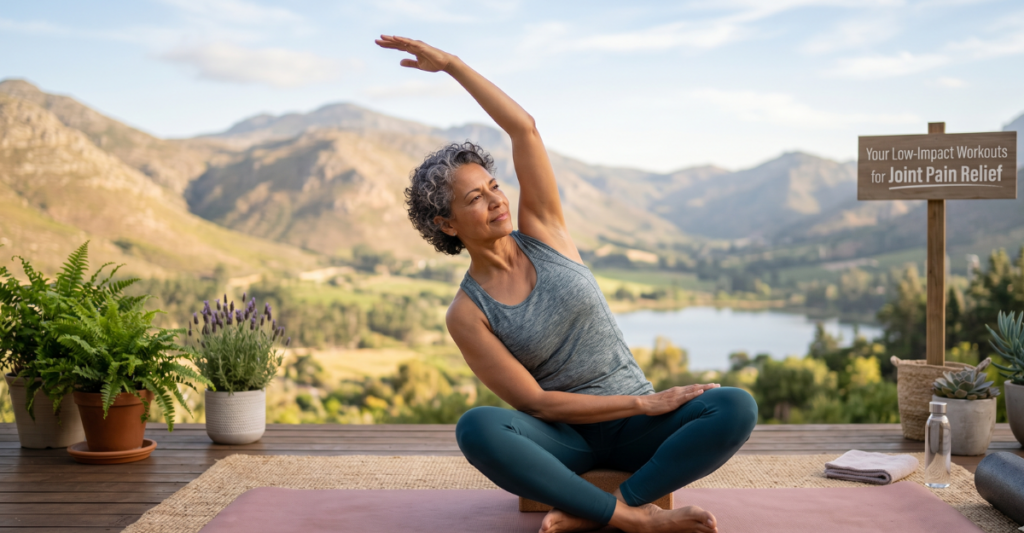
Joint pain doesn’t have to mean the end of your fitness journey. Whether you’re dealing with arthritis, recovering from an injury, or simply experiencing the natural wear and tear that comes with an active lifestyle, low-impact workouts for joint pain relief can help you maintain your strength, flexibility, and cardiovascular health without aggravating sensitive areas. The beauty of these exercises lies in their ability to keep you moving while minimizing stress on your joints, allowing you to stay active and healthy for years to come.
As a busy parent juggling work, family, and personal health goals, or as an athlete looking to maintain fitness while nursing nagging joint issues, you need workout solutions that actually work. The right approach to exercise can significantly reduce inflammation, improve mobility, and even help manage chronic pain conditions. This comprehensive guide will walk you through the most effective low-impact exercises specifically designed to provide relief while building the strength and endurance your body needs.
Understanding Joint Pain and Exercise
Before diving into specific workouts, it’s essential to understand the relationship between movement and joint health. Your joints are complex structures where bones meet, cushioned by cartilage and surrounded by synovial fluid that acts as a natural lubricant. When you experience joint pain, whether from osteoarthritis, overuse, or injury, this delicate system becomes compromised. However, contrary to what you might think, appropriate exercise is actually one of the most effective treatments for joint discomfort.
Movement helps circulate synovial fluid throughout your joints, essentially lubricating them from the inside out. When you engage in low-impact workouts for joint pain relief, you’re encouraging this natural lubrication process without creating the jarring forces that high-impact activities produce. Think of it this way: your joints are like door hinges that need regular, gentle use to stay functional. Leave them immobile, and they stiffen up. Subject them to too much force, and they deteriorate faster.
The key distinction between high-impact and low-impact exercise relates to force transmission through your skeletal system. High-impact activities like running or jumping can create forces equivalent to three to five times your body weight with each foot strike. Low-impact alternatives keep at least one foot on the ground at all times, or they completely eliminate gravitational stress through buoyancy or equipment support. This fundamental difference makes all the difference when you’re managing joint pain.
Swimming: The Ultimate Joint-Friendly Workout
Swimming stands as perhaps the single most effective low-impact workout for anyone dealing with joint discomfort. The buoyancy of water supports approximately 90% of your body weight when you’re submerged to neck level, creating an almost weightless environment for your joints. This unique property allows you to move through a full range of motion without the compressive forces that typically accompany land-based exercise.
Beyond just reducing impact, water provides natural resistance in all directions, meaning every movement becomes a strength-building exercise. When you push your arm through water during a freestyle stroke, you’re working against approximately 12 times the resistance of air. This creates an incredibly efficient workout that simultaneously builds cardiovascular endurance, muscular strength, and flexibility. Your heart rate elevates, calories burn, and muscles engage—all while your joints experience minimal stress.
Different swimming strokes offer varying benefits for specific joint concerns. The backstroke is particularly gentle on shoulders and can help improve posture, making it ideal if you spend long hours at a desk or on job sites. Breaststroke provides excellent hip mobility work, though it can sometimes aggravate knee issues if you have existing problems in that area. Freestyle offers the most balanced full-body workout and tends to be easiest on all joints when performed with proper technique.
Getting Started with Swimming
If you’re new to swimming or returning after a long break, start with just 15-20 minutes of continuous movement in the pool. You don’t need to be an Olympic swimmer to benefit; simply walking in chest-deep water provides substantial exercise benefits. Pool walking is an excellent entry point that allows you to adjust intensity by changing your speed, adding arm movements, or varying the water depth.
As your comfort level increases, consider taking a few lessons to refine your technique. Proper form isn’t just about efficiency—it’s about preventing compensatory movements that might strain your joints in different ways. Many community centers and gyms offer adult swim lessons specifically designed for fitness and therapeutic purposes. The investment in proper technique pays dividends in long-term joint health and overall swimming enjoyment.
Cycling: Building Strength Without Impact
Cycling represents another exceptional choice among low-impact workouts for joint pain relief, offering significant cardiovascular benefits while being remarkably easy on your joints. Whether you choose outdoor cycling, a stationary bike at the gym, or a recumbent bike at home, the circular pedaling motion creates smooth, controlled movement without any impact forces. Your joints move through their range of motion repeatedly, promoting circulation and flexibility without jarring compression.
The seated position removes much of the weight-bearing load from your hips, knees, and ankles, making cycling particularly beneficial for lower body joint issues. Unlike running, where each stride creates a momentary impact spike, cycling keeps constant, gentle pressure that your joints can handle much more easily. This makes it possible to exercise for longer durations, burning more calories and building greater endurance than might be possible with higher-impact alternatives.
Stationary cycling offers several advantages worth considering, especially for those with significant joint concerns. You can precisely control resistance levels, gradually increasing intensity as your joints adapt and strengthen. Recumbent bikes provide additional back support and distribute your weight across a larger surface area, which many people with hip or lower back issues find more comfortable. Upright stationary bikes more closely mimic outdoor cycling and engage your core muscles more actively for additional strength benefits.
Optimizing Your Cycling Setup
Proper bike fit is absolutely crucial for joint-friendly cycling. An incorrectly positioned saddle can actually create or worsen joint problems rather than alleviating them. Your saddle height should allow a slight bend in your knee (about 25-30 degrees) when your pedal is at its lowest point. If your leg fully extends or your hips rock side to side while pedaling, your seat is too high and you’re placing unnecessary stress on your knee joints.
Handlebar position matters too, particularly for your shoulders, neck, and wrists. You shouldn’t have to reach so far forward that your back rounds or your shoulders hunch. Start with shorter rides of 15-20 minutes and gradually build up duration before significantly increasing resistance. Your cadence, or pedaling speed, should generally stay between 60-90 revolutions per minute for optimal joint health—this faster, lower-resistance approach is easier on joints than grinding away at high resistance with slow pedaling.
Elliptical Training: Simulating Running Without the Impact
The elliptical trainer was specifically designed to provide the benefits of running while eliminating the repetitive impact. This makes it an outstanding option for former runners dealing with joint issues who miss that familiar running-like motion. The elliptical’s smooth, gliding movement pattern allows you to maintain a running-style workout while keeping your feet in constant contact with the pedals, eliminating those jarring foot strikes that can aggravate knee, hip, and ankle joints.
What sets elliptical training apart is its ability to engage both upper and lower body simultaneously when you use the moving handles. This full-body engagement increases calorie burn and provides a more comprehensive workout in less time—a significant advantage for busy parents trying to maximize limited exercise windows. You’re effectively working your quads, hamstrings, glutes, core, arms, shoulders, and back all in one fluid motion.
Modern elliptical machines offer impressive customization options that allow you to target different muscle groups and intensity levels. Adjusting the incline shifts emphasis toward your glutes and hamstrings while reducing quad dominance, which can be helpful if you have anterior knee pain. Increasing resistance builds strength, while maintaining lower resistance at higher speeds emphasizes cardiovascular conditioning. The ability to pedal in reverse on most ellipticals activates your muscles differently and provides movement variety that keeps your joints adapting positively.
Maximizing Elliptical Benefits
To get the most joint-protective benefits from elliptical training, focus on maintaining proper posture throughout your workout. Keep your shoulders back, chest lifted, and core engaged rather than leaning heavily on the handles. While the moving handles provide upper body work, they shouldn’t support your body weight—that defeats the purpose of engaging your stabilizing muscles and can actually create new strain on your wrists and elbows.
Start with intervals if continuous elliptical work feels monotonous or too challenging. Try two minutes at a moderate pace followed by one minute at a slightly easier pace, repeating this pattern for 20-30 minutes total. As your endurance and joint comfort improve, you can increase the duration of your moderate intervals or add brief higher-intensity segments. The low-impact nature of the elliptical means you can safely exercise most days of the week without the recovery demands of high-impact activities.
Yoga: Flexibility and Strength for Joint Support
Yoga might not immediately come to mind when you think of low-impact workouts for joint pain relief, but its benefits for joint health are substantial and scientifically supported. This ancient practice combines gentle stretching, strength building, balance training, and mindfulness in ways that directly address many underlying causes of joint pain. The controlled movements and sustained poses help build the muscular support around your joints while improving flexibility and range of motion.
Unlike dynamic exercises that move joints rapidly through their range of motion, yoga holds poses for extended periods, allowing connective tissues to gradually lengthen and adapt. This approach is particularly effective for reducing stiffness and improving joint mobility without triggering inflammation. Many yoga poses also emphasize proper body alignment, helping you develop movement patterns that protect your joints during daily activities, not just during formal exercise.
The variety of yoga styles available means you can find an approach that matches your current fitness level and specific joint concerns. Hatha yoga moves at a slower pace with longer holds, making it ideal for beginners or those with significant joint limitations. Yin yoga involves very long passive stretches that target deep connective tissue. Restorative yoga uses props extensively to support your body in relaxing positions that promote healing without any strain. For those seeking more challenge, vinyasa or flow yoga links poses together in sequences that build cardiovascular endurance alongside strength and flexibility.
Adapting Yoga for Your Joints
The most important principle in joint-friendly yoga is honoring your body’s current limitations rather than pushing into pain. That burning sensation of muscles working is different from the sharp or aching pain of joint stress—learn to distinguish between these sensations and back off when you experience the latter. Props like blocks, straps, bolsters, and blankets aren’t crutches for inflexibility; they’re tools that allow you to access yoga’s benefits while respecting your body’s needs.
Certain poses are particularly beneficial for common joint issues. Child’s pose gently stretches your hips and spine while being completely supported. Cat-cow movements mobilize your entire spine in a pain-free range of motion. Bridge pose strengthens your glutes and hamstrings, which support your knee and hip joints. Warrior poses build leg strength that protects your knees when performed with proper alignment. Consider working with an experienced yoga instructor who can provide modifications specific to your joint concerns—the investment in proper guidance prevents injury and accelerates your progress.
Water Aerobics: Community and Comfort Combined
Water aerobics classes have evolved far beyond the gentle sessions for seniors that you might imagine. Today’s aqua fitness programs offer serious workouts that challenge your cardiovascular system and build real strength, all while providing the joint-protective benefits of exercising in water. The social aspect of group classes also provides motivation and accountability that can be particularly valuable when you’re managing chronic pain that sometimes makes you want to skip exercise altogether.
The unique properties of water create resistance in all directions, meaning every movement through water strengthens both the prime mover muscles and their opposing stabilizers. When you push your arm forward through water, your chest, shoulders, and triceps work concentrically, but your back and biceps simultaneously engage eccentrically to control the movement. This balanced strengthening is exactly what your joints need—when muscles on all sides of a joint are equally strong, the joint itself experiences less stress and better stability.
Temperature plays a significant role in water aerobics’ effectiveness for joint pain relief. Many aquatic fitness programs use pools heated to 83-88 degrees Fahrenheit, which is warmer than typical lap swimming pools. This warmth increases blood flow to your joints and muscles, reduces stiffness, and allows greater range of motion during exercise. The combination of warmth, buoyancy, and hydrostatic pressure creates an almost therapeutic environment that can provide immediate pain relief even while you’re working hard.
What to Expect in Water Aerobics Classes
Most water aerobics classes follow a structured format beginning with a gentle warm-up that gradually increases your heart rate and prepares your joints for movement. The main workout typically includes a cardiovascular section with traveling movements across the pool, a strength segment using water resistance or equipment like foam dumbbells and noodles, and a cool-down with stretching. Class duration typically ranges from 45 to 60 minutes, providing a complete workout in a manageable timeframe.
Don’t worry about being the least fit person in class—water aerobics attracts people of all fitness levels precisely because it’s accessible and effective for such a wide range of needs. You’ll likely find fellow participants dealing with similar joint issues, creating a supportive environment where everyone understands the challenges of exercising with pain. The instructor can show you modifications to make movements easier or more challenging, allowing you to work at your own appropriate intensity even in a group setting.
Pilates: Core Strength for Joint Protection
Pilates focuses intensively on core strength, flexibility, and body awareness—all factors that directly impact your joint health. A strong core stabilizes your spine and pelvis, creating a solid foundation from which your limbs can move efficiently. When your core is weak, other joints have to compensate, leading to excess stress on knees, hips, and shoulders. By building this central stability, Pilates helps your joints function as they’re designed to, reducing pain and preventing further damage.
The controlled, precise movements characteristic of Pilates emphasize quality over quantity. Rather than performing countless repetitions mindlessly, you’ll execute fewer repetitions with intense focus on proper form and muscle engagement. This approach builds the mind-body connection that helps you move more efficiently in daily life, not just during formal exercise. You’ll become more aware of how you hold your body while standing, sitting, lifting, and moving throughout your day—awareness that translates to better joint protection in all activities.
Both mat Pilates and reformer Pilates offer benefits for people with joint pain, though they emphasize different aspects. Mat Pilates requires no special equipment beyond a mat, making it accessible for home practice once you’ve learned proper technique. It relies on your body weight for resistance and challenges your stability since you’re working on an unstable surface. Reformer Pilates uses a specialized machine with springs that provide adjustable resistance and support, often making certain movements more accessible for people with limitations. The reformer’s sliding carriage reduces friction and impact while the spring resistance can be calibrated precisely to your current strength level.
Pilates Principles for Joint Health
Several core Pilates principles are particularly relevant for joint pain management. Concentration keeps your mind focused on exactly which muscles should be working, preventing compensation patterns that stress joints. Control ensures movements remain smooth and deliberate rather than jerky or momentum-driven. Centering emphasizes engaging your core as the power source for all movements, taking stress off peripheral joints. Precision refines your alignment so joints track properly through their range of motion. Breath facilitates relaxation and oxygen delivery while coordinating with movement rhythm.
When starting Pilates with joint concerns, consider beginning with private or semi-private sessions rather than jumping into a large group class. An experienced instructor can assess your specific limitations and teach you modifications that protect your joints while still providing effective strengthening. Once you understand the fundamental movements and principles, you can safely participate in group classes or practice at home. Many excellent online Pilates resources now exist, but that initial foundation of proper technique is invaluable for preventing injury and maximizing benefits.
Walking: The Simplest Low-Impact Exercise
Never underestimate the power of walking as one of the most accessible low-impact workouts for joint pain relief. While it might seem too simple to be effective, regular walking provides substantial health benefits including improved cardiovascular fitness, better blood sugar control, weight management, and yes, reduced joint pain. The key is approaching walking strategically rather than just strolling casually, intentionally using technique and structure to maximize its therapeutic effects.
Walking is considered low-impact because one foot always remains in contact with the ground, meaning the forces transmitted through your joints are significantly lower than with running or jumping. However, walking still provides enough stimulus to strengthen bones, build supporting muscles, and improve joint lubrication through regular movement. For many people dealing with moderate joint pain, walking represents the sweet spot—gentle enough to perform daily without irritation, yet effective enough to produce meaningful fitness improvements.
The beauty of walking lies in its flexibility and accessibility. You don’t need a gym membership, special equipment beyond supportive shoes, or even a significant time commitment to benefit. Walking can be broken into shorter segments throughout your day if finding a continuous 30-minute block proves difficult. Ten minutes in the morning, fifteen at lunch, and ten in the evening provides the same cumulative benefits as thirty continuous minutes—a perfect solution for busy parents juggling multiple responsibilities.
Optimizing Your Walking Program
Footwear matters more than you might think when walking for joint health. Look for shoes with adequate cushioning in the heel and forefoot, good arch support appropriate for your foot type, and enough room in the toe box for your toes to spread naturally. Replace walking shoes every 300-500 miles or when you notice the cushioning feeling compressed and less responsive. Worn-out shoes lose their shock-absorbing capabilities, allowing more impact forces to reach your joints.
Gradually progress your walking program to allow your joints time to adapt. Start with a duration and pace that feels comfortable, even if that’s just 10-15 minutes at a leisurely speed. Each week, increase either your duration by 10% or your intensity by walking slightly faster or adding gentle hills—but not both simultaneously. This progressive approach builds your capacity while minimizing the risk of overuse injuries or joint flare-ups. Consider using walking poles or Nordic walking technique, which engages your upper body and can reduce lower body joint stress by up to 30% while increasing calorie burn.
Tai Chi: Moving Meditation for Joint Mobility
Tai Chi, often described as meditation in motion, offers profound benefits for joint health through its slow, flowing movements and emphasis on balance and body awareness. This ancient Chinese martial art has been extensively studied in modern medical research, with findings consistently showing significant improvements in pain, stiffness, physical function, and quality of life for people with various types of arthritis and joint problems. The gentle nature of Tai Chi makes it accessible even for those with severe limitations.
The slow, continuous movements of Tai Chi take your joints through their full range of motion without any jarring or sudden changes in direction. This sustained, gentle stretching helps maintain and gradually improve flexibility while the weight-shifting aspects build strength in the stabilizing muscles around your joints. The constant subtle shifts in position challenge your balance system, which tends to deteriorate with age and inactivity—better balance means fewer falls and consequently fewer joint injuries.
Tai Chi’s mindfulness component provides additional benefits beyond the purely physical. Chronic pain has psychological components that can amplify the physical sensation and create a cycle of tension and discomfort. The meditative focus required to perform Tai Chi movements correctly helps calm your nervous system, reduce stress, and may actually alter your pain perception. Many practitioners report that they become more aware of their bodies and better able to sense when they’re moving in ways that might aggravate their joints, allowing them to make protective adjustments in daily activities.
Beginning Your Tai Chi Practice
Unlike some exercises where you can learn effectively from videos alone, Tai Chi really benefits from in-person instruction, at least initially. The movements are subtle and require precise weight distribution and body alignment that’s difficult to self-assess. Look for beginner classes specifically designed for health and wellness rather than martial arts applications. Many community centers, senior centers, and parks and recreation departments offer affordable Tai Chi classes taught by qualified instructors.
Different Tai Chi styles exist, with Yang style being the most commonly taught in the West and generally considered most appropriate for health purposes. Yang style uses large, flowing movements with high stances that are easier on joints than the lower, more martial stances of some other styles. A complete Tai Chi form can take 20-30 minutes to perform, but beginners typically learn just a few movements initially, gradually building up the sequence over weeks or months. Even practicing just five to ten minutes of Tai Chi daily can provide meaningful benefits for your joints.
Give us a call today at 1-877-777-6086 or fill out our contact form to become a retail
distributor of our top-of-the-line safety lights.