Running after dark offers a unique freedom that daylight hours simply can’t match. Whether you’re squeezing in miles after tucking the kids into bed or heading out before dawn to beat the morning rush, night running has become an increasingly popular solution for busy parents and working professionals. The quiet streets, cooler temperatures, and peaceful solitude create an almost meditative experience that many runners have come to cherish. However, venturing out into darkness requires specialized equipment that goes far beyond your standard running shoes and athletic wear.
The essential gear checklist for night runners isn’t just about convenience—it’s fundamentally about safety, visibility, and maintaining the same level of performance you’d expect during daytime runs. When you’re navigating shadowy sidewalks, poorly lit trails, or sharing roads with vehicles whose drivers may not immediately see you, the right equipment becomes absolutely critical. Many runners make the mistake of assuming that a quick jog around the block doesn’t require special preparation, but statistics show that pedestrian accidents increase significantly during twilight and nighttime hours.
Your commitment to fitness shouldn’t be compromised by the setting sun, nor should it put you at unnecessary risk. This comprehensive guide will walk you through every piece of equipment you need to run safely, confidently, and effectively after dark. From illumination devices that help you see and be seen to safety accessories that could save your life, we’ve compiled everything you need to know about gearing up for nocturnal miles.
Lighting Systems That Keep You Visible and Safe
The foundation of any essential gear checklist for night runners starts with proper lighting, and this means both lights that help you see where you’re going and lights that make you visible to others. A quality headlamp is non-negotiable for serious night runners, serving as your primary vision tool when ambient street lighting falls short or disappears entirely. Modern running headlamps have evolved dramatically from the bulky, battery-draining models of the past—today’s options are lightweight, powerful, and designed specifically with runners in mind.
When selecting a headlamp, you’ll want to look for adjustable brightness settings that allow you to conserve battery life on well-lit streets while ramping up illumination on darker paths or trails. A minimum of 200 lumens should be your baseline for urban running, though trail runners will want something in the 400-600 lumen range to adequately illuminate uneven terrain and potential obstacles. The beam pattern matters tremendously too; you need a wide flood beam for general awareness combined with a focused spot beam for seeing further ahead down your path.
Comfort and stability are equally important factors in headlamp selection because even the most powerful light becomes useless if it’s bouncing around on your head with every stride. Look for models with silicone grip strips on the headband that prevent slipping, and ensure the battery pack is well-balanced—some designs position it at the back of your head for better weight distribution. The best headlamps for running are also weather-resistant, featuring IPX4 rating or higher to withstand sweat and unexpected rain showers.
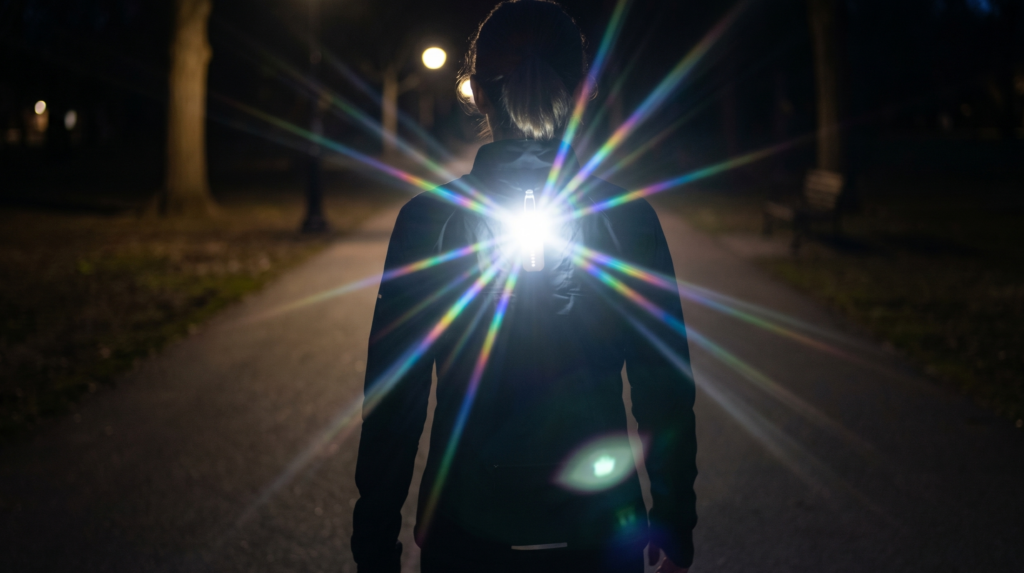
Beyond headlamps, chest-mounted lights have gained popularity among night runners for good reason. These lights provide illumination from a lower angle, which can actually help you see ground-level obstacles and texture variations more clearly than a head-mounted light alone. The shadows created by chest lights make it easier to spot elevation changes, roots, rocks, and other tripping hazards that might otherwise blend into the path when lit from above.
Reflective Clothing and Accessories for Maximum Visibility
Being seen by motorists, cyclists, and other trail users ranks among your highest priorities when running at night, making reflective gear an absolutely critical component of your safety arsenal. While you might think that simply wearing light-colored clothing suffices, research shows that reflective materials are exponentially more effective at catching the attention of drivers, especially when those drivers are tired, distracted, or dealing with their own visibility challenges.
A reflective running vest should be among the first items on your essential gear checklist for night runners, and not just any vest will do. The most effective designs feature 360-degree reflectivity with strategically placed reflective strips that catch light from all angles, ensuring visibility whether someone approaches from the front, side, or rear. Modern reflective vests are incredibly lightweight and breathable, designed to layer easily over whatever running clothes you’re already wearing without causing overheating or restricting your range of motion.
Don’t stop with just a vest, though. Reflective accessories should extend to multiple points on your body to create a human outline that drivers can recognize even from a distance. Ankle bands are particularly effective because they move with your stride, creating a bio-motion pattern that the human eye instinctively recognizes as another person. Similarly, reflective arm bands, gloves with reflective elements, and even reflective shoelaces all contribute to making you more noticeable from every conceivable angle.
Many runners have discovered that investing in running clothes specifically designed with built-in reflective elements offers the best combination of function and convenience. These garments incorporate reflective threads, panels, or strips directly into the fabric construction, meaning you don’t need to layer additional accessories. Reflective jackets, tights, and shirts designed for night running often feature large reflective zones across the back, chest, and along the limbs—places where light reflection will be most effective.
For those on a budget or just getting started with night running, adding stick-on or iron-on reflective tape to existing running clothes provides an economical alternative. This tape comes in various widths and can be applied to jackets, pants, and even running shoes. While not quite as durable as professionally manufactured reflective garments, quality reflective tape can withstand numerous wash cycles and significantly improve your visibility without requiring a complete wardrobe overhaul.
Safety Technology and Communication Devices
Modern technology has revolutionized personal safety for night runners, offering tools that previous generations of athletes could only dream about. Your smartphone likely already contains several features valuable for nighttime safety, but knowing how to use them effectively and having the right accessories makes all the difference. A GPS-enabled running app that shares your real-time location with designated emergency contacts provides peace of mind for both you and your family members who might worry about your solo nighttime excursions.
Numerous safety apps have been developed specifically with runners in mind, featuring panic buttons that can immediately alert emergency services and your chosen contacts if you find yourself in trouble. Some apps include audio check-ins at predetermined intervals, requiring you to confirm you’re safe—if you fail to respond, the app automatically sends alerts. These features prove particularly valuable for parents who manage tight schedules and might be running at unconventional hours when fewer people are around to help in case of emergency.
Wearable safety devices have also become more sophisticated and runner-friendly in recent years. Personal safety alarms that emit ear-piercing sounds when activated can startle potential threats and draw attention to your situation. Modern versions are compact enough to clip onto your waistband, wrist, or even integrate into running accessories like water bottle holders. The psychological benefit of carrying such a device shouldn’t be underestimated—knowing you have a defense option often provides the confidence needed to maintain your running routine even during darker months.
For those who regularly run in remote areas or on isolated trails, a portable GPS beacon or satellite communicator might be worth the investment. These devices allow you to send messages and your exact coordinates even in areas without cell phone coverage, making them invaluable for trail runners who venture into wilderness areas where traditional communication fails. While they represent a more significant financial commitment, the safety they provide for adventurous runners who refuse to let darkness limit their routes is immeasurable.
Road ID bracelets or shoe tags containing your critical medical information and emergency contact numbers should be considered mandatory equipment for night runners. In the unlikely event of an accident that leaves you unable to communicate, first responders can access vital information about allergies, medical conditions, and who to contact. These simple, inexpensive items could literally save your life, making them an essential component of any safety-conscious runner’s gear collection.
Proper Footwear and Clothing for Night Conditions
The shoes you wear for daytime running might not be your best choice for nighttime miles, especially if you’ll be navigating varied terrain with limited visibility. While reflective elements on running shoes contribute to visibility, the more important consideration is traction and stability on potentially hazardous surfaces. Evening dew, frost, or unexpected precipitation can make roads and trails surprisingly slippery, requiring shoes with more aggressive tread patterns than you might use during dry daylight runs.
Trail running shoes with enhanced grip technology make excellent choices for night runners, even those who primarily stick to paved surfaces. The additional traction provides confidence when you can’t see exactly where your foot will land, and the typically more substantial construction offers better protection if you misjudge a curb or step unexpectedly into a pothole. Many manufacturers now produce road-trail hybrid shoes that combine the cushioning and lighter weight of road shoes with the traction and durability of trail shoes—an ideal compromise for night runners.
Choosing the right clothing for night running extends beyond just reflective properties to include considerations about temperature regulation and weather protection. Evening temperatures often drop significantly from daytime highs, and the wind chill created by your running pace can make conditions feel even colder. Layering becomes particularly important because you want to start your run comfortable without overheating once your body temperature rises. Technical fabrics that wick moisture while providing insulation help maintain comfortable body temperature throughout your run.
A quality running jacket designed for night use should incorporate not only reflective elements but also wind and water resistance to protect you from the elements you’re more likely to encounter after dark. Evening rain showers, morning dew, and higher humidity levels all become factors that daylight runners might avoid entirely. Packable jackets that compress into their own pocket provide insurance against unexpected weather changes without adding significant weight or bulk to your run.
Don’t overlook the importance of gloves, hats, and other extremity protection in your night running wardrobe. Your hands and ears are particularly susceptible to cold, and once they get chilled, your entire run becomes uncomfortable. Lightweight running gloves with touchscreen-compatible fingertips allow you to adjust your phone or fitness watch without removing your hand protection, while reflective elements on these accessories contribute to your overall visibility profile.
Specialized Night Running Accessories
Beyond the basic clothing and footwear, several specialized accessories can significantly enhance your night running experience. Clip-on LED lights provide additional visibility points and come in various colors—white lights help you see, while red lights are ideal for rear-facing visibility, alerting drivers and cyclists approaching from behind. These small, inexpensive items can be attached to shoelaces, waistbands, or the back of your shirt, creating multiple points of moving light that make you impossible to miss.
Reflective belts with built-in storage pockets solve two problems simultaneously—they make you more visible while providing convenient places to store your phone, keys, identification, and energy gels. The best designs sit securely at your waist without bouncing, featuring adjustable straps that accommodate different body sizes and allow you to wear them over various clothing thicknesses depending on the season.
Hydration and Nutrition Considerations for Extended Night Runs
Staying properly hydrated during night runs requires the same attention you’d give to daytime training, but the logistics become slightly more complex in darkness. Standard handheld water bottles work fine, but hydration vests and belts with reflective elements serve double duty by carrying your fluids while improving your visibility. Many night runners find that hydration packs are actually more comfortable for evening runs because the weight distributes evenly across the back, and you don’t need to worry about maintaining grip on a handheld bottle when your visibility is already compromised.
Illuminated or glow-in-the-dark water bottles have become popular additions to the essential gear checklist for night runners, making it easier to locate your bottle without fumbling around in darkness. Some bottles feature built-in LED lights that activate when you squeeze them, while others incorporate photoluminescent materials that charge during daylight and glow when you run after dark. These features might seem like gimmicks, but they genuinely simplify hydration management when you’re focused on navigation and safety.
Nutrition during night runs deserves special consideration because your body’s digestive patterns and energy needs may differ from daytime running. Many runners find that they need to adjust their pre-run fueling strategy for evening runs, particularly those scheduled shortly after work when dinner timing becomes complicated. Carrying easily digestible energy sources like gels, chews, or energy bars becomes more important during night runs because you can’t simply duck into a convenience store if you hit the wall—many establishments close earlier in the evening, and stopping to search for fuel extends your time in potentially unsafe conditions.
Reflective fuel belt pouches that hold your nutrition also contribute to your visibility while keeping energy sources easily accessible. The convenience of having gels or chews within easy reach without breaking stride becomes particularly valuable during night runs when maintaining awareness of your surroundings takes precedence over fumbling through pockets or a pack.
Navigation Tools and Route Planning Technology
Even on familiar routes, darkness changes everything about navigation and spatial awareness. GPS running watches with backlighting and route-tracking features become invaluable tools for night runners, allowing you to monitor your location and progress without pulling out your phone. Modern GPS watches offer features specifically beneficial for night running, including breadcrumb trails that help you retrace your route if you become disoriented, and alerts when you deviate from planned courses.
Many experienced night runners swear by mapping out routes in advance using specialized running apps that allow you to preview terrain, lighting conditions, and safety features before heading out. These apps often include user-generated data about route popularity, which can indicate which paths other runners consider safe and well-maintained for night running. Creating and saving multiple night-running routes of varying distances gives you flexibility depending on available time and energy levels while ensuring you’re always running in areas you’ve previously vetted for safety.
Downloading offline maps to your phone or GPS watch provides critical backup if you venture into areas with spotty cellular coverage or if your device’s data connection fails. This redundancy might seem excessive for local neighborhood runs, but when you’re pushing distance or exploring new areas, having navigation capability that doesn’t depend on cell towers offers important peace of mind.
Eye Protection and Vision Enhancement
Most runners don’t initially consider eye protection as part of their night running gear, but clear or lightly tinted protective glasses serve multiple important functions after dark. They shield your eyes from insects that become more active during twilight hours, protect against branches or debris you might not see until the last second, and even reduce glare from oncoming headlights that can temporarily blind you and increase accident risk.
Specialized night running glasses with photochromic or contrast-enhancing lens technology can actually improve your ability to see in low-light conditions by increasing definition and making obstacles easier to distinguish from shadows. While standard sunglasses are obviously inappropriate for night running, these technical lenses work by amplifying available light and enhancing contrast, helping your eyes better distinguish terrain features and potential hazards.
For runners who wear prescription glasses, ensuring those glasses have anti-reflective coating becomes particularly important for night running. Without this coating, oncoming headlights and street lamps create distracting glare that can make it harder to see clearly. Sports-specific prescription glasses designed for running offer the additional benefits of staying securely in place and providing peripheral vision protection that standard eyeglasses might not.
Cold Weather Night Running Essentials
Winter night running presents unique challenges that require additional gear considerations beyond the standard essential gear checklist for night runners. The combination of darkness and cold creates conditions that demand more comprehensive preparation. Insulated running tights with reflective elements keep your legs warm while maintaining visibility, and many winter-specific running pants now incorporate wind-blocking panels across the front of the thighs where wind chill has the greatest impact.
Layering for cold-weather night runs requires balancing warmth with the reality that you’ll heat up once you’re moving. The classic three-layer system—moisture-wicking base layer, insulating middle layer, and protective outer shell—works excellently for night running when each piece incorporates reflective elements. Starting your run slightly cold prevents overheating five minutes in, but having layers you can adjust or remove (and conveniently store) ensures comfort throughout your entire run.
Thermal accessories like neck gaiters, balaclavas, and thermal headbands with reflective striping protect exposed skin from cold and wind while contributing to your visibility. These items are particularly important for runners in northern climates where winter night temperatures can be dangerously cold, making frostbite a genuine concern for unprotected skin. Many runners discover that protecting their neck and ears makes a dramatic difference in overall comfort, even more than additional body layering.
Hand warmers and toe warmers become valuable additions to night running gear when temperatures plummet below freezing. These small, air-activated heat packs can be slipped into gloves or shoes, providing hours of warmth that make the difference between an enjoyable run and a miserable slog through painful cold. While they’re single-use items that create some waste, the comfort and safety they provide during particularly brutal night runs often justifies their use for those committed to year-round training.
Trail-Specific Night Running Equipment
Night trail running represents the ultimate challenge in low-light running, requiring the most comprehensive gear preparation of any night running discipline. Beyond the basic essential gear checklist for night runners, trail running after dark demands enhanced lighting systems that can illuminate uneven terrain, roots, rocks, and elevation changes that could cause serious injury if unseen. Most experienced night trail runners use a combination of headlamp and chest light to create multiple light angles that reveal terrain texture through shadow patterns.
Trail running waist lights have gained popularity because they provide yet another lighting angle while keeping your hands completely free for balance and stability on technical terrain. These lights typically offer high lumen outputs specifically designed to illuminate trails, and their lower mounting position creates shadows that make it easier to judge the height of obstacles and the depth of depressions in the trail surface.
Additional trekking poles designed for runners provide extra stability and confidence on night trails, particularly when running unfamiliar routes or in areas where wildlife encounters are possible. Collapsible running poles with reflective elements and comfortable grips can be stored away when not needed but quickly deployed on technical descents or challenging terrain where the extra points of contact significantly improve safety and efficiency.
A small emergency kit becomes essential rather than optional for night trail running. This kit should include a backup headlamp or flashlight with fresh batteries, a whistle for signaling if you become injured or lost, basic first aid supplies, and an emergency blanket. Trail conditions that would be merely inconvenient during daylight can become genuinely dangerous at night, and self-sufficiency becomes critical when help might be hours away.
Audio Equipment and Awareness Considerations
The decision whether to run with music or podcasts becomes more complex and consequential when running at night. While many runners rely on audio entertainment to maintain motivation and pass miles, situational awareness takes on heightened importance after dark when visual information is already compromised. If you choose to run with audio, bone-conduction headphones that leave your ear canals open represent the safest choice, allowing you to hear approaching vehicles, cyclists, or other people while still enjoying your audio content.
Alternatively, running with only a single earbud keeps one ear completely free to monitor your surroundings—a compromise that many night runners find acceptable for maintaining both entertainment and safety. Volume should always be kept low enough that you can clearly hear ambient sounds, traffic, and other people. Remember that your ability to hear what’s around you becomes one of your primary safety tools when visual information is limited.
Some night runners prefer to abandon audio entertainment entirely, instead embracing the quiet solitude that nighttime running offers. This approach maximizes your awareness of your environment and allows you to fully engage with the meditative aspects of running. The rhythm of your breathing and footsteps can provide all the mental focus you need, while your unrestricted hearing keeps you connected to potential hazards.
Training Your Night Vision and Running Technique
While not equipment in the traditional sense, developing your natural night vision capabilities and adjusting your running technique for low-light conditions are critical skills that complement your physical gear. Your eyes need approximately 20-30 minutes to fully adapt to darkness, so starting your night runs with a proper warm-up serves the dual purpose of preparing your body while allowing your vision to adjust. Avoiding bright screens immediately before heading out prevents resetting this adaptation process.
Learning to rely more heavily on your peripheral vision during night runs can actually improve your ability to detect motion and objects in low light. The rod cells in your peripheral vision are more sensitive to dim light than the cone cells concentrated in your central vision, meaning that looking slightly to the side of objects sometimes allows you to see them more clearly than looking directly at them.
Adjusting your stride and pace for night running improves safety even with the best lighting equipment. Shortening your stride slightly and slowing your pace by 10-20% gives you more reaction time if you encounter unexpected obstacles. Lifting your feet higher than you might during daylight runs reduces the risk of tripping on curbs, roots, or uneven pavement that you might not see until you’re right upon them.
Seasonal Gear Adjustments for Year-Round Night Running
Successful year-round night running requires adapting your gear to seasonal changes in weather, temperature, and daylight availability. Summer night running brings its own challenges, including increased insect activity, higher humidity, and the need for sun protection.
Give us a call today at 1-877-777-6086 or fill out our contact form to become a retail
distributor of our top-of-the-line safety lights.