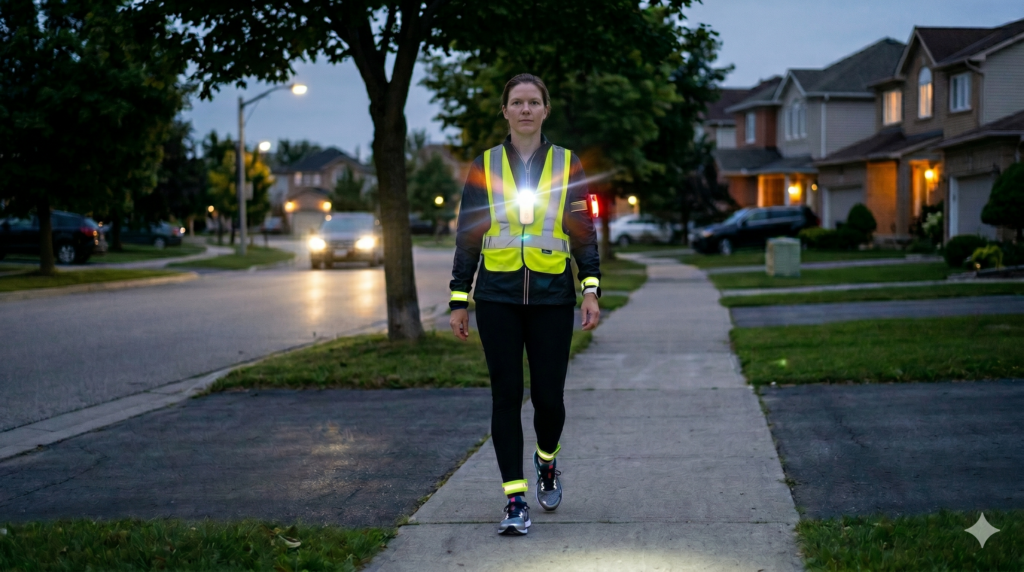
Walking at night offers unique advantages for busy parents and fitness enthusiasts who struggle to find time during daylight hours. The cooler temperatures, quieter streets, and peaceful atmosphere make evening walks incredibly appealing. However, reduced visibility creates significant safety challenges that require thoughtful preparation and the right equipment. Whether you’re squeezing in exercise after putting the kids to bed or enjoying a brisk walk after work, understanding how to stay visible while walking at night isn’t just about comfort—it’s about protecting your life and setting a strong safety example for your family.
Understanding Why Nighttime Visibility Matters
The statistics surrounding pedestrian accidents during nighttime hours paint a sobering picture that every walker should understand. According to traffic safety research, pedestrians are significantly more likely to be involved in accidents after dark, with visibility playing the primary role in these incidents. Drivers simply cannot avoid what they cannot see, and the human eye struggles dramatically in low-light conditions, making reaction times slower and distance perception less accurate.
Your choice to walk at night requires accepting additional responsibility for your own safety. Unlike daytime walking where natural light makes you inherently visible, nighttime conditions demand that you actively work to be seen by others sharing the road. This shift in responsibility might seem unfair, but it’s the reality of physics and human biology—drivers operating vehicles at 35-45 miles per hour need adequate time to perceive, process, and respond to your presence on or near the roadway.
Beyond the practical safety concerns, making yourself visible demonstrates consideration for drivers who share the road with you. When you take steps to be seen, you’re reducing stress and potential liability for motorists while simultaneously protecting yourself. This mutual respect creates safer conditions for everyone in your community and helps foster positive relationships between pedestrians and drivers.
The Science of How Drivers See Pedestrians
Understanding the mechanics of nighttime visibility helps you make smarter choices about your walking gear and routes. Human vision relies on two types of photoreceptor cells: cones that function in bright light and provide color vision, and rods that operate in dim conditions but only detect shades of gray. At night, drivers depend primarily on their rod cells, which means their ability to distinguish colors, detect fine details, and perceive depth becomes significantly compromised.
Vehicle headlights create a limited cone of illumination that typically extends 160-350 feet ahead, depending on whether low or high beams are activated. At 40 miles per hour, a vehicle travels approximately 59 feet per second, giving drivers roughly 2.7-5.9 seconds to notice you, recognize you as a pedestrian, decide to brake, and execute that decision. This narrow window explains why passive visibility—simply being present—isn’t sufficient for nighttime walking safety.
The concept of “biological motion” plays a fascinating role in how to stay visible while walking at night. Research demonstrates that drivers more readily recognize pedestrians when they can detect the characteristic motion patterns of human walking. This recognition happens faster than simple shape detection, which is why placing reflective materials on moving joints like ankles, knees, wrists, and elbows proves more effective than wearing a single reflective patch on your torso.
Essential Reflective Gear for Night Walkers
Investing in quality reflective gear represents the single most important step you can take to protect yourself during nighttime walks. Reflective materials work by returning light directly back to its source—when vehicle headlights strike reflective surfaces on your clothing or accessories, that light bounces straight back to the driver’s eyes, creating a bright, attention-grabbing effect. This retroreflection makes you visible from distances up to 500 feet, compared to just 100 feet for dark clothing under the same conditions.
Reflective vests remain the gold standard for pedestrian visibility and should be considered non-negotiable for anyone walking near traffic after dark. Look for vests that meet ANSI/ISEA 107 standards, which specify minimum amounts of reflective material and appropriate placement patterns. The best vests incorporate both reflective tape and fluorescent background fabric—while the fluorescent colors won’t help much at night, they provide excellent visibility during dawn and dusk when you might also be walking.
Reflective bands for your ankles and wrists add another layer of safety through biological motion detection. These simple accessories encircle your moving joints with 360-degree reflectivity, creating a distinctive visual pattern that drivers’ brains recognize as a walking human more quickly than static shapes. You can find affordable reflective bands at most sporting goods stores, or you can upgrade to LED bands that combine both active lighting and reflective properties for maximum visibility.
Active Lighting Solutions
While reflective gear excels at bouncing headlight beams back to drivers, active lighting makes you visible even before vehicle headlights reach you. Active lighting includes any device that produces its own illumination, from simple clip-on LEDs to sophisticated headlamps and chest-mounted lights. This self-generated visibility proves particularly valuable on roads with limited street lighting or when walking on paths that don’t accommodate vehicle traffic.
Clip-on LED lights offer an accessible entry point for walkers new to nighttime exercise. These compact devices attach to clothing, belts, backpacks, or shoe laces, providing steady or flashing illumination in various colors. Red lights work well for rear visibility, alerting drivers approaching from behind, while white or green lights suit front or side placement. Many walkers employ multiple clip-on lights positioned at different body heights to maximize their visible profile.
Headlamps deliver dual functionality by illuminating your path while simultaneously making you visible to others. Quality headlamps designed for running or walking feature multiple brightness settings, allowing you to balance battery life with visibility needs. Some models include rear-facing red lights, transforming your head into a moving beacon visible from all directions. When selecting a headlamp, prioritize comfort, adjustability, and weather resistance—you’ll appreciate these features when walking in various conditions.
Chest-mounted lights and belt lights create visibility at core body level, helping drivers accurately judge your position on or near the road. These lights typically shine forward to illuminate your path while side-emitting LEDs or reflective strips provide lateral visibility. The central body placement means your light source moves predictably, unlike a headlamp that shifts with every head turn, potentially making it easier for drivers to track your movement.
Strategic Clothing Choices for Maximum Visibility
Your clothing selection dramatically impacts how to stay visible while walking at night, yet many walkers overlook this fundamental safety factor. Dark-colored clothing essentially camouflages you against nighttime backgrounds, making you nearly invisible until you’re dangerously close to oncoming traffic. Light-colored clothing improves visibility somewhat, but still falls far short of the visibility provided by purpose-designed high-visibility apparel.
Fluorescent colors including yellow-green, orange, and pink provide excellent daytime and twilight visibility by converting ultraviolet light into visible light, effectively making you “glow” in natural light conditions. However, recognize that fluorescence requires UV light to function, so while your fluorescent jacket appears bright during dawn or dusk walks, it offers no special advantage in complete darkness. Pair fluorescent clothing with reflective elements to maintain visibility across all lighting conditions.
Many athletic apparel manufacturers now integrate reflective elements directly into their designs, creating garments that look stylish during the day but transform into highly visible safety gear when struck by light. These integrated reflectives often take the form of logos, stripes, or geometric patterns that complement the garment’s aesthetic while providing substantial nighttime visibility. When shopping for workout clothes, examine items under flash photography or direct light to assess their reflective properties—you might be surprised by which pieces include safety features.
Layering strategies allow you to adapt your visibility approach to changing weather conditions while maintaining safety. A reflective vest worn over a warm jacket provides visibility during cold-weather walks, while a lightweight reflective mesh vest works well over t-shirts in warmer conditions. This adaptability ensures you can prioritize visibility year-round without sacrificing comfort or weather protection.
Route Planning and Environmental Awareness
Selecting appropriate routes requires different criteria for nighttime walking compared to daytime exercise. Well-lit streets with sidewalks separated from vehicle traffic provide the safest environment, giving you physical protection from cars while street lighting supplements your reflective gear and active lights. Many communities have designated walking and biking paths that offer excellent nighttime safety, though you should scout any unfamiliar paths during daylight before attempting them after dark.
Traffic patterns change significantly after dark, often featuring faster-moving vehicles and potentially impaired drivers. Understanding these patterns in your specific neighborhood helps you avoid high-risk situations. Residential streets typically see reduced traffic volume at night, but the vehicles present may be traveling faster due to perceived emptiness. Conversely, commercial areas might remain busy later into the evening, presenting different challenges related to distracted drivers navigating parking lots and turn lanes.
Walking against traffic whenever possible gives you visual awareness of approaching vehicles, allowing you to take defensive action if a driver appears not to see you. This face-to-face orientation proves particularly important on roads without sidewalks where you’re sharing space with vehicles. When walking against traffic, position yourself as far from the travel lane as safely possible while watching for vehicles and making eye contact with drivers when feasible to confirm they’ve seen you.
Weather conditions compound nighttime visibility challenges in ways that demand additional precautions. Rain, fog, and snow dramatically reduce both your visibility to drivers and drivers’ overall sight distances. During adverse weather, consider postponing your walk, moving it to an indoor venue like a mall or gym, or restricting yourself to the safest possible routes with maximum lighting and physical separation from traffic. If you must walk in poor weather, increase your visibility measures—add extra lights, wear brighter colors, and stay hyper-vigilant about your surroundings.
Technology and Apps for Enhanced Safety
Modern technology offers numerous tools that complement traditional visibility measures and provide additional safety layers for night walkers. Smartphone apps designed for runners and walkers can share your real-time location with designated emergency contacts, providing peace of mind for both you and your family. Some apps include features like audio alerts that notify you of approaching vehicles or unsafe intersections based on GPS data and community reporting.
Fitness tracking devices with safety features have evolved beyond simple step counting to include incident detection and emergency communication capabilities. Some smartwatches and fitness trackers can automatically detect falls or sudden stops and alert emergency contacts if you don’t respond to prompts within a specified timeframe. While these features shouldn’t replace proper visibility measures, they add a valuable safety net should an accident occur despite your precautions.
Wearable technology increasingly incorporates lighting and visibility features directly into fitness tracking devices. Some running watches include LED safety lights, while certain fitness trackers offer reflective or illuminated bands. These integrated approaches simplify your preparation process—instead of remembering to attach separate lights and reflectors, your essential fitness gear doubles as safety equipment.
Teaching Children About Nighttime Visibility
For parents modeling healthy habits, teaching children about nighttime visibility creates awareness that protects them throughout their lives. Young children naturally struggle to understand why adults can’t see them in the dark—their developing brains haven’t fully grasped perspective-taking skills. Practical demonstrations prove more effective than lectures: let your child observe you walking away in the dark while wearing dark clothing, then repeat the exercise with reflective gear, allowing them to experience the dramatic difference firsthand.
Incorporating visibility gear into family walks transforms safety equipment from “annoying adult rules” into normal exercise preparation, no different from wearing appropriate shoes or bringing water bottles. When children see parents consistently using lights and reflectors, they internalize these behaviors as standard procedure rather than optional add-ons. This normalization proves especially valuable as children gain independence and begin walking or biking without direct supervision.
Making visibility gear fun increases compliance with younger children who might resist wearing “boring” safety equipment. Fortunately, manufacturers increasingly recognize this need, offering reflective accessories featuring popular characters, fun shapes, and appealing colors. Allowing children to select their own reflective bands or clip-on lights gives them ownership of their safety choices while ensuring they’re protected during evening activities.
Older children and teenagers require different educational approaches that respect their growing autonomy while emphasizing genuine safety concerns. Sharing statistics about nighttime pedestrian accidents, discussing the science of visibility, and involving them in selecting their own safety gear acknowledges their maturity while maintaining non-negotiable safety standards. Frame visibility requirements as demonstrating respect for drivers rather than assuming drivers are threats, which often resonates better with teens developing their own moral reasoning.
Special Considerations for Different Walking Environments
Urban walking environments present unique visibility challenges despite generally better street lighting. The visual clutter of storefronts, traffic signals, other pedestrians, and multiple vehicles competing for drivers’ attention means you must work harder to stand out from the background noise. In cities, consider using flashing lights that create eye-catching movement, drawing driver attention away from static visual elements and toward your position.
Suburban areas often feature the most dangerous conditions for nighttime pedestrians due to roads designed for vehicle speed, limited sidewalk infrastructure, and inconsistent street lighting. Many suburban roads include long stretches without illumination between widely-spaced street lights, creating dark zones where drivers simply cannot see pedestrians wearing inadequate visibility gear. In these environments, maximum visibility measures become essential—combine reflective clothing, multiple active lights, and light-colored garments to create redundant visibility from multiple angles.
Rural walking demands the most comprehensive visibility approach due to higher vehicle speeds, minimal lighting, and narrow shoulders that place you closer to traffic. Country roads rarely include sidewalks, meaning you’re walking directly on roadways or minimally-separated shoulders. The darkness in rural areas can be profound, with no ambient light pollution to provide baseline visibility. Rural walkers should consider themselves invisible unless they take active steps to be seen, treating every vehicle as though its driver cannot see them until proven otherwise through the driver’s behavior.
Trail and path walking might seem safer due to separation from vehicle traffic, but dedicated paths present their own visibility considerations. Other path users including cyclists, runners, and fellow walkers need to see you to avoid collisions, particularly on narrow paths or during passing maneuvers. Active lighting becomes more important than reflective gear in these environments since other path users aren’t approaching with bright headlights to activate your reflectors. A headlamp or handheld flashlight illuminates your path while alerting others to your presence.
Maintaining Visibility Gear for Optimal Performance
Even the highest-quality visibility gear loses effectiveness without proper maintenance and timely replacement. Reflective materials degrade over time through exposure to sunlight, washing, and physical wear. That vest you’ve been using for three years might provide far less reflectivity than when new, even if it appears visually intact. Most manufacturers recommend replacing reflective safety gear every 1-2 years with regular use, though inspection can help you determine whether earlier replacement is necessary.
Washing reflective clothing requires care to preserve the reflective properties. Always follow manufacturer instructions, but general best practices include turning garments inside-out, using gentle cycles with mild detergent, and avoiding fabric softeners or bleach that can coat or damage reflective materials. Air drying typically proves safer than machine drying, as high heat can degrade both reflective and fluorescent properties. Never iron directly over reflective materials, as heat will destroy their light-returning capabilities.
Battery-powered lights require regular attention to ensure they function when needed. Develop a routine for checking and charging or replacing batteries, perhaps linked to another regular activity like your weekly meal planning or Sunday evening preparation for the week ahead. Keep spare batteries on hand for devices that use replaceable cells. Many modern rechargeable lights include low-battery indicators, but don’t wait until batteries die completely—proactively recharge devices after every few uses to avoid being caught without functional lighting.
Physical inspection of all visibility gear should become part of your regular preparation routine. Before each walk, verify that clip-on lights are securely attached and functioning, check reflective bands for damage or dirt that might reduce their effectiveness, and ensure your vest or reflective clothing hasn’t developed tears or excessive wear. This 30-second inspection could save your life by catching equipment failures before they compromise your safety.
Building a Comprehensive Visibility System
Understanding how to stay visible while walking at night requires moving beyond single-solution thinking toward comprehensive, layered protection. Professional safety experts recommend a redundant approach that combines multiple visibility elements, ensuring that even if one component fails or proves inadequate for specific conditions, other elements maintain your visibility to drivers and other road users.
The foundation of any visibility system should include a high-quality reflective vest meeting professional safety standards. This single item dramatically improves your visibility from all angles and should be considered mandatory for any walking that brings you near vehicle traffic. Build additional layers onto this foundation based on your specific walking environment, routes, and personal preferences. A basic system might include a reflective vest plus a headlamp and rear clip-on light, while a comprehensive system could add reflective bands, multiple colored lights, and purpose-designed high-visibility athletic wear.
Color variety in your lighting setup provides functional benefits beyond aesthetics. White or yellow-green lights work well for front visibility, closely resembling vehicle headlights or emergency lights that drivers instinctively notice and respect. Red lights signal rear positioning and alert drivers that they’re approaching you from behind—this matches the red rear lights on vehicles, creating familiar visual cues that drivers readily interpret. Some walkers add side-facing amber or blue lights to increase lateral visibility and create a distinctive pattern that clearly identifies them as pedestrians rather than vehicles.
Your visibility system should adapt to specific conditions you encounter. Walking on a well-lit street with sidewalks requires less extensive measures than walking on a dark rural road with no shoulders. However, always err on the side of over-preparation—it’s better to feel slightly excessive with your safety measures than to discover you were underprepared after a dangerous close call. Consider weather conditions, traffic patterns, and your specific route when deciding which elements of your visibility system to deploy for each walk.
Cost-Effective Approaches to Nighttime Visibility
Safety shouldn’t require enormous financial investment, and numerous affordable options exist for walkers on tight budgets. Basic reflective vests start at less than $10 and provide substantial protection compared to walking with no visibility gear. Clip-on LED lights cost $5-15 for quality options that last multiple seasons. Reflective tape purchased by the roll allows you to add reflective elements to existing clothing, shoes, and accessories at minimal cost—a $10 roll of high-quality reflective tape can outfit your entire family’s walking wardrobe.
DIY approaches to visibility can supplement commercial products effectively. Sewing or ironing reflective tape onto existing jackets, hats, and pants transforms your current wardrobe into nighttime-appropriate gear. Creating reflective bands from elastic and reflective tape costs less than purchasing pre-made bands while allowing you to customize sizing and placement for optimal biological motion visibility. These projects also offer excellent opportunities to involve children, teaching them practical skills while reinforcing safety awareness.
Shopping strategically helps you maximize safety value from limited budgets. End-of-season sales often discount high-visibility athletic wear significantly as stores clear inventory for upcoming seasons. Online marketplaces and discount retailers frequently offer quality LED lights and reflective accessories at substantial savings compared to specialty running stores. Construction and industrial supply stores stock professional-grade reflective vests and gear at prices often lower than sporting goods retailers, though styling may be more utilitarian than fashion-forward.
Balancing Visibility with Personal Security
An important consideration that often goes unaddressed is balancing visibility with personal security concerns. While you need to be seen by drivers, you might prefer not to advertise your exact position to everyone in your neighborhood, particularly if you’re a woman walking alone or live in an area with higher crime rates. This tension requires thoughtful navigation to maintain safety from both traffic and potential personal threats.
Strategic lighting placement can address both concerns simultaneously. Positioning lights to create a larger, more ambiguous silhouette can make you appear bigger and less clearly defined as a lone walker while still providing necessary visibility to drivers. Some personal safety experts recommend carrying a bright flashlight that you can use to illuminate your face when you want to be clearly seen and identified (such as when checking your surroundings or greeting neighbors) while keeping it pointed downward during normal walking to avoid making yourself an obvious target.
Walking during high-traffic evening hours typically provides better personal security than walking during late-night low-traffic periods, even though the increased traffic creates more visibility challenges. The presence of other people, lit homes, and regular vehicle traffic creates natural surveillance that deters criminal activity. If your schedule requires late-night walking, consider recruiting a walking partner—you’ll both benefit from increased safety while enjoying social time that busy schedules often don’t accommodate.
Personal safety devices complement visibility gear for comprehensive protection. Many runners and walkers carry pepper spray, personal alarms, or safety whistles that can deter or summon help during threatening situations. Some prefer walking with phones easily accessible and emergency contacts on speed dial. These precautions prove particularly appropriate for anyone walking alone in less-populated areas or during hours when street activity is minimal.
Creating Sustainable Nighttime Walking Habits
Consistency matters more than perfection when establishing safe nighttime walking habits. Missing a single day of exercise doesn’t derail your fitness goals, but forming inconsistent safety habits can create dangerous situations where you walk without adequate protection “just this once.” Building visibility preparation into your pre-walk routine makes it automatic rather than optional, similar to how you automatically lock your car or look both ways before crossing streets.
Designating specific storage locations for all visibility gear eliminates the excuse of not being able to find equipment when you’re ready to walk. A hook near your door for your reflective vest, a charging station for your lights, and a basket for reflective bands and other accessories ensures everything is ready when you are. This organization proves especially valuable during busy periods when you might grab whatever time you can find for exercise—removing barriers to proper preparation increases the likelihood you’ll consistently use appropriate safety measures.
Habit stacking connects new behaviors to established routines, making them easier to remember and maintain. If you always walk after dinner.