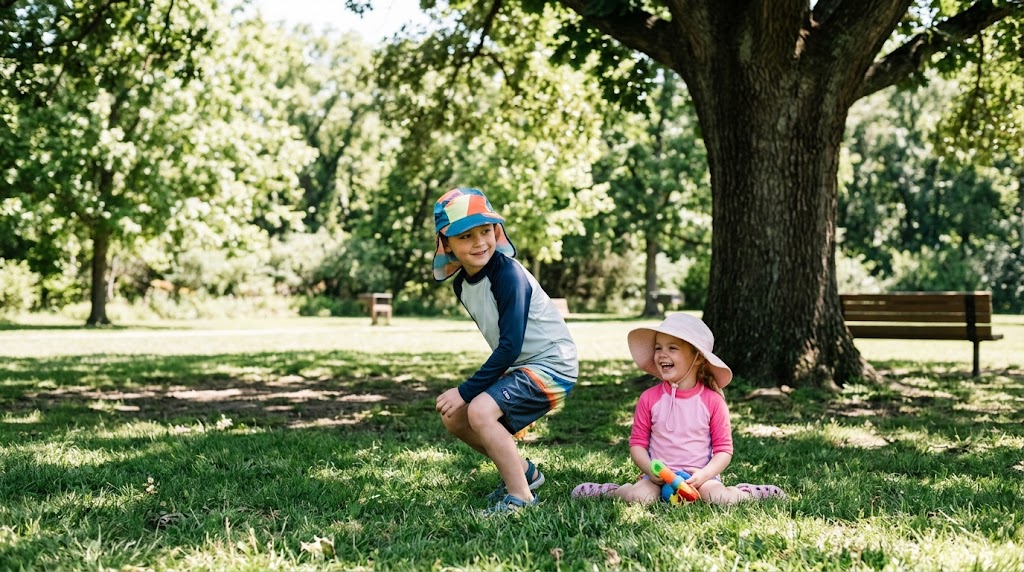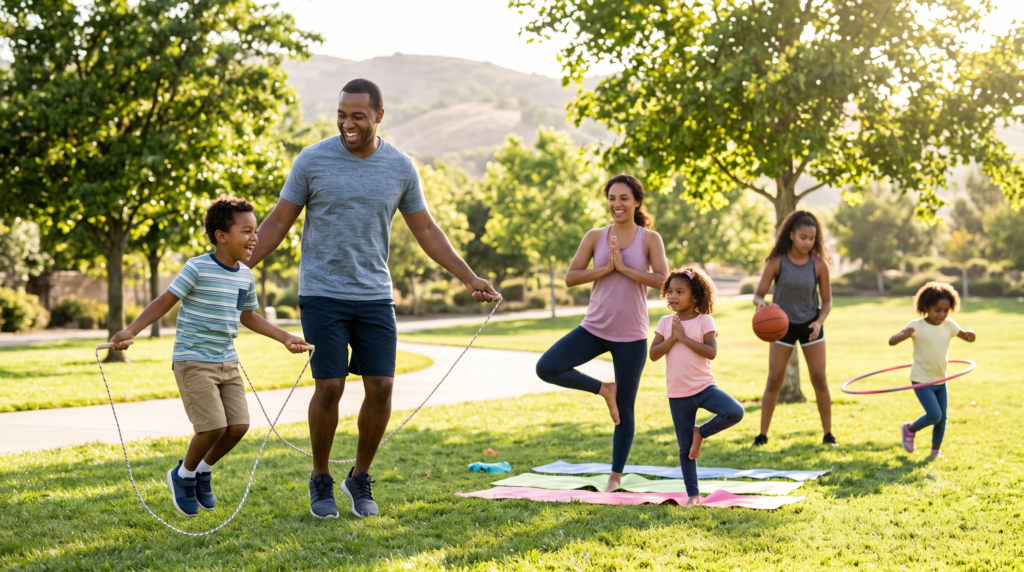
In today’s screen-dominated world, getting your family moving together has become both more challenging and more critical than ever before. Fun family fitness activities serve as the perfect antidote to sedentary lifestyles, creating opportunities to bond while building healthier habits that can last a lifetime. When you engage in physical activities with your children, you’re not just burning calories—you’re modeling positive behaviors, creating cherished memories, and establishing a foundation for wellness that extends far beyond childhood.
The statistics paint a sobering picture: childhood obesity rates have tripled over the past four decades, and many adults struggle to meet even the minimum recommended physical activity guidelines. But here’s the good news: you don’t need expensive gym memberships or complicated equipment to reverse these trends. The key is finding activities that genuinely excite everyone in your household, transforming exercise from a chore into something your family actually looks forward to doing together.
Research consistently shows that children who see their parents prioritizing fitness are significantly more likely to remain active throughout their lives. By making movement a family affair, you’re essentially writing a prescription for your children’s future health while simultaneously improving your own. The ripple effects of this investment extend into better sleep quality, improved academic performance, enhanced mood regulation, and stronger family relationships.
Getting Started: Setting Your Family Up for Success
Before diving into specific activities, you’ll want to establish a framework that sets your family up for long-term success with fitness. Start by having an open conversation with everyone about their interests, fears, and fitness goals. Your ten-year-old might dream of becoming a ninja warrior, while your teenager might prefer activities with a social component. Understanding these preferences helps you select fun family fitness activities that genuinely resonate rather than feel forced.
Creating a family fitness calendar can transform good intentions into consistent action. Block out specific times each week dedicated to movement, treating these appointments with the same importance as soccer practice or piano lessons. Consistency matters more than intensity when you’re building habits, so aim for manageable commitments you can actually maintain. Three twenty-minute sessions per week will yield better results than ambitious plans that collapse after two weeks.
Essential Gear and Space Considerations
You don’t need to transform your home into a commercial gym, but having some basic equipment accessible makes spontaneous activity more likely. Consider investing in:
- Resistance bands in various strengths
- A few sets of dumbbells or adjustable weights
- Jump ropes for different heights
- A basketball or soccer ball
- Yoga mats for each family member
- A pull-up bar that fits standard doorframes
Designate a specific area in your home as the “fitness zone”—even if it’s just a corner of the living room. This physical space serves as a visual reminder and removes the friction of setup time. When equipment lives in a closet three rooms away, you’re adding unnecessary barriers to getting started.
Outdoor Adventures That Disguise Exercise as Play
The great outdoors offers an incredible playground for fun family fitness activities that don’t feel like traditional workouts. Nature inherently engages multiple senses and provides constantly changing terrain that challenges your body in ways treadmills simply cannot replicate. When you’re hiking up a trail or navigating a rocky creek bed, you’re building functional fitness—the kind that translates into real-world strength and agility.
Trail Hiking and Nature Exploration
Transform ordinary hikes into adventure quests by incorporating scavenger hunts or geocaching challenges. Create lists of items to find—a pinecone, three different types of leaves, a Y-shaped stick, animal tracks—and watch how quickly miles disappear when children are engaged in purposeful searching. You’re simultaneously building cardiovascular endurance, strengthening leg muscles on varied terrain, and teaching environmental awareness.
For families with younger children, start with well-maintained trails featuring interesting destinations like waterfalls, scenic overlooks, or historical markers. The promise of something exciting at the end provides powerful motivation during challenging stretches. As fitness levels improve, gradually introduce more challenging terrain with elevation changes that really get hearts pumping and legs burning.
Consider making hiking a progressive challenge by tracking elevation gain and total mileage. Many families enjoy working toward goals like summiting all peaks above a certain elevation in their region or completing sections of famous long-distance trails. These larger objectives give context to individual outings and create a sense of accomplishment that extends beyond single activities.
Cycling Adventures for All Skill Levels
Cycling offers tremendous versatility for families with mixed fitness levels. Younger children can start with balance bikes or training wheels on quiet residential streets, while accomplished riders can tackle challenging mountain bike trails. The key is selecting routes appropriate for your least experienced rider while building in optional challenges for more advanced family members.
Bike rides to specific destinations—the local ice cream shop, a favorite park, a friend’s house—add purpose beyond pure exercise. You’re also teaching practical life skills and environmental responsibility by demonstrating car alternatives for short trips. As confidence grows, consider planning longer adventures like rail-trail excursions with picnic stops or weekend camping trips accessed primarily by bicycle.
Safety deserves paramount attention when cycling as a family. Ensure everyone wears properly fitted helmets, uses bikes appropriate for their size and skill level, and understands basic traffic rules. Investing in a quality bike trailer or tag-along attachment allows you to include very young children who aren’t ready to ride independently, ensuring no one gets left behind.
Backyard Games That Build Serious Fitness
Your backyard or local park can become an incredible venue for fun family fitness activities that combine competition, skill development, and serious calorie burning. Traditional games often provide better workouts than people realize, engaging multiple muscle groups while keeping participants so entertained they forget they’re exercising.
Obstacle Course Challenges
Creating backyard obstacle courses taps into the same appeal that makes ninja warrior competitions so captivating. Use whatever you have available: jump over pool noodles staked in the ground, crawl under tables, zigzag between cones, complete a set of jumping jacks at designated stations, balance walk along a two-by-four laid on the ground, and finish with a sprint to the fence and back. The specific elements matter less than the overall flow and variety.
Time each family member’s run through the course, encouraging everyone to beat their personal records rather than competing directly against each other. This approach maintains motivation for participants of all abilities while teaching the valuable lesson that fitness is ultimately about self-improvement. Change up the course regularly to prevent boredom and ensure balanced physical development across different movement patterns.
For an extra challenge, require participants to complete the course while carrying objects of various weights—a backpack filled with books, a bucket of water, or a basketball they must dribble throughout. These additions build functional strength and add unpredictability that keeps the activity fresh even after dozens of runs.
Classic Sports With Fitness Twists
Take familiar games and modify them to increase intensity or include additional fitness challenges. Play basketball where each basket must be preceded by five burpees, or soccer where goals only count if the entire team has completed a lap around the yard first. These modifications transform casual play into genuine conditioning work while maintaining the fun competitive elements that make sports engaging.
Tag variants offer incredible workout potential with minimal equipment requirements. Try freeze tag where frozen players must hold challenging yoga poses until freed, or fitness tag where whoever is “it” calls out exercises that everyone must perform. Flashlight tag after dark adds an element of adventure that older children and teenagers particularly enjoy, getting even reluctant exercisers moving enthusiastically.
Indoor Activities for Weather-Challenged Days
Weather, darkness, and seasonal limitations need not derail your fitness momentum. Having a repertoire of engaging indoor activities ensures consistency regardless of external conditions. Fun family fitness activities that work in limited space often emphasize bodyweight exercises, creative movement, and activities that build both strength and flexibility.
Living Room Dance Parties
Never underestimate the fitness potential of a spontaneous dance party. Create playlists spanning different genres and eras, exposing children to various musical styles while getting everyone moving. Dancing provides excellent cardiovascular conditioning, improves coordination and rhythm, and offers a judgment-free zone where awkwardness becomes part of the fun rather than a source of embarrassment.
Structure dance sessions with specific challenges: freeze dance where everyone must hold their position when the music stops, dance-offs where family members take turns showcasing their best moves, or follow-the-leader where one person creates moves everyone else must copy. These variations maintain engagement and naturally incorporate intervals of high and moderate intensity that optimize cardiovascular benefits.
For families with video game systems, dance-based games offer structured workouts with built-in progression and scoring systems. While some fitness purists dismiss these as “not real exercise,” the reality is that any activity getting your family moving consistently deserves recognition. If gamification helps maintain motivation, embrace it fully.
Yoga and Flexibility Training
Family yoga sessions build strength, flexibility, and mindfulness while accommodating a wide range of fitness levels. Numerous child-friendly yoga resources exist, featuring poses named after animals and objects that make the practice accessible and engaging for younger participants. You’ll find that holding warrior pose or balancing in tree pose challenges muscles quite differently than running or jumping activities.
Start with simple flows focusing on fundamental poses, gradually building complexity as everyone’s skills develop. Partner poses where family members work together add an element of cooperation and communication that deepens bonds while challenging balance and core strength. Even fifteen minutes of yoga before bedtime can improve sleep quality while counting toward daily activity goals.
The breathing techniques central to yoga practice offer benefits extending far beyond the mat. Teaching children to use breath as a tool for managing stress and emotions provides life skills as valuable as any physical fitness gains. When your teenager can employ pranayama breathing to calm pre-test anxiety, you’ve given them something truly transformative.
Water-Based Activities for Year-Round Fitness
Water activities offer unique advantages for family fitness, providing resistance that builds strength while remaining gentle on developing joints. Whether you have backyard pool access or utilize community facilities, aquatic exercise delivers serious fitness benefits wrapped in refreshing fun.
Swimming Skills and Games
Beyond being essential for safety, swimming provides a phenomenal full-body workout engaging virtually every major muscle group. If your children aren’t confident swimmers yet, enrolling in family swim lessons serves the dual purpose of building critical life skills while establishing aquatic comfort that opens doors to numerous fitness activities. Many communities offer family swim sessions specifically designed for multi-generational participation.
Once basic skills are established, introduce games that increase intensity and challenge different aspects of fitness. Underwater tea parties develop breath control, treasure diving builds leg strength and lung capacity, and relay races cultivate speed and cardiovascular endurance. Pool noodle jousting, Marco Polo variations, and synchronized swimming challenges keep the atmosphere playful while providing genuine conditioning work.
For families with access to open water—lakes, rivers, or oceans—introduce stand-up paddleboarding, kayaking, or canoeing. These activities build upper body strength and core stability while offering opportunities to explore natural environments. The learning curve for most paddle sports is gentle enough that even young children can participate meaningfully, though life jackets remain non-negotiable safety equipment.
Aqua Aerobics Adaptations
Those water aerobics classes you might associate with senior centers actually provide killer workouts for all ages. The water’s resistance makes movements significantly more challenging than their land-based equivalents, while buoyancy reduces impact stress. Create your own family aqua aerobics sessions with jumping jacks, leg lifts, arm circles, and jogging in place—all performed in chest-deep water.
Add pool toys to increase resistance and engagement. Pool noodles become resistance tools for arm exercises, kickboards challenge leg strength during various kicks, and beach balls can be pushed underwater and released for explosive catching practice. These simple additions transform basic movements into engaging challenges that hold children’s attention while delivering serious fitness benefits.
Strength Training as a Family Activity
Many parents hesitate to include strength training in family fitness routines, worried about injury risks or appropriateness for children. However, age-appropriate resistance work offers tremendous benefits for developing bodies, building bone density, improving athletic performance, and establishing movement patterns that prevent injuries. The key lies in proper form, appropriate resistance, and maintaining the fun factor that characterizes effective fun family fitness activities.
Bodyweight Exercise Progressions
Bodyweight training requires zero equipment while providing scalable challenges suitable for all fitness levels. Push-ups alone offer dozens of variations ranging from wall push-ups for beginners to one-arm push-ups for advanced athletes. Similarly, squats can be modified with assistance from a chair or intensified with jump squats and single-leg variations.
Create family circuits rotating through different movement patterns: push exercises, pull exercises, squats, lunges, core work, and explosive movements. Set a timer for thirty-second intervals, allowing everyone to work at their own pace while exercising simultaneously. This approach removes the comparison trap while maintaining the together aspect that makes family fitness special.
Challenge everyone to master specific skills like handstands, L-sits, or pistol squats. These goals provide clear progression markers and a sense of accomplishment when achieved. Celebrating each family member’s victories—regardless of how they compare to others’ achievements—reinforces the message that fitness is a personal journey.
Partner Exercises That Build Cooperation
Partner exercises simultaneously develop strength and teamwork. Wheelbarrow walks, partner plank high-fives, resistance band exercises with partners providing resistance, and medicine ball passes all require communication and cooperation while challenging muscles. These collaborative efforts teach children that fitness can be a shared experience rather than solitary suffering.
Create parent-child challenges where size differences become advantages rather than obstacles. Can your eight-year-old complete a plank while you do push-ups over them? How many squats can you complete while your teenager sits on your shoulders? These playful competitions build impressive functional strength while creating stories your family will recount for years.
Seasonal Activities That Celebrate Nature’s Cycles
Embracing seasonal changes prevents fitness routines from becoming stale while teaching appreciation for nature’s rhythms. Each season offers unique opportunities for movement and adventure, encouraging your family to view exercise as an evolving practice rather than a static routine.
Winter Fitness Adventures
Cold weather often triggers hibernation instincts, but winter activities offer some of the most memorable family fitness experiences. Sledding provides intense cardiovascular work during the uphill climbs between runs, while the downhill portions deliver pure joy. Building snowmen, having snowball fights, and creating snow angels all count as physical activity—movement doesn’t require formality to provide benefits.
For families in appropriate climates, skiing and snowboarding offer thrilling full-body workouts combining strength, balance, and endurance. These sports do require equipment investment and skill development, but many resorts offer family packages and lessons that make entry more accessible than you might imagine. Cross-country skiing provides an even more accessible and arguably superior fitness option, delivering one of the most complete cardiovascular workouts available.
Ice skating represents another winter activity suitable for all ages and skill levels. The balance challenges inherent in skating engage core muscles and smaller stabilizers often neglected in other activities. Many communities maintain free or low-cost outdoor rinks, making this an economical option for regular family outings.
Spring and Summer Exploration
Warmer months expand outdoor possibilities dramatically. Gardening might not seem like traditional exercise, but digging, weeding, hauling mulch, and planting all provide resistance work that builds functional strength. Assigning children their own garden plots creates investment in the process while teaching valuable lessons about nutrition, patience, and the relationship between effort and results.
Organize family field days featuring classic events like three-legged races, egg-and-spoon relays, sack races, and tug-of-war competitions. These activities evoke nostalgic joy for parents while introducing children to games predating digital entertainment. The competitive elements naturally push participants to work harder than they might during unstructured play.
Take advantage of longer daylight hours by scheduling after-dinner walks or bike rides. This timing aids digestion, provides opportunities for conversation without distractions, and helps everyone wind down from busy days. The consistent routine becomes a ritual your family relies upon, a dependable constant amid life’s chaos.
Tracking Progress and Celebrating Milestones
Maintaining motivation over months and years requires acknowledging progress and celebrating achievements. Fun family fitness activities become even more rewarding when you can look back and recognize how far you’ve come together. Tracking doesn’t need to become obsessive or competitive—the goal is simply creating awareness of improvement that fuels continued effort.
Creating Family Fitness Journals
Designate a special notebook as your family fitness journal, recording activities, distances, times, and subjective notes about how everyone felt. Over time, this journal becomes a powerful testament to your family’s commitment and growth. Younger children can draw pictures of activities, while older family members might track specific metrics like running pace or number of consecutive push-ups.
Review the journal monthly during family meetings, acknowledging improvements and discussing what activities everyone enjoyed most. This reflection helps you make informed decisions about future activities while reinforcing the positive habit loop. When someone feels discouraged about their progress, flipping back through months of entries provides concrete evidence of improvement.
Achievement Systems That Motivate
Create a family achievement system recognizing both participation and skill milestones. Awards might include badges for completing a certain number of family fitness sessions, reaching distance goals, or mastering new skills. These markers provide short-term motivation while working toward bigger objectives.
Plan special rewards for major milestones—maybe a camping trip after completing fifty family fitness sessions, or new equipment when everyone achieves a personal goal. These celebrations acknowledge that commitment to health deserves recognition and that progress merits celebration. Balance individual achievements with family accomplishments to reinforce that you’re on this journey together.
Nutrition Education Through Active Involvement
Fitness and nutrition form inseparable components of health, making it natural to combine movement activities with food education. When children understand the connection between what they eat and how they feel during physical activities, they’re more likely to make informed nutritional choices.
Post-Activity Meal Preparation
Make preparing healthy post-workout snacks or meals a family activity that extends the together time while teaching practical cooking skills. Discuss how different foods support recovery, explaining that protein helps repair muscles worked during your bike ride, or that the carbohydrates in fruit replenish energy stores depleted during your hike. This contextualized education proves far more effective than abstract nutrition lectures.
Involve children in meal planning for activity days, encouraging them to research what athletes eat and why. When your ten-year-old discovers that their sports hero prioritizes lean proteins and vegetables, they’re more likely to try foods they might otherwise reject. Allowing children agency in food choices within healthy parameters builds decision-making skills alongside nutritional knowledge.
Growing Your Own Fitness Fuel
If space permits, create a family garden growing fruits and vegetables you regularly consume. The physical work of gardening counts as fitness activity while teaching where food comes from. Children who’ve nurtured tomato plants from seeds to fruit develop different relationships with vegetables than those who only encounter them in grocery stores.
Use gardening success to fuel cooking experiments. Can you create a meal using only ingredients from your garden? What healthy recipes feature your abundant zucchini crop? These challenges make nutrition education hands-on and experimental rather than prescriptive and boring.
Building Community Through Family Fitness
While family fitness focuses on your immediate household, expanding to include friends and community amplifies benefits while adding social dimensions that enhance motivation. Many fun family fitness activities become even more engaging when shared with others facing similar challenges and celebrating similar victories.
Organizing Group Activities
Coordinate with other families to organize regular group activities like weekend hikes, playground meetups featuring fitness challenges, or friendly sports tournaments. These gatherings provide social time for both children and adults while creating accountability that helps everyone maintain consistency. When you know another family is counting on your attendance, you’re less likely to cancel due to minor inconveniences.
Consider starting a family fitness club in your community, rotating leadership responsibilities among participating families. Different families can introduce activities reflecting their interests and expertise—one family might lead a geocaching adventure, another could teach basic rock climbing skills, and a third might organize relay races. This variety prevents stagnation while exposing everyone to activities they might not discover independently.
Participating in Community Events
Many communities host family-friendly fitness events like fun runs, charity walks, obstacle course races, or recreational sports leagues. Participating together in these organized activities provides goals to work toward and memorable shared experiences. The festive atmosphere of most community events makes them feel more like parties than workouts, reinforcing positive associations with physical activity.
Training together for a specific event—perhaps a 5K run or a charity bike ride—gives purpose to your regular fitness sessions. When each family bike ride represents preparation for an upcoming event, the activity gains additional meaning. Crossing finish lines together creates powerful memories and sense of accomplishment that individual training never quite replicates.
Adapting Activities for Different Ages and Abilities
Families rarely consist of members with perfectly matched fitness levels and physical capabilities. The most successful fun family fitness activities accommodate these differences, allowing everyone to participate meaningfully regardless of age or ability. Flexibility and creativity ensure no one feels left behind or held back.
Give us a call today at 1-877-777-6086 or fill out our contact form to become a retail distributor of our top-of-the-line safety lights.