You’ve probably experienced that overwhelming feeling when your heart races, your thoughts spiral, and the weight of daily responsibilities feels crushing. Whether you’re juggling work deadlines, family commitments, or the constant demands of modern life, anxiety has a way of creeping into the calmest moments. But here’s something you might not fully appreciate: your running shoes and that gym membership could be powerful tools in managing those anxious feelings. Regular exercise and anxiety management go hand-in-hand in ways that science continues to validate, offering you a natural, accessible approach to finding mental peace.
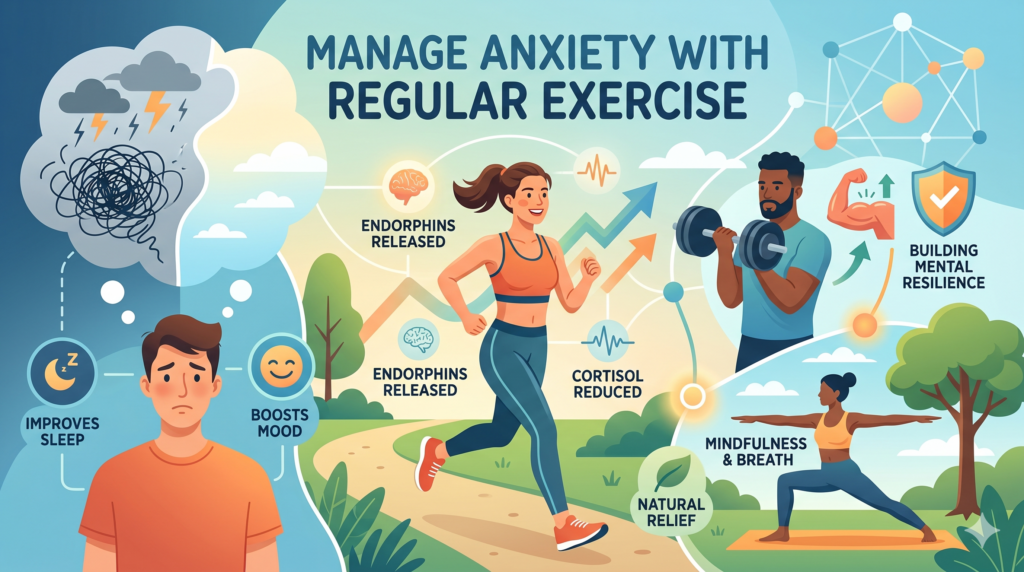
The connection between physical activity and mental wellness isn’t just anecdotal wisdom passed down through generations. When you engage in exercise, your body undergoes remarkable chemical changes that directly combat anxiety’s grip on your mind. Your brain releases endorphins—those feel-good chemicals that act as natural painkillers and mood elevators. Simultaneously, exercise reduces levels of stress hormones like cortisol and adrenaline, creating a biochemical environment that naturally counteracts anxious feelings.
The Science Behind Exercise as an Anxiety Management Tool
When you lace up those sneakers and hit the pavement, you’re doing much more than burning calories or building muscle. Your body initiates a complex cascade of neurological and hormonal responses that fundamentally alter your mental state. Research from leading universities and medical institutions has consistently demonstrated that regular exercise and anxiety management are intrinsically linked through multiple biological pathways.
Your brain’s hippocampus—the region responsible for memory and emotion regulation—actually grows new cells during regular physical activity. This neurogenesis doesn’t happen overnight, but with consistent exercise, you’re literally building a more resilient brain structure. The increased blood flow to your brain during exercise delivers oxygen and nutrients while clearing out metabolic waste products that can contribute to foggy thinking and heightened anxiety.
Exercise also impacts your body’s autonomic nervous system, which controls your fight-or-flight response. When you’re anxious, your sympathetic nervous system is in overdrive, keeping you in a state of constant alertness. Regular physical activity trains your body to recover more quickly from stress responses and strengthens your parasympathetic nervous system—the part responsible for rest and relaxation. Over time, you’ll notice that situations that once triggered intense anxiety become more manageable.
How Much Exercise Do You Really Need?
You don’t need to become an ultra-marathoner or spend hours in the gym daily to experience anxiety-reducing benefits. The beauty of regular exercise and anxiety management is that moderate amounts of physical activity can produce significant mental health improvements. Most mental health professionals and exercise physiologists recommend at least 150 minutes of moderate-intensity aerobic activity per week—that breaks down to just 30 minutes, five days a week.
But what counts as moderate intensity? Think of activities where you can still hold a conversation but you’re definitely working. Brisk walking, recreational swimming, cycling at a comfortable pace, or light jogging all fit this category. If you’re a busy parent, this might mean pushing the stroller at a faster pace through the neighborhood or playing an active game of tag with your kids in the backyard.
For those days when you have more energy and time, vigorous exercise provides even more pronounced anxiety-reducing effects. High-intensity interval training, running, competitive sports, or challenging fitness classes fall into this category. You’ll know you’re working vigorously when conversation becomes difficult and your heart rate significantly elevates. Just 75 minutes of vigorous activity weekly can deliver the same mental health benefits as 150 minutes of moderate exercise.
The Best Types of Exercise for Managing Anxiety
Not all exercise affects anxiety in exactly the same way, and discovering which activities resonate most with you personally makes all the difference. Some people find that rhythmic, repetitive exercises like running or swimming create a meditative state that quiets anxious thoughts. Others discover that the focused intensity of strength training or the social connection of group fitness classes provides the greatest relief. The key is experimenting until you find your perfect anxiety-management activity.
Cardiovascular Exercise: Running, Walking, and Cycling
Aerobic activities deserve their reputation as anxiety-busters. When you run, walk briskly, or cycle, you engage in repetitive movements that can induce a almost trance-like state—sometimes called “runner’s high.” This isn’t just about endorphins; it’s about creating space between you and your worries. Many runners report that their best problem-solving happens on the road, as the physical activity quiets the mental chatter that feeds anxiety.
Walking deserves special mention because it’s accessible to nearly everyone regardless of fitness level. You don’t need special equipment beyond comfortable shoes, and you can adjust the intensity simply by changing your pace or choosing hillier routes. For busy moms trying to squeeze in exercise, walking offers the flexibility of including children in strollers or encouraging older kids to join on bikes. The outdoor component adds another layer of anxiety relief—exposure to nature and sunlight boosts mood through multiple mechanisms.
Cycling provides similar benefits with the added advantage of covering more ground and potentially turning your commute into exercise time. Whether you’re on a stationary bike at the gym or riding through your neighborhood, the sustained effort required for cycling gives your mind something concrete to focus on while providing those crucial anxiety-reducing neurochemical benefits.
Strength Training: Building Mental Resilience Along with Muscle
Lifting weights or performing bodyweight exercises might seem primarily physical, but the mental benefits for anxiety management are substantial. Strength training requires intense focus on form, breathing, and movement patterns—this concentrated attention naturally crowds out anxious thoughts. The immediate feedback of successfully completing a challenging set provides tangible evidence of your capabilities, which directly counters the helplessness that often accompanies anxiety.
Progressive overload—the principle of gradually increasing resistance or difficulty—teaches your nervous system to adapt to stress in controlled, manageable increments. This physical adaptation mirrors the psychological resilience you’re building. Each time you lift slightly heavier weights or complete one more repetition than last week, you’re proving to yourself that you can handle more than you thought possible.
The structure and routine inherent in strength training programs also benefit anxious minds. Having a clear plan for what exercises to perform, how many sets and reps to complete, and how to progress over time provides order and predictability. For people whose anxiety thrives in uncertainty, this structured approach to exercise can be particularly therapeutic.
Mind-Body Exercises: Yoga, Tai Chi, and Pilates
Practices that explicitly connect physical movement with breath and mindfulness offer unique advantages for regular exercise and anxiety management. Yoga, in particular, has been extensively studied for its anxiety-reducing effects. The combination of physical postures, controlled breathing, and meditation addresses anxiety from multiple angles simultaneously. Even gentle yoga styles can significantly reduce anxiety symptoms, while more vigorous styles like vinyasa or power yoga add cardiovascular benefits.
Tai chi, often described as meditation in motion, uses slow, deliberate movements coordinated with deep breathing. This ancient Chinese practice has shown remarkable results in reducing anxiety, particularly in older adults. The slow pace makes it accessible for various fitness levels, and the focus required to perform the movements correctly naturally interrupts anxious thought patterns.
Pilates emphasizes core strength, flexibility, and controlled breathing through precise movements. The concentration required during Pilates sessions provides a mental break from worry while building physical strength and body awareness. Many people find that the mind-body connection developed through Pilates helps them recognize and release physical tension that manifests from anxiety.
Creating Your Personalized Exercise Routine for Anxiety Relief
Knowing that exercise helps anxiety is one thing; actually building a sustainable routine is another challenge entirely. You need an approach that fits your schedule, matches your fitness level, and actually appeals to you enough that you’ll stick with it. The most scientifically proven exercise program is worthless if it sits unused because it doesn’t align with your real life.
Start by honestly assessing your current schedule. Where are the realistic windows for exercise? Maybe you’re a morning person who could wake thirty minutes earlier, or perhaps your lunch break offers a midday movement opportunity. Some busy parents find that evening exercise after kids’ bedtime is most feasible. There’s no universally “best” time—the best time is whatever time you’ll actually do it consistently.
Consider your starting fitness level without judgment. If you haven’t exercised regularly, beginning with 10-minute walks and gradually building up is perfectly appropriate and will still provide anxiety-reducing benefits. Pushing too hard too fast often leads to injury or burnout, which obviously derails your anxiety management efforts. Regular exercise and anxiety management is about consistency over intensity, especially when you’re establishing new habits.
Overcoming Common Obstacles to Exercise
You know exercise helps anxiety, you’ve identified activities you might enjoy, but somehow you still struggle to maintain consistency. You’re not alone—the gap between intention and action trips up most people. Understanding common obstacles and developing specific strategies to address them dramatically increases your success rate.
Time scarcity ranks as the number one exercise barrier, especially for busy parents and working professionals. But this obstacle often reflects prioritization challenges more than actual time availability. Track how you actually spend your time for a week—you might discover pockets of time currently devoted to less beneficial activities. Could you exercise while watching your favorite show on a stationary bike? Could you replace scrolling through social media with a quick walk? These aren’t judgments but honest questions about priorities.
Lack of energy creates a paradoxical obstacle because exercise actually increases energy levels over time. When you’re exhausted and anxious, the last thing you feel like doing is working out. Here’s the secret: you don’t need to feel motivated to start exercising; motivation typically arrives after you begin moving. Commit to just five minutes—put on your exercise clothes and start your chosen activity for five minutes. Most times, you’ll continue beyond that initial commitment once you’re in motion.
Making Exercise Work with Family Responsibilities
Parents face unique challenges in carving out exercise time. Your kids need attention, household tasks demand completion, and guilt about “taking time for yourself” can feel overwhelming. Reframe exercise not as selfish self-care but as essential maintenance that makes you a better parent. Just as you wouldn’t feel guilty about sleeping or eating, exercise for anxiety management is a basic need that enables you to show up more patiently and presently for your family.
Involve your children in your physical activity when possible. Family bike rides, active playground time where you actually move instead of sitting on benches, or playing sports together all count. Your children benefit tremendously from seeing you prioritize movement and from being active themselves. You’re modeling healthy anxiety management strategies that they’ll carry into their own lives.
For young children who can’t participate in your exercise, creative solutions exist. Some parents exercise during naptime, trade childcare with neighbors or friends specifically for exercise time, or utilize gym childcare services. Home workout videos during children’s morning cartoons or after bedtime provide another option requiring minimal setup.
The Role of Consistency Over Intensity
You might assume that more intense workouts produce better anxiety-reducing results, but research reveals a more nuanced picture. While vigorous exercise certainly helps, the consistency of your exercise routine matters more than the intensity of individual sessions. Three moderate 30-minute walks weekly will reduce anxiety more effectively than one brutal two-hour workout followed by six inactive days.
This finding should feel liberating rather than disappointing. You don’t need to push yourself to exhaustion or dread your workouts. Regular exercise and anxiety management succeeds through sustainable, repeated practice. Think of exercise like brushing your teeth—you don’t brush intensely once weekly; you brush adequately every day. The same principle applies to using exercise for mental health.
Building this consistency requires systems rather than relying on motivation or willpower. Schedule exercise appointments with yourself and treat them as seriously as doctor appointments or work meetings. Lay out workout clothes the night before. Find an accountability partner or join a regular class where people will notice your absence. These environmental and social supports make consistency achievable even when motivation wanes.
Immediate Anxiety Relief Versus Long-Term Benefits
One of the most encouraging aspects of using exercise for anxiety management is that benefits occur on multiple timelines. You’ll experience some anxiety reduction during and immediately after a single exercise session—that’s the acute effect from endorphin release and the focused attention exercise requires. These immediate benefits can be particularly valuable during high-anxiety periods or panic symptoms.
The long-term benefits of regular exercise develop more gradually but run much deeper. After several weeks of consistent exercise, your baseline anxiety levels decrease. Situations that previously triggered significant anxiety responses become more manageable. Your sleep quality typically improves, which further reduces anxiety since sleep deprivation and anxiety create a vicious cycle. Your confidence grows as you accomplish fitness goals, counteracting the low self-esteem that often accompanies chronic anxiety.
Understanding this dual timeline helps you maintain realistic expectations. Don’t expect one workout to cure your anxiety disorder, but do recognize that you can use exercise as an immediate coping tool during anxiety spikes. Meanwhile, your regular routine is building long-term resilience and fundamentally shifting your mental health baseline.
Combining Exercise with Other Anxiety Management Strategies
Exercise is powerful for anxiety management, but it works best as part of a comprehensive approach rather than a standalone solution. Think of exercise as a foundational practice that enhances other anxiety-management strategies you might use. When you combine regular physical activity with proper sleep, stress management techniques, social connection, and professional mental health support when needed, you create a robust system for managing anxiety.
Many people find that exercise makes therapy more effective. The neuroplasticity enhanced through regular physical activity helps your brain form new thought patterns and release old ones. If you’re working with a therapist on cognitive behavioral techniques or exposure therapy, exercise supports that psychological work at the biological level. Your brain becomes literally more capable of change when you’re physically active.
Nutrition and exercise work synergistically for both physical health and anxiety management. When you exercise regularly, you typically become more motivated to fuel your body well. Conversely, good nutrition provides the energy and nutrients needed for consistent exercise. Both practices independently reduce anxiety, and together they create a positive feedback loop that builds momentum toward better mental health.
Tracking Progress and Celebrating Small Wins
Anxiety can make you focus disproportionately on what’s still wrong while overlooking genuine progress. Deliberately tracking your exercise consistency and its impact on your anxiety helps counteract this negativity bias. You don’t need complicated systems—a simple calendar where you mark days you exercised or a notes app where you briefly record your anxiety levels and exercise completed provides valuable feedback.
Look for subtle changes rather than expecting dramatic transformations. Maybe you notice that you sleep slightly better on days you exercise, or that your afternoon anxiety dip is less severe when you take a morning walk. Perhaps you handled a typically stressful situation with more calm than usual. These small improvements are the building blocks of significant long-term change in your relationship with anxiety.
Celebrate your consistency independent of outcomes. Did you exercise three times this week even though it didn’t magically eliminate your anxiety? That’s worth acknowledging. The act of showing up for yourself repeatedly, especially when anxiety makes everything feel harder, demonstrates strength. Over time, this consistent showing-up creates the conditions for more noticeable anxiety reduction.
Adjusting Your Approach Based on Anxiety Levels
Your anxiety doesn’t remain constant, and your exercise approach can flexibly respond to these fluctuations. On high-anxiety days, you might find that gentler movement like walking or restorative yoga feels more manageable than intense workouts. That’s perfectly fine—you’re still getting anxiety-reducing benefits from moderate activity. Conversely, on days when anxiety manifests as restless energy, a more vigorous workout might provide exactly the outlet you need.
Listen to your body’s signals without letting anxiety make all the decisions. There’s a difference between exercising differently because you’re having a tough anxiety day versus letting anxiety convince you to skip exercise entirely. Sometimes the most therapeutic thing you can do during high anxiety is gentle movement, even if it’s just a 10-minute walk around your block. That movement interrupts the anxiety spiral and provides a small accomplishment that counters feelings of helplessness.
Be cautious about over-exercising as an anxiety management strategy. While regular exercise and anxiety management go together beautifully, excessive exercise can actually increase anxiety and stress on your body. If you find yourself compulsively exercising, feeling guilty on rest days, or using exercise to punish yourself, these are signs that your relationship with exercise might need adjustment. Balance remains key—adequate rest and recovery are essential components of an anxiety-management exercise program.
The Social Dimension of Exercise for Anxiety
Exercising with others adds a powerful social component that enhances anxiety-reducing benefits. Humans are fundamentally social creatures, and isolation tends to worsen anxiety. When you join a running group, attend fitness classes, or work out with friends, you’re addressing anxiety through both movement and connection. The accountability inherent in group exercise also helps with consistency—you’re more likely to show up when others expect you.
Team sports or recreational leagues offer structured social exercise opportunities. Whether you’re playing basketball at the community center, joining a recreational softball league, or participating in group cycling events, you’re combining multiple anxiety-reducing elements: physical activity, social connection, fun, and the absorption that comes from learning and executing skills. The focus required during sports naturally interrupts anxious rumination.
Even exercising near others without direct interaction provides benefits. The energy of a busy gym or the presence of other people on a popular trail creates a sense of shared humanity that can ease the isolation anxiety often creates. You’re reminded that you’re part of a larger community of people taking care of themselves, which normalizes the self-care that exercise represents.
Creating Environmental Supports for Exercise Consistency
Your environment profoundly influences your behavior, often more than willpower or motivation. By deliberately designing your environment to support regular exercise, you remove friction and make physical activity the path of least resistance. This environmental design approach works with your brain’s natural tendencies rather than fighting against them.
Place visual reminders of your exercise commitment in strategic locations. Leave your running shoes by the door, keep resistance bands in your living room, or set your workout clothes on top of your dresser. These physical cues trigger the behavior you want to encourage. When you see your exercise equipment or clothes, your brain automatically thinks about working out, making it more likely you’ll follow through.
Reduce barriers between intention and action. If going to the gym requires packing a bag, driving across town, and finding parking, you’ve created multiple decision points where anxiety or inertia could derail you. Consider home workouts, walking or running routes that start at your door, or bodyweight exercises requiring no equipment. The fewer steps between deciding to exercise and actually exercising, the more consistent you’ll be.
Seasonal Adjustments and Exercise Variety
Your exercise routine will need to evolve with seasons, life changes, and your developing fitness level. This adaptability isn’t a weakness but a strength that ensures long-term sustainability. Winter might shift your outdoor running to an indoor track or treadmill. Summer could open opportunities for swimming or hiking that weren’t available in colder months. These seasonal variations keep exercise interesting and work with rather than against environmental realities.
Variety within your exercise routine also serves multiple purposes. Cross-training—incorporating different types of exercise—reduces injury risk, prevents boredom, and ensures balanced fitness development. You might run three days weekly, strength train twice, and take one yoga class. This variety keeps your mind and body engaged while delivering comprehensive anxiety-management benefits.
Some people thrive on routine and prefer doing the same workout consistently, which is equally valid. If you’ve found an exercise pattern that works for your anxiety management and you enjoy it enough to maintain consistency, there’s no need to force variety. The best exercise program is the one you’ll actually do regularly, whether that’s the same daily walk or a rotating schedule of diverse activities.
Exercise as a Keystone Habit for Overall Wellness
When you establish regular exercise, you often notice positive changes rippling into other life areas. Exercise functions as what researchers call a “keystone habit”—a behavior that naturally triggers other beneficial changes. You might find yourself naturally making better food choices, prioritizing sleep more, or managing stress more effectively. These cascading improvements occur partly because exercise itself affects multiple body systems and partly because the discipline and self-care exercise represents strengthens your capacity for positive change.
This keystone effect is particularly relevant for anxiety management because anxiety rarely exists in isolation. It often intertwines with poor sleep, stress, low energy, and unhealthy coping mechanisms. When you address anxiety through regular exercise and anxiety management practices, you simultaneously create conditions that support improvements in these related areas. Better sleep reduces anxiety, which makes exercise easier, which improves sleep further—virtuous cycles replace vicious ones.
The identity shift that accompanies regular exercise also matters significantly. As you consistently show up for workouts, you begin seeing yourself as someone who exercises, someone who takes care of their health, someone who doesn’t let anxiety completely dictate their choices. This identity evolution influences countless small decisions throughout your day, steering you toward choices that support rather than undermine your wellbeing.
Working with Healthcare Providers
While exercise powerfully impacts anxiety, it’s important to view physical activity as part of comprehensive anxiety management rather than a replacement for professional care when needed. If your anxiety significantly interferes with daily functioning, causes intense distress, or includes panic attacks, working with a mental health professional alongside your exercise routine provides the most effective approach. Exercise enhances but doesn’t replace appropriate professional treatment.
Communicate with your doctor about your plans to use exercise for anxiety management, especially if you have any health conditions or haven’t been physically active recently. Most healthcare providers enthusiastically support exercise for mental health and can provide guidance on safely starting or intensifying an exercise program. They might have specific recommendations based on your individual health profile.
Some therapists explicitly incorporate exercise into treatment plans or can help you troubleshoot obstacles to maintaining exercise consistency. If anxiety about exercising itself—worries about judgment, physical sensations during exercise, or leaving home.