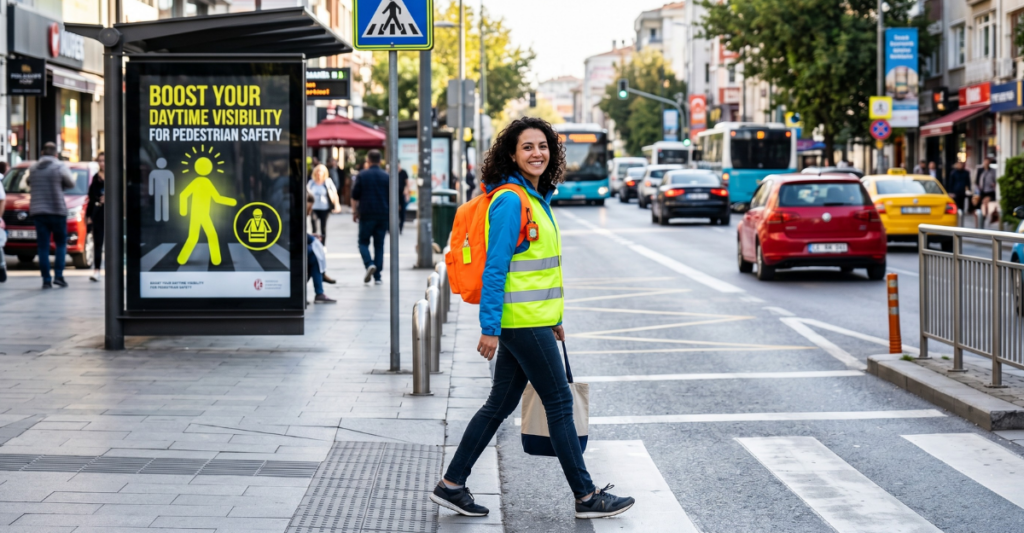
When you lace up your running shoes for an early morning jog or head out for a power walk during your lunch break, you probably think about your route, your pace, and maybe what podcast you’ll listen to. But there’s one critical factor that many fitness enthusiasts overlook entirely: daytime visibility: the hidden factor behind pedestrian safety. You might assume that visibility only matters at dawn, dusk, or nighttime, but statistics tell a different story—one that could literally save your life or the life of someone you love.
The reality is that pedestrian accidents occur throughout the day, and your visibility to drivers plays a monumental role in preventing collisions. Whether you’re a dedicated runner training for your next marathon, a busy mom squeezing in a quick walk between errands, or someone who simply enjoys staying active outdoors, understanding and improving your daytime visibility isn’t just smart—it’s essential. The misconception that bright sunlight automatically makes you visible to motorists has led countless people to underestimate the risks they face every time they step onto a sidewalk or cross a street.
Understanding the Science Behind Daytime Visibility
The human eye is an incredible organ, but it has limitations that directly impact pedestrian safety. When drivers are behind the wheel, they’re processing an enormous amount of visual information simultaneously—road signs, other vehicles, traffic lights, pedestrians, and countless environmental factors. In this complex visual landscape, your body becomes just another object competing for a driver’s attention, and unless you stand out distinctly from your surroundings, you might blend into the background noise of urban or suburban environments.
Daytime visibility: the hidden factor behind pedestrian safety operates on principles of contrast, movement, and color psychology. Research from traffic safety institutes reveals that the human brain identifies objects based primarily on contrast rather than absolute brightness. This means that even on a sunny day, if your clothing matches the color and tone of your environment—gray workout clothes against concrete sidewalks, green athletic wear near landscaped areas, or dark colors against shadowed backgrounds—you’re essentially camouflaging yourself from drivers who need to see you.
Motion detection also plays a crucial role in how drivers perceive pedestrians. Studies have demonstrated that our peripheral vision is particularly sensitive to movement, which is why reflective materials and high-contrast clothing can catch a driver’s eye even when they’re not looking directly at you. The combination of contrast and movement creates what safety experts call “conspicuity,” which is your ability to attract attention in a visual environment. When you’re walking or running, you’re already in motion, but if your clothing doesn’t provide adequate contrast, that movement advantage diminishes significantly.
The Shocking Statistics About Daytime Pedestrian Accidents
If you believe that most pedestrian accidents happen at night, you’re not alone—but you’re also not entirely correct. According to data from the National Highway Traffic Safety Administration, while nighttime accidents are indeed more frequent per mile traveled, a substantial percentage of pedestrian fatalities and injuries occur during daylight hours when visibility should theoretically be optimal. These numbers reveal something troubling: good ambient lighting isn’t enough to guarantee your safety as a pedestrian.
The Governors Highway Safety Association reports that daytime pedestrian accidents account for approximately 25-30% of all pedestrian fatalities annually. When you break down these statistics further, certain patterns emerge that should concern anyone who exercises outdoors. Busy intersections, areas with multiple lanes of traffic, and locations where pedestrians cross mid-block show elevated risk levels regardless of the time of day. Distracted driving has exponentially increased these risks, with drivers checking phones, adjusting GPS systems, or managing other in-vehicle distractions while simultaneously trying to navigate traffic.
What makes these statistics particularly relevant to runners and walkers is that many daytime pedestrian accidents involve individuals engaged in exercise or recreational activities. You might be focused on your workout, monitoring your heart rate, or simply enjoying the endorphins that come with physical activity, which means your attention to surrounding traffic may be compromised. Simultaneously, drivers may not expect to encounter pedestrians in certain areas, creating a dangerous combination of reduced vigilance on both sides. Understanding that daytime visibility: the hidden factor behind pedestrian safety affects you personally transforms these abstract numbers into a concrete reason to reassess your outdoor exercise habits.
Why Drivers Don’t Always See You in Broad Daylight
The assumption that drivers will naturally see you during the day is built on a faulty premise. Modern driving involves managing multiple complex tasks simultaneously, and the human brain uses various shortcuts and filtering mechanisms to handle this cognitive load. One of these shortcuts is called “inattentional blindness,” a phenomenon where people fail to notice unexpected objects or people in their visual field when their attention is focused elsewhere. Even the most conscientious driver can experience this, especially during routine commutes where the brain essentially operates on autopilot.
Glare represents another significant challenge to your daytime visibility. When the sun sits low on the horizon—not just at sunrise and sunset, but also during winter months when the sun remains lower throughout the day—drivers face substantial visibility challenges. Sun glare can reduce a driver’s ability to see pedestrians by up to 90%, according to research from automotive safety organizations. During these conditions, even brightly colored clothing might not be enough to ensure that drivers can see you in time to react appropriately.
Environmental factors compound these challenges in ways you might not anticipate. Urban canyons created by tall buildings cast inconsistent shadows that create zones of varying brightness, forcing drivers’ eyes to constantly adjust to changing light levels. This adjustment period, though brief, represents a window of reduced visibility where pedestrians become harder to detect. Similarly, weather conditions like fog, rain, or even bright overcast days can reduce contrast and make it harder for drivers to distinguish pedestrians from their surroundings, reinforcing why daytime visibility: the hidden factor behind pedestrian safety deserves your attention year-round.
The Critical Role of Color Selection in Your Workout Wardrobe
Your choice of workout clothing does more than affect your comfort and performance—it directly impacts your survival. The colors you wear during outdoor exercise fundamentally determine how quickly and easily drivers can identify you as a pedestrian who requires their attention and response. While fashion considerations and personal preferences certainly matter, prioritizing visibility should be your primary concern when selecting athletic wear for outdoor activities.
Fluorescent colors—particularly fluorescent yellow, fluorescent orange, and fluorescent lime green—have been scientifically proven to provide superior daytime visibility. These colors work because they convert ultraviolet light into visible light, essentially making them appear to glow even during daylight hours. Studies show that fluorescent yellow-green provides the highest level of conspicuity across the widest range of lighting conditions, which is why this color dominates safety vests, traffic signs, and emergency responder uniforms. When you choose workout clothes in these colors, you’re leveraging the same visibility principles that protect construction workers, police officers, and other professionals whose lives depend on being seen.
Beyond fluorescent colors, strategic use of contrast can dramatically improve your visibility profile. If you’re wearing a bright top, pair it with dark bottoms, or vice versa. This creates a distinct human silhouette that drivers’ brains can easily recognize and classify as a pedestrian requiring caution. Multi-colored outfits that incorporate both bright and contrasting elements provide visual interest that catches the eye more effectively than monochromatic ensembles, even when those single colors are relatively bright. Remember that daytime visibility: the hidden factor behind pedestrian safety isn’t just about being bright—it’s about being noticeably different from your environment in ways that command attention.
Consider the specific environments where you typically exercise when selecting your workout wardrobe. If you run through residential neighborhoods with lots of trees and lawns, avoid green tones regardless of how attractive they might be. Urban runners should be cautious about gray, black, and neutral tones that blend with concrete, asphalt, and building facades. If your route takes you past commercial areas with colorful storefronts and signage, you need especially bright and distinct clothing to stand out from that visual competition.
Reflective Materials: Not Just for Nighttime Safety
When most people think about reflective materials, they imagine nighttime running and the way these materials shine in headlights. However, reflective elements provide significant safety benefits during daylight hours as well, though the mechanism works somewhat differently. During the day, reflective materials increase your visibility through enhanced brightness and by creating eye-catching flashes of light as you move, which triggers drivers’ motion-detection capabilities even when they’re not looking directly at you.
Modern reflective technology has evolved far beyond the simple reflective tape of decades past. Today’s athletic wear incorporates sophisticated reflective elements that are seamlessly integrated into garment design, providing 360-degree visibility without compromising style or comfort. These materials use microscopic glass beads or prismatic designs to reflect light back toward its source, making you visible from multiple angles and in various lighting conditions. High-quality reflective trim can increase your detection distance by drivers by up to 500 feet during daylight hours, giving motorists crucial additional seconds to recognize your presence and respond appropriately.
The placement of reflective materials on your body significantly impacts their effectiveness. The most effective locations mirror the natural movement patterns of human locomotion—near ankles and wrists where motion is most pronounced during walking and running. This “biomotion” pattern helps drivers’ brains quickly recognize you as a moving human rather than a static object, triggering faster and more appropriate responses. Reflective elements placed on your torso, shoulders, and along the sides of your legs create a visible outline that defines your shape and direction of travel, providing drivers with the information they need to predict your movements and adjust their driving accordingly.
Don’t limit reflective materials to your clothing alone. Accessories like reflective bands, vests worn over existing workout clothes, reflective shoelaces, and caps with reflective trim all contribute to your overall visibility profile. For busy moms who might be pushing strollers during their walks, adding reflective strips or flags to the stroller dramatically increases the visibility of your entire group. Even your choice of running shoes can contribute to safety—many athletic shoe manufacturers now incorporate reflective elements into their designs, recognizing that daytime visibility: the hidden factor behind pedestrian safety requires a comprehensive approach that addresses every aspect of your appearance.
Strategic Route Planning for Maximum Visibility
Where you choose to exercise matters just as much as what you wear while doing it. Route selection plays a fundamental role in your overall safety, and visibility considerations should influence your decisions about where and when to run, walk, or cycle. The same route that feels safe and comfortable during low-traffic hours might present significantly different risks during rush hour or other high-traffic periods, and understanding these dynamics helps you make informed choices that protect your health in multiple ways.
Sidewalks and designated pedestrian paths should always be your first choice when available, as they provide physical separation from vehicle traffic and reduce the likelihood of conflicts between pedestrians and drivers. However, not all sidewalks offer equal protection. Consider the proximity of the sidewalk to traffic lanes, the presence of barriers or buffers like parked cars or landscaping, and the overall visibility of the pedestrian path from the driver’s perspective. Sidewalks that run immediately adjacent to high-speed traffic lanes place you at greater risk than those separated by parking lanes, grass strips, or other buffers that provide both physical and visual separation.
Intersections represent particular danger zones where pedestrian-vehicle conflicts most commonly occur. When planning your route, consider which intersections you’ll need to navigate and assess their safety features. Marked crosswalks, pedestrian signals, and traffic lights all improve safety, but only if drivers are paying attention and you remain visible while crossing. Before stepping into any crosswalk, even with a walk signal, make eye contact with drivers when possible and ensure they’ve seen you. Your brightly colored, reflective clothing serves its most critical purpose at these intersection crossing points, where split-second decisions by drivers determine your safety.
Some routes naturally provide better visibility than others based purely on environmental factors. Roads with good sightlines—long, straight stretches without significant curves or hills—allow drivers to see pedestrians from greater distances, providing more time for appropriate reactions. Conversely, routes with sharp curves, blind corners, or rapid elevation changes reduce the distance at which drivers can see you, compressing the time available for response and increasing risk. When possible, choose routes that maximize these sightlines, and if you must navigate areas with limited visibility, exercise extra caution and ensure your clothing provides maximum conspicuity since daytime visibility: the hidden factor behind pedestrian safety becomes even more critical in these challenging environments.
The Impact of Weather and Seasonal Changes on Visibility
Your visibility to drivers fluctuates significantly based on weather conditions and seasonal factors that affect both ambient light and environmental contrast. Understanding these variables helps you adapt your safety strategies throughout the year, ensuring that your outdoor exercise routine remains as safe as possible regardless of when or in what conditions you choose to be active. Many runners and walkers maintain consistent workout schedules year-round, but fewer adjust their visibility strategies to match changing conditions—a gap that creates unnecessary risk.
Winter months present unique visibility challenges that extend well beyond shorter daylight hours. The sun’s lower angle creates extended periods of glare that reduce driver visibility, while snow and ice on roadways demand more of drivers’ attention, potentially reducing their awareness of pedestrians. However, snowy environments can actually improve pedestrian visibility in some ways—dark or brightly colored clothing creates stark contrast against white snow, making you more noticeable. The key is selecting colors that contrast with your specific environment, which means your optimal workout wardrobe might need to change with the seasons.
Rainy conditions dramatically reduce visibility for both pedestrians and drivers. Water on windshields, even with functioning wipers, reduces clarity and creates reflective glare that makes it harder for drivers to detect pedestrians. Rain also tends to wash out colors, making even bright clothing appear duller and less noticeable. In these conditions, reflective materials become especially valuable, as they maintain their visibility-enhancing properties even when wet. Many runners and walkers also underestimate how rain affects their own visibility—wet clothing appears darker and provides less contrast, while rain gear in gray or dark colors essentially camouflages you against rainy-day environments.
Fog presents perhaps the most challenging visibility conditions for pedestrian safety. Even light fog reduces visual range significantly, and thick fog can reduce driver visibility to just a few car lengths—barely enough distance to stop if an unexpected pedestrian appears. If you must exercise in foggy conditions, maximize every visibility advantage: wear the brightest fluorescent colors you own, add reflective accessories, consider carrying a light or wearing a headlamp even during daytime hours, and stay as far from traffic as possible. Understanding that daytime visibility: the hidden factor behind pedestrian safety fluctuates with weather conditions empowers you to make smart decisions about whether to modify your route, adjust your timing, or even choose an indoor alternative when conditions become truly hazardous.
Teaching Visibility Awareness to Children and Family Members
If you’re a parent working to instill healthy habits in your children, visibility awareness should be part of that education. Kids who walk or bike to school, who play in neighborhoods near streets, or who accompany you on walks and runs need to understand the principles of visibility just as thoroughly as you do. The habits they develop now will protect them throughout their lives, and your example serves as their primary teacher on these critical safety matters.
Start by explaining the basic concept in age-appropriate terms: drivers have a hard job watching for many things at once, so we need to make sure they can see us easily. Make visibility a game by having children identify which colors would make them most visible in different environments—what would stand out against green grass? Against gray sidewalks? Against brick buildings? This interactive approach helps them develop visual discrimination skills while learning safety principles. When selecting clothes for school or outdoor activities, involve children in the decision-making process, discussing how their clothing choices affect their safety.
Demonstrate proper pedestrian behavior consistently, as your actions teach more effectively than words alone. Always use crosswalks and pedestrian signals, make eye contact with drivers before crossing, and verbalize your decision-making process: “I’m wearing my bright yellow jacket today because it’s cloudy and I want drivers to see me easily” or “Let’s wait for that car to pass even though we have the walk signal, because I’m not sure the driver sees us.” These running commentaries help children understand the thought processes behind safe pedestrian behavior and the role that visibility plays in their safety.
For families who enjoy outdoor activities together—bike rides, hiking near roads, or evening walks—establish visibility rules that everyone follows. Make bright colors and reflective gear non-negotiable requirements for any activity near traffic, just as you would make helmets mandatory for cycling. When children understand that these rules exist to protect them and see that even adults follow them consistently, they’re more likely to internalize these behaviors and maintain them as they grow older. Recognizing that daytime visibility: the hidden factor behind pedestrian safety affects the entire family transforms individual precautions into family culture, creating lasting safety habits that extend far beyond childhood.
Technology and Tools That Enhance Your Daytime Visibility
Innovation in pedestrian safety technology has produced numerous tools and devices designed to increase your visibility to motorists. While appropriate clothing remains your foundation, supplementary technologies can provide additional layers of protection, especially in high-risk environments or during conditions that compromise visibility. These tools range from simple and inexpensive accessories to sophisticated electronic devices, offering options for every budget and preference.
LED-equipped safety gear has become increasingly popular among runners and walkers who exercise during marginal lighting conditions. Unlike passive reflective materials that only return light from external sources, LED lights actively emit light, making you visible even when no light source is directed toward you. Arm bands, vest clips, shoe lights, and hat-mounted LEDs all provide 360-degree visibility and can be seen from significantly greater distances than reflective materials alone. Many of these devices offer multiple lighting modes—steady, slow flash, or rapid flash—with research suggesting that flashing patterns attract attention more effectively than steady lights by triggering the motion-detection capabilities of human peripheral vision.
High-visibility vests and sashes represent the most straightforward technological enhancement to your visibility profile. Modern versions bear little resemblance to the bulky, uncomfortable safety vests of previous generations. Today’s designs use lightweight, breathable materials that don’t compromise your comfort or athletic performance while providing maximum conspicuity through fluorescent colors and extensive reflective trim. Many athletes resist wearing such vests due to aesthetic concerns, but multiple manufacturers now produce designs that look more like athletic wear than safety equipment, making it easier to prioritize function without sacrificing style.
Wearable technology increasingly incorporates safety features that extend beyond fitness tracking. Some smart watches and fitness bands now include options for emergency signals or lights that increase your visibility. Certain apps allow you to share your route with family members in real-time, providing an additional safety layer beyond visibility by ensuring someone knows your location if problems arise. While these technologies don’t directly increase your visibility to drivers, they represent part of a comprehensive safety approach that acknowledges daytime visibility: the hidden factor behind pedestrian safety as just one element of overall pedestrian risk management.
Advocacy and Community Action for Pedestrian Safety
Individual actions to improve your visibility are essential, but lasting change in pedestrian safety requires community-level initiatives and infrastructure improvements that protect all pedestrians. As someone who exercises outdoors regularly, you have both personal investment and valuable perspective that can contribute to making your community safer for everyone who walks, runs, or cycles. Your voice and advocacy can influence decisions about road design, traffic calming measures, and public awareness campaigns that extend protection far beyond your personal safety.
Engaging with local government and transportation departments about pedestrian safety concerns creates opportunities for meaningful change. Attend city council or town board meetings to speak about areas where pedestrian visibility is compromised—whether due to inadequate lighting, poor intersection design, or lack of designated pedestrian infrastructure. Bring specific examples and, if possible, data about accidents or near-misses in problem areas. Transportation engineers and city planners often respond more effectively to specific, documented concerns from community members than to general complaints, and your regular use of these areas gives you credibility as a witness to their deficiencies.
Community awareness campaigns can shift cultural attitudes about pedestrian safety and driver responsibility. Consider partnering with local running clubs, parent-teacher organizations, or community health organizations to promote visibility awareness. Organize group runs or walks where participants wear high-visibility clothing, creating a visible statement about the importance of pedestrian safety. These events generate media attention and community conversation while simultaneously demonstrating proper visibility practices to everyone who sees participants. Educational components might include workshops on selecting appropriate visibility gear, presentations about local pedestrian safety statistics, or demonstrations of how different clothing colors appear to drivers in various conditions.
School zones represent particularly important areas for pedestrian safety advocacy, as protecting children should be a universal priority that generates broad community support. Work with schools to implement or enhance safety measures like crossing guards, improved crosswalk markings, reduced speed limits during school hours, and mandatory visibility requirements for students who walk or bike to school. Many schools distribute reflective materials or high-visibility accessories as part of safety programs, and your advocacy can help initiate or expand these efforts. By promoting awareness that daytime visibility: the hidden factor behind pedestrian safety affects community members of all ages, you help create a culture that prioritizes pedestrian protection as a shared responsibility.
Transforming knowledge about pedestrian visibility into consistent daily practice requires intentional habit formation. Like any behavioral change related to health and safety, improving your visibility to drivers works best when it becomes an automatic part of your routine rather than a decision you need to make consciously each time you head out for a workout. Creating systems and routines that default to high visibility removes the mental burden of repeated decision-making and ensures consistent protection.
Give us a call today at 1-877-777-6086 or fill out our contact form to become a retail
distributor of our top-of-the-line safety lights.