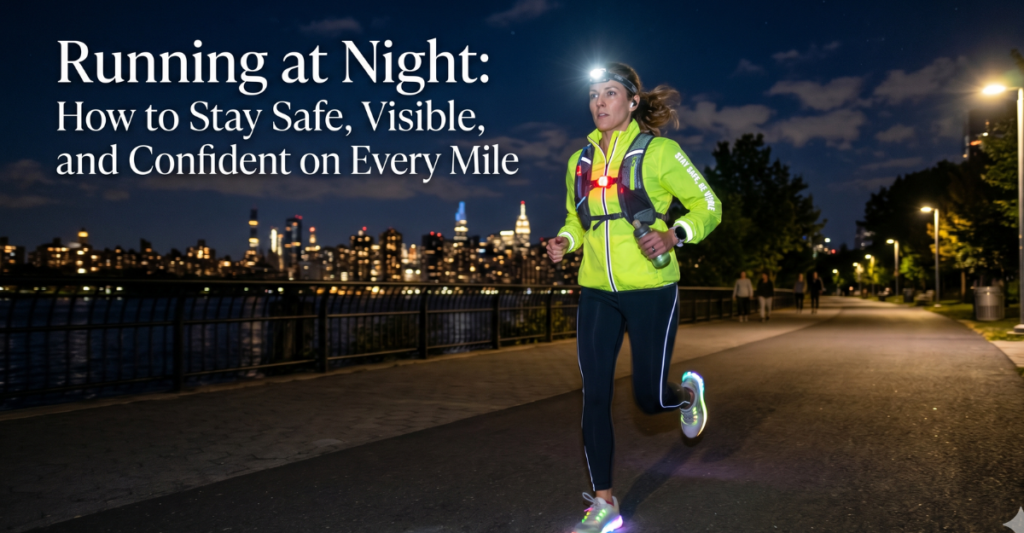
There’s something uniquely powerful about running at night. The world is quieter, the air feels cooler, and distractions seem to fade away. For many runners, nighttime miles are not just a convenience—they’re a ritual. Whether you’re squeezing in a workout after a long day or simply enjoying the calm of the evening, running after dark can be incredibly rewarding.
But let’s be clear: running at night also introduces real risks.
Reduced visibility, traffic, uneven terrain, and personal safety concerns all become more significant once the sun goes down. That doesn’t mean you should avoid nighttime running—it means you should approach it smarter.
This guide will show you exactly how to stay safe, visible, and confident every time you step out into the dark.
Why People Love Running at Night
Before diving into safety, it’s worth understanding why so many runners prefer nighttime training.
For starters, temperatures are often cooler, especially in warmer climates. This makes longer runs more comfortable and reduces the risk of overheating.
There’s also the mental aspect. Night running can feel meditative. With fewer people around, fewer distractions, and less noise, it becomes easier to focus on your breathing, your stride, and your thoughts.
For many, it’s the only time available. Work schedules, family commitments, and daily responsibilities often leave evenings as the only window for exercise.
But while the benefits are real, so are the challenges.
The Biggest Risks of Running at Night
Running in the dark changes your environment in ways that directly impact your safety.
1. Reduced Visibility
Drivers, cyclists, and even other pedestrians may not see you until it’s too late. Dark clothing and poorly lit areas make this even worse.
2. Obstacles and Uneven Terrain
Potholes, curbs, loose gravel, or debris become harder to spot. This increases the risk of trips and injuries.
3. Traffic Hazards
Even in familiar neighborhoods, traffic patterns change at night. Some drivers may be fatigued or less attentive.
4. Personal Safety Concerns
Unfortunately, running alone at night can increase vulnerability, especially in isolated areas.
The key is not to fear these risks—but to manage them intelligently.
Visibility: Your First Line of Defense
If there’s one thing that matters most when running at night, it’s this:
You must be seen.
Many runners underestimate how invisible they are in low-light conditions. Dark clothing blends into the environment, and even streetlights don’t guarantee visibility.
Wear Reflective Gear
Reflective materials bounce light back toward its source—like car headlights—making you visible from much farther away.
Key areas to prioritize:
- Chest and back
- Arms and legs (movement catches attention)
- Shoes
Use Active Lighting
Reflective gear is passive—it depends on external light. Active lighting (like LED lights) makes you visible regardless of surroundings.
Consider:
- Clip-on LED lights
- Light-up vests or belts
- Headlamps or chest lamps
These not only make you visible—they also help you see where you’re going.
Choosing the Right Route
Not all running routes are created equal—especially at night.
Stick to Well-Lit Areas
Streetlights, open businesses, and populated streets increase both visibility and safety.
Avoid Isolated Paths
Trails and parks may be great during the day, but at night they can become risky due to poor lighting and limited access to help.
Run Against Traffic
This allows you to see oncoming vehicles and react if necessary.
Know Your Route
Avoid experimenting with new routes in the dark. Familiarity reduces the chances of unexpected hazards.
Situational Awareness: Stay Alert, Stay Safe
One of the biggest mistakes runners make at night is becoming too disconnected from their surroundings.
Limit Headphone Use
If you listen to music or podcasts:
- Keep the volume low
- Use only one earbud
- Stay aware of approaching vehicles or people
Stay Off Your Phone
Checking messages or changing songs while running reduces awareness and increases risk.
Trust Your Instincts
If something feels off, it probably is. Change direction, move to a brighter area, or end your run early.
Running Gear That Makes a Difference
The right gear doesn’t just improve performance—it can protect you.
Reflective Apparel
Look for clothing designed specifically for visibility. These often include strategically placed reflective strips.
LED Safety Lights
Compact, lightweight, and powerful. These are essential for:
- Runners
- Cyclists
- Night workers
Headlamps
Great for:
- Trail running
- Poorly lit streets
- Avoiding obstacles
Bright-Colored Clothing
Even during dusk or dawn, bright colors improve visibility.
Running Alone vs Running With Others
Running Alone
If you run solo:
- Share your route with someone
- Use tracking apps
- Carry identification
Running With a Partner or Group
This significantly increases safety. There’s strength—and visibility—in numbers.
Weather and Night Conditions
Nighttime conditions can change quickly.
Fog
Reduces visibility dramatically. Use brighter lights and slow your pace.
Rain
Makes surfaces slippery and reduces traction. Reflective gear becomes even more critical.
Cold Temperatures
Layer properly, but avoid bulky clothing that restricts movement or visibility.
Mental Confidence: The Hidden Factor
Running at night isn’t just physical—it’s psychological.
Confidence comes from preparation.
When you:
- Know your route
- Wear the right gear
- Stay visible
- Stay alert
You eliminate most of the uncertainty.
And that’s when night running becomes what it should be:
Peaceful, empowering, and enjoyable.
How SafetyLightMe Fits Into Your Night Routine
SafetyLightMe isn’t just about products—it’s about enabling freedom.
Freedom to:
- Run when you want
- Train safely
- Stay visible without compromise
Whether you’re a runner, cyclist, or someone working late hours, visibility isn’t optional—it’s essential.
The right lighting gear turns risk into confidence.
Running at night doesn’t have to be dangerous.
With the right mindset and preparation, it can become one of the most enjoyable parts of your routine.
Remember:
- Visibility is everything
- Awareness is your advantage
- Preparation builds confidence
So lace up, light up, and take control of your run—even after the sun goes down.
Give us a call today at 1-877-777-6086 or fill out our contact form to become a retail
distributor of our top-of-the-line safety lights.