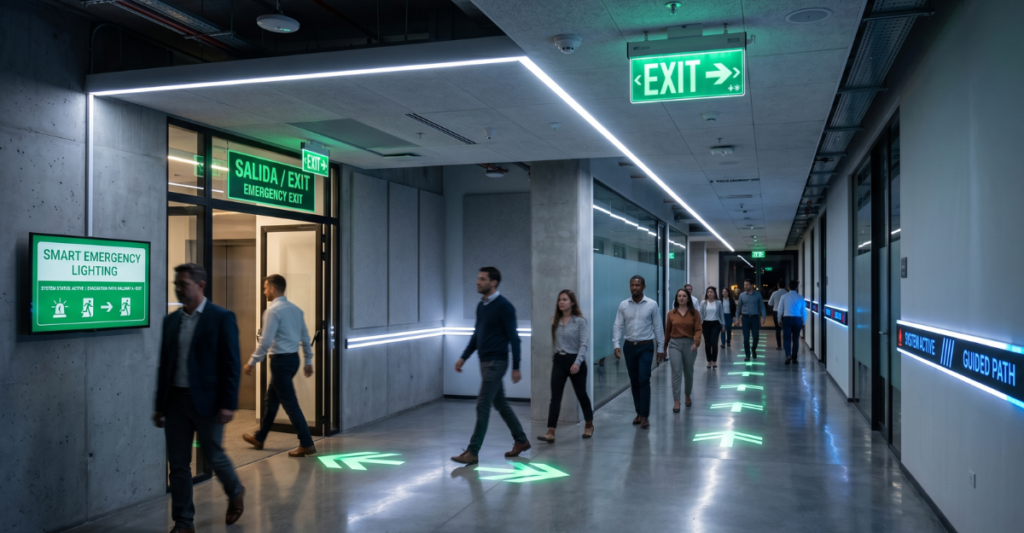
Over the past decade, buildings have become smarter. From automated climate control to advanced security systems, technology is reshaping how we design and manage spaces. Yet one area that is rapidly evolving — and often overlooked — is emergency lighting.
Traditional emergency lighting systems have served their purpose for decades. They turn on when power fails, guide people to exits, and provide basic illumination during emergencies. However, these systems are reactive, limited, and often inefficient.
Today, a new generation of lighting is emerging: smart emergency lighting systems.
These systems go beyond simple illumination. They integrate with building management systems, provide real-time data, self-test automatically, and adapt dynamically to emergencies.
In this article, we’ll explore how smart emergency lighting is transforming safety, why it matters, and how businesses can benefit from adopting this technology.
What Is Smart Emergency Lighting?
Smart emergency lighting refers to advanced lighting systems that use digital technology, sensors, and connectivity to improve safety and efficiency.
Unlike traditional systems, smart lighting can:
- Monitor its own performance
- Detect faults automatically
- Communicate with central systems
- Adjust lighting levels dynamically
- Provide real-time alerts
These capabilities make smart emergency lighting a proactive safety solution rather than a reactive one.
How Smart Emergency Lighting Works
Smart systems rely on a combination of technologies:
1. Sensors
Detect motion, occupancy, and environmental changes.
2. Connectivity (IoT)
Allows devices to communicate with each other and central systems.
3. Software Platforms
Provide dashboards for monitoring and control.
4. Automated Controls
Enable self-testing and real-time adjustments.
Key Features of Smart Emergency Lighting Systems
1. Self-Testing Capabilities
Traditional systems require manual testing, which is time-consuming and often inconsistent.
Smart systems:
- Perform automatic tests
- Log results digitally
- Notify managers of failures
This ensures compliance and reliability without manual effort.
2. Real-Time Monitoring
Facility managers can monitor the entire lighting system from a central dashboard.
Benefits include:
- Immediate fault detection
- Remote diagnostics
- Faster maintenance response
3. Adaptive Lighting
Smart systems can adjust brightness based on:
- Occupancy
- Time of day
- Emergency conditions
This improves both safety and energy efficiency.
4. Integration with Building Systems
Smart emergency lighting can integrate with:
- Fire alarm systems
- Security systems
- HVAC systems
This creates a unified safety ecosystem.
Why Smart Emergency Lighting Matters
1. Faster Emergency Response
In critical situations, every second counts.
Smart systems can:
- Automatically illuminate escape routes
- Highlight safest exits
- Adjust lighting based on hazards
2. Improved Safety Outcomes
By providing better visibility and guidance, smart lighting reduces:
- Panic
- Confusion
- Evacuation time
3. Reduced Maintenance Costs
Automation eliminates the need for manual inspections, saving time and money.
4. Enhanced Compliance
Digital records make it easier to meet regulatory requirements.
Energy Efficiency and Sustainability
Smart emergency lighting is not just safer — it’s also more sustainable.
Key Benefits:
- Lower energy consumption
- Reduced carbon footprint
- Longer lifespan of components
LED technology combined with smart controls maximizes efficiency.
Applications Across Industries
1. Commercial Buildings
Offices benefit from automated monitoring and reduced maintenance.
2. Hospitals
Critical environments require reliable and adaptive lighting.
3. Airports and Transportation
High-traffic areas need dynamic safety solutions.
4. Industrial Facilities
Complex layouts benefit from intelligent guidance systems.
Challenges of Implementing Smart Lighting
While the benefits are significant, there are challenges to consider:
1. Initial Cost
Smart systems require higher upfront investment.
2. Integration Complexity
Older buildings may need upgrades.
3. Training Requirements
Staff must understand how to use the system.
Overcoming These Challenges
1. Long-Term ROI
Energy savings and reduced maintenance offset initial costs.
2. Scalable Solutions
Start small and expand over time.
3. Professional Installation
Ensures smooth integration and optimal performance.
The Role of Data in Smart Lighting
One of the biggest advantages of smart systems is data.
What Data Can Do:
- Identify high-risk areas
- Predict failures
- Optimize lighting performance
Data-driven decisions improve safety and efficiency.
Future Trends in Smart Emergency Lighting
The future of safety lighting is even more advanced.
1. AI Integration
Systems that learn and adapt automatically.
2. Predictive Maintenance
Fix issues before they occur.
3. Advanced Sensors
Detect smoke, heat, and movement simultaneously.
4. Wireless Systems
Simplify installation and upgrades.
How to Choose the Right Smart Lighting System
Key Factors:
- Building size
- Industry requirements
- Budget
- Scalability
Working with experienced providers ensures the best results.
Best Practices for Implementation
- Conduct a full safety audit
- Plan integration with existing systems
- Train staff properly
- Schedule regular system reviews
Why Businesses Are Making the Switch
Companies are increasingly adopting smart lighting because it offers:
- Better safety
- Lower costs
- Future-proof solutions
Smart emergency lighting represents the future of building safety. By combining advanced technology with practical functionality, these systems provide a level of protection that traditional lighting simply cannot match.
For businesses looking to improve safety, reduce costs, and stay ahead of regulations, investing in smart emergency lighting is not just an upgrade — it’s a necessity.
Give us a call today at 1-877-777-6086 or fill out our contact form to become a retail
distributor of our top-of-the-line safety lights.