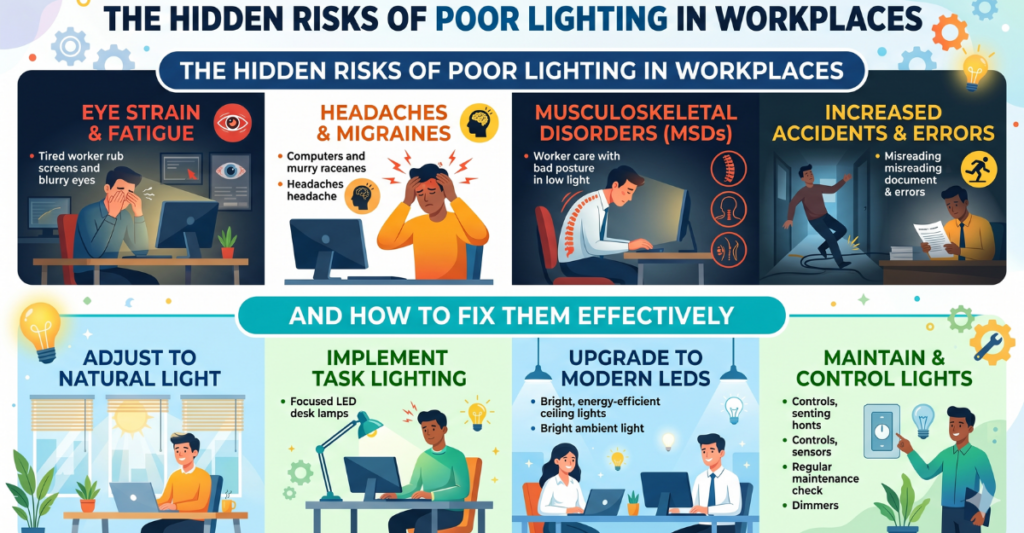
Lighting is often treated as a secondary concern in workplace design. Companies invest heavily in equipment, training, and safety protocols, yet overlook one critical factor that directly impacts employee wellbeing and operational efficiency: lighting.
At first glance, lighting may seem like a simple utility — just flip a switch and the room is illuminated. But in reality, lighting quality plays a fundamental role in workplace safety, productivity, and even long-term health.
Poor lighting conditions are responsible for a surprising number of workplace incidents every year. From minor injuries like slips and trips to more serious accidents involving machinery, inadequate visibility can turn routine tasks into hazardous situations.
In this guide, we’ll uncover the hidden risks of poor workplace lighting and provide practical, effective solutions to help you create a safer and more productive environment.
Why Lighting Matters More Than You Think
Lighting affects much more than visibility. It directly influences:
- Employee safety
- Productivity levels
- Mental focus
- Fatigue and eye strain
- Overall workplace morale
When lighting is inadequate, these areas suffer — often without immediate detection.
The Hidden Risks of Poor Workplace Lighting
1. Increased Risk of Accidents
One of the most obvious dangers of poor lighting is the increased likelihood of accidents.
Employees working in dim or uneven lighting may struggle to see:
- Obstacles on the floor
- Moving machinery
- Warning signs
- Changes in surface levels
This can lead to:
- Slips and falls
- Collisions
- Equipment mishandling
In industrial environments, these risks are amplified, potentially resulting in serious injuries.
2. Eye Strain and Fatigue
Poor lighting forces the eyes to work harder, leading to:
- Eye strain
- Headaches
- Blurred vision
- Mental fatigue
Over time, this reduces concentration and increases the likelihood of mistakes.
Employees experiencing visual discomfort are less productive and more prone to errors — especially in detail-oriented tasks.
3. Reduced Productivity
Lighting directly impacts how efficiently employees perform their tasks.
Inadequate lighting can cause:
- Slower task completion
- Increased errors
- Reduced motivation
On the other hand, well-lit environments improve focus and energy levels.
4. Long-Term Health Issues
Chronic exposure to poor lighting can contribute to:
- Vision problems
- Sleep disturbances
- Increased stress levels
Lighting also affects circadian rhythms, which regulate sleep cycles and overall wellbeing.
5. Poor Emergency Response
In emergencies, visibility is critical.
If a workplace lacks proper safety lighting, employees may struggle to:
- Locate exits
- Follow evacuation routes
- Avoid hazards
This can delay evacuation and increase risk during critical situations.
Common Lighting Problems in Workplaces
Understanding the most common lighting issues can help you identify risks early.
1. Insufficient Light Levels
Areas that are too dim make it difficult to see clearly, especially in:
- Warehouses
- Storage areas
- Stairways
2. Glare
Excessive brightness or reflections can cause discomfort and reduce visibility.
Common sources include:
- Unshielded lights
- Reflective surfaces
- Computer screens
3. Uneven Lighting
Inconsistent lighting creates shadows and dark spots, increasing accident risks.
4. Flickering Lights
Flickering can cause:
- Eye strain
- Distractions
- Headaches
4. Flickering Lights
Flickering can cause:
- Eye strain
- Distractions
- Headaches
Industries Most Affected by Poor Lighting
While all workplaces need proper lighting, some industries face higher risks:
Manufacturing
Precision and safety are critical, making visibility essential.
Warehousing and Logistics
Large spaces and moving equipment require consistent lighting.
Construction
Dynamic environments demand adaptable lighting solutions.
Healthcare
Accurate lighting is crucial for patient care and procedures.
Office Environments
Even desk jobs require proper lighting to prevent fatigue and improve productivity.
How Proper Lighting Improves Workplace Safety
Investing in quality lighting provides immediate and long-term benefits.
1. Enhanced Visibility
Clear illumination reduces accidents and errors.
2. Better Focus
Employees can perform tasks more efficiently.
3. Improved Morale
A well-lit workspace feels safer and more comfortable.
4. Faster Emergency Response
Proper safety lighting ensures quick evacuation.
Modern Lighting Solutions for Safer Workplaces
1. LED Lighting Systems
LED technology has revolutionized workplace lighting.
Benefits include:
- Energy efficiency
- Long lifespan
- Consistent brightness
- Low maintenance
2. Motion Sensor Lighting
Automatically activates when movement is detected, saving energy and improving safety in low-traffic areas.
3. Task Lighting
Provides focused illumination for specific tasks, improving precision and reducing strain.
4. Emergency Lighting Systems
Essential for safety during power outages, ensuring visibility in critical moments.
Best Practices for Workplace Lighting Design
1. Conduct a Lighting Audit
Evaluate current lighting conditions and identify problem areas.
2. Ensure Uniform Lighting
Avoid shadows and dark spots by distributing light evenly.
3. Reduce Glare
Use diffusers and proper fixture placement.
4. Use Appropriate Light Levels
Different tasks require different brightness levels.
5. Incorporate Natural Light
Whenever possible, use daylight to improve mood and reduce energy costs.
The Role of Safety Lighting in Compliance
Many workplace safety regulations include lighting requirements.
Compliance ensures:
- Employee safety
- Legal protection
- Reduced liability
Failing to meet these standards can result in penalties and increased risks.
Cost vs Value: Why Lighting Is a Smart Investment
Some businesses hesitate to upgrade lighting due to costs.
However, the benefits far outweigh the investment:
- Reduced accidents
- Lower energy bills
- Increased productivity
- Fewer maintenance costs
Lighting upgrades often pay for themselves over time.
Signs Your Workplace Needs a Lighting Upgrade
Look out for these warning signs:
- Frequent employee complaints
- High accident rates
- Flickering or outdated lights
- Dark or uneven areas
If any of these apply, it’s time to take action.
Future Trends in Workplace Lighting
The future of lighting is smarter and more efficient.
Emerging Innovations:
- Smart lighting systems
- Automated brightness control
- IoT integration
- Human-centric lighting
These technologies improve both safety and comfort.
Poor workplace lighting is more than an inconvenience — it’s a serious safety risk. From increased accidents to reduced productivity and long-term health issues, inadequate lighting can impact every aspect of your business.
The good news is that these risks are entirely preventable.
By investing in modern safety lighting solutions, conducting regular assessments, and prioritizing employee wellbeing, you can create a safer, more efficient, and more productive workplace.
Lighting is not just about visibility — it’s about safety, performance, and responsibility.
Give us a call today at 1-877-777-6086 or fill out our contact form to become a retail
distributor of our top-of-the-line safety lights.