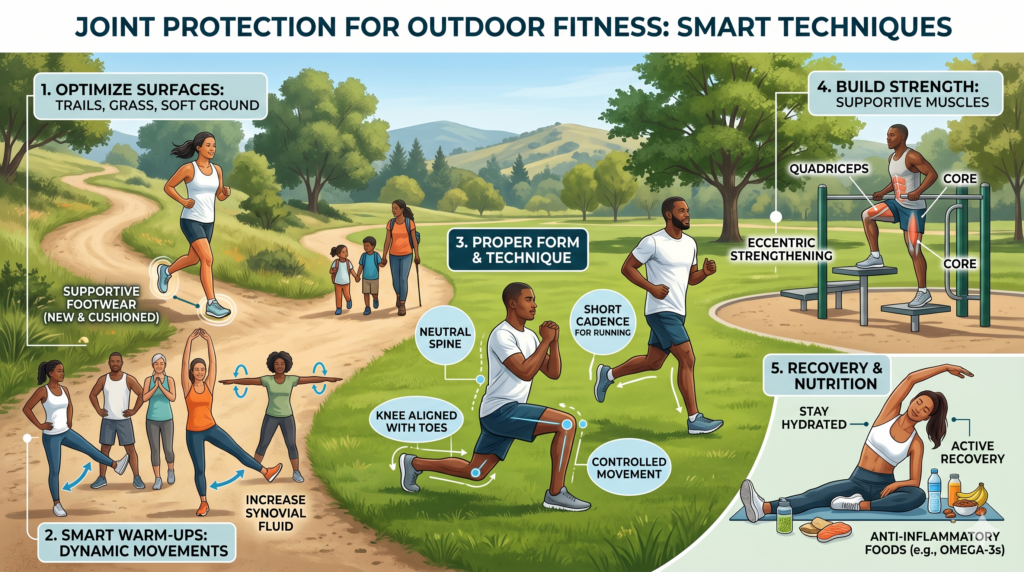
Getting outside for your workout can feel incredible the fresh air, changing scenery, and connection with nature make outdoor fitness an appealing choice for busy parents and fitness enthusiasts alike. However, the uneven terrain, hard surfaces, and variable conditions that make outdoor exercise exciting can also pose unique challenges to your joints. Whether you’re running through your neighborhood, hiking mountain trails with your kids, or doing bodyweight exercises at the local park, understanding joint protection techniques for outdoor fitness becomes essential for maintaining long-term health and staying active for years to come.
Your joints are remarkable structures that allow movement, absorb shock, and support your body weight during physical activity. Unlike muscles that can recover relatively quickly from stress, joint cartilage has limited blood supply and heals much more slowly when damaged. This makes prevention absolutely critical, especially as you navigate the unpredictable elements of outdoor training environments.
Understanding Joint Stress in Outdoor Environments
Outdoor fitness activities subject your joints to different stresses than indoor workouts. When you’re running on pavement, your knees, hips, and ankles absorb impact forces that can be two to three times your body weight with each footstrike. Trail running adds lateral stress as you navigate roots, rocks, and uneven ground. Even seemingly gentle activities like outdoor yoga or park bench exercises can strain your joints if performed on unstable or hard surfaces without proper preparation.
Temperature fluctuations significantly affect joint health during outdoor workouts. Cold weather causes synovial fluid the lubricant in your joints to thicken, reducing its shock-absorbing properties and making your joints stiffer and more vulnerable to injury. Hot weather brings different challenges, as dehydration can reduce joint lubrication and increase inflammation throughout your body.
The cumulative effect of these environmental factors means that joint protection techniques for outdoor fitness require more attention than you might give to similar indoor activities. Your body adapts to consistent stress over time, but outdoor variables constantly change, demanding greater awareness and proactive protective measures.
Warm-Up Strategies That Actually Protect Your Joints
A proper warm-up isn’t just about getting your heart rate up it’s about preparing your joints for the specific demands they’ll face during your outdoor workout. Start with five to ten minutes of gentle movement that gradually increases your core temperature and circulation. This could be brisk walking before a run, easy cycling before a bike ride, or dynamic stretching before a hiking adventure with your family.
Dynamic stretching should form the cornerstone of your outdoor fitness warm-up routine. Unlike static stretching where you hold positions, dynamic movements take your joints through their full range of motion while warming the surrounding muscles. Leg swings, arm circles, walking lunges, and hip rotations all prepare your joints by increasing synovial fluid production and improving mobility.
Pay special attention to warming up in cold weather. You might need an extra five to ten minutes of gradual movement before your joints feel ready for intense activity. Many experienced outdoor athletes wear an extra layer during warm-ups that they remove once their body temperature rises, keeping joints warm and flexible during those crucial initial minutes.
Choosing the Right Surfaces for Joint-Friendly Outdoor Exercise
Not all outdoor surfaces are created equal when it comes to joint health. Concrete sidewalks represent one of the hardest surfaces you can exercise on, offering virtually no shock absorption and transmitting maximum impact directly to your joints. Asphalt roads provide slightly more give but still create significant joint stress, particularly during running or jumping movements.
Natural surfaces often provide better joint protection. Grass, dirt trails, wood chip paths, and even sand offer varying degrees of cushioning that reduce impact forces on your knees, hips, and ankles. However, these surfaces also present their own challenges—softer ground can increase muscle fatigue and instability, potentially leading to different types of joint stress if you’re not properly conditioned.
The ideal approach involves varying your training surfaces throughout the week. This strategy, sometimes called “surface periodization,” helps your joints adapt to different stress patterns while preventing the repetitive strain that comes from always exercising on the same terrain. You might run on trails twice weekly, use sidewalks once, and incorporate grass or track work to create a balanced training program that keeps your joints healthier long-term.
Footwear: Your First Line of Joint Defense
The shoes you wear during outdoor fitness activities directly impact every joint from your feet to your lower back. Worn-out shoes lose their cushioning properties and structural support, causing your joints to absorb impacts they shouldn’t have to handle. Most athletic shoes need replacement every 300-500 miles of use, though this varies based on your body weight, running mechanics, and the surfaces you typically train on.
Different outdoor activities demand different footwear characteristics. Trail running shoes provide grip and lateral stability that road running shoes don’t offer, protecting your ankles and knees when navigating uneven terrain. Walking shoes need excellent arch support and cushioning for heel strike impact. Cross-training shoes work well for park workouts that involve varied movements in multiple directions.
Custom orthotics or quality insoles can significantly enhance joint protection by correcting biomechanical issues and providing additional cushioning exactly where your feet need it most. Many adults develop slight changes in foot mechanics as they age, and addressing these changes through proper footwear becomes increasingly important for maintaining joint health during outdoor activities.
Proper Form and Technique for Outdoor Movements
Your movement patterns during outdoor exercise create either protective or destructive forces on your joints. When running, maintaining a slight forward lean from your ankles rather than your waist helps distribute impact forces more evenly. Shortening your stride and increasing your cadence reduces the braking force that happens when your foot lands too far in front of your body—a common cause of knee pain among outdoor runners.
During bodyweight exercises at the park, maintaining neutral spine alignment protects your lower back and reduces unnecessary stress on hip joints. When performing squats, lunges, or step-ups on outdoor structures, focus on keeping your knees aligned with your toes rather than allowing them to collapse inward, a movement pattern that creates harmful torque on knee ligaments and cartilage.
Joint protection techniques for outdoor fitness also include learning to “read” terrain and adjust your movement accordingly. When hiking downhill, taking shorter steps and engaging your core muscles protects your knees from excessive impact. When trail running over roots and rocks, lifting your knees slightly higher and maintaining better foot clearance prevents the jarring missteps that can damage ankle and knee joints.
Upper Body Joint Protection
While much attention focuses on lower body joints during outdoor fitness, your shoulders, elbows, and wrists also need protection. If you’re doing push-ups on park benches or playground equipment, maintaining wrist alignment and avoiding hyperextension protects these vulnerable joints. Hand positioning matters tremendously—slight variations in hand placement during push-ups, planks, or pull-ups can shift stress from muscles to joint structures.
For activities involving throwing, swinging, or overhead movements with your kids, warming up your rotator cuff muscles and maintaining good scapular stability prevents shoulder injuries. Many parents develop shoulder problems from activities like playing catch, pushing swings, or lifting children without proper preparation or form awareness.
Progressive Overload: Building Joint Resilience Safely
Your joints grow stronger and more resilient when you progressively challenge them over time, but this adaptation process requires patience and strategic planning. The “10% rule”—increasing your weekly training volume or intensity by no more than 10% each week—provides a reasonable guideline for allowing your joints to adapt without overwhelming them.
This progressive approach becomes especially important when introducing new outdoor activities or returning to exercise after a break. Your cardiovascular system recovers faster than your joints, which means you might feel capable of doing more than your joints can safely handle. Many enthusiastic exercisers make the mistake of letting their improved stamina push them beyond what their joints are ready for, leading to overuse injuries.
Periodization strategies that cycle through periods of different training intensities give your joints recovery time while maintaining fitness. You might alternate harder workout weeks with easier recovery weeks, or vary the intensity of different training days throughout each week. This approach acknowledges that joint tissues need adequate recovery time between stressful sessions to rebuild and adapt.
The Role of Strength Training in Joint Protection
Building the muscles around your joints provides critical support that reduces joint stress during outdoor activities. Stronger quadriceps, hamstrings, and hip muscles stabilize your knee joint and absorb impact forces that would otherwise damage cartilage. Similarly, strong core muscles protect your spine and reduce compensatory stress on hip and shoulder joints.
Outdoor strength training using park benches, playground equipment, or portable resistance bands can effectively build this protective muscle. Squats, step-ups, lunges, and single-leg exercises strengthen the lower body muscles that support your knees and hips. Push-ups, pull-ups, and rows develop upper body strength that protects shoulder joints during daily activities and recreational sports.
The key is maintaining balance between opposing muscle groups. Many people develop strength imbalances—strong quadriceps but weak hamstrings, for example—that actually increase joint stress and injury risk. A well-rounded outdoor strength program addresses all major muscle groups and includes both pushing and pulling movements, both knee-dominant and hip-dominant exercises.
Eccentric Strengthening for Joint Stability
Eccentric exercises—movements where muscles lengthen under tension—provide unique joint protection benefits. Slowly lowering yourself during a squat, controlling your descent during step-downs, or gradually straightening your arms during push-ups all represent eccentric muscle actions that build tremendous strength in the ranges of motion where joints are most vulnerable.
Research shows eccentric strengthening particularly helps prevent tendon problems around joints, conditions like patellar tendinopathy (jumper’s knee) or Achilles tendinopathy that commonly affect outdoor fitness enthusiasts. These exercises can be easily incorporated into park workouts or pre-run routines without requiring special equipment.
Nutrition Strategies That Support Joint Health
What you eat directly impacts your joint health and your body’s ability to manage inflammation from outdoor exercise. Omega-3 fatty acids found in fish, walnuts, and flaxseeds have well-documented anti-inflammatory properties that help reduce exercise-induced joint inflammation. Many active adults notice reduced joint discomfort when they consistently include omega-3 sources in their diet.
Adequate protein intake supports the maintenance and repair of connective tissues surrounding your joints. Collagen protein, in particular, provides the specific amino acids your body uses to rebuild cartilage, tendons, and ligaments. Some research suggests that consuming collagen before exercise may enhance this rebuilding process, though more studies are needed to confirm optimal timing and dosages.
Staying properly hydrated maintains the viscosity of synovial fluid that lubricates your joints. Dehydration reduces this lubrication, increases friction within joints, and promotes inflammation throughout your body. During outdoor workouts, especially in hot weather, you’re losing fluid through sweat that must be replaced to maintain optimal joint function.
Anti-Inflammatory Foods and Joint Protection
Chronic inflammation gradually damages joint cartilage and other structures, so managing inflammation through diet represents an important joint protection technique for outdoor fitness enthusiasts. Colorful fruits and vegetables contain antioxidants and phytonutrients that combat inflammation. Berries, leafy greens, tomatoes, and peppers are particularly rich in these protective compounds.
Conversely, certain foods promote inflammation and may contribute to joint problems over time. Processed foods high in refined sugars and trans fats trigger inflammatory responses in your body. While occasional treats won’t destroy your joints, a diet consistently high in inflammatory foods can counteract all the protective measures you’re taking during your outdoor workouts.
Recovery Techniques for Outdoor Athletes
What you do between outdoor workouts matters just as much for joint health as the workouts themselves. Adequate sleep allows your body to produce growth hormone and other compounds that repair and rebuild joint tissues damaged during exercise. Most adults need seven to nine hours of quality sleep for optimal recovery, though individual needs vary.
Active recovery activities like easy walking, gentle swimming, or casual cycling promote blood flow to your joints without creating additional stress. This increased circulation delivers nutrients to joint tissues and removes metabolic waste products, supporting the repair process. Many outdoor fitness enthusiasts find that easy movement actually helps them feel better than complete rest.
Self-massage techniques and foam rolling can reduce muscle tension that might otherwise create abnormal stress patterns on joints. When muscles remain tight, they can pull joints out of optimal alignment or restrict movement in ways that increase wear and tear. Spending just ten minutes after outdoor workouts addressing tight hip flexors, calves, or other commonly tight areas can significantly reduce joint stress.
Cold and Heat Therapy Applications
Applying ice to joints after particularly intense outdoor workouts helps manage acute inflammation and provides pain relief. Cold therapy constricts blood vessels and reduces swelling, making it most appropriate immediately following exercise or after any minor joint aggravation. Most experts recommend 15-20 minute applications, several times if needed.
Heat therapy serves different purposes for joint health. Warming joints before outdoor exercise in cold weather helps improve flexibility and prepares tissues for activity. Heat also helps manage chronic stiffness and promotes blood flow to support healing. However, avoid applying heat to acutely inflamed joints, as this can increase swelling and discomfort.
Modifying Outdoor Workouts Based on Joint Feedback
Learning to distinguish between normal exercise discomfort and problematic joint pain represents a critical skill for long-term outdoor fitness participation. Muscle soreness that appears 24-48 hours after a workout and gradually improves signals healthy adaptation. Sharp pain during exercise, joint swelling, or discomfort that persists for days suggests you’ve exceeded what your joints can safely handle.
When joints send warning signals, responding quickly prevents minor irritation from becoming serious injury. This might mean taking extra rest days, reducing workout intensity, modifying exercises that stress the painful joint, or temporarily switching to alternative activities that don’t aggravate the problem. Many fitness enthusiasts resist these adjustments, viewing them as weakness or failure, but intelligent modification actually demonstrates mature training wisdom.
Cross-training provides an excellent strategy for maintaining fitness while protecting stressed joints. If running causes knee discomfort, switching to cycling or swimming maintains cardiovascular fitness while giving knee joints a break from impact. If shoulder problems limit certain exercises, focusing on lower body work and core training maintains overall fitness while the shoulder recovers.
Age-Specific Considerations for Joint Protection
Joint protection strategies should evolve as you age because joint structures change over time. By your mid-thirties, cartilage begins showing normal wear patterns, and cellular repair processes gradually slow. This doesn’t mean you can’t participate in outdoor fitness activities, but it does mean that recovery takes longer and protective measures become more important.
For adults in their forties and fifties, the balance between challenging workouts and adequate recovery narrows. You might need more warm-up time, extra strength training to maintain protective muscle mass, and longer recovery periods between intense sessions. Many athletes in this age group find they perform better training four days per week with quality sessions than trying to maintain the six-day schedules they followed when younger.
Hormonal changes that occur during perimenopause and menopause affect joint health in ways many women don’t anticipate. Declining estrogen levels can increase joint inflammation and reduce the thickness of cartilage. Women going through these transitions often benefit from emphasizing anti-inflammatory nutrition strategies and may need to adjust workout intensity more frequently based on how their joints feel.
Joint Protection for Young Athletes
If you’re helping your kids develop outdoor fitness habits, understanding age-appropriate joint protection techniques becomes important. Young athletes’ growth plates remain open until late adolescence, creating vulnerability to certain overuse injuries. Specializing in single sports too early, training too intensely, or participating in activities without adequate rest can cause growth plate damage that affects joints long-term.
Encouraging your children to participate in multiple activities rather than specializing develops well-rounded fitness and distributes stress across different joints and movement patterns. Teaching proper form early establishes movement patterns that protect joints throughout their lives. Making fitness fun and varied rather than intensely competitive during childhood years supports both immediate joint health and lifetime activity participation.
Equipment and Accessories for Enhanced Joint Protection
Beyond proper footwear, various equipment pieces can enhance joint protection during outdoor fitness activities. Trekking poles reduce stress on knee and hip joints during hiking by distributing some of your body weight through your arms. Research shows poles can reduce knee impact by up to 25% during downhill hiking, making them particularly valuable for anyone with existing knee concerns or when carrying a heavy pack.
Knee sleeves or braces provide compression and warmth that can reduce joint discomfort during outdoor exercise. While braces don’t substitute for proper strength and technique, they can provide useful feedback about joint position and may reduce pain sufficiently to allow you to exercise while rehabbing minor issues. Choose braces specifically designed for athletic activity rather than rigid medical braces unless directed by a healthcare provider.
Exercise mats or portable cushioning make outdoor bodyweight workouts more joint-friendly. Performing planks, mountain climbers, or other floor exercises directly on hard ground creates unnecessary stress on wrists, knees, and other contact points. A simple foam mat provides cushioning that protects joints without significantly affecting exercise difficulty.
Technology for Monitoring Joint Stress
Fitness trackers and running watches now include features that help monitor factors affecting joint health. Step counters help ensure you’re not dramatically increasing daily impact loads too quickly. Heart rate monitors help you stay in appropriate training zones rather than constantly pushing maximum intensity that might overwhelm your joints’ recovery capacity.
Some advanced devices measure ground contact time, vertical oscillation, and other biomechanical factors that relate to joint stress during running and other activities. While this data isn’t necessary for everyone, athletes dealing with recurring joint problems might find these insights helpful for identifying and correcting movement patterns that contribute to their issues.
Recognizing When Professional Help Is Needed
Despite your best prevention efforts, sometimes joint problems require professional evaluation. Persistent pain lasting more than a few days, joint swelling, significant stiffness that doesn’t improve with movement, or joints that feel unstable all warrant consultation with a healthcare provider who understands sports medicine and outdoor fitness activities.
Physical therapists specializing in sports rehabilitation can identify biomechanical issues contributing to joint stress and design corrective exercise programs. They might discover that your knee pain stems from weak hip muscles, or that shoulder problems relate to poor thoracic spine mobility. Addressing these underlying causes often resolves joint discomfort more effectively than simply resting and hoping problems disappear.
Don’t wait until joint problems become severe before seeking help. Early intervention prevents minor issues from developing into chronic conditions that might eventually limit your outdoor fitness participation. Many joint problems respond excellently to treatment when caught early but become much more difficult to resolve after months or years of damage accumulation.
Creating Your Personalized Joint Protection Plan
Implementing comprehensive joint protection techniques for outdoor fitness requires developing a personalized approach based on your individual factors. Consider your age, fitness history, any existing joint problems, the specific outdoor activities you enjoy, and your overall goals. Someone training for a marathon needs different joint protection strategies than someone doing casual park workouts twice weekly.
Start by assessing your current practices honestly. Are you warming up adequately? When did you last replace your athletic shoes? Do you include sufficient strength training? Are you getting enough sleep and eating an anti-inflammatory diet? Identifying gaps in your current approach helps you prioritize which protective measures to implement first.
Make changes gradually rather than trying to overhaul everything simultaneously. Perhaps you begin by improving your warm-up routine and committing to replace worn shoes. Once these habits are established, you might add twice-weekly strength sessions and begin tracking your training volume to ensure appropriate progression. This incremental approach builds sustainable habits rather than creating overwhelming to-do lists you can’t maintain.
Keep a simple training log that notes not just your workouts but how your joints felt during and after exercise. Over time, patterns emerge showing which combinations of training, recovery, and environmental factors support optimal joint health for your body. This personalized data becomes more valuable than any generic advice because it reflects your unique physiology and circumstances.
Protecting your joints doesn’t mean avoiding outdoor fitness activities you love—it means approaching them with intelligence and respect for your body’s capabilities and limitations. By implementing the strategies discussed here, you’re investing in decades of active, pain-free outdoor movement. Your future self will thank you for the attention you give to joint health today, as you continue enjoying trails, parks, and outdoor spaces with energy and enthusiasm for years to come.