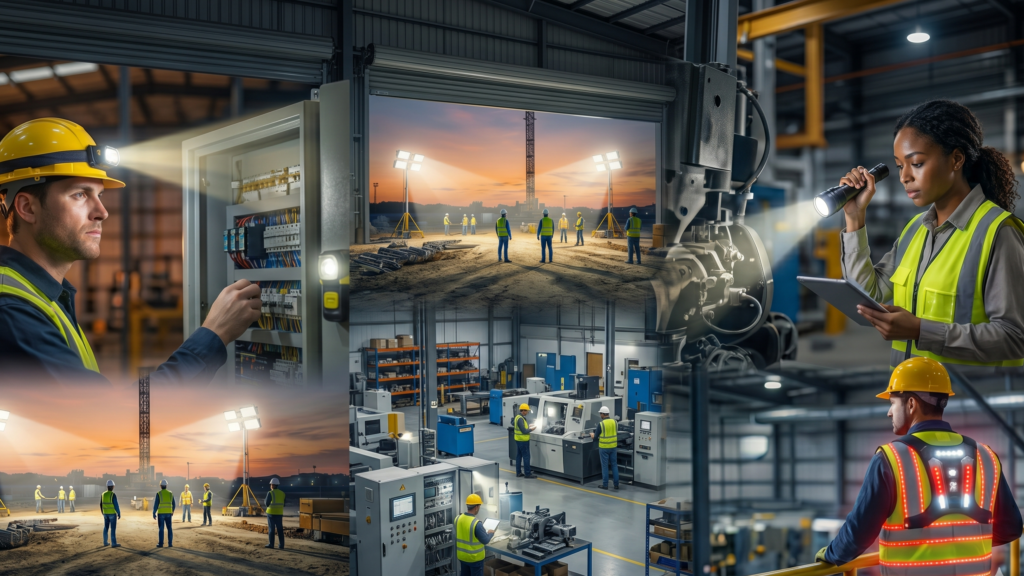
When it comes to industrial work environments, safety is paramount. One crucial aspect of maintaining a safe workplace is proper lighting, especially in areas where visibility might be compromised. This is where safety lighting solutions come into play, and among them, clip-on safety lights have gained popularity in recent years. But how do clip-on safety lights compare to other safety lighting solutions for industrial workers? Let’s dive deep into this topic and explore the various options available to keep workers safe and visible in challenging conditions.
Industrial workers face numerous hazards daily, and poor visibility can significantly increase the risk of accidents and injuries. Whether you’re working in dimly lit warehouses, construction sites, or outdoor environments during low-light conditions, having reliable safety lighting is essential. As an industrial worker, you need to be aware of your surroundings and be visible to others, including your colleagues and any moving machinery or vehicles in the area.
The Rise of Clip-On Safety Lights in Industrial Settings
Clip-on safety lights have gained traction in recent years as a versatile and convenient lighting solution for industrial workers. These compact, lightweight devices can be easily attached to various parts of your clothing or personal protective equipment (PPE), providing a hands-free lighting option that moves with you. But how do clip-on safety lights compare to other safety lighting solutions for industrial workers? Let’s examine some of the key advantages that have contributed to their growing popularity:
Portability and Versatility: Clip-on safety lights are designed to be compact and lightweight, making them easy to carry and use in various work environments. You can attach them to your hard hat, safety vest, or even your tool belt, ensuring that you have a reliable light source wherever you go.
Hands-Free Operation: Unlike traditional flashlights or handheld work lights, clip-on safety lights allow you to keep both hands free for tasks. This is particularly beneficial when you’re working with tools or machinery that require your full attention and dexterity.
Customizable Illumination: Many clip-on safety lights offer multiple lighting modes, such as steady, flashing, or strobing options. This allows you to adjust the light output based on your specific needs and the ambient lighting conditions in your work area.
Comparing Clip-On Safety Lights to Traditional Lighting Solutions
To fully understand how clip-on safety lights stack up against other options, let’s compare them to some traditional safety lighting solutions commonly used in industrial settings:
- Headlamps
- Handheld flashlights
- Work area flood lights
- Wearable LED vests
Each of these lighting solutions has its own set of advantages and limitations, and the best choice often depends on the specific work environment and tasks at hand.
Headlamps: A Direct Competitor to Clip-On Safety Lights
Headlamps have long been a popular choice for industrial workers who need hands-free lighting. These devices are typically worn on the head or attached to a hard hat, providing illumination that follows your line of sight. But how do clip-on safety lights compare to headlamps in terms of functionality and user experience?
One of the main advantages of headlamps is their ability to provide focused illumination exactly where you’re looking. This can be particularly useful when working on detailed tasks or inspecting equipment. However, headlamps can sometimes be uncomfortable to wear for extended periods, especially if they’re heavy or poorly balanced.
Clip-on safety lights, on the other hand, offer more flexibility in terms of placement. You can attach them to various parts of your clothing or equipment, allowing you to customize the lighting angle based on your specific needs. This versatility can be especially beneficial when working in tight spaces or when you need to illuminate a wider area around you.
Battery Life and Power Output Considerations
When comparing clip-on safety lights to headlamps, it’s important to consider factors such as battery life and power output. Headlamps often have larger batteries and can provide more powerful illumination for longer periods. However, this comes at the cost of increased weight and bulk.
Clip-on safety lights typically have smaller batteries, which can result in shorter run times. However, their compact size and lightweight design make them more comfortable to wear for extended periods. Additionally, many clip-on lights now feature rechargeable batteries or USB charging capabilities, making it easy to keep them powered up throughout your workday.
Handheld Flashlights: Traditional Lighting with Limitations
Handheld flashlights have been a staple in industrial settings for decades, offering powerful illumination and the ability to direct light precisely where it’s needed. However, when comparing clip-on safety lights to handheld flashlights, several key differences become apparent.
The most significant limitation of handheld flashlights is that they occupy one of your hands, which can be impractical and even dangerous in many industrial work scenarios. Imagine trying to operate machinery or climb a ladder while holding a flashlight – it’s not an ideal situation. Clip-on safety lights, on the other hand, leave both of your hands free to perform tasks safely and efficiently.
Another factor to consider is the risk of dropping or misplacing a handheld flashlight. In a busy industrial environment, it’s all too easy to set down a flashlight and forget where you left it. Clip-on safety lights, being attached to your person or equipment, are much less likely to be lost or damaged during your workday.
Illumination Range and Beam Control
One area where handheld flashlights often have an advantage over clip-on safety lights is in their illumination range and beam control. Many professional-grade flashlights offer powerful beams that can illuminate objects at a considerable distance, as well as adjustable focus to switch between spot and flood lighting.
Clip-on safety lights typically have a more limited range and less control over the beam pattern. However, for most close-range work in industrial settings, the illumination provided by clip-on lights is usually sufficient. Additionally, some advanced clip-on lights now offer adjustable beam angles or multiple light sources to provide both focused and wide-area illumination.
Work Area Flood Lights: Stationary Lighting for Large Spaces
When it comes to illuminating large work areas, nothing beats the power and coverage of dedicated flood lights. These stationary lighting solutions are designed to provide bright, even illumination across expansive spaces, making them ideal for construction sites, warehouses, and outdoor work areas. But how do clip-on safety lights compare to work area flood lights in terms of functionality and practicality?
The most obvious difference is that flood lights are stationary, while clip-on safety lights move with you. This means that flood lights can provide consistent illumination for an entire work area, but they may create shadows or dark spots as workers move around obstacles or equipment. Clip-on lights, being attached to the worker, ensure that you always have adequate lighting no matter where you go within the work area.
Another factor to consider is the setup and power requirements of flood lights. These systems often require a dedicated power source, whether it’s a generator or electrical outlets, and they can take time to set up and position correctly. Clip-on safety lights, being battery-powered and portable, can be deployed instantly without any setup time or power infrastructure needs.
Complementary Lighting Solutions
It’s worth noting that clip-on safety lights and work area flood lights are not necessarily mutually exclusive options. In fact, many industrial workers find that using both types of lighting in combination provides the best overall visibility and safety. Flood lights can provide general illumination for the entire work area, while clip-on lights offer personalized, mobile lighting for specific tasks or areas that may be shadowed by equipment or structures.
By using both types of lighting, you can ensure that you have adequate visibility in all situations, from navigating through the work area to performing detailed tasks that require close-up illumination.
Wearable LED Vests: Visibility and Illumination Combined
Wearable LED vests represent another innovative approach to safety lighting in industrial settings. These vests combine high-visibility reflective materials with built-in LED lights, providing both passive and active visibility for workers. But how do clip-on safety lights compare to wearable LED vests in terms of functionality and user experience?
One of the primary advantages of LED vests is their ability to provide 360-degree visibility. The lights and reflective materials on these vests can make workers visible from all angles, which is particularly important in environments with moving vehicles or machinery. Clip-on safety lights, depending on their placement, may not offer the same level of omnidirectional visibility.
However, clip-on lights often provide more focused and directional illumination compared to LED vests. This can be beneficial when working on specific tasks that require concentrated light. Additionally, clip-on lights offer more flexibility in terms of placement, allowing you to position the light source exactly where you need it.
Comfort and Breathability Considerations
When comparing clip-on safety lights to wearable LED vests, it’s important to consider factors such as comfort and breathability. LED vests, while effective for visibility, can sometimes be bulky or less breathable than standard safety vests. This can be a concern in hot or humid work environments where worker comfort is crucial for productivity and safety.
Clip-on safety lights, being small and lightweight, typically have minimal impact on your comfort or mobility. You can easily attach them to your existing safety gear without adding significant bulk or restricting your movement.
The Versatility of Clip-On Safety Lights in Various Industrial Settings
One of the key strengths of clip-on safety lights is their versatility across a wide range of industrial applications. Let’s explore how these compact lighting solutions can be beneficial in various work environments:
Construction Sites: In the dynamic and often hazardous environment of a construction site, clip-on safety lights can provide essential visibility for workers moving between different areas or working in partially completed structures with limited lighting.
Warehouses and Distribution Centers: Workers in large warehouses can benefit from clip-on lights when navigating through aisles or working in areas with tall shelving units that may cast shadows.
Maintenance and Repair Work: For technicians and maintenance workers who frequently need to access tight spaces or work behind equipment, clip-on lights can provide crucial illumination without occupying their hands.
Outdoor Worksites: In outdoor industrial settings, clip-on lights can be invaluable during early morning or late evening hours when natural light is limited.
Adapting to Changing Lighting Conditions
Another advantage of clip-on safety lights is their ability to adapt to changing lighting conditions throughout the workday. As natural light levels fluctuate or as you move between different areas of a worksite, you can easily adjust or activate your clip-on light as needed. This flexibility ensures that you always have adequate illumination, regardless of the ambient lighting conditions.
Safety Standards and Compliance Considerations
When evaluating how clip-on safety lights compare to other safety lighting solutions for industrial workers, it’s crucial to consider relevant safety standards and compliance requirements. Depending on your industry and specific work environment, there may be regulations governing the type and intensity of lighting required for various tasks.
Many clip-on safety lights are designed to meet or exceed industry standards for personal protective equipment (PPE) and safety lighting. However, it’s important to verify that any lighting solution you choose complies with the specific requirements of your workplace and any applicable regulatory bodies.
Intrinsic Safety in Hazardous Environments
For workers in potentially explosive or flammable environments, intrinsic safety is a critical consideration. Some clip-on safety lights are specifically designed and certified for use in these hazardous areas, ensuring that they won’t create sparks or heat that could potentially ignite flammable gases or dust.
When comparing clip-on lights to other lighting solutions for use in hazardous environments, be sure to check for appropriate certifications and ratings, such as those from ATEX or UL for intrinsically safe equipment.
Cost-Effectiveness and Long-Term Value
When considering how clip-on safety lights compare to other safety lighting solutions for industrial workers, it’s important to evaluate the cost-effectiveness and long-term value of each option. While the initial cost of clip-on lights may be higher than some traditional lighting solutions, their durability, versatility, and low maintenance requirements can make them a cost-effective choice in the long run.
Factors to consider when assessing the value of clip-on safety lights include:
- Battery life and replacement costs
- Durability and resistance to damage in industrial environments
- Versatility across different work scenarios
- Potential productivity gains from hands-free operation
By taking these factors into account, you can make an informed decision about whether clip-on safety lights are the right choice for your specific work environment and budget.
Return on Investment in Worker Safety
When evaluating the cost-effectiveness of any safety equipment, it’s crucial to consider the potential return on investment in terms of improved worker safety and reduced accident rates. While it may be challenging to quantify the exact impact of improved lighting on safety outcomes, the potential benefits in terms of accident prevention and increased worker confidence can be significant.
By investing in effective safety lighting solutions like clip-on lights, you’re not only complying with safety regulations but also demonstrating a commitment to worker well-being. This can lead to improved morale, increased productivity, and potentially lower insurance costs due to reduced accident rates.
The Future of Safety Lighting in Industrial Environments
As technology continues to advance, the landscape of safety lighting solutions for industrial workers is likely to evolve. Clip-on safety lights are already benefiting from improvements in LED technology, battery life, and smart features. Looking ahead, we can expect to see further innovations that may enhance the functionality and effectiveness of these portable lighting solutions.
Some potential future developments in clip-on safety lighting may include:
Smart connectivity: Integration with IoT (Internet of Things) systems to provide real-time location tracking and automated activation based on environmental conditions.
Advanced sensors: Incorporation of sensors that can detect hazardous gases or abnormal environmental conditions, providing additional layers of safety beyond just illumination.
Improved energy efficiency: Ongoing advancements in LED and battery technology may lead to even longer-lasting and more powerful clip-on lights.
Customizable light spectrums: The ability to adjust the color temperature or spectrum of the light output to optimize visibility in different work environments or to reduce eye strain during long shifts.
As these technologies develop, clip-on safety lights may continue to gain advantages over traditional lighting solutions, further cementing their place in the toolkit of industrial workers across various sectors.