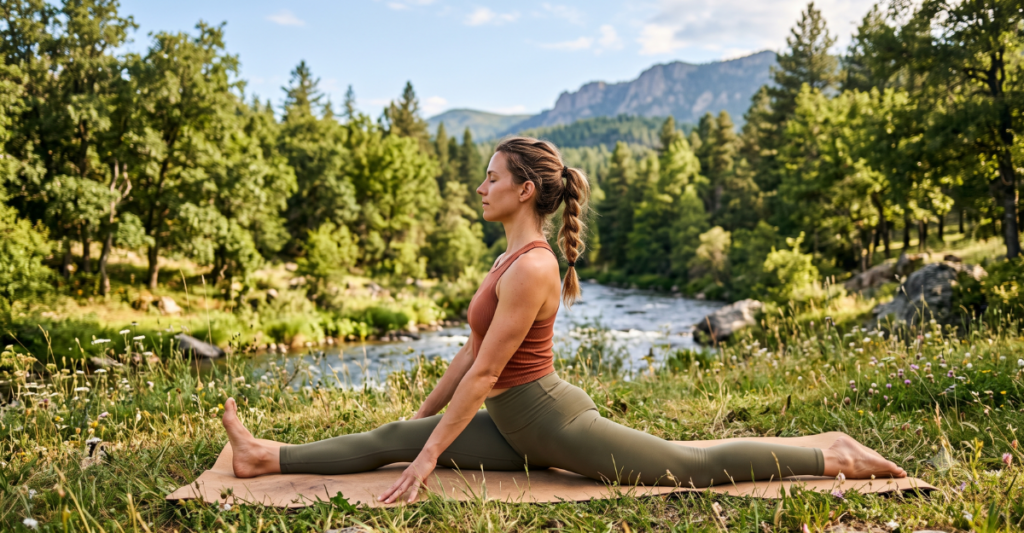
Yoga, an ancient practice that has stood the test of time, continues to captivate millions worldwide with its myriad benefits for both body and mind. When you take your yoga practice outdoors, you open yourself up to a whole new realm of possibilities, particularly when it comes to enhancing your flexibility. The question that naturally arises is: How can yoga enhance flexibility when practiced outdoors? The answer lies in the unique combination of natural elements, fresh air, and the expansive environment that outdoor settings provide.
Practicing yoga in the great outdoors offers a refreshing change of scenery from the confines of a studio or your living room. The natural surroundings can have a profound impact on your practice, allowing you to connect more deeply with your body and the world around you. This connection can lead to increased mindfulness and awareness, which are crucial elements in developing flexibility. As you breathe in the crisp outdoor air and feel the gentle breeze on your skin, you may find yourself more attuned to your body’s sensations and limitations, enabling you to push your boundaries safely and effectively.
The Role of Nature in Enhancing Yoga-Induced Flexibility
Nature plays a significant role in how yoga can enhance flexibility when practiced outdoors. The ever-changing outdoor environment challenges your body in ways that a controlled indoor setting simply cannot. Uneven terrain, for instance, engages your stabilizing muscles more intensely, leading to improved balance and core strength. This increased engagement can translate to better overall flexibility as your body learns to adapt to various surfaces and conditions.
Moreover, the natural elements can provide additional resistance or support, depending on the pose. A gentle breeze might offer a slight challenge to your balance in standing poses, encouraging you to engage your muscles more deeply and improve your overall stability. Conversely, the soft cushioning of grass or sand can provide a forgiving surface for deeper stretches, allowing you to sink into poses with greater ease and comfort.
The psychological benefits of being in nature can also contribute to enhanced flexibility. Studies have shown that spending time in green spaces can reduce stress and anxiety, leading to a more relaxed state of mind. This relaxation can translate directly to your yoga practice, allowing you to release tension in your muscles more effectively and achieve deeper stretches.
Temperature Variations and Their Impact on Flexibility
One of the key factors in how yoga can enhance flexibility when practiced outdoors is the natural variation in temperature throughout the day. Early morning practices, with their crisp, cool air, can be particularly beneficial for improving flexibility. The cooler temperatures encourage you to move more deliberately and focus on proper alignment, which is crucial for safely increasing your range of motion.
As the day progresses and temperatures rise, your muscles naturally become more pliable. This increased pliability can lead to greater flexibility gains, especially during midday or afternoon practices. The warmth of the sun can help loosen tight muscles and connective tissues, allowing you to sink deeper into stretches and potentially achieve new levels of flexibility.
However, it’s important to note that extreme temperatures, whether hot or cold, can impact your practice. In very hot conditions, be mindful of overextending yourself, as the heat can sometimes mask the body’s natural limits. Conversely, in colder weather, take extra time to warm up properly to prevent injury and maximize the benefits of your practice.
Tips for Practicing Yoga Outdoors in Different Temperatures:
- In cooler weather, focus on dynamic movements to generate internal heat before moving into deeper stretches
- During hot days, practice in shaded areas and stay hydrated to prevent overheating
- Adjust your practice time according to the season to take advantage of optimal temperatures for flexibility
The Influence of Natural Light on Your Yoga Practice
Natural light is another crucial element in understanding how yoga can enhance flexibility when practiced outdoors. Sunlight exposure during your practice can have numerous benefits that contribute to improved flexibility. Firstly, natural light helps regulate your body’s circadian rhythm, which can lead to better sleep patterns. Improved sleep quality can, in turn, contribute to reduced muscle tension and increased overall flexibility.
Additionally, sunlight exposure stimulates the production of vitamin D in your body. This essential vitamin plays a vital role in maintaining healthy bones and muscles, which are crucial for developing and maintaining flexibility. Adequate vitamin D levels can help prevent muscle weakness and reduce the risk of injuries as you work on increasing your range of motion.
The varying intensity of natural light throughout the day can also influence your practice. Early morning light can be invigorating, helping you feel more alert and focused as you move through your poses. This increased alertness can lead to better body awareness and more precise movements, potentially resulting in greater flexibility gains. As the day progresses, the changing quality of light can create different moods and atmospheres for your practice, allowing you to explore various aspects of flexibility and body awareness.
Grounding and Earthing: Connecting with Nature for Enhanced Flexibility
The concept of grounding or earthing is gaining recognition in the wellness community, and it’s particularly relevant when considering how yoga can enhance flexibility when practiced outdoors. Grounding involves direct physical contact with the earth’s surface, such as practicing yoga barefoot on grass, sand, or soil. This connection is believed to have numerous health benefits, including reduced inflammation and improved sleep quality, both of which can contribute to enhanced flexibility.
When you practice yoga outdoors with direct contact to the ground, you may experience a sense of stability and connection that’s difficult to replicate indoors. This feeling of being grounded can lead to increased confidence in your practice, allowing you to explore more challenging poses and push your flexibility limits safely. The texture of natural surfaces like grass or sand can also provide tactile feedback, heightening your proprioception (awareness of your body’s position in space) and potentially improving your overall flexibility.
Furthermore, the act of grounding can have a calming effect on your nervous system. A relaxed nervous system is crucial for flexibility, as tension and stress can cause muscles to tighten and restrict movement. By practicing yoga outdoors and connecting with the earth, you may find it easier to release tension and sink deeper into stretches, ultimately enhancing your flexibility.
The Power of Fresh Air in Yoga Practice
One of the most significant factors in how yoga can enhance flexibility when practiced outdoors is the abundance of fresh air. Breathing is a fundamental aspect of yoga, and the quality of the air you breathe can have a profound impact on your practice. Outdoor environments typically offer cleaner, more oxygenated air compared to indoor spaces, especially in natural settings away from urban pollution.
This higher quality air can lead to improved oxygenation of your blood, which in turn helps deliver more nutrients and oxygen to your muscles and tissues. Better oxygenation can result in reduced muscle fatigue and increased endurance, allowing you to hold poses for longer periods and work more effectively on your flexibility. Additionally, the act of deep breathing in fresh air can have a calming effect on your nervous system, promoting relaxation and potentially allowing for deeper stretches.
The scents present in outdoor environments can also play a role in enhancing your yoga practice. Natural aromas from flowers, trees, or the ocean can have aromatherapeutic effects, potentially reducing stress and promoting relaxation. This relaxed state can contribute to improved flexibility by helping you release tension in your muscles and approach your practice with a calm, focused mind.
Benefits of Practicing Yoga in Fresh Air:
- Improved oxygenation of muscles and tissues
- Reduced muscle fatigue and increased endurance
- Calming effects on the nervous system
- Potential aromatherapeutic benefits from natural scents
Adapting Your Practice to Different Outdoor Environments
One of the exciting aspects of outdoor yoga is the variety of environments available for practice. Each setting offers unique opportunities and challenges that can contribute to how yoga can enhance flexibility when practiced outdoors. Beach yoga, for instance, provides an unstable surface that engages your core and stabilizing muscles more intensely, potentially leading to improved overall flexibility as your body adapts to the shifting sand.
Practicing in a forest or wooded area offers a different set of benefits. The uneven terrain can challenge your balance and proprioception, leading to improved body awareness and potentially greater flexibility gains. The natural obstacles present in such environments, like rocks or tree roots, can also inspire creative modifications to your practice, encouraging you to explore new ways of moving and stretching your body.
Mountain or hillside yoga presents its own set of challenges and rewards. The inclined surfaces can intensify certain poses, providing a deeper stretch for muscles that might not be as engaged on flat ground. The expansive views often found in these settings can also inspire a sense of openness and possibility, potentially encouraging you to push your flexibility limits further than you might in a more confined space.
The Role of Mindfulness in Outdoor Yoga and Flexibility
Mindfulness is a crucial component of yoga practice, and outdoor settings can significantly enhance this aspect of your practice. When considering how yoga can enhance flexibility when practiced outdoors, it’s important to recognize the role that increased mindfulness can play in improving your overall flexibility.
Practicing yoga outdoors naturally encourages a greater sense of presence and awareness. The ever-changing environment, with its sounds, smells, and visual stimuli, can help anchor your attention to the present moment. This heightened awareness can translate directly to your body, allowing you to tune in more closely to sensations of stretch, tension, and release.
As you become more attuned to your body’s signals, you may find that you’re able to approach your flexibility practice with greater intelligence and sensitivity. This increased body awareness can help you distinguish between beneficial stretching sensations and potentially harmful pain, allowing you to push your limits safely and effectively.
Moreover, the natural beauty of outdoor settings can inspire a sense of awe and wonder, which can have a profound impact on your mental state during practice. This positive mental state can help reduce stress and tension in your body, potentially allowing for greater flexibility gains. The sense of spaciousness often found in outdoor environments can also encourage a feeling of expansion in your body, inspiring you to reach further and stretch deeper in your poses.
Seasonal Variations and Their Impact on Flexibility
When exploring how yoga can enhance flexibility when practiced outdoors, it’s crucial to consider the impact of seasonal changes on your practice. Each season offers unique opportunities and challenges that can influence your flexibility journey.
Spring, with its mild temperatures and budding nature, can be an ideal time to focus on rejuvenating your practice and working on flexibility. The renewal energy of the season can inspire you to set new flexibility goals and approach your practice with fresh enthusiasm. The gradually warming temperatures can also help your muscles become more pliable, potentially leading to increased flexibility gains.
Summer provides ample opportunity for outdoor yoga practice, with long days and warm temperatures. The heat can be particularly beneficial for flexibility, as warm muscles are generally more pliable and receptive to stretching. However, it’s important to stay hydrated and be mindful of overexertion in high temperatures. Early morning or evening practices can be ideal during this season, allowing you to take advantage of the warmth without risking heat exhaustion.
Autumn brings cooler temperatures and a changing landscape, which can add a new dimension to your outdoor yoga practice. The crisp air can be invigorating, encouraging more dynamic practices that can improve both strength and flexibility. The changing colors of fall foliage can also provide a beautiful backdrop for your practice, potentially inspiring a sense of transformation in your own body.
Winter, while challenging, can offer unique benefits for your flexibility practice. Cold weather necessitates a more thorough warm-up, which can lead to increased body awareness and a more mindful approach to stretching. Practicing in the snow (with appropriate precautions) can also provide an unstable surface that challenges your balance and engages your stabilizing muscles, potentially leading to improved overall flexibility.
Seasonal Tips for Outdoor Yoga Practice:
- In spring, focus on gentle, restorative practices to awaken your body after winter
- During summer, practice in shaded areas and stay well-hydrated
- In autumn, incorporate more dynamic movements to generate heat
- For winter practices, invest in proper cold-weather yoga gear and focus on thorough warm-ups
The Social Aspect of Outdoor Yoga and Its Impact on Flexibility
While yoga is often viewed as a solitary practice, practicing outdoors can introduce a social element that can indirectly contribute to how yoga can enhance flexibility when practiced outdoors. Group outdoor yoga classes or meetups are becoming increasingly popular, offering a unique blend of community and nature connection.
Practicing yoga with others in an outdoor setting can provide motivation and inspiration to push your flexibility limits. Seeing others working on challenging poses or achieving new levels of flexibility can encourage you to explore your own potential. The supportive atmosphere of a group practice can also help you feel more confident in attempting new stretches or holding poses for longer periods.
Moreover, the social aspect of outdoor group yoga can contribute to a positive mindset, which is crucial for flexibility training. Enjoyable social interactions can release endorphins and reduce stress, leading to a more relaxed state that’s conducive to deeper stretches and increased flexibility. The shared experience of practicing in nature can also foster a sense of connection and community, which can make your yoga practice more enjoyable and sustainable in the long term.
Integrating Props and Natural Elements in Outdoor Yoga
When considering how yoga can enhance flexibility when practiced outdoors, it’s important to explore the creative use of props and natural elements. While traditional yoga props like blocks and straps can certainly be brought outdoors, nature itself offers a variety of tools that can be incorporated into your practice to enhance flexibility.
Trees, for instance, can serve as excellent supports for balance poses or deep stretches. Leaning against a tree trunk can provide stability for standing splits or other challenging poses, allowing you to focus on deepening the stretch rather than maintaining balance. Rocks or logs can be used as natural yoga blocks, providing support in seated poses or helping to extend your reach in standing poses.
The varying terrain of outdoor environments can also be utilized as a natural prop. Slopes can be used to deepen stretches in poses like downward-facing dog or to challenge your balance in standing poses. Sandy beaches or soft grass can provide a forgiving surface for practicing more advanced poses or deeper stretches that you might be hesitant to try on a hard floor.
Furthermore, incorporating elements like water can add a new dimension to your flexibility practice. Practicing near a body of water, whether it’s a lake, river, or ocean, can inspire a sense of flow in your movements. The sound of water can also have a calming effect, potentially allowing you to relax more deeply into stretches.
Creative Ways to Use Natural Elements in Your Yoga Practice:
- Use tree branches for assisted stretches or balance poses
- Incorporate sand or pebbles for tactile feedback in grounding poses
- Utilize slopes or hills to deepen stretches in forward folds or lunges
- Practice near water to inspire fluid movements and promote relaxation
The Long-Term Benefits of Outdoor Yoga for Flexibility
While the immediate benefits of outdoor yoga on flexibility are notable, it’s the long-term effects that truly showcase how yoga can enhance flexibility when practiced outdoors. Consistent outdoor practice can lead to sustained improvements in flexibility that go beyond what might be achieved in an indoor setting.
The varied and often unpredictable nature of outdoor environments continually challenges your body in new ways. This constant adaptation can lead to more well-rounded flexibility gains, as your body learns to move and stretch effectively in different conditions. Over time, this can translate to improved overall mobility and a reduced risk of injury in your daily life.
Moreover, the mental benefits of regular outdoor yoga practice can have a profound impact on your flexibility journey. The stress-reducing effects of nature exposure, combined with the mindfulness cultivated through yoga, can lead to a more relaxed and open approach to your practice. This mental state can allow you to approach your flexibility training with patience and consistency, key factors in achieving long-term flexibility improvements.
The connection with nature fostered through outdoor yoga can also inspire a more holistic approach to health and wellness. This might lead to lifestyle changes that support flexibility, such as improved nutrition or better sleep habits. The sense of renewal and vitality often experienced after an outdoor yoga session can motivate you to maintain a consistent practice, leading to steady progress in your flexibility goals.
In conclusion, the practice of outdoor yoga offers a unique and powerful approach to enhancing flexibility. By harnessing the natural elements, embracing seasonal changes, and fostering a deep connection with your environment, you can unlock new levels of flexibility and overall well-being. As you continue to explore how yoga can enhance flexibility when practiced outdoors, remember that each session is an opportunity to grow, adapt, and connect with both your body and the world around you.
Give us a call today at 1-877-777-6086 or fill out our contact form to become a retail
distributor of our top-of-the-line safety lights.