When the sun sets and darkness blankets your neighborhood, outdoor playtime doesn’t have to end. Many parents hesitate to let their children venture outside after dusk, but with proper planning and safety measures, nighttime can offer unique opportunities for memorable family experiences and physical activity. Safe nighttime outdoor activities for kids can actually enhance their development, boost their confidence in different environments, and create lasting memories that daytime adventures simply can’t replicate.
The magic of nighttime brings a completely different sensory experience that can captivate children’s imaginations while keeping them active and healthy. From observing nocturnal wildlife to stargazing adventures, the possibilities are endless when you know how to create a secure environment. As a busy mom committed to your family’s health and fitness, you’ll discover that these evening activities can fit seamlessly into your routine while providing exercise and outdoor exposure that modern children desperately need.
Understanding the Benefits of Nighttime Outdoor Play
Nighttime outdoor activities offer developmental advantages that daytime play simply cannot match. When children experience nature after dark, they develop enhanced sensory awareness, learning to rely more heavily on hearing, touch, and smell rather than sight alone. This multisensory engagement strengthens neural pathways and builds confidence in navigating different environments. Research shows that children who regularly experience varied outdoor conditions, including nighttime settings, demonstrate improved spatial awareness and problem-solving abilities compared to their peers who stick to daylight activities only.
The physical benefits extend beyond typical daytime exercise because nighttime activities often require different movement patterns and heightened awareness. Your kids will naturally move more cautiously and deliberately, which actually strengthens proprioception—their body’s ability to sense its position in space. Additionally, safe nighttime outdoor activities for kids can help regulate circadian rhythms when timed appropriately, leading to better sleep patterns and overall health. The cooler evening temperatures in many climates also make outdoor exercise more comfortable, especially during summer months when afternoon heat can be oppressive.
Psychologically, conquering mild fears of darkness in a controlled, safe environment builds resilience and self-confidence that transfers to other life challenges. Children learn that darkness isn’t inherently dangerous when they’re properly prepared and supervised. This gradual exposure therapy, wrapped in the fun package of games and exploration, helps kids develop emotional regulation skills and reduces anxiety about unfamiliar situations. As an added bonus, these shared nighttime adventures strengthen family bonds through unique experiences that stand out from routine daytime activities.
Essential Safety Equipment and Preparation
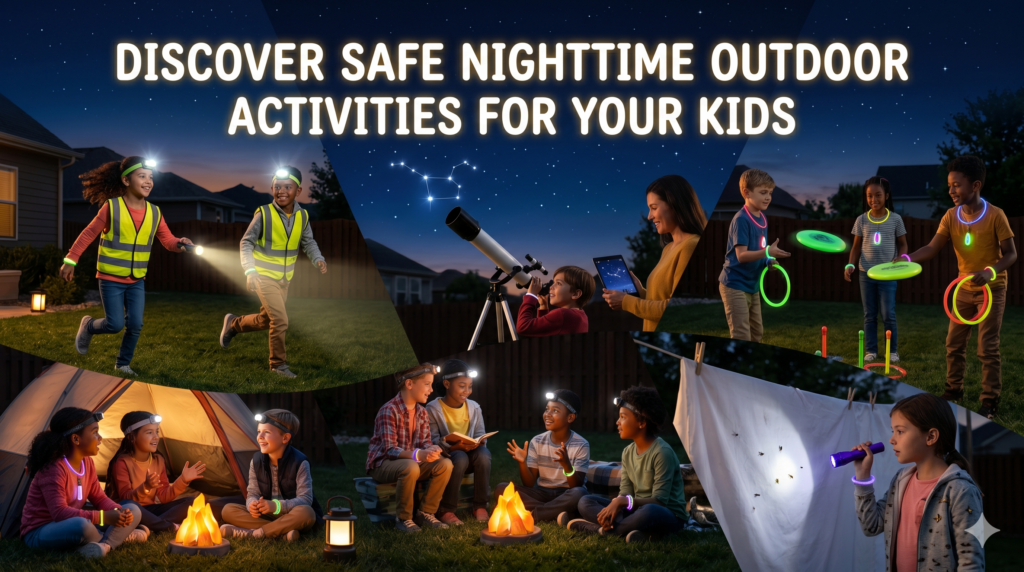
Before embarking on any nighttime outdoor adventure with your children, proper equipment forms the foundation of safety. Reflective clothing and accessories should be non-negotiable items in your nighttime activity kit. Invest in reflective vests, armbands, shoe clips, and even reflective tape that can be applied to regular clothing. These items make your children visible to drivers, cyclists, and other people from considerable distances, dramatically reducing accident risks. Choose bright colors like neon yellow, orange, or lime green for base clothing, which remain somewhat visible even in low light conditions.
Lighting equipment serves multiple purposes during nighttime activities. Headlamps offer hands-free illumination and should be your first choice for most activities, allowing children to point light wherever they’re looking while keeping hands available for balance and play. Flashlights work as backup options, and you might consider glow sticks or LED necklaces as supplementary lighting that makes kids visible without providing illumination. For stationary activities or base camp areas, battery-operated lanterns create welcoming pools of light that help children feel secure while allowing their eyes to adjust to darkness at the periphery.
- Fully charged cell phone with emergency contacts programmed
- First aid kit specifically stocked for outdoor injuries
- Whistle for each child to signal if separated
- Weather-appropriate clothing including extra layers
- Insect repellent suitable for evening pests
- Water bottles to maintain hydration
- Portable phone charger or power bank
Communication protocols deserve careful attention before any nighttime outing. Establish clear boundaries for where children can roam, using landmarks they can identify even in darkness. Create simple sound signals—perhaps two whistle blows means “stop where you are,” while three means “return immediately to base.” For younger children or those new to nighttime activities, consider using walkie-talkies that let you maintain voice contact while allowing them some independence. Teach your kids to stay together in buddy pairs at minimum, never wandering off alone regardless of how safe the area seems.
Backyard Nighttime Adventures That Promote Fitness
Your own backyard offers the safest starting point for introducing children to nighttime outdoor activities, providing familiar terrain with controlled access. A nighttime obstacle course transforms ordinary playground equipment and yard features into exciting challenges. String up battery-operated rope lights or place solar pathway lights to mark the course boundaries, then have kids navigate through, under, and around various stations. Include crawling sections under low-hanging branches, balance beam walking on landscape timbers, jumping zones between marked spots, and stretching stations at various checkpoints. Time each run and encourage kids to beat their personal records, combining fitness with fun competition.
Flashlight tag ranks among the most beloved safe nighttime outdoor activities for kids because it combines cardiovascular exercise with the thrill of darkness. Unlike traditional tag, the person who’s “it” uses a flashlight to tag others by shining light on them rather than physical touch. This variation naturally creates larger playing fields and more running, boosting the aerobic intensity. Set clear yard boundaries marked with reflective tape or rope lights, and require all players to wear reflective gear so you can monitor everyone’s location. Rotate who’s “it” frequently to ensure everyone gets both pursuits and evasion exercise, keeping heart rates elevated throughout the game.
Glow-in-the-dark sports introduce familiar athletic activities with a nighttime twist that kids find irresistible. Purchase or make glow-in-the-dark equipment like frisbees, footballs, soccer balls, and flying discs that remain visible during evening play. Set up goals or targets using luminescent tape, glow sticks, or LED markers to create playing fields your children can navigate safely. Glow stick ring toss, where kids throw activated glow stick bracelets onto stakes or bottles topped with glow sticks, combines hand-eye coordination with gentle competition. These modified sports maintain skill development and physical activity while adding the novelty factor that keeps kids engaged and eager to play outside rather than defaulting to screens.
Neighborhood Exploration Activities
Evening nature walks transform ordinary streets into discovery adventures when approached with intention and preparation. Choose routes you’ve walked during daylight so you’re familiar with terrain, traffic patterns, and potential hazards. Bring field guides for identifying nocturnal animals by sound, downloadable apps that identify constellations visible in your area, and perhaps a UV flashlight that reveals surprising fluorescence in certain plants, minerals, and even scorpions in some regions. Challenge your kids to identify familiar locations and landmarks using non-visual cues like sounds, smells, and spatial memory, turning the walk into a sensory awareness game that sharpens observation skills.
Nighttime scavenger hunts combine physical activity with problem-solving and teamwork, making them ideal safe nighttime outdoor activities for kids of various ages. Create lists that include items identifiable after dark: something that makes noise, something smooth, something that reflects light, a specific type of leaf identified by touch and shape, evidence of nocturnal animals, and so forth. For older children, incorporate navigation challenges using simple compass directions or landmark-based clues that require reasoning to solve. The searching, bending, reaching, and walking involved provides moderate cardiovascular exercise while the mental engagement keeps kids from realizing they’re actually working out.
Sidewalk chalk takes on new dimensions when you add glow-in-the-dark paint or washable fluorescent chalk to your evening toolkit. Create elaborate hopscotch courses that glow under blacklight, design glow-in-the-dark murals that appear magical in darkness, or draw obstacle courses neighbors can follow using UV-reactive materials. This activity combines creativity with physical movement as kids jump, squat, reach, and move while creating and playing with their art. The novelty of artwork that transforms after dark adds excitement that motivates children to spend extended time outdoors being active rather than sedentary indoors.
Camping-Style Activities in Safe Spaces
Backyard camping introduces children to overnight outdoor experiences without the risks associated with remote wilderness locations. Pitch a tent in your yard, roll out sleeping bags, and create an authentic camping atmosphere complete with battery-operated lanterns and camping chairs. This controlled environment lets kids experience sleeping under the stars while you maintain all the safety and convenience of home proximity. Include camping fitness activities like nature yoga performed by lantern light, evening stretching routines, or camping-themed exercise circuits between tent setup and bedtime. The physical work of setting up camp, gathering supplies, and organizing the space provides functional fitness that builds real-world capabilities.
Campfire alternatives allow you to capture the traditional camping centerpiece without open flame risks. Battery-operated artificial campfires now look remarkably realistic, providing ambient light and gathering focus without fire hazards. Alternatively, create a “campfire circle” using rope lights, lanterns, or even carefully arranged flameless candles that establish the ceremonial space. Gather around this focal point for active camping games like campfire yoga, stretching stories where kids act out adventure tales with corresponding movements, or circle games that involve jumping, lunging, or other exercises between players’ turns. These activities maintain the camping experience while incorporating fitness elements that keep kids moving.
Stargazing sessions combine education with peaceful outdoor time that promotes overall wellness. Download constellation-finding apps that overlay star maps onto your phone’s camera view, helping kids locate and identify celestial objects visible from your location. Bring yoga mats or blankets for comfortable ground viewing, and alternate between standing stretches and floor positions to prevent stiffness during observation sessions. Challenge children to create constellation exercise routines where each star pattern corresponds to specific movements—perhaps the Big Dipper means seven jumping jacks, Orion’s Belt requires three burpees, and so on. This creative approach transforms stationary stargazing into active learning that engages both mind and body.
Organized Group Activities for Multiple Children
Glow stick capture the flag elevates a classic group game into a spectacular nighttime activity that kids talk about for weeks. Divide players into teams and give each team a base marked with abundant glow sticks in their team color. The flag itself should be a bright LED lantern or a pole topped with multiple glow sticks, making it visible from distance but still requiring strategic approach. All players wear glow stick bracelets in their team color, instantly identifying allegiance even in darkness. The running, dodging, strategic thinking, and teamwork involved provide excellent cardiovascular exercise while the nighttime setting adds excitement that motivates even reluctant exercisers to participate enthusiastically.
Nighttime relay races work wonderfully for safe nighttime outdoor activities for kids when you’ve got multiple children or can coordinate with neighboring families. Design relay courses with stations marked by different colored glow sticks or rope lights, each requiring specific exercises or challenges. One station might require ten jumping jacks before advancing, another demands crab-walking through a marked zone, while a third involves balancing a glow stick on one hand while walking a designated path. The team structure encourages children to push themselves while the nighttime setting feels more like adventure than structured exercise.
Shadow puppet theater combines creativity with gentle movement when performed outdoors using strategic lighting. Hang a white sheet between trees or use your house wall as a projection surface, then position a bright light source to create a shadow stage. Kids perform active stories that require running in place, jumping, dancing, and dramatic movements that cast engaging shadows for audiences. This activity works particularly well for mixed age groups since younger children can participate in simpler movement stories while older kids choreograph more complex shadow plays. The physical activity feels incidental to the creative performance, making it ideal for children who resist traditional exercise.
Nature-Based Learning Activities After Dark
Nocturnal wildlife observation teaches children about ecosystem rhythms while encouraging patient, quiet outdoor time. Many animals become active at dusk and throughout the night, offering observation opportunities impossible during daytime hours. Set up comfortable observation posts with cushions or camping chairs in areas where you’ve noticed animal activity—near bird feeders, garden edges, or wooded borders. Bring binoculars, field guides, and recording equipment to document sightings and sounds. While this appears sedentary, kids typically intersperse observation periods with active searching, position changes, and excited movement when spotting animals, creating natural activity intervals that accumulate meaningful physical engagement over evening sessions.
Moth and insect identification provides surprising engagement for children interested in nature and science. Hang a white sheet vertically and position a bright light source nearby to create a moth attraction station. Various nocturnal insects will gather on and around the sheet, allowing close observation of species rarely seen during daytime. Bring magnifying glasses, insect field guides, and perhaps a camera for documentation. Kids naturally move between observation positions, squat to ground level for closer looks, and walk surrounding areas to compare the lit sheet’s visitors with insects in nearby darkness. This activity combines learning with the subtle physical activity of field research, promoting curiosity-driven movement rather than structured exercise.
Sound mapping exercises develop sensory awareness while incorporating movement throughout your yard or local green space. Give each child a clipboard with paper marked with a simple compass rose or location grid. As they walk slowly through the designated area, they mark approximate locations and directions of sounds they hear: crickets, frogs, wind through different tree types, distant traffic, owls, rustling leaves, and so forth. After completing their maps, kids compare findings and discuss differences in perception and attention. This mindful movement activity promotes present-moment awareness while ensuring kids stay active, building both physical fitness and mental wellness through engaged outdoor time.
Weather-Appropriate Nighttime Activities
Clear summer nights offer ideal conditions for the widest range of safe nighttime outdoor activities for kids, but success requires managing heat residue and insects. Even after sunset, summer temperatures often remain elevated, making hydration absolutely crucial during evening play. Position multiple water stations around your activity area and establish mandatory water breaks every fifteen to twenty minutes. Choose activities with natural pause points where kids catch their breath and rehydrate without feeling their play is being interrupted. Cooling strategies like misting bottles, damp bandanas around necks, and UV-fluorescent body paint made with cooling formulas add comfort while contributing to the evening’s fun factor.
Cool spring and fall evenings require layered clothing approaches that adapt to activity intensity and dropping temperatures. Start kids with base layers that wick moisture, add insulating middle layers, and top with wind-resistant outer shells that include reflective elements for visibility. As play intensity increases and children warm up, they can shed layers and store them in a designated base camp area. Activities during these transitional seasons should include more vigorous options that generate body heat—running games, relay races, and dynamic movement challenges rather than stationary observation activities. The comfortable temperatures make these seasons ideal for extended cardiovascular activities that might be uncomfortable during summer heat or winter cold.
Winter nighttime activities require the most careful planning but offer unique experiences unavailable in other seasons. In regions with snow, nighttime snow fort building combines construction activity with winter exercise in a magical after-dark setting. String up outdoor lights to illuminate work areas, and kids will naturally stay warm through the physical exertion of piling, packing, and shaping snow. Glow stick snow sculptures turn artistic creation into evening adventure—insert activated glow sticks into snow creations to make them visible after dark. For areas without snow, winter constellation hikes take advantage of clear cold-weather skies that often provide the year’s best stargazing opportunities. The crisp air requires continuous movement to stay comfortable, naturally encouraging the brisk walking pace that delivers aerobic benefits.
Technology-Enhanced Safe Activities
GPS-based games like Geocaching introduce children to navigation technology while motivating extensive outdoor exploration. Download geocaching apps that show nearby hidden containers, then embark on evening treasure hunts using GPS coordinates and clue descriptions. Equip kids with headlamps for trail navigation and bring small trinkets to trade when finding caches, following geocaching etiquette. The searching process typically involves significant walking, sometimes hiking, and occasional scrambling or climbing to reach hidden locations. This technology-integrated outdoor activity appeals to digital natives while delivering genuine physical exercise and navigation skill development that builds confidence and competence.
Fitness tracker challenges gamify evening outdoor time by letting kids monitor their activity metrics in real-time. If your children wear fitness trackers or you can loan them devices, create evening challenges focused on step counts, active minutes, or distance covered during nighttime activities. Establish friendly competitions between siblings or organize neighborhood challenges where multiple families participate in accumulating evening activity stats. The immediate feedback from devices motivates many children to push harder and extend play duration. Frame these as adventure missions where step goals represent progress toward imaginative objectives—perhaps every thousand steps moves them closer to a virtual summit or completes a percentage of their hero’s journey.
Augmented reality games designed for outdoor play can work after dark when safety measures are properly implemented. Games that overlay digital elements onto real-world environments through smartphone screens motivate movement and exploration. Choose titles specifically designed for safe play that don’t encourage running while looking at screens or venturing into dangerous areas. Establish rules requiring kids to stop completely before checking devices, look up and assess surroundings before moving, and stay within predetermined boundaries marked with visible lighting. When used responsibly with proper safety protocols, these games leverage children’s natural attraction to technology while directing it toward beneficial outdoor physical activity rather than sedentary screen time.
Building Confidence Through Progressive Challenges
Introducing safe nighttime outdoor activities for kids requires gradual progression that builds comfort with darkness over time. Start with well-lit familiar spaces like your illuminated backyard or well-lit neighborhood streets during the hour immediately after sunset when ambient light remains. Initial activities should be engaging but simple, focusing more on fun than challenge so children associate evening outdoor time with positive experiences. As comfort levels increase over multiple sessions, gradually reduce artificial lighting, extend timeframes further into full darkness, and venture into slightly less familiar territories while always maintaining safety parameters.
Age-appropriate challenge escalation ensures each child progresses at their developmental pace without being pushed beyond reasonable comfort zones. Younger elementary children might start with backyard glow stick games, progressing to neighborhood walks, then eventually comfortable with darker nature observation. Older children and teens can advance more quickly toward activities like nighttime geocaching adventures, trail hiking with proper equipment, or organizing and leading activities for younger siblings. Pay attention to individual responses rather than assuming same-age children will have identical comfort levels—some kids naturally embrace darkness while others need more gradual exposure and reassurance.
Empowerment through mastery creates lasting confidence that extends beyond nighttime activities into general life skills. When children successfully navigate challenges in low-light conditions, solve problems without full visual information, and overcome mild discomfort or uncertainty, they internalize resilience and capability. Celebrate these achievements explicitly, acknowledging their courage and growth. Create a nighttime achievement system that recognizes milestones: first solo walk to the mailbox after dark, first time leading a nighttime game, first successful navigation using a flashlight and map, and so forth. These concrete recognitions validate their developing confidence and motivate continued participation in healthy outdoor activities.
Social Benefits and Family Bonding
Shared nighttime adventures create distinctive family memories that stand apart from routine daily interactions. The novelty of being outside after dark, combined with activities that require cooperation and communication, strengthens family bonds through unique shared experiences. Parents participating actively rather than simply supervising demonstrates that outdoor fitness activities matter at all ages, modeling lifelong health habits. These evening activities also accommodate busy schedules—working parents who miss afternoon outdoor time can connect with kids through after-dinner adventures that fit everyone’s availability.
Neighborhood community building happens naturally when families observe others enjoying safe nighttime outdoor activities for kids and want to participate. Organize informal evening play sessions where multiple families gather for group games, creating social connections for both children and adults. Kids develop broader friendship networks while parents build community relationships that enhance neighborhood safety and support systems. Community fitness nights might rotate between participating families’ yards, with each host family planning activities and providing simple refreshments, distributing organizational responsibilities while ensuring variety that maintains children’s interest.
Sibling cooperation improves during nighttime activities that require teamwork and mutual support. The slight uncertainty of darkness naturally encourages children to work together rather than compete or conflict. Pair siblings as mandatory teams for nighttime games, assign shared responsibilities like equipment management or time tracking, and structure activities where success depends on cooperation. Older children often become protective and helpful toward younger siblings during evening activities, taking pride in leadership roles that might trigger resistance during daytime interactions. This cooperation translates to improved general sibling relationships as patterns established during nighttime adventures carry over into daily life.
Adapting Activities for Different Age Groups
Toddlers and preschoolers benefit from very short, highly supervised evening outdoor experiences that introduce darkness in controlled doses. A simple nighttime bubble session on your lit porch or patio lets young children experience being outside after dark without venturing far from safety. Glow stick dancing parties where you play music and kids move freely while holding or wearing glow sticks provides both gross motor practice and positive nighttime associations. Keep these sessions brief—perhaps fifteen to twenty minutes—ending while children still feel positive and engaged rather than pushing until tiredness or fear emerge. The goal at this age is building comfort and positive associations rather than extended fitness benefits.
Elementary-aged children thrive with structured nighttime games that have clear rules ad defined boundaries.