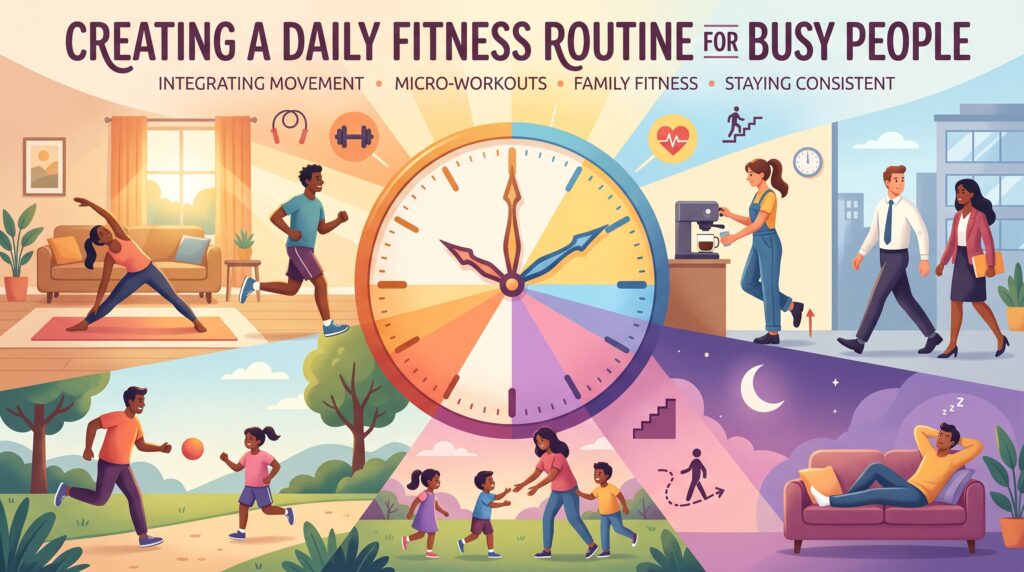
You know the feeling all too well—the alarm goes off, and before you’ve even had your first sip of coffee, your mind is already racing through the day’s obligations. Between work deadlines, kids’ activities, household responsibilities, and trying to maintain some semblance of a social life, finding time for exercise seems nearly impossible. Yet here you are, reading this article because deep down, you understand that your health can’t keep taking a back seat to everything else. The truth is that creating a daily fitness routine for busy people isn’t about finding more hours in the day; it’s about working smarter with the time you already have.
The modern lifestyle has created a paradox where we need physical fitness more than ever to combat stress and sedentary work, yet we seem to have less time than previous generations to achieve it. Your grandparents might have gotten their exercise naturally through physical labor and walking, but today’s reality involves long commutes, desk jobs, and the constant ping of digital demands. This doesn’t mean fitness is out of reach—it simply means we need to approach it differently, with strategies specifically designed for people who are juggling multiple responsibilities.
Research consistently shows that even small amounts of daily movement can significantly impact your health, energy levels, and longevity. You don’t need to spend two hours at the gym every day to see real results. What you need is a sustainable approach that fits seamlessly into your existing life rather than requiring you to completely overhaul your schedule. This is the foundation of an effective daily fitness routine for busy people—it’s practical, flexible, and built around your real life, not some idealized version of it.
The Morning Momentum: Starting Your Day With Movement
Mornings set the tone for everything that follows, and incorporating fitness into your early routine ensures that it actually happens before the day’s chaos intervenes. You’ve probably promised yourself a thousand times that you’ll exercise after work, only to find yourself exhausted on the couch at 8 PM, scrolling through your phone. By shifting your mindset to prioritize morning movement, you’re essentially making a non-negotiable appointment with yourself that comes before everyone else’s demands start flooding in.
A successful morning fitness routine doesn’t mean dragging yourself out of bed at 4 AM for a grueling boot camp session. Instead, consider waking up just 20-30 minutes earlier than usual and using that time for focused, efficient exercise. This might involve a quick bodyweight circuit in your living room, a brisk walk around your neighborhood, or a short yoga session that gets your blood flowing and your muscles engaged. The key is consistency rather than intensity—you’re building a habit that will stick for the long term.
Quick Morning Workout Options That Actually Work
Your morning workout should energize you rather than deplete you before the day even begins. Consider these time-efficient options that deliver maximum benefit without requiring you to sacrifice sleep or family time. A 15-minute high-intensity interval training (HIIT) session can boost your metabolism for hours afterward, helping you burn calories throughout the day even while you’re sitting at your desk. Alternatively, a 20-minute yoga flow improves flexibility, reduces stress, and centers your mind for the challenges ahead.
For those who prefer outdoor exercise, a 25-minute run or brisk walk gives you fresh air, vitamin D, and cardiovascular benefits all at once. If you’re a parent, this can become family time—pushing a jogging stroller or having older kids ride bikes alongside you turns fitness into connection. The beauty of establishing this daily fitness routine for busy people is that it becomes automatic over time, requiring less willpower and mental energy to initiate.
Micro-Workouts Throughout Your Day: The Power of Movement Snacking
One of the most revolutionary concepts in fitness for time-strapped individuals is the idea of “movement snacking”—breaking your exercise into small, manageable chunks distributed throughout the day. Rather than thinking you need a solid 60-minute block of time, you can achieve remarkable results by accumulating 10-minute movement sessions whenever opportunities arise. Research shows that these shorter bursts of activity can be just as effective as longer continuous sessions for improving cardiovascular health and maintaining muscle mass.
Think about the natural breaks that already exist in your day: the few minutes before your morning shower, your lunch break, the time while dinner is cooking, or those minutes when you’re waiting for your kids to finish their activities. Each of these windows represents an opportunity for purposeful movement. You might do a set of push-ups, squats, and planks before your shower, take a brisk walk during lunch, do calf raises while brushing your teeth, or knock out some burpees while the pasta water comes to a boil.
The psychological benefit of this approach cannot be overstated. Instead of feeling like a fitness failure because you missed your planned gym session, you’ve actually completed three or four mini-workouts before the day is done. This creates a positive feedback loop where you feel accomplished and capable, which motivates you to continue the pattern. For busy parents especially, this daily fitness routine for busy people demonstrates to your children that exercise doesn’t have to mean expensive gym memberships or elaborate equipment—it’s simply a natural part of how you move through your day.
Desk-Friendly Exercises You Can Do Without Drawing Attention
If you work in an office environment, you might feel self-conscious about exercising at your workplace. However, there are numerous subtle movements you can incorporate that won’t make you the subject of water cooler gossip. Seated leg raises under your desk strengthen your quadriceps and hip flexors without anyone noticing. Desk push-ups or wall push-ups during bathroom breaks engage your upper body and can be done in just two minutes. Standing up and sitting down repeatedly from your chair without using your hands is an excellent quad and glute exercise that looks like you’re just adjusting your position.
Consider setting a timer to remind yourself to stand and stretch every hour. This simple practice combats the negative health effects of prolonged sitting while keeping your muscles engaged and your energy levels stable throughout the workday. Even something as basic as choosing to walk to a colleague’s desk instead of sending an email adds valuable steps to your daily total. These micro-movements might seem insignificant individually, but collectively they transform you from sedentary to moderately active.
Lunchtime Fitness Strategies That Won’t Leave You Sweaty
Your lunch break presents one of the best opportunities for meaningful exercise during the workday, but many people avoid it because they worry about returning to the office disheveled or smelling like a gym. The solution is choosing activities that elevate your heart rate without requiring a full shower afterward. A purposeful walk at a moderate pace gets your heart pumping, clears your mind, and aids digestion without leaving you dripping in sweat. If you have access to stairs in your building, climbing them for 10-15 minutes provides an excellent cardiovascular and lower body workout.
The mental benefits of breaking up your workday with physical activity are substantial. Studies show that midday exercise improves afternoon productivity, creativity, and decision-making while reducing stress and anxiety. You’re not just benefiting your body—you’re actually becoming better at your job. For busy professionals trying to balance career advancement with health goals, this makes a compelling argument for protecting that lunch hour as sacred fitness time.
Smart Planning for Midday Movement
Success with lunchtime fitness requires a bit of preparation. Keep a spare shirt and some personal hygiene essentials at your desk so you can freshen up quickly after movement. Choose clothing that’s office-appropriate but also allows for comfortable walking—many modern work wardrobes can accommodate this dual purpose. If you drive to work, keep a pair of athletic shoes in your car so you can swap out dress shoes for something more supportive during your walk.
Consider recruiting colleagues to join you for walking meetings or lunchtime strolls. This creates accountability and makes the time more enjoyable, plus it might strengthen your professional relationships. For those working from home, use your lunch break to follow a 20-minute YouTube workout video or do yard work that gets your body moving. The flexibility of remote work can be leveraged to create an even more robust daily fitness routine for busy people who no longer commute.
Family Fitness: Turning Kid Time Into Active Time
If you’re a parent, you probably feel like your children’s schedules dominate your life, leaving zero time for your own pursuits. Instead of viewing parenting responsibilities as barriers to fitness, what if you reframed them as opportunities? The time you spend with your kids can become active time that benefits everyone’s health while also creating memories and modeling healthy behaviors. This approach kills multiple birds with one stone—you get exercise, your children get quality time with you, and everyone develops positive associations with physical activity.
Active play with children doesn’t feel like “working out” in the traditional sense, but it absolutely counts toward your daily movement goals. Chasing toddlers around the playground, playing tag, shooting baskets, kicking a soccer ball, riding bikes together, or having dance parties in the living room all elevate your heart rate and engage your muscles. You’re teaching your children that movement is fun rather than a chore, which sets them up for a lifetime of healthy habits. Meanwhile, you’re getting legitimate exercise without having to carve out separate time away from your family.
For parents of teenagers or older kids who are involved in sports, those hours you spend at practices and games represent opportunities rather than dead time. Instead of sitting in your car scrolling social media, use that time to walk laps around the field, do bodyweight exercises in the parking lot, or explore the neighborhood on foot. Bring resistance bands to work your upper body while you watch practice. These simple adjustments transform waiting time into productive fitness time, making your daily fitness routine for busy people seamlessly integrated with your existing obligations.
Weekend Warrior Activities the Whole Family Enjoys
Weekends offer more extended blocks of time for family fitness adventures that feel like recreation rather than exercise. Hiking local trails gives you hours of low-impact cardio while exposing your family to nature and fresh air. Swimming at the community pool or beach provides full-body resistance training that’s gentle on joints. Bike rides through your town or on dedicated trails build cardiovascular endurance while allowing conversation and exploration.
Even household projects can become family fitness when approached intentionally. Yard work—raking leaves, pulling weeds, washing cars, or moving mulch—engages numerous muscle groups and can burn hundreds of calories. By involving your children in these activities rather than doing them alone after the kids are in bed, you’re accomplishing necessary tasks while staying active together. This practical approach to fitness resonates particularly well with busy parents who feel guilty about time spent at the gym away from their families.
Evening Routines That Promote Recovery and Preparation
Your evening routine is just as important as your morning one, though it serves different purposes within your overall fitness plan. After a long day of work and family responsibilities, your body needs gentle movement that promotes recovery and prepares you for quality sleep. This doesn’t mean intense exercise—in fact, vigorous workouts too close to bedtime can interfere with your ability to fall asleep. Instead, focus on stretching, gentle yoga, foam rolling, or easy walking that releases the day’s tension from your muscles.
Many busy people underestimate the importance of recovery in their fitness routines, focusing only on the active exercise components. However, your muscles actually grow and strengthen during rest periods, not during the workouts themselves. By incorporating deliberate recovery practices into your evening routine, you’re ensuring that all the movement you’ve accumulated throughout the day actually translates into improved fitness rather than just wearing you down. This might involve 10 minutes of static stretching while watching TV, using a foam roller on tight muscles, or practicing a gentle bedtime yoga sequence.
The evening is also when you can prepare for the next day’s fitness success. Lay out your workout clothes, prep a healthy breakfast, pack your gym bag if you’re planning a lunch workout, or set up your yoga mat in the living room. These small acts of preparation remove barriers and decision fatigue from tomorrow’s routine, making it much more likely that you’ll actually follow through. Your daily fitness routine for busy people succeeds or fails based on how effectively you set yourself up for success.
Maximizing Efficiency With Compound Exercises
When time is your most precious commodity, exercise selection becomes critically important. Compound exercises—movements that engage multiple muscle groups simultaneously—give you the most fitness benefit per minute invested. Rather than isolating individual muscles with single-joint exercises, compound movements like squats, deadlifts, push-ups, pull-ups, and lunges work your entire body in functional patterns that translate to real-world activities and athletic performance.
A 20-minute workout consisting entirely of compound movements can be more effective than an hour of isolated exercises on machines. Consider a circuit that includes squats, push-ups, rows, lunges, and planks—you’ve just worked your legs, chest, back, shoulders, arms, and core in one efficient session. This approach is particularly valuable for busy people because it delivers comprehensive fitness benefits without requiring extensive time or equipment. You can perform these exercises at home, in a hotel room while traveling, at a park, or in your office.
Building Your Go-To Circuit Routine
Create a standard circuit that you can fall back on whenever time is tight. This removes the mental burden of planning workouts when you’re already stressed and tired. A solid basic circuit might include:
- Bodyweight squats – 15 repetitions to strengthen your entire lower body
- Push-ups – as many quality reps as possible to build upper body strength
- Walking lunges – 10 per leg to challenge balance and leg strength
- Plank hold – 30-60 seconds to develop core stability
- Burpees – 10 repetitions for cardiovascular challenge and full-body engagement
- Mountain climbers – 20 repetitions to elevate heart rate and work core
Perform this circuit three times through with minimal rest between exercises, and you’ve completed a comprehensive workout in under 20 minutes. The beauty of having this template ready means you never have to think about what to do—you just execute. As you get stronger, you can increase repetitions, add resistance with dumbbells or resistance bands, or perform more challenging variations of each movement.
The Role of Nutrition in Your Busy Fitness Life
No discussion of fitness for busy people is complete without addressing nutrition, because you simply cannot out-exercise a poor diet. However, complicated meal planning and elaborate food preparation are just as time-consuming as lengthy workouts, which is why your nutritional approach needs to be as streamlined and efficient as your exercise routine. The good news is that healthy eating doesn’t require being a gourmet chef or spending hours in the kitchen—it requires smart planning and simple, repeatable strategies.
Meal preparation is your secret weapon as a busy person trying to maintain healthy eating habits. Dedicating two hours on Sunday to prep proteins, chop vegetables, and portion out meals for the week eliminates the daily decision fatigue around “what’s for dinner” and removes the temptation to default to takeout. Cook large batches of versatile proteins like grilled chicken, ground turkey, or hard-boiled eggs that can be used in multiple ways throughout the week. Wash and chop vegetables so they’re grab-and-go ready for snacks or quick stir-fries.
Your kitchen should be stocked with nutritious staples that don’t require much preparation: Greek yogurt, nuts, fruit, whole grain bread, canned beans, frozen vegetables, and pre-cooked grains like quinoa or brown rice. These items allow you to assemble healthy meals in minutes rather than resorting to convenience foods that undermine your fitness goals. For busy parents, involving children in simple meal prep teaches valuable life skills while also making them more likely to eat the healthy foods they helped prepare. This holistic approach to health—combining your daily fitness routine for busy people with practical nutrition strategies—is what creates lasting transformation.
The Minimal Equipment Home Gym Solution
One of the biggest barriers busy people face is the time required to travel to and from a gym. When you factor in commuting, changing, waiting for equipment, and showering, what should be a 30-minute workout easily becomes 90 minutes. For most people with packed schedules, that math simply doesn’t work. The solution is creating a functional home workout space that eliminates travel time and allows you to exercise whenever a window of opportunity appears.
You don’t need an elaborate home gym with expensive equipment to get excellent results. A modest investment in a few key items gives you everything necessary for comprehensive fitness. Start with a quality yoga mat for floor exercises and stretching. Add a set of adjustable dumbbells or resistance bands that can provide progressive resistance for strength training. Consider a pull-up bar that fits in a doorway for upper body work. If you have the space and budget, a kettlebell or two opens up additional exercise options.
Making Your Home Environment Fitness-Friendly
The strategic placement of your fitness equipment dramatically impacts how often you actually use it. If everything is hidden away in a closet or basement, you’re creating barriers to usage. Instead, keep some equipment visible in your living space—maybe resistance bands hanging on a hook near where you watch TV, dumbbells in a corner of your bedroom, or a yoga mat rolled up but visible. This environmental design approach removes friction from the process of working out and provides visual reminders throughout the day.
Create a dedicated space, even if it’s small, that’s your workout zone. This might be a corner of your bedroom, a spot in the basement, or even just a patch of floor in your living room. The psychological benefit of having a designated space is significant—when you step into that space, your mind shifts into exercise mode. You can enhance this effect by keeping that area tidy and perhaps adding motivational elements like a mirror or inspirational quotes. This home fitness sanctuary becomes the anchor of your daily fitness routine for busy people, always accessible regardless of gym hours or weather conditions.
Tracking Progress Without Obsession
Measurement and tracking can be powerful motivational tools, but they can also become sources of stress and obsession if not approached properly. As a busy person implementing a new fitness routine, you want just enough tracking to keep you accountable and show progress without it becoming another time-consuming task on your to-do list. The key is finding the minimal effective dose of measurement that serves your goals without dominating your mental energy.
A simple fitness journal where you note what you did each day can be incredibly valuable. This doesn’t need to be elaborate—just a quick record of “20-minute morning walk” or “completed bodyweight circuit” gives you a visual representation of consistency over time. Many people find that simply checking off days on a calendar where they exercised creates motivation through the desire to not break the streak. This gamification element taps into our natural competitiveness and desire for accomplishment.
For those who enjoy data, a basic fitness tracker or smartphone app can monitor steps, heart rate, and workout duration without requiring manual entry. However, be cautious about letting the numbers dictate your self-worth or becoming anxious about hitting arbitrary daily targets. The purpose of tracking is to provide information and encouragement, not to create additional stress. Your fitness journey as a busy person should reduce stress and increase well-being, not the opposite.
Adapting Your Routine for Travel and Disruptions
Life is unpredictable, especially when you’re managing work, family, and numerous other responsibilities. Business travel, family vacations, sick kids, and unexpected crises will all disrupt your routine at various points. The difference between people who maintain long-term fitness and those who fall off the wagon is how they handle these disruptions. Instead of viewing them as failures or reasons to quit, successful fitness maintainers see them as temporary adjustments that require flexibility and creativity.
When traveling for work, your hotel room becomes your gym. Bodyweight exercises require no equipment and can be done in minimal space. A hotel stairwell provides an excellent cardio workout. Many hotels have small fitness centers, but even if yours doesn’t, you can maintain your routine with push-ups, squats, planks, and lunges. Wake up 20 minutes early to exercise before your meetings begin, because waiting until evening means fighting fatigue and the temptation to just collapse in bed.
Family vacations offer opportunities for active recreation that keeps you moving while creating memories. Walking tours of new cities, swimming, hiking, beach activities, and exploring on foot all count as exercise while also being experiences you’ll treasure. The mindset shift here is important—you’re not on vacation from health and fitness, you’re just expressing them differently. Your daily fitness routine for busy people isn’t rigid and inflexible; it’s adaptable to whatever circumstances you face.
The Power of Accountability and Community
Humans are social creatures, and we’re far more likely to stick with difficult behaviors when we have support and accountability from others. Even though you’re busy, investing a small amount of time in building fitness connections pays enormous dividends in consistency and motivation. This doesn’t necessarily mean joining a formal group or team—it can be as simple as having one friend who texts you each morning to confirm you both did your planned workout.
Social media, despite its many drawbacks, can be a useful accountability tool when used intentionally. Sharing your daily workout on Instagram or Facebook creates public commitment that makes you more likely to follow through. Joining online fitness communities specific to busy parents or professionals connects you with people facing similar challenges who can offer encouragement and practical tips.