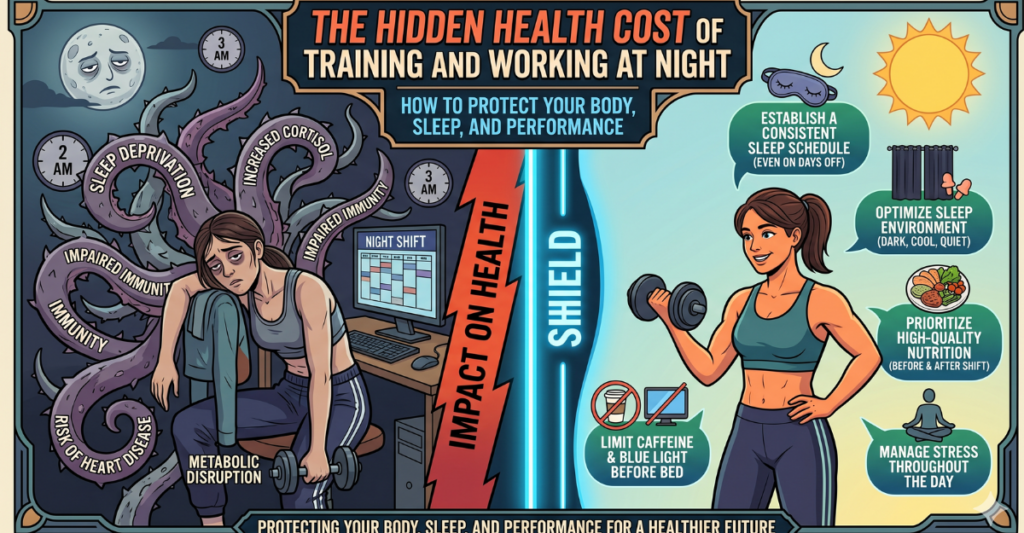
For millions of people around the world, nighttime is not a time for rest. It is a time for movement, productivity, exercise, commuting, and performance. Nurses finish long hospital shifts under fluorescent lights. Cyclists train after work because it is the only free time available. Runners hit the streets before sunrise or after sunset to escape traffic and heat. Warehouse workers, delivery drivers, security guards, emergency responders, and factory employees keep entire cities functioning while most people sleep.
Modern life has transformed the traditional idea of daytime activity and nighttime rest. While this flexibility has created more opportunities for work and fitness, it has also introduced a hidden challenge that many people underestimate: the physical and mental cost of functioning during hours the body naturally expects recovery.
The human body was designed around circadian rhythms — internal biological processes that regulate sleep, hormone production, body temperature, digestion, alertness, and energy levels. When we consistently train, work, or remain highly active during nighttime hours, these natural systems can become disrupted.
This disruption does not always show up immediately. At first, it may simply feel like fatigue, low motivation, poor sleep, or reduced performance. Over time, however, the consequences can become more serious:
- Slower athletic recovery
- Increased injury risk
- Reduced reaction time
- Weight gain and metabolic issues
- Higher stress levels
- Mood instability
- Sleep disorders
- Reduced cardiovascular health
The good news is that nighttime activity does not automatically mean poor health. With the right strategies, routines, equipment, and recovery habits, runners, cyclists, and night-shift workers can protect both their performance and long-term wellbeing.
In this guide, we will explore how nighttime schedules affect the body, why recovery becomes more difficult, and what practical steps active people can take to stay healthy, visible, energized, and safe.
Why the Human Body Struggles at Night
To understand the challenges of nighttime activity, we first need to understand how the body naturally functions.
Humans operate according to circadian rhythms, a 24-hour biological cycle controlled largely by light exposure. During daylight hours, the body increases alertness, energy production, coordination, and reaction speed. As darkness arrives, the brain releases melatonin, a hormone that signals the body to prepare for rest.
When someone consistently trains or works during nighttime hours, the body receives mixed signals.
Physically, you may be asking your body to perform intense activity. Biologically, however, your internal clock may still be preparing for sleep and recovery.
This mismatch can affect:
Hormone Production
Hormones play a major role in recovery, muscle repair, fat burning, energy, and mood.
Nighttime activity can disrupt hormones such as:
- Melatonin
- Cortisol
- Growth hormone
- Testosterone
- Insulin
For athletes and active workers, this can result in slower recovery, reduced muscle repair, increased fatigue, and inconsistent energy.
Reaction Time and Coordination
Research consistently shows that reaction speed and alertness decrease during late-night and early-morning hours.
For runners and cyclists, reduced reaction time can increase accident risk.
For workers operating machinery, driving vehicles, or navigating low-light environments, the dangers become even greater.
Sleep Quality
Even if night-shift workers sleep during the day, daytime sleep is often shorter and less restorative than nighttime sleep.
Noise, sunlight, stress, social obligations, and inconsistent schedules can prevent deep recovery.
This creates cumulative sleep debt over time.
How Night Schedules Affect Athletic Performance
Many people assume exercise automatically improves health regardless of timing. While exercise is beneficial, training at night introduces unique recovery challenges.
Reduced Recovery Efficiency
Recovery is where the body adapts and improves.
Muscles rebuild. Inflammation decreases. Energy stores replenish. Hormones stabilize.
When sleep quality suffers, recovery quality also declines.
This can lead to:
- Persistent soreness
- Plateaued performance
- Increased fatigue
- Reduced endurance
- Mental burnout
- Lower training motivation
Increased Injury Risk
Sleep deprivation affects coordination, balance, and tissue recovery.
Studies show athletes who consistently sleep less than recommended are significantly more likely to experience injuries.
Nighttime runners and cyclists often face additional environmental risks as well:
- Poor visibility
- Uneven terrain
- Distracted drivers
- Reduced depth perception
- Lower awareness from others
Higher Stress Levels
Late-night training combined with demanding work schedules can keep the nervous system in a constant state of stimulation.
Over time, chronic stress can increase cortisol levels, disrupt sleep further, and negatively impact immune function.
This creates a cycle where the body struggles to fully recover.
The Unique Challenges for Night-Shift Workers Who Exercise
One of the most overlooked groups in the fitness world is people who combine physical activity with shift work.
These individuals often face competing demands:
- Irregular sleep schedules
- Long work hours
- Physical fatigue
- Limited daylight exposure
- Reduced recovery windows
- Social obligations during daytime hours
For example:
A nurse may finish a 12-hour overnight shift and still try to fit in a run.
A warehouse worker may train before work because nighttime is the only available time.
A delivery driver may cycle home after midnight in low-visibility conditions.
These lifestyles require more intentional recovery planning than standard daytime schedules.
Unfortunately, many active shift workers try to force themselves into routines designed for daytime athletes.
That rarely works long term.
Instead, they need strategies tailored to their biological and environmental realities.
Why Visibility Becomes a Health Issue — Not Just a Safety Issue
When people think about visibility gear, they often think only about accidents.
But visibility affects much more than safety.
Feeling visible changes confidence, mental stress, reaction behavior, and overall comfort during nighttime movement.
Mental Stress in Low-Light Environments
Many runners and cyclists experience anxiety when training at night.
Common concerns include:
- Drivers not seeing them
- Uneven roads
- Poorly lit intersections
- Personal security
- Distracted traffic
This low-level stress activates the nervous system.
Over time, chronic stress can increase mental fatigue and reduce enjoyment of exercise.
Visibility Improves Confidence and Awareness
Wearing reflective or illuminated gear creates psychological reassurance.
When runners and cyclists feel more visible:
- They move more confidently
- They maintain better posture
- They experience less anxiety
- They become more aware of surroundings
- Drivers react earlier
This creates a safer and more relaxed training environment.
For night-shift workers walking or cycling home after work, visibility products become an essential part of personal wellness.
The Connection Between Sleep and Recovery
Sleep is not optional recovery time.
It is the foundation of physical performance.
During sleep, the body:
- Repairs muscle tissue
- Releases growth hormone
- Restores the nervous system
- Consolidates memory
- Strengthens immunity
- Reduces inflammation
For nighttime workers and athletes, poor sleep quickly compounds.
Even highly disciplined training programs can fail if sleep quality remains poor.
Signs Your Recovery Is Suffering
Many active people normalize exhaustion without realizing recovery is declining.
Warning signs include:
- Waking up tired every day
- Elevated resting heart rate
- Constant muscle soreness
- Irritability
- Poor workout performance
- Frequent illness
- Low motivation
- Difficulty concentrating
If these symptoms continue for weeks, the body may be struggling with chronic recovery deficits.
Strategies to Improve Sleep for Nighttime Athletes and Workers
Fortunately, recovery can improve dramatically with targeted habits.
Create a Consistent Sleep Schedule
Even if you work rotating shifts, consistency matters.
Try to keep sleep and wake times as stable as possible.
Irregular schedules confuse the circadian rhythm and reduce sleep quality.
Use Light Strategically
Light exposure strongly influences biological rhythms.
To improve recovery:
- Get bright light exposure during waking hours
- Reduce blue light before sleep
- Use blackout curtains during daytime sleep
- Wear sunglasses during the morning commute home if sleeping immediately afterward
Keep the Sleep Environment Cool
The body naturally lowers temperature during sleep.
A cool room helps support deeper recovery.
Avoid Heavy Meals Before Sleep
Large meals close to bedtime can disrupt digestion and reduce sleep quality.
Choose lighter recovery-focused foods when possible.
Limit Stimulants
Caffeine can remain active in the body for many hours.
Night workers often rely heavily on caffeine, but excessive intake can worsen long-term fatigue.
Instead of increasing caffeine endlessly, focus on improving sleep quality.
Give us a call today at 1-877-777-6086 or fill out our contact form to become a retail
distributor of our top-of-the-line safety lights.