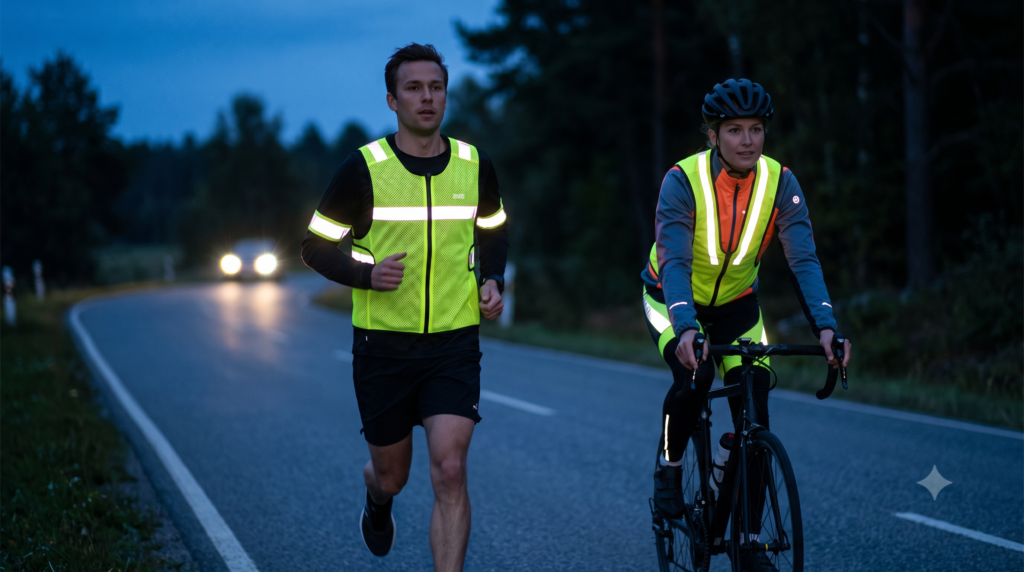
When you lace up your running shoes before dawn or clip into your bike pedals as dusk settles, you’re making a commitment to your health and fitness. But there’s another commitment you need to make simultaneously: protecting yourself from traffic hazards. Every year, thousands of runners and cyclists are involved in accidents with vehicles, many of which could have been prevented with better visibility. The statistics are sobering—according to the National Highway Traffic Safety Administration, over 800 cyclists are killed annually in traffic accidents, and a significant percentage of these incidents occur during low-light conditions.
Your eyes might be adjusted to the dimness of early morning or evening, but that doesn’t mean drivers can see you clearly. In fact, research shows that motorists often fail to notice pedestrians and cyclists until they’re dangerously close. This phenomenon, known as “inattentional blindness,” means that even attentive drivers can overlook you if you’re not standing out from your surroundings. That’s precisely where reflective vests for runners and cyclists become not just accessories, but essential safety equipment.
The science behind visibility is fascinating and critical to understand. Human eyes detect movement and light contrast far more effectively than they distinguish shapes in low-light conditions. When you wear reflective materials, you’re essentially creating a beacon that catches headlight beams and bounces them back toward drivers, making you visible from hundreds of feet away rather than just dozens. This additional reaction time can mean the difference between a close call and a tragic accident.
Understanding Reflective Technology and How It Works
The technology behind reflective vests for runners and cyclists is more sophisticated than many people realize. At its core, retroreflection is the principle that makes these safety garments work. Unlike regular materials that scatter light in multiple directions, retroreflective materials contain thousands of tiny glass beads or prismatic elements that redirect light back toward its source—in this case, a vehicle’s headlights. When a car’s headlights hit your reflective vest, the driver sees a bright, attention-grabbing glow that immediately signals your presence on the road.
There are different classes and types of reflective materials, each with varying levels of brightness and durability. High-quality reflective vests use ANSI (American National Standards Institute) certified materials that meet specific performance standards. These standards ensure that the vest will reflect light effectively even after repeated washing and exposure to the elements. Some advanced reflective vests incorporate fluorescent colors during the day combined with retroreflective strips for nighttime, giving you 24-hour visibility protection. The fluorescent materials work by converting ultraviolet light into visible light, making you stand out even in overcast daytime conditions.
The placement of reflective strips on vests is also strategically designed. You’ll notice that quality reflective vests feature strips that run horizontally across the chest and back, as well as vertically down the sides. This pattern, sometimes called “biomotion” design, doesn’t just make you visible—it helps drivers recognize you as a moving human being rather than just a stationary object. When you’re running or cycling, the movement of these reflective strips creates a distinctive pattern that the human brain quickly identifies as a person in motion, triggering faster recognition and response from drivers.
Types of Reflective Vests Available for Active Lifestyles
The market for reflective vests for runners and cyclists has expanded dramatically in recent years, offering options for every preference and activity level. Understanding the different types available will help you choose the right vest for your specific needs. Traditional mesh vests remain popular due to their lightweight construction and breathability. These vests typically feature large mesh panels that allow maximum airflow while incorporating reflective strips or panels on the front, back, and sides. They’re particularly suitable for warm-weather running when you want visibility without adding heat retention.
For cyclists who demand more features, there are specialized cycling vests with pockets for storing essentials like energy gels, phones, or small tools. These vests often incorporate a more tailored fit that reduces flapping at high speeds, which is crucial when you’re descending hills or riding in windy conditions. Many cycling-specific vests also feature longer backs to accommodate the forward-leaning riding position, ensuring your lower back remains visible to traffic approaching from behind. Some models even include built-in hydration pack compatibility, allowing you to carry water without compromising the reflective surface area.
LED-enhanced reflective vests represent the cutting edge of visibility technology. These innovative garments combine traditional reflective materials with integrated LED lights that actively emit light rather than just reflecting it. The batteries for these lights are typically lightweight and rechargeable via USB, making them convenient for regular use. While they’re more expensive than basic reflective vests, they offer unmatched visibility in all conditions, including when ambient lighting makes reflection less effective. For runners and cyclists who regularly train in complete darkness or heavy fog, this active lighting can provide an extra layer of security that passive reflection alone cannot match.
Weather-resistant and convertible designs cater to those who face varying conditions throughout the year. Some reflective vests are designed to be worn over heavy winter jackets, featuring adjustable straps and oversized dimensions. Others are ultralight and packable, folding down to fit in a running belt or saddle bag so you can carry them for those unexpected late finishes. There are even reflective arm and leg bands that, while not technically vests, provide additional visibility points that complement a vest or serve as a minimalist alternative when you want the absolute lightest safety gear possible.
Choosing the Perfect Reflective Vest for Your Needs
Selecting the right reflective vest involves considering several factors beyond just grabbing the first one you see at a sporting goods store. Fit is paramount—a vest that’s too loose will bounce and flap, creating distraction and discomfort, while one that’s too tight will restrict your movement and breathing. Look for adjustable straps or elastic panels that allow you to customize the fit over different layers of clothing. Remember that you might wear the vest over a light t-shirt in summer but need it to fit over a heavy jacket in winter, so versatility in sizing is valuable.
The amount and quality of reflective material should be your next consideration. More reflective surface area generally means better visibility, but the placement matters as much as the quantity. Look for vests with 360-degree visibility, meaning they have reflective elements on all sides—front, back, and both sides. This ensures you’re visible regardless of which angle traffic approaches from. Check the certification standards too; vests meeting ANSI/ISEA 107 standards have been tested to ensure they meet minimum reflectivity requirements. For serious runners and cyclists, this certification isn’t just a nice-to-have—it’s essential.
Comfort features can make the difference between a vest you’ll wear consistently and one that stays in your closet. Breathable fabrics, moisture-wicking properties, and lightweight construction all contribute to a vest you won’t mind wearing during intense workouts. Some vests feature antimicrobial treatments to prevent odor buildup, which is particularly valuable if you’re training daily or in hot conditions. Consider whether you prefer a pullover style or one with buckles or Velcro closures. Pullover styles are typically lighter and have fewer components to fail, while closure-based designs offer more adjustability and can be put on or removed without disturbing your headphones or helmet.
Think about your specific use case when shopping for reflective vests for runners and cyclists. If you’re primarily a road runner who trains alone in the early morning, your needs differ from a cyclist who commutes in urban traffic or a trail runner who occasionally finds themselves out past sunset. Some runners prefer minimal designs that won’t interfere with arm swing or create chafing, while cyclists might prioritize pockets and features that enhance their ride. Parents who run with strollers need vests that remain visible even when pushing a large stroller in front of them. Understanding your primary use will guide you toward the most appropriate style.
The Real-World Benefits Beyond Basic Safety
While the primary purpose of wearing reflective vests for runners and cyclists is preventing accidents, the benefits extend into several unexpected areas of your fitness journey. First and foremost, wearing a reflective vest provides psychological benefits that enhance your training quality. When you know you’re visible to traffic, you can focus more completely on your workout rather than constantly monitoring approaching vehicles. This mental freedom allows you to maintain better form, concentrate on your breathing and pacing, and simply enjoy your run or ride more fully. The reduction in stress hormones associated with traffic anxiety can actually improve your training adaptations and recovery.
There’s also a social responsibility aspect that many athletes appreciate. When you wear reflective gear, you’re setting an example for others in your community, particularly younger athletes who look up to experienced runners and cyclists. As a parent, wearing a reflective vest demonstrates safety-conscious behavior that your children will internalize and hopefully replicate in their own activities. It sends a message that taking safety seriously is part of being a mature, responsible athlete. Many running clubs and cycling groups have adopted reflective vests as standard equipment precisely because of this community-building aspect—everyone looks out for everyone else, starting with making themselves visible.
Some communities and jurisdictions have even made reflective gear mandatory during certain hours or conditions, meaning your reflective vest might keep you legal as well as safe. Even where it’s not required by law, wearing reflective gear can improve your relationship with local drivers and law enforcement. Motorists are more likely to respect cyclists and runners who take visible safety precautions, and this mutual respect makes for better sharing of road space. Additionally, if you’re ever involved in an incident, wearing proper safety equipment demonstrates your commitment to responsible behavior, which can be relevant in any subsequent proceedings or insurance claims.
The confidence boost from wearing a reflective vest can actually expand your training possibilities. Many athletes find that with proper reflective gear, they’re comfortable running or cycling routes and at times they previously avoided due to visibility concerns. This means more flexibility in your training schedule—you’re not constrained to only exercising during daylight hours. For busy parents juggling work, family obligations, and fitness goals, this flexibility is invaluable. You can seize training opportunities when they arise, whether that’s a pre-dawn run before the kids wake up or an evening ride after dinner, knowing you’re protected by your reflective gear.
Proper Care and Maintenance for Long-Lasting Performance
Your investment in reflective vests for runners and cyclists will last longer and perform better with proper care and maintenance. Reflective materials can degrade over time, especially when subjected to harsh washing, direct heat, or excessive abrasion. Understanding how to care for your vest ensures it maintains its life-saving reflectivity for years. Always check the manufacturer’s care instructions first, as different materials and construction methods may have specific requirements. Generally, hand washing in cool water with mild detergent is the gentlest approach that preserves reflective properties longest.
If you must machine wash your reflective vest, use cold water on a gentle cycle and place the vest inside a mesh laundry bag to protect it from aggressive agitation and contact with other items. Avoid using bleach or fabric softeners, as these chemicals can break down the adhesive that bonds reflective elements to the base fabric. The same goes for the dryer—high heat is the enemy of reflective materials. Air drying is always preferable; simply hang your vest in a well-ventilated area away from direct sunlight, which can also degrade certain materials over time. The few extra minutes required for air drying are a small price for maintaining the effectiveness of equipment that protects your life.
Regular inspection of your reflective vest should become part of your routine. Before each use, take a moment to look over the vest for any damage, loose threads, or areas where the reflective material appears to be peeling or flaking. Pay special attention to high-stress areas like adjustment straps, buckles, and seams. Even small amounts of damage can compromise visibility, particularly if they occur in key reflective zones. If you notice significant wear, it’s time to replace the vest rather than risk reduced visibility. Consider keeping a photo of your vest when new to compare against as it ages—sometimes degradation is gradual enough that you don’t notice until you see the dramatic before-and-after difference.
Storage also impacts the longevity of reflective vests. Don’t leave your vest crumpled in the bottom of a gym bag or car trunk where it’s subjected to extreme temperatures and constant compression. Instead, hang it or fold it loosely in a cool, dry place. Some athletes keep their reflective vests near their front door or with their running shoes as a visual reminder to wear them. This practice not only protects the vest but also makes you more likely to actually use it consistently. After particularly sweaty workouts, allow the vest to dry completely before storing it to prevent mildew and odor buildup that can be difficult to eliminate later.
Integrating Reflective Vests into Your Training Routine
Making reflective vests for runners and cyclists a non-negotiable part of your training requires building habits around their use. The most successful approach is treating your reflective vest as essential equipment, just like your running shoes or bike helmet. One effective strategy is the “low-light rule”—if there’s any question about visibility conditions, wear the vest. This eliminates the mental negotiation that often leads to skipping safety equipment. Dawn, dusk, overcast days, foggy conditions, and shaded routes all qualify as low-light situations where a reflective vest significantly improves your safety profile.
For busy parents managing complex schedules, creating systems around reflective vest use helps ensure consistency. Keep a reflective vest in your car, another in your work bag, and one at home near your running gear. This redundancy means you’re never without a vest when you need one. If you run with a stroller, attach the vest to the stroller handle so you’ll see it every time you prepare for a run with your child. Many athletes find that laying out their complete workout outfit the night before, including the reflective vest, makes early morning training smoother and ensures nothing is forgotten in the pre-dawn grogginess.
Educating your family about the importance of reflective gear creates a support system for consistent use. When your children understand why you wear a reflective vest, they become advocates who’ll remind you if you forget it. This is particularly valuable for establishing safety-conscious habits in young athletes. If your kids participate in youth running programs or cycle to school, ensuring they have and wear their own reflective gear instills lifelong safety awareness. Make it a family standard—everyone who exercises or travels in low-light conditions wears reflective gear, no exceptions.
Some athletes resist wearing reflective vests due to aesthetic concerns or the perception that they’re unnecessary for experienced athletes. This mindset is dangerous. No amount of experience or familiarity with a route eliminates the need for visibility—in fact, overconfidence based on experience often leads to the very accidents that reflective gear prevents. Reframe the reflective vest not as a sign of being cautious or inexperienced, but as a mark of professionalism and respect for your sport. Elite athletes and professional cycling teams use high-visibility gear during training because they understand that managing controllable risks is part of maximizing performance longevity.
Additional Safety Measures to Complement Your Reflective Vest
While reflective vests for runners and cyclists are crucial safety equipment, they work best as part of a comprehensive visibility and safety strategy. Combining your vest with other reflective gear multiplies your visibility from multiple angles. Reflective ankle bands are particularly effective for runners because the motion of your legs creates a distinctive pattern that captures driver attention even at considerable distances. This biological motion is processed by the human visual system as clearly animate, making recognition and response faster than with static reflective surfaces alone.
Front and rear lights serve a complementary role, particularly for cyclists. While reflective materials excel at bouncing back light from vehicles behind or in front of you, they’re less effective at alerting perpendicular traffic at intersections or driveways. Battery-powered or rechargeable LED lights that actively emit light fill this visibility gap. Modern bike lights offer impressive runtime and brightness, with some models providing hundreds of lumens that make you visible even in well-lit urban environments. For runners, clip-on lights or headlamps serve similar purposes, and the combination of active lighting and reflective materials creates redundant safety systems.
Route selection and running/cycling behavior also factor into your overall safety. Whenever possible, choose routes with sidewalks, bike lanes, or wide shoulders that provide physical separation from traffic. Run or ride against traffic so you can see approaching vehicles and react accordingly, though cyclists should obviously ride with traffic as legally required. Make eye contact with drivers at intersections to ensure they’ve seen you before proceeding. Use hand signals to telegraph your intentions when turning or stopping. These defensive practices, combined with your reflective vest, create multiple layers of protection.
Consider technology-enhanced safety solutions that are becoming more accessible. GPS tracking apps that share your location with designated emergency contacts provide an additional safety net. Some of these apps include features that detect sudden stops or impacts and automatically alert your contacts if you don’t respond within a set timeframe. While these don’t prevent accidents, they ensure help arrives quickly if something does go wrong. Smart watches and fitness trackers with incident detection serve similar purposes. The peace of mind from these technologies can be particularly valuable for those training alone in isolated areas during low-light hours.
Teaching Children and New Athletes About Reflective Safety
If you’re a parent introducing your children to running or cycling, or a coach working with novice athletes, teaching proper use of reflective vests for runners and cyclists is a critical responsibility. Young athletes often don’t fully appreciate the risks associated with low-visibility conditions, making education about reflective gear especially important. Start by explaining in age-appropriate terms how cars and eyes work—that drivers can’t see what doesn’t stand out from the background, and that their equipment helps them be seen. Demonstrations can be powerful; show your child how a reflective vest appears in headlights versus regular clothing to make the concept concrete.
Lead by example in your own training. Children adopt the habits they observe far more readily than those they’re simply told about. When they see you consistently wearing reflective gear regardless of conditions, they internalize this as standard practice. Make reflective vests part of the pre-exercise checklist, right alongside proper shoes and hydration. Creating a routine where everyone gears up together builds both safety habits and quality family time. Some parents make it fun by letting children decorate their reflective vests with additional reflective stickers or choosing vests in favorite colors.
For youth athletic programs, establishing team standards around reflective gear creates peer accountability that reinforces safety messages. When all team members wear reflective vests during early morning or evening practices, it normalizes the behavior and eliminates any stigma about looking different. Coaches should clearly communicate that reflective vest use isn’t optional—it’s a requirement for participation during low-light conditions, just like wearing cleats or bringing water. Many programs designate a team parent to check that all athletes have proper reflective gear before leaving the parking area for runs or rides.
Addressing resistance from older children or teenagers requires different approaches. Adolescents often prioritize appearance and peer perception over safety, making aesthetic concerns a genuine barrier to reflective vest use. Look for vests with youth-oriented designs or the ability to customize with team logos and colors. Emphasize the respect and maturity that comes with taking safety seriously—positioning reflective gear as something serious athletes use rather than something “nervous beginners” need. Sharing statistics and stories about young athletes injured in visibility-related accidents can also resonate, though balance these cautionary tales with positive messaging about how simple precautions enable continued participation in beloved activities.
Overcoming Common Objections and Misconceptions
Despite the clear safety benefits of reflective vests for runners and cyclists, some athletes resist wearing them based on various objections and misconceptions. Addressing these concerns head-on helps more people adopt this critical safety equipment. One frequent objection is that reflective vests are uncomfortable or restrict movement. While this may have been true of early, bulky designs, modern reflective vests are engineered for athletic performance. High-quality vests use lightweight, breathable materials that you barely notice during exercise. If you’ve tried a vest that felt restrictive, you likely had the wrong size or an outdated design—give newer models a fair trial.
Another common misconception is that reflective vests are only necessary for serious athletes who train at extreme hours. In reality, visibility risks exist whenever light levels are less than optimal, which includes overcast days, shaded routes, and the transitional periods of dawn and dusk that can arrive unexpectedly during variable-length workouts. You don’t need to be training for an ultra-marathon to benefit from a reflective vest—a parent out for a quick 20-minute neighborhood jog faces the same visibility challenges as an elite athlete. The stakes are actually higher for recreational athletes who may be less skilled at reading traffic patterns and defensive positioning.
Some athletes believe that running on familiar routes eliminates the need for reflective gear because local drivers “know” to expect runners. This is dangerously flawed reasoning. Drivers change constantly—visitors, delivery vehicles, distracted motorists, and impaired drivers all use roads regardless of local norms. Even the most runner-friendly community experiences turnover in its driving population. Moreover, familiarity breeds complacency in both athletes and drivers. The route you’ve run a hundred times is where you’re most likely to run on autopilot, potentially making less-defensive choices precisely because it feels safe.
The “it won’t happen to me” mentality affects athletes of all levels. We all tend to believe we’re somehow immune to the accidents that happen to others, particularly when we’ve been fortunate enough to avoid incidents in the past. This optimism bias is a documented psychological phenomenon that leads to underestimating personal risk. Every athlete who has been in a close call or actual collision thought it wouldn’t happen to them—until it did.