Getting your kids moving doesn’t have to feel like a chore—in fact, it can be one of the most rewarding parts of your day when you discover the right approach. As a parent juggling multiple responsibilities, you know that establishing healthy habits early sets the foundation for a lifetime of wellness. When you implement kid-friendly exercise routines that genuinely excite your children, you’re not just checking a box on your parenting to-do list; you’re creating memories, building confidence, and instilling a love for movement that will serve them throughout their lives.
The beauty of kid-friendly exercise routines lies in their versatility and adaptability to your family’s unique needs and interests. Whether you’re dealing with high-energy toddlers who seem to have endless reserves of stamina or school-aged children who’d rather play video games than go outside, there’s a perfect fitness solution waiting to be discovered. The key is finding activities that don’t feel like traditional exercise but instead disguise physical activity as pure, unadulterated fun.
Why Kid-Friendly Exercise Routines Matter More Than Ever
Today’s children face unprecedented challenges when it comes to maintaining an active lifestyle, and as a parent, you’re on the front lines of combating sedentary behaviors. Screen time has skyrocketed, outdoor play has diminished, and structured physical education programs in schools have been cut back in many districts across the country. These factors combine to create a perfect storm of inactivity that affects not just physical health but also mental well-being, social development, and academic performance.
When you prioritize kid-friendly exercise routines in your household, you’re investing in your children’s overall development in ways that extend far beyond simple cardiovascular health. Regular physical activity enhances cognitive function, improves mood regulation, builds self-esteem, and teaches valuable life lessons about perseverance, teamwork, and goal-setting. You’re also modeling healthy behaviors that your children will likely carry into adulthood, breaking cycles of inactivity that have become all too common in modern society.
Research consistently demonstrates that children who engage in regular physical activity perform better academically, sleep more soundly, and exhibit fewer behavioral problems than their sedentary peers. By establishing kid-friendly exercise routines now, you’re giving your children tools to manage stress, process emotions, and maintain balance in an increasingly demanding world. The investment you make today in their physical literacy—their ability to move confidently and competently in various environments—pays dividends for decades to come.
Getting Started: Setting Up Your Family for Success
Before diving into specific kid-friendly exercise routines, you’ll want to create an environment that supports and encourages movement throughout your home and daily schedule. Start by assessing your current space and identifying areas where physical activity can naturally occur without requiring major renovations or expensive equipment purchases. Even small apartments can accommodate creative movement opportunities when you think outside the traditional gym paradigm.
Your mindset matters tremendously when introducing new fitness habits to your family. If you approach kid-friendly exercise routines with enthusiasm and genuine interest rather than treating them as mandatory obligations, your children will pick up on that energy and respond accordingly. Make it clear through your words and actions that movement is a privilege and a joy, not a punishment or something to be endured. When exercise becomes associated with family bonding time, laughter, and accomplishment, resistance typically melts away.
Consider involving your children in the planning process by letting them vote on activities, choose music playlists, or design obstacle courses. This ownership stake increases buy-in and reduces the likelihood of complaints or pushback. You might be surprised at the creative ideas your kids generate when given the opportunity to contribute. Remember that the goal isn’t perfection—it’s progress, consistency, and developing positive associations with physical activity that will last long after childhood.
Animal Movement Games That Make Exercise Irresistible
One of the most effective categories of kid-friendly exercise routines involves animal-inspired movements that tap into children’s natural love of pretend play while delivering serious fitness benefits. These activities work beautifully because they engage imagination alongside muscles, making the experience feel more like storytelling than structured exercise. You can implement these movements individually as quick energy breaks or string them together into elaborate safari adventures that span your entire living space.
Bear Crawls and Crab Walks
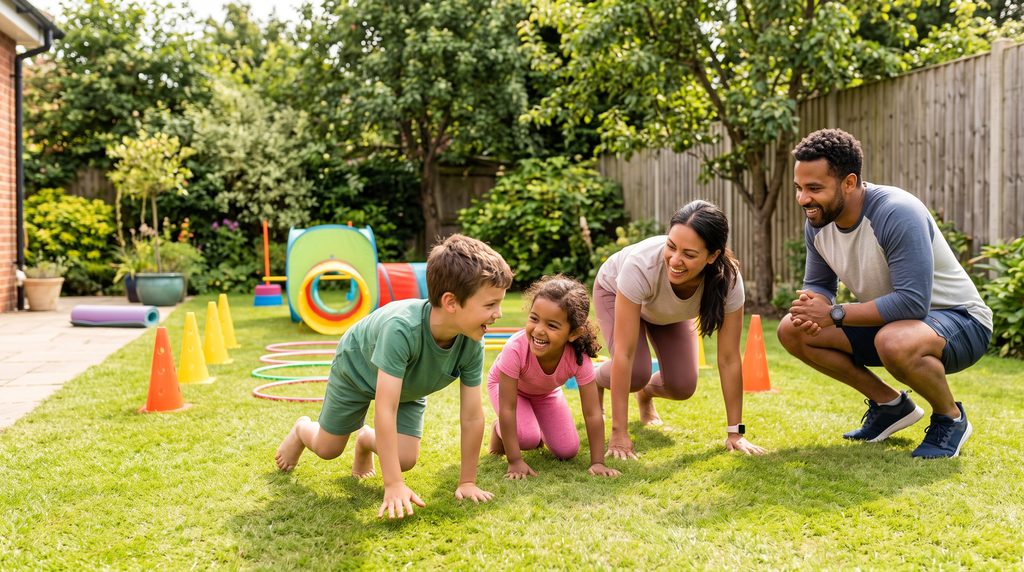
The bear crawl requires children to move on their hands and feet with their bottom up in the air, mimicking the powerful gait of a bear roaming through the forest. This deceptively challenging movement builds tremendous upper body and core strength while improving coordination and body awareness. You can create relay races where family members bear crawl to designated spots, or incorporate the movement into storytelling where you’re all bears searching for honey or preparing for hibernation.
Crab walks complement bear crawls perfectly by working different muscle groups and requiring children to move in unfamiliar ways. Have your kids sit on the floor, place their hands behind them, lift their hips, and walk backward or sideways like a crab scuttling across the beach. This exercise strengthens shoulders, triceps, core muscles, and legs while challenging balance and spatial awareness. Create obstacle courses where children must crab walk under tables or between chair legs, adding problem-solving elements to the physical challenge.
Frog Jumps and Bunny Hops
Transform your living room into a lily pad pond where your children become energetic frogs leaping from one safe spot to another. Frog jumps involve squatting down low, placing hands between feet, and explosively jumping forward while maintaining that low, compact position. This plyometric movement builds incredible leg power and cardiovascular endurance while being so entertaining that kids rarely realize they’re working hard. You can mark “lily pads” with pieces of paper, cushions, or tape on the floor, creating pathways and challenges that keep the activity fresh and engaging.
Bunny hops offer a slightly different movement pattern that emphasizes different muscle activation and coordination challenges. Children place their hands on the ground, then hop both feet forward simultaneously, keeping their feet together like a bunny bouncing through a garden. This movement particularly develops core strength and shoulder stability while improving the explosive power needed for many sports and activities. Race across rooms, hop through obstacle courses, or play bunny tag where one person is the gardener trying to catch the bunny rabbits invading the vegetable patch.
Flamingo Balance and Penguin Waddles
Balance-focused kid-friendly exercise routines teach body control and stability while being wonderfully adaptable to different age groups and skill levels. Flamingo stands require children to balance on one leg while holding various positions with their lifted leg and arms. Start with simple challenges like holding the position for ten seconds, then progress to closing eyes, reaching toward toes, or standing on unstable surfaces like pillows. You can turn this into a game where everyone holds flamingo poses while you tell stories, and anyone who falls must perform a silly task before rejoining.
Penguin waddles bring laughter and leg strength together in one adorable package. Have children place a small ball, stuffed animal, or bean bag between their knees, then walk without dropping their “penguin egg.” This seemingly simple challenge engages inner thigh muscles, requires careful movement control, and naturally moderates pace so even younger children can participate successfully. Create penguin parades around the house, set up relay races, or challenge kids to penguin waddle while carrying additional items in their hands or on their heads for multi-layered difficulty.
Dance Party Workouts That Feel Like Pure Fun
Few kid-friendly exercise routines generate as much genuine enthusiasm as dance parties that transform your living room into a personal nightclub. Dancing combines cardiovascular exercise with creative expression, rhythm development, and often impressive calorie burn—all while feeling completely unlike traditional workout formats. You don’t need any special skills, equipment, or training to make dance parties a regular part of your family’s fitness routine, just a willingness to move and a device that plays music.
The spontaneous nature of dance parties makes them perfect for busy families because they require zero preparation and can happen anytime energy levels need adjusting. When your kids get restless during homework time, when everyone feels sluggish on a rainy weekend afternoon, or when you need a transition activity between other tasks, simply crank up the music and start moving. The beauty of this approach is that it never feels forced—it’s a celebration of movement rather than an obligation.
Create themed dance parties that align with your children’s interests: superhero training sessions with dramatic power poses and action moves, princess balls with elegant twirls and graceful movements, or rock star concerts with exaggerated stage performances. You can incorporate structured dance games like freeze dance, where everyone must stop moving when the music pauses, or musical statues where the last person to freeze each round performs a funny dance move for everyone else to copy. These variations add elements of listening skills and impulse control to the physical benefits of dancing.
Follow the Leader Dance Routines
Take turns being the leader who creates dance moves that everyone else must copy, rotating leadership every song or every minute to keep everyone engaged and challenged. This format empowers children by giving them control and recognition while exposing them to diverse movement patterns created by different family members. You’ll be amazed at the creative and sometimes hilarious movements your kids invent when given the spotlight, and they’ll benefit from the executive function skills required to generate novel ideas under time pressure.
The social-emotional benefits of follow-the-leader dance routines shouldn’t be underestimated in your quest for effective kid-friendly exercise routines. Shy children gain confidence when their movements are validated through imitation, while more outgoing kids learn to tone down their energy to ensure others can successfully copy their moves. Siblings develop appreciation for each other’s strengths and creativity, and you get precious insight into your children’s personalities, interests, and developmental stages through the movements they choose to share.
Obstacle Course Adventures for Total Body Fitness
Creating obstacle courses might be the ultimate expression of kid-friendly exercise routines because they combine physical challenges with problem-solving, imagination, and accomplishment in one comprehensive package. The modular nature of obstacle courses means you can scale difficulty up or down, adapt to available space and equipment, and completely transform the experience simply by rearranging elements or changing the theme. Your children never face the exact same challenge twice, which maintains novelty and prevents the boredom that often derails exercise consistency.
You don’t need expensive equipment or elaborate setups to create effective obstacle courses—household items work beautifully when repurposed with a little creativity. Couch cushions become mountains to climb, chairs draped with blankets transform into tunnels to crawl through, tape lines on the floor designate balance beams that can’t be touched, and laundry baskets serve as targets for throwing rolled-up socks. The process of setting up the obstacle course becomes part of the activity, engaging planning and spatial reasoning skills while building anticipation for the physical challenges ahead.
Time trials add competitive elements that motivate many children to push themselves harder and practice more consistently. Use a stopwatch or phone timer to record how long each family member takes to complete the course, then challenge everyone to beat their personal best times. This approach teaches valuable lessons about self-improvement and persistence while naturally encouraging repeated practice—which means more exercise volume overall. You can track times on a chart or poster, celebrating improvements and effort regardless of absolute performance levels.
Theme-Based Obstacle Courses
Elevate your obstacle courses from random physical challenges to immersive adventures by incorporating themes that capture your children’s imaginations. A pirate treasure hunt course might include walking a plank (balance beam), climbing the rigging (climbing over furniture), crawling through a cave (under tables), and digging for treasure (retrieving items from a basket). A superhero training academy could feature power jumps, agility drills between “laser beams” (streamers taped across doorways), and strength tests like carrying weighted items from one location to another.
Seasonal and holiday themes provide ready-made storylines for your kid-friendly exercise routines throughout the year. Halloween courses might involve escaping from a haunted house, collecting candy scattered around obstacles, and avoiding spooky creatures lurking in shadowy corners. Winter courses could feature navigating a blizzard, building a snowman by collecting pieces from various stations, and rescuing lost penguins. These thematic elements transform simple physical movements into narrative experiences that children want to repeat again and again.
Yoga and Mindful Movement for Kids
While high-energy activities certainly have their place in kid-friendly exercise routines, don’t overlook the tremendous value of slower, more mindful movement practices like yoga and stretching. These activities teach body awareness, emotional regulation, and the important lesson that exercise doesn’t always mean pushing to maximum intensity. In our increasingly rushed and overstimulated world, giving children tools for calming their bodies and minds might be one of the most valuable gifts you can offer.
Kid-focused yoga differs significantly from adult practices in its approach and execution. Rather than holding poses in silent meditation, children’s yoga incorporates storytelling, animal sounds, and playful transitions that maintain engagement while delivering the physical and mental benefits of the practice. You might guide your children through a jungle adventure where they become tall giraffes (extended mountain pose), slithering snakes (cobra pose), resting butterflies (bound angle pose), and sturdy trees (tree pose). The narrative structure helps younger children remember sequences and stay focused for longer periods than traditional instruction methods would allow.
Partner yoga poses add social connection and trust-building elements to these kid-friendly exercise routines. Simple poses like double downward dog (where one child creates a downward dog position and another carefully places their feet on the first child’s back to create a second level), back-to-back chair pose, or mirrored tree pose require communication, cooperation, and mutual support. These shared experiences strengthen sibling bonds, teach patience and accommodation, and create opportunities for teamwork outside of competitive contexts where someone wins and someone loses.
Breath Work and Relaxation Techniques
Integrating breathing exercises into your physical activity sessions teaches children that fitness encompasses more than just moving fast and building strength. Simple techniques like balloon breathing (imagining inflating a balloon in your belly with each inhale, then slowly releasing the air with each exhale), bunny breathing (three quick sniffs in through the nose followed by one long exhale through the mouth), or lion’s breath (inhaling deeply then exhaling forcefully while sticking out the tongue and making a “ha” sound) make breath control accessible and fun for kids.
These breathing practices serve practical purposes beyond their immediate calming effects, as they prepare children for the breath control needed in many sports and activities while providing portable coping tools for managing stress, anxiety, and strong emotions. When your child faces a challenging test at school, conflicts with friends, or overwhelming feelings at home, they can draw upon these breathing techniques you’ve practiced together. The connection between physical exercise and emotional regulation becomes clear, teaching valuable lessons about the mind-body connection.
Strength Building Games That Don’t Feel Like Work
Many parents worry that strength training isn’t appropriate for children, but age-appropriate resistance activities are not only safe but beneficial for developing bodies when approached correctly. The key to making strength work part of your kid-friendly exercise routines lies in using bodyweight exercises disguised as games rather than implementing adult-style weightlifting programs. These playful approaches build muscular strength, endurance, and power while teaching proper movement patterns that will serve children throughout their lives.
Wheelbarrow races transform walking into an intense upper body and core workout that children find thrilling rather than tedious. One child holds their partner’s ankles while that person walks on their hands, requiring tremendous shoulder and abdominal strength to maintain position and move forward. You can create relay races, obstacle course segments, or simple distance challenges that family members attempt to beat over time. For younger children who can’t yet support their weight this way, you can hold their legs higher up toward the knees or hips, reducing the load while still providing valuable strengthening benefits.
Plank challenges become adventures when you transform them from static holds into interactive experiences. Have children hold plank position (either full plank on hands or modified on forearms) while you place small toys or objects on their backs that they must keep balanced. This game element distracts from the burning sensation in their cores while actually encouraging better form and longer hold times. You can also play plank tag where everyone starts in plank position and one person is “it,” trying to carefully tag others while maintaining their own plank—a hilarious and surprisingly challenging variation.
Push-Up and Squat Variations
Transform these fundamental exercises into entertaining games that children actively request rather than resist. Animal push-ups involve pausing partway down to make specific sounds (alligator snaps, dinosaur roars, lion growls), immediately making the exercise more engaging for young minds. Number push-ups challenge children to count in different ways: by twos, backward from ten, in different languages, or while you quiz them on math problems they must solve while exercising.
Squat games work beautifully when integrated into other activities your children already enjoy. Squat and catch involves squatting down while you throw a ball for them to catch, requiring them to maintain the squat position until the catch is complete. Musical squats work like musical chairs but require holding a squat position when the music stops, with the last person to achieve the position performing a silly task. These variations accumulate significant training volume without children feeling like they’re doing repetitive strength exercises, making consistency much easier to maintain over the long term.
Outdoor Adventures That Maximize Movement
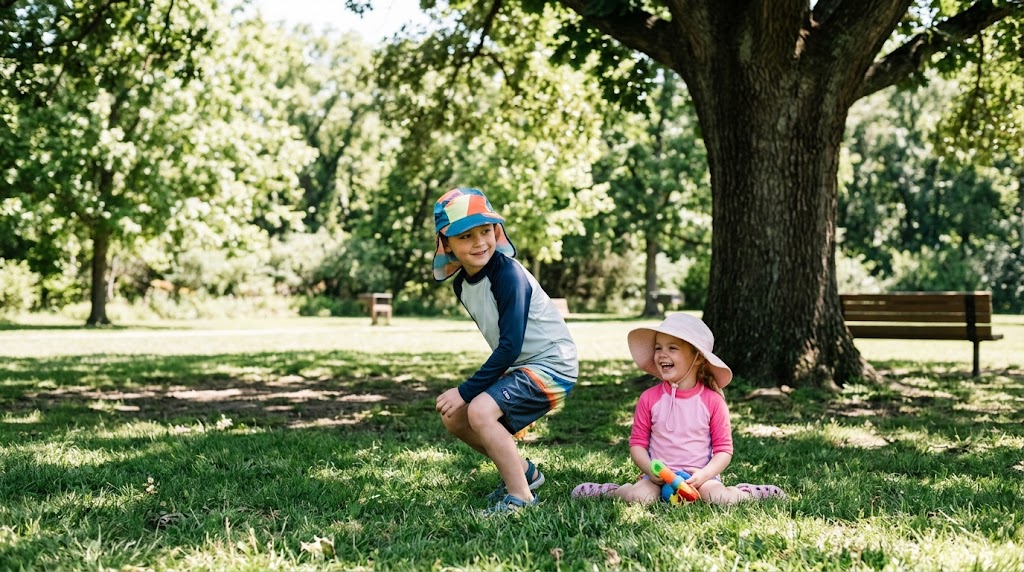
While many kid-friendly exercise routines work perfectly indoors, taking your activities outside whenever possible adds dimensions of sensory stimulation, vitamin D exposure, and connection with nature that enhance both physical and mental health benefits. Outdoor environments naturally encourage more vigorous movement and longer activity durations compared to indoor settings, as the changing scenery, fresh air, and expanded space inspire exploration and adventure that closed rooms simply can’t match.
Nature scavenger hunts combine exercise with observation skills, teaching children to move purposefully through environments while paying attention to details. Create lists of items to find (something smooth, something rough, three different types of leaves, a Y-shaped stick, something red) that require covering significant territory and varied terrain to complete. The hunt structure disguises the walking, running, climbing, and exploring as a game with a goal, making the physical exertion feel secondary to the mission. You can photograph items on phones or tablets, collect actual objects in bags, or simply check items off lists depending on your preferences and environmental considerations.
Park playground circuits turn casual play into structured exercise by creating challenges that utilize various equipment in sequences. Start with five trips down the slide, followed by hanging from the monkey bars for as long as possible, then three rounds of climbing up and down the climbing wall, finishing with ten swings while pumping legs for momentum. Children complete the circuit as many times as possible in a set timeframe or compete to see who can finish a certain number of circuits fastest. This structure provides enough organization to ensure adequate exercise volume while maintaining the fun, playful atmosphere that makes outdoor time special.
Backyard Obstacle Courses and Sports Skills
Your backyard or nearby open spaces become versatile training grounds when you set up semi-permanent obstacle elements that can remain in place for days or weeks. String a slackline between trees for balance challenges, hang ropes for climbing, mark agility ladder patterns with chalk or paint, and designate areas for different movement stations. These setups encourage spontaneous activity since the equipment is always available and inviting rather than requiring deliberate setup time that might not happen on busy days.
Sport-specific skill development fits perfectly into kid-friendly exercise routines when approached playfully rather than as serious training. Set up target practice for throwing accuracy using hula hoops hung from trees, buckets at varying distances, or homemade goals fashioned from PVC pipes. Create dribbling courses for basketball or soccer that wind through cones, around trees, and between obstacles. Practice batting by hitting whiffle balls off tees at different heights. These activities build athletic capabilities while providing cardiovascular and neuromuscular benefits, all disguised as casual backyard fun rather than structured practice sessions.
Incorporating Exercise Into Daily Routines
The most sustainable kid-friendly exercise routines are those that seamlessly integrate into your existing daily patterns rather than requiring completely separate blocks of time that compete with other priorities. Movement snacks—brief periods of physical activity scattered throughout the day—accumulate substantial total exercise volume while being much easier to consistently implement than single long workout sessions. This approach particularly suits families with younger children who have limited attention spans or households juggling multiple competing demands on time and energy.
Commercial breaks during television time provide perfect opportunities for movement bursts that offset the sedentary nature of screen time without eliminating the activity entirely. When commercials begin, challenge your family to perform specific exercises: jumping jacks, running in place, dance moves, yoga poses, or any of the activities previously discussed. This pattern creates positive associations with exercise as a fun interruption rather than a replacement for preferred activities, reducing resistance while establishing habits of breaking up sitting time that have important health implications.
Transition time between activities—getting ready for meals, preparing for bed, traveling between rooms—can incorporate brief movement challenges that add up significantly over a day. Before dinner, everyone must perform ten squats or hop on one foot from the living room to the kitchen. Before bed, each family member picks a stretching pose to share with everyone else. When going upstairs, you must take exaggerated high steps or do bunny hops. These micro-workouts feel like playful family quirks rather than exercise requirements, embedding physical activity into the fabric of your household culture.