When you watch your children dash across the playground, scaling climbing structures and soaring down slides, their safety is undoubtedly your top priority. Yet many parents overlook one of the most critical safety features at any play area: the surface beneath their feet. The playground surface plays an essential role in preventing injuries, cushioning falls, and creating an environment where kids can play freely without unnecessary risk. Understanding what makes a playground surface safe can help you make informed decisions about where your children play and how to create safe spaces at home.
Understanding Fall Height and Impact Protection
The primary purpose of playground surfacing is to reduce the severity of injuries from falls. Children fall frequently during play—it’s a natural part of their development and learning process. However, the surface they land on makes all the difference between a minor bump and a serious injury. The Consumer Product Safety Commission (CPSC) estimates that over 200,000 children visit emergency rooms each year due to playground-related injuries, with falls accounting for approximately 75% of these incidents.
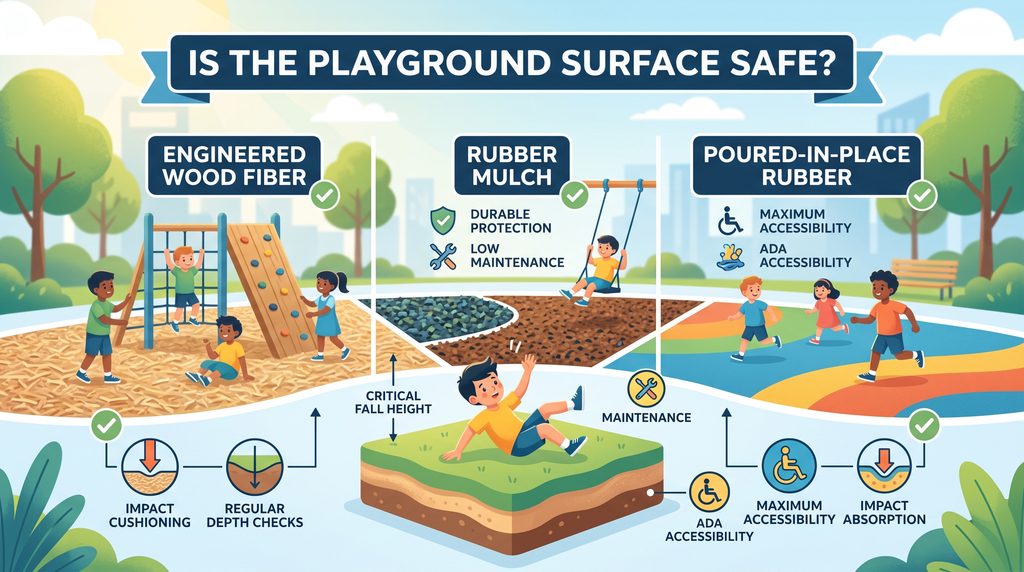
Critical fall height is a term you’ll want to understand when evaluating playground safety. This measurement indicates the maximum height from which a child can fall onto a surface without sustaining a life-threatening head injury. Different surfacing materials have different critical fall height ratings, and this information should match or exceed the height of the play equipment. For instance, if your child’s favorite climbing structure reaches eight feet high, the surface material needs to be rated for at least that fall height.
The depth of surfacing material significantly affects its protective qualities. Loose-fill materials like wood chips or rubber mulch require adequate depth to provide proper cushioning. Over time, these materials can become compacted, displaced, or depleted, reducing their effectiveness. Regular maintenance and replenishment are essential to maintain the protective qualities you’re counting on to keep your children safe.
Types of Playground Surfaces: Pros and Cons
Navigating the various playground surface options can feel overwhelming, but understanding the characteristics of each type will help you assess whether is the playground surface safe for your active kids. Each material comes with distinct advantages and potential drawbacks that affect safety, maintenance, accessibility, and cost.
Engineered Wood Fiber
Engineered wood fiber has become increasingly popular at public playgrounds due to its excellent impact attenuation properties. This material consists of processed wood that has been shredded and screened to create consistent particle sizes, making it safer than traditional wood chips which can contain sharp edges or pieces. When properly installed at a depth of 9-12 inches, engineered wood fiber provides excellent fall protection for equipment up to 10 feet high.
The natural appearance of wood fiber blends well with outdoor environments, creating an aesthetically pleasing play area that many parents appreciate. It’s also relatively affordable compared to some synthetic options, making it accessible for community playgrounds and budget-conscious families. However, this material requires regular maintenance to maintain proper depth and coverage, as it can be kicked out of high-traffic areas or decompose over time.
One consideration for health-conscious parents is that wood fiber can harbor insects, develop mold in damp conditions, or hide debris like broken glass or sharp objects. You’ll need to inspect play areas with this surfacing regularly, looking for contamination or displacement that could compromise safety. Additionally, wood fiber isn’t the most accessible option for children with mobility devices, as wheelchairs and walkers can have difficulty navigating the loose surface.
Rubber Mulch
Rubber mulch offers many of the benefits of wood fiber while addressing some of its shortcomings. Made from recycled tires, this surfacing material provides excellent shock absorption and doesn’t decompose or compact as quickly as organic materials. At proper depths of 6 inches or more, rubber mulch can protect children from falls up to 16 feet, making it suitable for even the tallest playground structures.
The durability of rubber mulch means less frequent replacement and lower long-term maintenance costs, though the initial investment is typically higher than wood fiber. It doesn’t attract insects, won’t rot or splinter, and maintains its protective qualities through various weather conditions. Many playground designers appreciate that rubber mulch comes in various colors, allowing for creative designs or color-coding different play zones.
However, rubber mulch does present some concerns worth considering. In hot weather, dark-colored rubber can absorb heat and become uncomfortably hot to the touch, potentially burning children’s hands or bare feet. Some studies have raised questions about potential chemical exposure from recycled tire materials, though research remains inconclusive about health risks at the exposure levels typical in playground settings. As a parent focused on your family’s health, you’ll want to weigh these considerations against the safety benefits.
Poured-in-Place Rubber
For a permanent, highly effective surfacing solution, poured-in-place rubber surfaces represent the gold standard in playground safety. This system involves installing a base layer of recycled rubber buffered topped with a wear layer of colored EPDM rubber, creating a seamless, cushioned surface. The result is exceptional impact protection, excellent accessibility for wheelchairs and mobility devices, and minimal maintenance requirements.
The smooth surface prevents trip hazards from displaced materials and makes it easy to spot and remove debris or dangerous objects. Poured-in-place surfaces don’t harbor insects, won’t wash away in rain, and maintain consistent depth and coverage without the regular replenishment that loose-fill materials require. For busy moms juggling multiple responsibilities, this low-maintenance option can provide peace of mind about playground safety.
The primary drawback is cost—poured-in-place rubber is significantly more expensive than loose-fill alternatives, both for initial installation and for repairs if the surface becomes damaged. Additionally, poor installation can lead to inadequate coverage or drainage problems that create safety hazards. If you’re evaluating a playground with this type of surface, look for proper installation by certified professionals and adequate drainage to prevent water pooling.
Artificial Turf
Modern artificial turf designed for playgrounds differs significantly from the hard, carpet-like surfaces of decades past. Today’s synthetic grass systems incorporate shock-absorbing pad layers beneath realistic-looking turf, providing fall protection while creating an attractive, natural appearance. This option particularly appeals to families who want the look of grass without the maintenance challenges of keeping natural grass healthy in high-traffic play areas.
Quality artificial turf systems offer good drainage, resist weather-related deterioration, and remain accessible for children with mobility challenges. The surface stays clean and mud-free, even after rain, and doesn’t require mowing, watering, or pesticide applications. For environmentally conscious parents concerned about water conservation and chemical use, artificial turf can represent an eco-friendly choice despite being a synthetic product.
When evaluating artificial turf, pay attention to the infill material used beneath the grass blades, as this component provides much of the impact protection. Some infill materials can become extremely hot in direct sunlight, creating burn risks similar to those associated with rubber mulch. Additionally, lower-quality turf products may not provide adequate fall protection for taller equipment, so verification of safety ratings is essential.
Assessing Existing Playground Surfaces
As an active parent, you probably visit various playgrounds throughout your community, each with different surfacing materials in varying conditions. Developing the ability to quickly assess whether is the playground surface safe empowers you to make smart decisions about where your children play. Several observable factors can help you evaluate surface safety without specialized equipment or expertise.
Start by visually inspecting the surface for adequate coverage and depth. With loose-fill materials, you should see consistent depth across the entire play area, particularly under and around high-traffic equipment like swings and slide exits. If you can see the underlying ground or a fabric barrier through the surfacing material, depth is insufficient. Areas where children land repeatedly—like swing zones and the bottom of slides—often show the most displacement and require your closest attention.
Check for displacement and compaction by walking across the surface and noticing how it feels beneath your feet. Properly maintained loose-fill surfaces should feel springy and give way slightly under your weight. Hard, compacted areas or sections where material has been kicked away indicate maintenance needs that compromise safety. You can perform a simple test by dropping to your knees on the surface—if it feels uncomfortably hard on your knees, it won’t adequately protect your child’s head in a fall.
Look for contamination and hazards that could cause injuries beyond fall-related impacts. Broken glass, sharp objects, animal waste, and standing water all present dangers that responsible playground maintenance should prevent. Loose-fill materials can hide small hazards, so teach your children to alert you if they spot anything dangerous and make a habit of scanning play areas before your kids begin playing.
Surface Safety Standards and Certifications
Understanding the regulatory framework around playground safety helps you advocate for proper maintenance at public playgrounds and make informed decisions about home play equipment. The CPSC publishes comprehensive guidelines for playground safety, including detailed specifications for surfacing materials and their proper installation and maintenance. While these guidelines aren’t legally binding for public playgrounds, many municipalities and schools adopt them as standards.
ASTM International (formerly the American Society for Testing and Materials) has developed technical standards for playground surfacing, including testing methods for impact attenuation. The ASTM F1292 standard specifically addresses impact attenuation of surfacing materials within the use zone of playground equipment. When playground surfaces are tested and certified to meet ASTM standards, you can feel more confident about their protective qualities.
For public playgrounds, the Americans with Disabilities Act (ADA) requires that surfacing materials meet accessibility standards, ensuring children with mobility devices can access play equipment. This requirement has driven improvements in playground design and surface selection, benefiting all children by promoting surfaces that are firmer, more stable, and easier to navigate. When evaluating playgrounds, consider whether the surface would allow a child using a wheelchair or walker to reach the play equipment independently.
Maintenance Requirements for Different Surfaces
Even the highest-quality playground surface will fail to protect children if not properly maintained. Understanding maintenance requirements helps you assess whether a playground receives adequate care and informs your decisions if you’re installing home play equipment. Different surface types demand varying levels of attention, and maintenance needs change with seasons and usage patterns.
Loose-fill materials require the most frequent maintenance attention. Wood fiber and rubber mulch need regular raking to redistribute material that gets displaced during play, particularly around high-use areas. Monthly depth checks ensure material hasn’t become depleted below safe levels, and annual replenishment typically becomes necessary as materials compress, decompose, or migrate out of play areas. After heavy rain or wind, loose-fill surfaces need inspection and grooming to restore proper coverage.
The border containment system for loose-fill materials deserves attention as well. Proper edging prevents surfacing from spreading beyond the designated play area while keeping it contained where protection is needed. Check that borders remain intact and securely installed, as damaged containment allows material to escape and reduces protective depth where it matters most.
Unitary surfaces like poured-in-place rubber and artificial turf require less frequent but different maintenance. These surfaces need regular cleaning to remove debris, leaves, and other materials that accumulate over time. Inspect unitary surfaces for damage like tears, separation, or worn areas that could create trip hazards or reduce impact protection. While these surfaces don’t require replenishment like loose-fill options, repairs can be complex and costly, making damage prevention through proper use and regular inspection particularly important.
Creating Safe Play Surfaces at Home
Many fitness-focused families invest in backyard play equipment to encourage active play and outdoor time for their children. When installing home playground equipment, the surface beneath it deserves as much consideration as the equipment itself. You have the same responsibility to provide adequate fall protection at home as you’d expect from public playgrounds, and understanding your options helps you make choices that balance safety, budget, and maintenance capabilities.
Before selecting a surface material, accurately measure your play area and determine the fall zones for all equipment. The use zone—the area requiring protective surfacing—extends beyond the footprint of the equipment itself. For structures with slides, swings, or climbing features, you’ll need to calculate proper use zones based on equipment height and type. The CPSC guidelines provide specific formulas for determining use zone dimensions, ensuring you install protective surfacing everywhere it’s needed.
Consider your local climate and how it affects different surfacing materials. If you live in an area with hot summers, dark-colored rubber surfaces might become uncomfortably hot, while regions with heavy rainfall need surfaces with excellent drainage properties. Wood fiber might not be ideal in humid climates where moisture promotes rapid decomposition and mold growth. Think about how your climate interacts with different materials to choose an option that maintains its protective properties year-round.
Your maintenance capacity and commitment should influence surface selection as well. If you’re a busy mom juggling work, fitness routines, and family responsibilities, a low-maintenance option like poured-in-place rubber might be worth the higher initial investment. Conversely, if you enjoy outdoor projects and don’t mind regular upkeep, loose-fill materials offer excellent protection at lower cost. Be honest with yourself about the time and effort you’ll realistically dedicate to playground maintenance.
The Connection Between Surface Safety and Physical Development
As someone committed to health and fitness, you understand that active play contributes enormously to children’s physical development. Safe playground surfaces don’t just prevent injuries—they provide the foundation for confident, vigorous play that builds strength, coordination, and motor skills. When children feel secure in their environment, they’re more willing to take appropriate risks, challenge themselves physically, and develop the body awareness that supports lifelong fitness.
Research demonstrates that children who engage in regular, active play develop better balance, spatial awareness, and physical confidence than their more sedentary peers. Playgrounds with safe, well-maintained surfaces encourage this type of play by allowing children to run, jump, climb, and explore without excessive restriction from anxious parents. While you naturally want to protect your children from harm, a truly safe playground surface gives you the confidence to step back and let them test their physical limits.
The psychological aspect of surface safety shouldn’t be underestimated either. Children are remarkably perceptive about their environments, and unsafe conditions can create anxiety that limits their willingness to play actively. Conversely, a playground that feels secure allows children to focus on the joy of movement rather than fear of injury. This emotional security during childhood play experiences can influence attitudes toward physical activity that persist into adulthood.
Special Considerations for Different Age Groups
When evaluating whether is the playground surface safe, remember that age-appropriate design extends to surfacing choices as well as equipment selection. Toddlers, school-age children, and preteens have different play patterns, developmental needs, and risk factors that should influence playground design and surface selection.
Toddlers and preschoolers typically play on lower equipment but fall more frequently as they develop coordination and balance. Play areas designed for this age group might use different surfacing than zones for older children, potentially opting for materials with excellent impact protection at lower heights. These younger children are also more likely to put objects in their mouths, making surface cleanliness particularly critical and favoring materials less likely to harbor bacteria or small pieces that could present choking hazards.
School-age children engage in more vigorous, athletic play, running faster and climbing higher than younger kids. Surfaces in their play areas need to accommodate higher fall heights and more intense use patterns. These children benefit from surfaces that support running games and active play while still providing fall protection around climbing structures and elevated equipment. The surface should facilitate rather than hinder their increasingly sophisticated physical activities.
Older children and preteens often push equipment to its limits, using it in creative ways that designers might not have anticipated. Surfaces in play areas for this age group must withstand heavy use and continue providing protection even when play becomes rough. Additionally, this age group often engages in sports-like activities on playground surfaces, making durability and athletic performance qualities more important than for younger children’s play spaces.
Cost-Benefit Analysis of Playground Surface Investment
For families considering home playground installations or communities evaluating playground upgrades, understanding the financial implications of different surfacing choices helps inform decision-making. The cheapest option rarely represents the best value when you factor in safety benefits, longevity, and maintenance costs over the life of the playground.
Initial installation costs vary dramatically among surface types. Basic options like pea gravel or sand cost significantly less upfront than engineered wood fiber, which in turn costs less than rubber mulch or artificial turf. Poured-in-place rubber represents the highest initial investment, sometimes costing three to five times as much as loose-fill alternatives. However, installation cost is just one piece of the financial picture.
Long-term maintenance expenses can shift the cost equation substantially. Loose-fill materials require regular replenishment, with wood fiber typically needing significant addition or replacement every 2-3 years. Rubber mulch lasts longer but still requires periodic replenishment, while poured-in-place and artificial turf surfaces can last 10-15 years or more with minimal maintenance beyond cleaning and occasional repairs. When you calculate the total cost of ownership over a decade, more expensive initial options sometimes prove more economical.
The value of injury prevention defies simple financial calculation but deserves serious consideration. Medical costs for playground injuries can be substantial, with fractures, concussions, and other serious injuries requiring emergency care, specialist treatment, and sometimes extended recovery periods. Beyond financial costs, childhood injuries bring pain, disrupted activities, and family stress that safe surfacing helps prevent. For health-conscious parents, viewing surface investment as injury prevention rather than just playground aesthetics reframes the decision-making process.
Environmental and Health Considerations
Modern parents increasingly consider environmental impact and potential health effects when making decisions for their families, and playground surfacing deserves the same scrutiny you apply to food choices, household products, and other aspects of your health-conscious lifestyle. Different surface materials have varying environmental footprints and potential health implications worth understanding.
Rubber products made from recycled tires represent both environmental benefits and potential concerns. Recycling used tires prevents them from ending up in landfills and gives new purpose to materials that would otherwise create environmental problems. However, tires contain various chemicals used in their manufacture, and questions persist about whether these chemicals can leach from recycled tire products and present health risks. Current research generally indicates that exposure levels from playground surfaces are very low, but studies continue, and some cautious parents prefer to avoid tire-derived products.
Natural materials like wood fiber appeal to environmentally conscious families due to their renewable, biodegradable nature. However, not all wood fiber is created equal from an environmental perspective. Products sourced from sustainably managed forests carry less environmental impact than those involving questionable forestry practices. Additionally, some wood fiber products contain additives or treatments to extend lifespan or resist pests, and you’ll want to understand what chemicals, if any, are present in materials your children will contact regularly.
Artificial turf presents a mixed environmental picture. These systems eliminate the need for lawn watering, mowing, and chemical treatments, reducing environmental impact compared to maintaining natural grass in high-use areas. However, synthetic turf products are petroleum-based, non-biodegradable, and energy-intensive to manufacture. At end-of-life, artificial turf creates disposal challenges, though recycling programs are developing. For your family’s decision-making, weighing these competing factors against your environmental priorities helps clarify the best choice.
Educating Children About Surface Safety
While adults bear responsibility for providing and maintaining safe playground surfaces, teaching children to recognize and respond to surface-related hazards empowers them to make good decisions when playing. Age-appropriate safety education helps your kids understand that not all playgrounds are equally safe and gives them tools to protect themselves.
Young children can learn to look for obvious hazards before they play—broken glass, standing water, animal waste, and sharp objects are dangers even preschoolers can identify with guidance. Make safety scanning a routine part of arriving at any playground, modeling the behavior by pointing out what you’re checking and why. This habit builds awareness without creating excessive fear, helping children develop judgment about their play environments.
Older children can understand more nuanced safety concepts, like recognizing when loose-fill surfacing has become too shallow or compacted to provide adequate protection. Teach them to notice whether they can see the ground through wood chips or if the surface feels hard rather than springy underfoot. Empower them to speak up when they notice safety concerns rather than simply avoiding problematic equipment, helping create a culture where everyone takes responsibility for playground safety.
Encourage your children to report unsafe conditions to appropriate adults—playground monitors at school, park staff at public playgrounds, or you at home. Many municipalities have systems for reporting playground maintenance needs, and teaching children that they can contribute to fixing problems rather than just avoiding them builds civic engagement and personal responsibility. This empowerment serves them well beyond playground safety, developing advocacy skills they’ll use throughout life.
Seasonal Surface Safety Challenges
If you live in an area with distinct seasons, playground surface safety requires different attention throughout the year. Weather conditions affect surface materials in various ways, and understanding these seasonal challenges helps you assess whether playgrounds remain safe across changing conditions.
Winter weather presents unique surface safety issues in cold climates. Snow and ice can obscure surface hazards and create slipping dangers, while freeze-thaw cycles may damage some surface types. Loose-fill materials can become frozen and hard, losing their impact-attenuation properties until they thaw. Poured-in-place surfaces may become slippery when icy, and snow removal practices might damage surfaces if not done carefully. Before allowing children to play on snow-covered playgrounds, consider whether you can verify that the surface beneath the snow remains safe and that ice hasn’t created additional hazards.
Spring often brings increased moisture that can waterlog some surface materials or create drainage problems. Standing water on playground surfaces presents drowning hazards for very young children and creates conditions for bacterial growth and surface deterioration. Inspect playgrounds after spring rains to ensure drainage systems are functioning properly and that surfaces dry adequately between weather events.