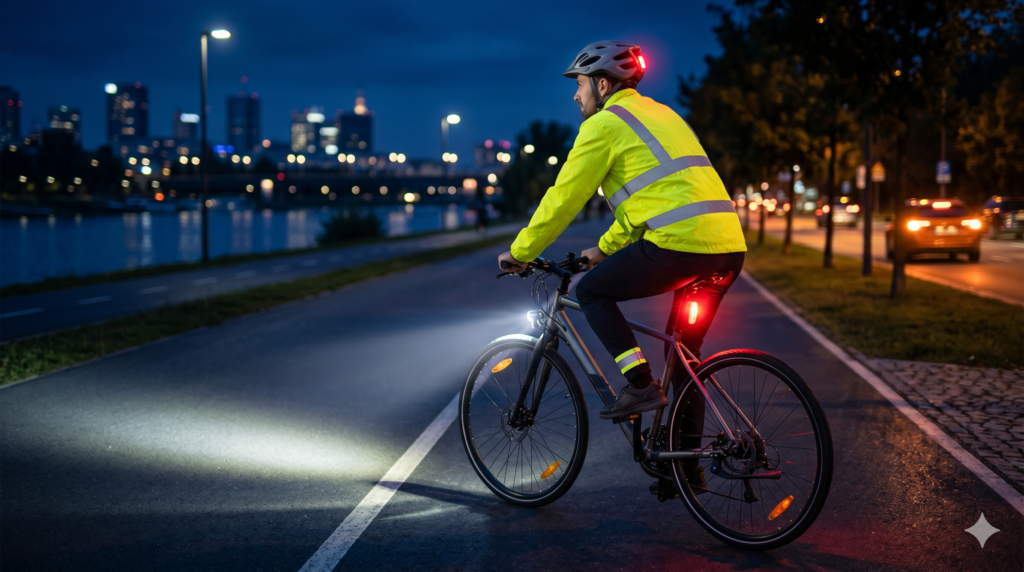
When the sun sets and darkness blankets your cycling route, the dynamics of your ride change dramatically. Night cycling presents a unique set of challenges that every cyclist must understand and prepare for, whether you’re commuting home from work or squeezing in an evening training session after putting the kids to bed. The reduced visibility affects not only your ability to see potential hazards but also dramatically decreases other road users’ ability to see you, creating a two-fold danger that demands your complete attention and preparation.
The statistics surrounding nighttime cycling accidents are sobering, with research showing that cyclists are significantly more likely to be involved in serious collisions during evening hours compared to daylight riding. This increased risk isn’t just about darkness—it’s about the combination of reduced visibility, driver fatigue, the psychological challenges of riding in the dark, and the often-rushed nature of evening commutes. Understanding these ways to avoid cycling accidents at night becomes crucial for anyone who regularly finds themselves pedaling after sunset.
Your eyes function differently in low-light conditions, with your peripheral vision becoming less effective and your depth perception substantially compromised. Colors appear muted, making it harder to distinguish between objects and their backgrounds, and your reaction time to unexpected obstacles naturally increases. These physiological limitations mean that even if you’re an experienced daytime cyclist with thousands of miles under your belt, you need to approach night riding with a completely different mindset and toolkit.
Essential Lighting Equipment for Maximum Visibility
The foundation of safe night cycling begins with proper lighting, and this goes far beyond the basic requirement of having a front and rear light attached to your bike. Investing in high-quality, powerful lights is perhaps the single most important step you can take to protect yourself during evening rides. Your front light should be powerful enough not just to make you visible to others, but to actually illuminate the road ahead, allowing you to spot potholes, debris, and other hazards before they become problems.
When selecting a front light, look for models that offer at least 500 lumens for urban riding and 800-1000 lumens if you’ll be cycling on unlit rural roads or trails. Many modern bicycle lights come with multiple modes, including steady beams for maximum visibility and flashing modes that can catch drivers’ attention more effectively. Consider mounting two front lights at different angles—one aimed at the road surface immediately ahead of you and another positioned slightly higher to increase your visibility to oncoming traffic.
Your rear light is equally critical, as the majority of serious cycling accidents involve vehicles striking cyclists from behind. Modern rear lights should be bright, attention-grabbing, and visible from at least 500 feet away. Many cyclists make the mistake of relying on a single small rear light, but implementing multiple rear lights at different mounting positions—one on your seat post, one on your helmet, and perhaps one on your backpack—creates a larger visual signature that helps drivers accurately judge your position and speed. Flashing rear lights are generally more effective at capturing attention than steady beams, though some jurisdictions have specific regulations about light patterns that you should research.
Beyond your primary lights, supplementary lighting can dramatically increase your safety profile. Wheel lights, spoke reflectors, and frame-mounted accent lights create a distinctive pattern that helps motorists perceive you as a cyclist rather than just an ambiguous light source. These additional lights also help drivers judge your speed and direction more accurately, giving them better information for making safe passing decisions.
Reflective Gear and Clothing Strategies
While active lighting is crucial, reflective materials provide an additional layer of protection that operates independently of batteries and electrical systems. The science behind retroreflective materials is fascinating—these specially designed surfaces bounce light directly back to its source, meaning that when a car’s headlights hit your reflective gear, the driver sees an exceptionally bright return signal. This passive visibility system works 24/7 without requiring any power source or maintenance, making it an essential component of your nighttime cycling safety strategy.
Reflective vests, jackets, and ankle bands should be standard equipment for any after-dark ride, but the placement and type of reflective materials matter significantly. Moving reflectors are particularly effective at catching drivers’ attention—reflective ankle bands or leg straps create a distinctive up-and-down motion pattern that the human brain quickly recognizes as a cyclist, even at considerable distances. This biological motion pattern is much more noticeable than static reflective patches, making ankle and wrist bands particularly valuable additions to your night cycling wardrobe.
Consider the geometry of how car headlights hit cyclists when choosing your reflective gear. Low-mounted reflectors on your pedals, crank arms, and ankles are particularly effective because they’re positioned at the optimal height for most vehicle headlights. Meanwhile, reflective strips on your torso and back create a larger visual signature that’s visible from greater distances. Many cycling-specific jackets feature reflective panels strategically positioned across the shoulders and back, creating maximum visibility from the angles most critical for motorist awareness.
Don’t overlook the importance of reflective helmet covers and backpack covers, which add visibility at head height where drivers naturally tend to look. Some innovative products now include integrated LED strips within reflective materials, combining both active lighting and passive reflection for maximum effect. When choosing colors for your night riding gear, bright fluorescent yellow, orange, or lime green provide the best visibility during twilight hours when there’s still some ambient light, while white and silver reflective materials perform best in complete darkness.
Route Planning and Road Selection
The routes that work perfectly for your daytime rides may become significantly more dangerous after dark, making careful route planning an essential element of nighttime cycling safety. Well-lit roads with dedicated bike lanes or wide shoulders should become your preferred pathways during evening rides, even if they add distance to your journey. The extra time spent on safer roads is a worthwhile investment in your wellbeing and is far preferable to taking shortcuts through poorly lit areas where visibility is compromised.
Familiarize yourself with your night routes during daylight hours so you understand the road surface conditions, potential hazard locations, and traffic patterns before you encounter them in darkness. This pre-ride reconnaissance allows you to note specific danger points—poorly maintained road sections, areas with limited sight lines, or intersections with historically aggressive traffic—and develop strategies for navigating them safely. Make mental notes of streetlight coverage, identifying any dark sections where you’ll need to rely more heavily on your bike lights and reduce your speed accordingly.
Urban environments generally offer better lighting infrastructure and more predictable traffic patterns, but they also present unique challenges including more frequent intersections, parked cars creating dooring hazards, and higher volumes of distracted pedestrians. Rural roads might offer less traffic overall, but the vehicles that do appear are often traveling at higher speeds, and the complete absence of street lighting creates a more challenging visual environment. Each setting demands different strategies and awareness patterns, so tailor your approach based on the specific environment you’re navigating.
Consider developing multiple route options for your regular night rides, allowing you to adapt based on weather conditions, traffic patterns, and your fatigue level. Having alternatives means you’re never forced to take a route that feels unsafe, and it prevents the complacency that can develop from riding the same path repeatedly. Share your planned routes with family members or use a GPS tracking app that allows others to monitor your location—this added safety measure provides peace of mind for both you and your loved ones.
Defensive Riding Techniques for Dark Conditions
Adopting a defensive riding mindset becomes even more critical during night cycling, as you must assume that many drivers simply haven’t seen you, regardless of how well-lit you might be. This assumption isn’t cynical—it’s realistic given the multiple factors that can limit driver awareness, from dirty windshields and misaligned headlights to driver distraction and fatigue. By mentally preparing for the possibility that you’re invisible to other road users, you create the psychological foundation for making safer decisions.
Your lane positioning deserves careful consideration during night rides. While you want to avoid being too far to the right where you might disappear from drivers’ primary field of vision or encounter debris and drainage grates, you also need to be realistic about visibility limitations. In many situations, taking a more prominent lane position actually increases your safety by forcing drivers to see you and make conscious passing decisions rather than squeezing by without adequate clearance. However, this strategy requires confidence, clear communication through lights and reflectors, and careful judgment about when to assert your space versus when to yield.
Reduce your speed during night rides to account for limited visibility and increased reaction times. This isn’t about being timid—it’s about physics and biology. Your ability to perceive and react to hazards is compromised in low light, and the faster you’re traveling, the less time you have to respond when something unexpected appears. A pace that feels comfortable during the day might be recklessly fast at night when a pothole or patch of gravel can appear with much less warning. Think of your nighttime speed reduction as an investment in maintaining control rather than a limitation on your performance.
Intersection navigation requires heightened awareness and patience during evening rides. Even when you have the right of way, make eye contact with drivers before proceeding through intersections, and position yourself where you’re most visible to turning vehicles. Be especially cautious of right-hook scenarios where a vehicle passes you and then immediately turns right across your path—this dangerous situation becomes even more likely at night when drivers may not have properly registered your presence or speed. At complex intersections, don’t hesitate to dismount and walk your bike through if the situation feels uncertain or particularly hazardous.
Weather Considerations and Environmental Factors
Rain, fog, and other adverse weather conditions exponentially increase the challenges of night cycling, creating visibility problems that affect both you and the drivers around you. Wet roads reflect light in unpredictable ways, creating glare that can obscure hazards and make it harder for your lights to effectively illuminate the path ahead. Painted road markings become slippery when wet, and standing water can hide potholes and other surface irregularities that you’d easily avoid in dry conditions.
When rain and darkness combine, strongly consider alternative transportation or significantly modify your riding approach. If you must ride in wet nighttime conditions, reduce your speed substantially, increase your following distance behind vehicles, and give yourself extra space when cornering. Brake earlier and more gently than you would in dry conditions, as your stopping distance increases significantly on wet pavement. Ensure your lights are angled properly to illuminate the road without creating excessive glare off the wet surface, and consider carrying a small cloth to periodically wipe your lights and glasses clean.
Fog presents unique visibility challenges that standard bike lights can actually worsen. In dense fog, powerful lights can create a wall of reflected glare that makes it harder rather than easier to see where you’re going. If you encounter foggy conditions during a night ride, consider switching your front light to a lower power setting or angling it more toward the ground to minimize this reflection effect. Your rear light, however, should remain as bright and visible as possible to alert motorists to your presence in the reduced visibility.
Temperature also plays a role in night cycling safety beyond simple comfort considerations. Cold air affects battery performance, potentially reducing the runtime and brightness of your lights. If you regularly ride in cold conditions, invest in lights with good cold-weather performance ratings and carry backup batteries. Cold also affects your body’s reaction time and manual dexterity, making it harder to operate brakes and shifters effectively, so dress appropriately in layers that keep you warm without restricting movement.
Bike Maintenance for Night Riding Safety
The margin for error decreases significantly during night rides, making reliable equipment absolutely essential for your safety. A mechanical failure that would be merely inconvenient during a daytime ride can become genuinely dangerous after dark, particularly if it leaves you stranded in an area with poor lighting or heavy traffic. Regular maintenance checks become non-negotiable when you’re frequently cycling at night, with special attention paid to the systems most critical for safe navigation in low-light conditions.
Your braking system deserves particular scrutiny before night rides, as your ability to stop quickly and controllably can mean the difference between avoiding an accident and becoming involved in one. Check brake pad wear regularly and replace pads before they become critically worn—night riding isn’t the time to push your equipment to its absolute limits. Ensure your brake cables move freely without binding, and verify that your wheels are properly trued so they don’t rub against brake pads or create unpredictable handling characteristics that could surprise you in a critical moment.
Tire condition and pressure directly affect your ability to maintain control and avoid hazards that are harder to spot at night. Maintain proper tire pressure and inspect your tires for cuts, embedded debris, and wear patterns before each night ride. Consider using slightly wider tires with good puncture protection for night riding, as they provide better stability and are more forgiving when you encounter unseen road surface irregularities. A flat tire during daylight hours is frustrating; a flat tire on a dark road with limited visibility and passing traffic creates a potentially dangerous situation.
Your lights require the same attention as your mechanical systems. Check battery levels before every night ride and carry backup batteries or a backup light system. Clean your light lenses regularly to ensure maximum brightness and consider marking the expected runtime on your lights or setting phone reminders to replace batteries proactively rather than waiting for them to fail. Many cyclists carry a small backup light attached to their helmet or in their bag—this redundancy ensures you’re never left without illumination even if your primary lights fail.
Communication and Signaling Strategies
Clear communication with other road users becomes even more critical during night rides when visual signals may be harder to see and interpret. Standard hand signals for turning and stopping remain important, but you may need to exaggerate these movements and hold them longer to ensure drivers have adequate time to see and understand your intentions. Consider wearing reflective gloves or adding reflective tape to your gloves to make your hand signals more visible against the dark background.
Some cyclists attach turn signal lights to their bikes or helmets, creating bright, unmistakable indicators of their intended movements. While these aren’t yet standard equipment, they can significantly improve communication with motorists, particularly at complex intersections or during lane changes. These lights typically use bright LEDs in amber colors that clearly indicate direction, mimicking the turn signals that drivers are already conditioned to recognize and respond to.
Your positioning on the road communicates your intentions even before you signal specific maneuvers. Moving toward the center of the lane well before an intersection signals your intention to go straight or turn left, while a gradual shift toward the right side indicates preparation for a right turn. These positional changes should be smooth and early, giving drivers ample time to understand and respond to your intended path. Avoid sudden movements that might surprise motorists who may already be operating with limited information due to darkness.
Eye contact serves as a critical confirmation of communication with drivers, but it becomes more challenging at night when faces are shadowed and harder to see. Instead of relying solely on eye contact, watch for vehicle movements and wheel positions to gauge whether a driver has acknowledged your presence. If you’re uncertain whether a driver has seen you, assume they haven’t and give them additional space and time to react safely.
Technology and Apps for Enhanced Safety
Modern technology offers numerous tools that can enhance your safety during night cycling, from GPS navigation with cycling-specific routing to apps that alert emergency contacts if you’re involved in an accident. Cycling computers with integrated lights can automatically adjust brightness based on ambient conditions, ensuring your lights are always providing optimal visibility without requiring constant manual adjustment. Some advanced systems even include radar technology that detects approaching vehicles from behind and alerts you through handlebar-mounted displays or connected devices.
Smartphone apps designed for cyclists can provide real-time weather updates, route guidance, and emergency assistance features that are particularly valuable during night rides when you’re more isolated and potentially more vulnerable. Apps like Strava include beacon features that share your real-time location with designated contacts, providing peace of mind for both you and your family. Other apps can automatically detect crashes and notify emergency services with your location if you’re unable to call for help yourself.
Bike lights with smartphone connectivity allow you to monitor battery levels, adjust brightness settings, and receive low-battery warnings through your phone, helping you avoid unexpected light failures. Some systems integrate front and rear lights with synchronized flash patterns that can be customized for different riding conditions. While these high-tech options represent significant investments, they offer convenience and safety features that can justify their cost for regular night cyclists.
Action cameras aren’t just for capturing scenic rides—they also serve a safety function by providing evidence in case of accidents or conflicts with motorists. The presence of a visible camera can even modify driver behavior, encouraging more cautious and respectful passing. Models with built-in lights or that can be mounted alongside your lights create minimal additional complexity while providing valuable documentation of your rides.
Group Riding Considerations at Night
Riding with others can enhance safety through increased visibility and mutual support, but it also introduces coordination challenges that become more complex in low-light conditions. When cycling in a group at night, spread out enough to create a larger visual presence that’s harder for drivers to miss, but maintain close enough proximity to stay cohesive as a unit. Communication within the group becomes essential, with riders calling out hazards, traffic, and upcoming turns clearly and early enough for everyone to respond appropriately.
Establish a clear leadership structure for night group rides, with experienced riders positioned at the front and rear of the group. The lead rider sets the pace and identifies upcoming hazards, while sweep riders ensure no one gets left behind and manage interactions with traffic approaching from behind. Agree on hand signals and verbal callouts before starting the ride, ensuring everyone understands the communication system you’ll use to navigate safely through darkness.
Lighting coordination within the group requires thoughtfulness to avoid creating excessive glare that interferes with other riders’ vision. Riders should angle their front lights to illuminate the road ahead without shining directly into the eyes of cyclists in front of them. The group should maintain enough front and rear lighting to be clearly visible as a unit while avoiding the confusion that might result from dozens of randomly flashing lights that don’t create a coherent visual pattern.
Mental Preparation and Psychological Readiness
The psychological aspects of night cycling deserve as much attention as the physical and equipment preparations. Darkness can be mentally challenging, creating anxiety that affects your decision-making and enjoyment of the ride. Building comfort with night cycling gradually helps you develop the confidence necessary to ride safely after dark. Start with familiar routes in areas with good street lighting, then progressively tackle darker conditions as your skills and comfort level increase.
Fatigue affects judgment and reaction time, making it crucial to honestly assess your mental and physical state before heading out for evening rides. If you’re already exhausted from a long day at work or caring for family, that might not be the ideal time to tackle a challenging night ride. Listen to your body and mind—there’s no shame in choosing a stationary trainer ride or simply rescheduling when you’re not at your best. Safe night cycling requires sharp awareness and quick reactions that are compromised when you’re running on empty.
Managing distractions becomes even more important during night rides when your attention is already divided between multiple visibility challenges. Avoid using headphones or earbuds that might prevent you from hearing approaching vehicles, and resist the temptation to check your phone while riding. If you need to address navigation questions or adjust settings, pull completely off the road into a well-lit area before taking your attention away from riding.
Your nighttime cycling confidence grows with experience and preparation, transforming what initially might feel risky into an enjoyable and safe regular practice. Many cyclists discover that night riding offers unique rewards—quieter roads, cooler temperatures, and the meditative quality of moving through darkness with just your lights and your thoughts. By implementing comprehensive safety strategies and respecting the additional challenges that darkness brings, you can make night cycling a sustainable part of your active lifestyle.
Dealing with Common Night Cycling Scenarios
Specific situations arise during night cycling that require practiced responses and quick thinking. When approaching poorly lit intersections, slow down significantly and activate any secondary lighting or attention-getting features your equipment offers. Make yourself as visible as possible while ensuring you have maximum time to assess the situation and react to unexpected movements from vehicles or pedestrians who may not see you clearly.
Encounters with aggressive or inattentive drivers unfortunately occur more frequently at night when visibility issues combine with driver fatigue and impairment. If you notice a vehicle behaving erratically or approaching too closely, take evasive action by moving further right when safe to do so, or in extreme cases, leaving the roadway entirely until the threat passes. Your ego and your schedule are both less important than your safety—there’s no prize for maintaining your line when doing so puts you at risk.
Wildlife presents increased hazards during evening hours when many animals are most active. Deer, raccoons, and other creatures can dart into your path with minimal warning, and your reduced visibility means you’ll have less time to react. In areas known for wildlife activity, reduce your speed and stay particularly alert near wooded areas and water sources where animals are likely to cross roads. Your lights may actually attract some animals or startle them into unpredictable movements, so be prepared for unusual reactions to your presence.
Navigating areas with parked cars requires special attention at night when it’s harder to see into vehicle windows to check for occupants who might open doors into your path. Maintain adequate distance from parked cars—at least three feet when possible—and watch for signs of occupied vehicles such as exhaust vapor, interior lights, or movement inside. Slow down in areas with heavy parking turnover like commercial districts and residential neighborhoods where dooring risk is elevated.
Building a Night Cycling Safety Kit
Beyond your primary equipment, assembling a dedicated safety kit for night rides provides backup solutions and emergency resources when things don’t go according to plan. This kit should include spare batteries for all your lights, a backup light source such as a small LED flashlight or headlamp, and reflective emergency tape that can be applied to your bike or clothing.