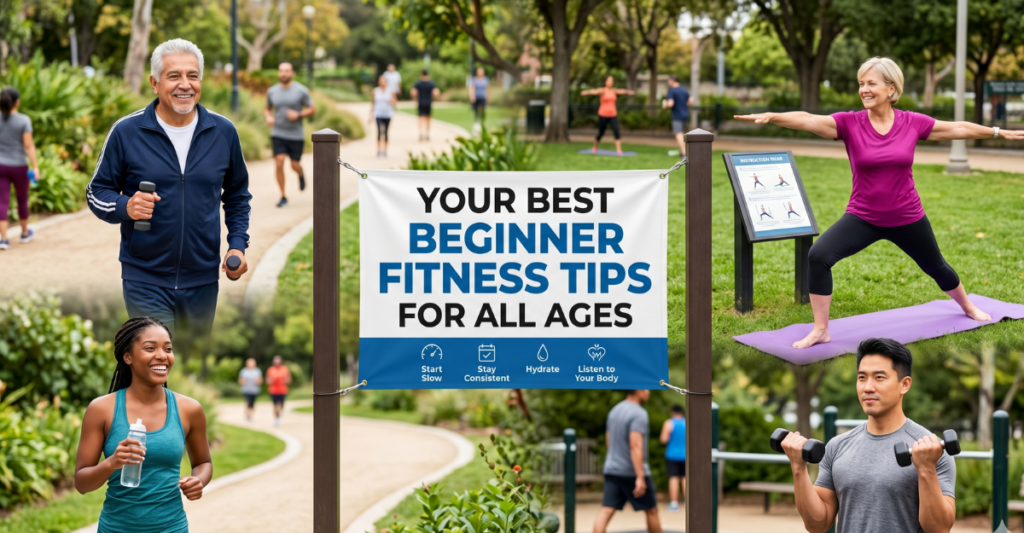
Starting a fitness journey can feel overwhelming, whether you’re a parent juggling multiple responsibilities, an athlete looking to get back in shape, or someone who’s never really exercised consistently before. The good news? It’s never too late—or too early—to begin. The best beginner fitness tips for all ages share common ground: they emphasize sustainable habits, realistic expectations, and a mindset focused on long-term health rather than quick fixes.
When you’re just starting out, the sheer volume of conflicting fitness advice can paralyze you before you even lace up your sneakers. Should you lift weights or do cardio? Is running better than walking? What about those trendy workout programs you see on social media? Here’s the truth: the most effective fitness program is the one you’ll actually stick with. That’s the foundation of all successful fitness journeys, regardless of whether you’re twenty-five or sixty-five.
Understanding Your Starting Point and Setting Realistic Goals
Before diving into any fitness routine, you need to understand where you’re starting from. This isn’t about comparing yourself to the person running effortlessly past you in the park or the fitness influencer posting their morning workout routine. Your journey is uniquely yours, shaped by your current fitness level, health history, lifestyle demands, and personal goals.
Consider scheduling a check-up with your healthcare provider, especially if you’re over forty or have any existing health conditions. This isn’t just a precautionary measure—it’s an empowering step that gives you valuable information about your baseline health markers. Blood pressure, cholesterol levels, blood sugar, and joint health all factor into which activities will serve you best as you begin.
Setting goals requires a delicate balance between ambition and realism. You want targets that excite you enough to get moving but don’t set the bar so high that you’re setting yourself up for disappointment. Instead of “I want to lose fifty pounds,” try “I want to move my body for thirty minutes, four times this week.” The difference? One is outcome-focused and outside your complete control, while the other is behavior-focused and entirely within your power.
The Foundation: Movement Patterns Before Exercise Programs
One of the most overlooked aspects of the best beginner fitness tips for all ages is mastering basic movement patterns before jumping into structured exercise programs. Your body is designed to move in specific ways: squatting, hinging at the hips, pushing, pulling, rotating, and carrying. These fundamental movements form the basis of nearly every exercise you’ll encounter.
Start by assessing your current mobility and movement quality. Can you squat down to pick something up without your knees caving inward? Can you bend at the hips while keeping your back relatively neutral? These aren’t just fitness questions—they’re daily life questions. Improving these basic patterns reduces injury risk and makes everything else easier.
Here are essential movement patterns to practice:
- Bodyweight squats focusing on proper form rather than depth
- Hip hinges like deadlift patterns without weight
- Wall push-ups or counter push-ups to build pushing strength
- Assisted pull-ups or band-supported rows for pulling movements
- Carrying groceries or other objects to build functional strength
- Plank holds to develop core stability
Spend two to three weeks just practicing these movements. You don’t need a gym membership or fancy equipment. Your living room, a sturdy chair, and your own bodyweight provide everything necessary to build this foundation. Think of this phase as learning the alphabet before writing sentences—it seems basic, but it’s absolutely essential.
Walking: The Most Underrated Fitness Tool
If there’s one universal recommendation among the best beginner fitness tips for all ages, it’s this: walk more. Walking doesn’t get the glamorous attention that high-intensity workouts receive, yet it’s arguably the most sustainable and beneficial activity for long-term health. It’s low-impact, requires no special equipment beyond decent shoes, and can be adapted to any fitness level.
The beauty of walking lies in its accessibility and scalability. Struggling with motivation? A ten-minute walk around the block counts. Building stamina? Gradually increase your distance or add hills. Want more challenge? Incorporate intervals where you walk faster for a minute or two. The adaptability makes walking perfect whether you’re recovering from an injury, managing chronic conditions, or simply starting from a sedentary baseline.
Research consistently shows that walking provides remarkable health benefits beyond burning calories. Regular walking improves cardiovascular health, strengthens bones, enhances mood through endorphin release, and even supports better sleep quality. For busy parents, walking doubles as quality time with kids or a peaceful solo break to decompress. For tradesmen whose work involves standing but not necessarily moving, dedicated walking time improves circulation and reduces the strain from static positioning.
Building a Walking Routine
Creating a sustainable walking routine starts with honest assessment of your schedule. When do you have pockets of time? Early morning before the household wakes? Lunch breaks? Evening after dinner? Consistency matters more than duration when you’re establishing the habit, so even fifteen minutes at the same time each day beats sporadic hour-long walks.
Invest in proper footwear. You don’t need the most expensive shoes, but you do need shoes designed for walking with adequate arch support and cushioning. Ill-fitting shoes lead to blisters, foot pain, and eventually abandonment of your walking routine. Visit a specialty running or walking store where staff can assess your gait and recommend appropriate options.
Track your progress, but don’t obsess over it. A simple smartphone app or even a basic pedometer shows you how much you’re moving and helps identify patterns. Maybe you notice you walk significantly more on days when you park farther from the store entrance or take the stairs instead of the elevator. These insights help you make small adjustments that compound over time.
Strength Training Basics for Beginners
Strength training intimidates many beginners, particularly those who picture bodybuilders or athletes lifting impossibly heavy weights. Here’s what you need to know: strength training is for everyone, and it doesn’t require a gym full of equipment or the risk of getting “too bulky” (a common misconception, especially among women). Building strength improves everyday functionality, protects against injury, maintains bone density, and boosts metabolism.
Start with bodyweight exercises before adding any external resistance. Push-ups, squats, lunges, planks, and glute bridges provide substantial strength-building stimulus without requiring equipment. As a beginner, your body weight presents plenty of challenge, and mastering these movements with proper form creates a solid foundation for progression.
When you’re ready to add resistance, don’t automatically reach for the heaviest weights you can manage. This isn’t about ego—it’s about consistency and longevity. A pair of light dumbbells (five to fifteen pounds depending on the exercise and your strength), resistance bands, or even filled water bottles allow you to increase intensity while maintaining control and proper form. The weight should feel challenging by the last few repetitions of a set but shouldn’t compromise your technique.
Sample Beginner Strength Routine
A balanced beginner strength routine addresses all major muscle groups without requiring hours in the gym. Two to three sessions per week, with at least one rest day between sessions, provides sufficient stimulus for adaptation while allowing adequate recovery. Each workout session should last thirty to forty-five minutes including warm-up and cool-down.
Try this full-body beginner routine:
- Five-minute dynamic warm-up with arm circles, leg swings, and light movement
- Bodyweight squats: 2-3 sets of 10-15 repetitions
- Push-ups (modified on knees if needed): 2-3 sets of 8-12 repetitions
- Dumbbell or band rows: 2-3 sets of 10-12 repetitions per arm
- Lunges: 2-3 sets of 8-10 repetitions per leg
- Plank holds: 2-3 sets of 20-30 seconds
- Glute bridges: 2-3 sets of 12-15 repetitions
- Five-minute cool-down with static stretching
Focus on controlled movements rather than speed. Lower the weight or your body for a count of two to three seconds, pause briefly, then lift for one to two seconds. This tempo maximizes muscle engagement and reduces injury risk. Between sets, rest for sixty to ninety seconds—enough to recover but not so long that you lose the workout’s momentum.
Cardiovascular Exercise Beyond Just Running
When people think about cardio, running often comes to mind first. While running certainly qualifies as excellent cardiovascular exercise, it’s not the only option—and it’s not the best choice for everyone, particularly beginners carrying extra weight or dealing with joint issues. The best beginner fitness tips for all ages emphasize finding cardiovascular activities that you enjoy and can sustain.
Cardiovascular exercise strengthens your heart and lungs, improves circulation, enhances endurance, and burns calories. The key is elevating your heart rate above resting levels and sustaining that elevation for an extended period. This can happen through countless activities: brisk walking, cycling, swimming, dancing, rowing, or even vigorous yard work.
For beginners, the conversation-pace test provides a simple way to gauge appropriate intensity. During cardiovascular exercise, you should be able to speak in short sentences but not comfortably carry on an extended conversation. If you’re gasping for air and can barely speak, you’re working too hard. If you can easily chat or sing, you need to increase intensity. This self-regulation helps prevent the common beginner mistake of going too hard, too fast, leading to burnout or injury.
Low-Impact Cardio Options
Low-impact doesn’t mean low-intensity. It means protecting your joints while still challenging your cardiovascular system. Swimming and water aerobics provide outstanding cardiovascular benefits with virtually zero impact, making them perfect for people with arthritis, significant weight to lose, or previous injuries. The water’s resistance also adds a strength component without additional equipment.
Cycling—whether on a stationary bike, in a spin class, or outdoors—offers another joint-friendly option. You control the intensity through speed and resistance, making it easily adaptable as your fitness improves. For busy parents, cycling can incorporate family time when kids are old enough to ride alongside you. For those concerned about outdoor safety or weather, indoor options provide consistent alternatives.
Elliptical machines, while sometimes dismissed as too easy, actually provide excellent cardiovascular workouts when used properly. The key is not holding onto the handles for dear life but using the machine as intended, engaging your core and allowing your legs to power the movement. Increase resistance and speed to match your developing fitness level.
The Flexibility and Mobility Connection
Flexibility and mobility work often gets relegated to brief, half-hearted stretching at the end of workouts—if it happens at all. This represents a critical oversight, particularly for beginners and older adults. Maintaining or improving your range of motion affects everything from workout performance to daily activities like reaching overhead cabinets or tying your shoes.
Flexibility refers to a muscle’s ability to lengthen passively, while mobility involves active control through a range of motion. You need both. A muscle might be flexible when you’re relaxed, but can you control movement through that full range while engaging the muscle? That’s mobility, and it’s what keeps you functional and injury-free.
Dedicate at least ten to fifteen minutes daily to flexibility and mobility work. This doesn’t need to happen all at once. A few minutes of morning stretches, some hip mobility exercises during lunch, and an evening flexibility routine spreads the work throughout your day. Consistency matters more than duration for these adaptations.
Essential Stretches and Mobility Exercises
Focus your flexibility and mobility work on areas that commonly become tight or restricted: hips, shoulders, spine, and ankles. These joints handle the most movement in daily life and exercise, so maintaining their health pays significant dividends. Dynamic stretches (movement-based) work well before exercise, while static stretches (holding positions) fit better post-workout or during dedicated flexibility sessions.
Incorporate these movements regularly:
- Cat-cow stretches for spinal mobility
- Hip circles and hip flexor stretches
- Shoulder rolls and arm circles
- Ankle circles and calf stretches
- Seated spinal twists
- Child’s pose for back and hip release
- Doorway chest stretches for shoulder mobility
Hold static stretches for twenty to thirty seconds, breathing deeply and relaxing into the stretch. Never bounce or force a stretch to the point of pain. Mild discomfort is normal; sharp pain signals you’re pushing too far. Over time, your range of motion will improve, but this adaptation happens gradually over weeks and months, not days.
Nutrition Fundamentals for Fitness Beginners
You’ve probably heard the phrase “abs are made in the kitchen” or “you can’t out-exercise a bad diet.” While somewhat reductive, these statements contain truth: nutrition profoundly impacts your fitness results and overall health. However, nutrition advice has become so convoluted and contradictory that many beginners feel paralyzed, unsure whether they should go low-carb, high-protein, plant-based, or follow some other dietary approach.
Here’s the liberating truth: the best beginner fitness tips for all ages regarding nutrition focus on principles, not rigid rules. Eat mostly whole foods—things that grew from the ground, came from an animal, or have minimal processing. Prioritize protein at each meal to support muscle maintenance and growth. Include plenty of vegetables for fiber, vitamins, and minerals. Stay adequately hydrated. These fundamentals apply regardless of your specific dietary preferences or restrictions.
Avoid the temptation to overhaul your entire diet overnight. Radical changes might work for a week or two, but they rarely stick long-term. Instead, implement small, sustainable modifications. Start by adding a serving of vegetables to dinner. Switch from soda to water or unsweetened beverages. Plan your meals a few days ahead to reduce reliance on fast food or convenience options. These incremental changes compound over months into dramatically different eating patterns.
Protein Requirements and Sources
Protein deserves special attention when beginning a fitness journey. It repairs muscle tissue damaged during exercise, maintains muscle mass during weight loss, and increases satiety to help manage hunger. Most adults should aim for 0.7 to 1.0 grams of protein per pound of body weight, with higher amounts beneficial when trying to build muscle or lose fat while preserving muscle.
Quality protein sources include lean meats like chicken and turkey, fish, eggs, dairy products like Greek yogurt and cottage cheese, and plant-based options like beans, lentils, tofu, and tempeh. If you’re struggling to meet protein targets through food alone, protein powder offers a convenient supplement, though whole food sources should form the foundation of your intake.
Distribute protein throughout the day rather than consuming most of it at one meal. Your body can only synthesize a certain amount of muscle protein at once, making steady intake more effective than feast-and-famine patterns. Aim for twenty to thirty grams of protein at each main meal, with smaller amounts in snacks if needed.
Recovery: The Missing Piece in Most Beginner Programs
Enthusiasm often leads beginners to make a critical mistake: working out every single day without adequate recovery. While dedication deserves praise, understanding that fitness improvements actually happen during recovery, not during workouts, separates sustainable progress from burnout and injury. When you exercise, you’re essentially damaging muscle tissue and stressing your cardiovascular system. Recovery allows adaptation—your body repairs the damage and builds back stronger.
Sleep represents the most important recovery tool in your arsenal. During deep sleep, your body releases growth hormone, repairs tissues, and consolidates the neural patterns learned during exercise. Aim for seven to nine hours of quality sleep nightly. Establish consistent sleep and wake times, even on weekends. Create a dark, cool sleeping environment. Limit screen time before bed. These habits improve sleep quality and, by extension, your fitness results.
Active recovery—light movement on rest days—often serves you better than complete inactivity. A leisurely walk, gentle yoga, swimming, or stretching keeps blood flowing to muscles, reducing stiffness and maintaining the movement habit without taxing your recovery capacity. Think of active recovery as the difference between hitting pause and stop on your fitness journey.
Recognizing and Respecting Recovery Needs
Learning to distinguish between productive discomfort and signals that you need more recovery takes time and self-awareness. Some muscle soreness in the day or two following workouts is normal, particularly when trying new exercises. This delayed onset muscle soreness (DOMS) feels like a dull ache and gradually improves with movement. Sharp pain, persistent soreness lasting more than a few days, or pain that worsens with movement might indicate injury or excessive training stress.
Chronic fatigue, irritability, sleep disturbances, or plateauing performance despite consistent training suggest you need more recovery. Rather than pushing through, take an extra rest day or reduce training intensity for several days. Your long-term progress depends on sustainability, not heroic efforts that leave you injured or burned out.
Nutrition and hydration play crucial recovery roles. Consume a meal or snack containing both protein and carbohydrates within a couple of hours after exercise to replenish energy stores and provide building blocks for muscle repair. Stay hydrated throughout the day, not just during workouts. Consider this: even mild dehydration impairs both physical performance and cognitive function.
Creating Your Personal Fitness Schedule
The best beginner fitness tips for all ages acknowledge that life doesn’t stop just because you’ve decided to get fit. Between work demands, family obligations, and the unpredictable nature of daily life, fitting in exercise requires planning and flexibility. The goal is creating a realistic schedule that accommodates your actual life, not an idealized version of it.
Start by auditing your weekly schedule. When do you genuinely have available time? Be honest—if you’re not a morning person, planning 5 AM workouts sets you up for failure. If evenings are chaotic with kids’ activities and dinner preparation, that’s probably not your best workout window either. Look for consistent pockets of time where exercise can become a natural part of your routine rather than an impossible squeeze.
Consider these scheduling strategies:
- Morning workouts before family demands arise
- Lunch break walks or quick gym sessions
- Early evening workouts before dinner
- Weekend longer sessions when time allows
- Split sessions like morning cardio and evening strength work
- Family activities that incorporate movement
Remember that some movement beats no movement. If your schedule only allows three thirty-minute sessions weekly, that’s your starting point. As fitness becomes habitual and you experience benefits, you’ll likely find ways to expand your commitment. But forcing an unrealistic schedule from the start leads to failure and discouragement.
Overcoming Common Beginner Obstacles
Starting a fitness journey involves confronting obstacles both physical and mental. Anticipating these challenges and developing strategies to address them dramatically increases your success likelihood. The obstacles vary individually, but certain barriers appear repeatedly among beginners across all age groups.
Motivation fluctuates. That initial excitement that propelled you into action inevitably fades, leaving you relying on discipline and habit. This is normal and expected, not a personal failing. Building systems and routines that remove decision-making helps navigate motivation valleys. If your workout clothes are laid out the night before, your gym bag is packed, and the time is blocked on your calendar, you’re more likely to follow through even when motivation dips.
Fear of judgment keeps many people from gyms or fitness classes. If you’re imagining everyone watching and judging your form or fitness level, here’s the truth: most people are focused on their own workouts, not yours. Everyone started somewhere, and most fitness enthusiasts respect anyone making the effort. If gym anxiety still overwhelms you, start with home workouts, outdoor walking or running, or specifically beginner-focused classes where everyone shares similar experience levels.
Time Management and Prioritization
“I don’t have time” ranks as the most common excuse for skipping exercise, and sometimes it reflects genuine schedule constraints. More often, though, it reveals a prioritization issue rather than an actual time shortage. Track your screen time for a week—how many hours do you spend scrolling social media, watching television, or engaged in other discretionary activities? Not suggesting you eliminate all leisure, but even reclaiming two or three of those hours weekly for fitness makes a significant difference.
Efficiency matters. You don’t need hour-long workouts to see benefits, particularly as a beginner. Thirty minutes of focused exercise beats an hour of distracted, inefficient activity. Circuit training—moving quickly between exercises with minimal rest—provides both strength and cardiovascular benefits in compact time frames. High-intensity interval training (though perhaps better saved until you’ve built a base fitness level) maximizes results in short durations.
Combine activities when possible. Walking meetings with colleagues, family bike rides, or playground workouts while kids play all count as exercise while fulfilling other needs. Resistance bands travel easily for strength work during business trips or vacations. Creativity in finding movement opportunities transforms exercise from another obligation into an integrated life component.
Give us a call today at 1-833-366-FOAM (3626) or complete our contact form to find an
installer in your area and get a free, no-obligation quote