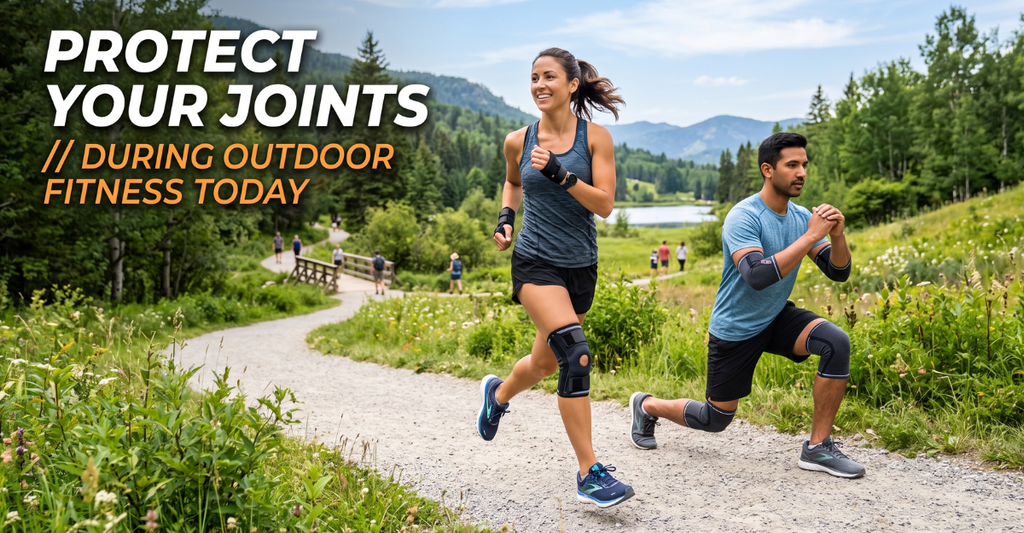
The crisp morning air beckons you outside, promising an invigorating workout that combines the best of nature and physical fitness. Yet, as you lace up your running shoes or prep your mountain bike, there’s one critical consideration that often gets overlooked until it’s too late—your joints. Whether you’re a seasoned athlete pushing through another training cycle or a busy parent squeezing in exercise between family obligations, understanding joint protection techniques for outdoor fitness isn’t just smart; it’s essential for maintaining an active lifestyle well into your golden years.
Your joints are remarkable structures, acting as living hinges that facilitate every movement you make. However, outdoor fitness activities—from trail running and cycling to hiking and outdoor boot camps—place tremendous stress on these connective points. The uneven terrain, repetitive impact, varying weather conditions, and sometimes unpredictable surfaces create a perfect storm for joint wear and tear. But here’s the good news: with the right approach and awareness, you can enjoy all the benefits of outdoor exercise while simultaneously safeguarding these vital components of your musculoskeletal system.
Understanding Joint Mechanics in Outdoor Environments
Before diving into specific protection strategies, you need to grasp what actually happens to your joints during outdoor activities. Your knees, hips, ankles, and shoulders absorb massive amounts of force with every stride, pedal rotation, or overhead movement. Research indicates that when running, your joints can experience impact forces equivalent to three to five times your body weight. On trails or uneven surfaces, this multiplies significantly as your body constantly adjusts to maintain balance and forward momentum.
The outdoor environment introduces variables that indoor workouts simply can’t replicate. Temperature fluctuations affect joint fluid viscosity—cold weather can make synovial fluid thicker, reducing its lubricating properties and making joints feel stiff. Conversely, heat can lead to dehydration, which diminishes the quality of cartilage cushioning. Rocky trails demand sudden directional changes that stress ligaments differently than smooth pavement. Uphill climbs compress knee joints while downhill descents create shearing forces that challenge stability.
Your body’s proprioceptive system—the internal GPS that tells you where you are in space—works overtime during outdoor fitness. This heightened demand, while excellent for functional fitness, means your stabilizing muscles and connective tissues are constantly firing to protect joint integrity. Understanding these mechanics helps you appreciate why joint protection techniques for outdoor fitness aren’t optional extras but fundamental necessities for anyone serious about long-term health.
Dynamic Warm-Up Protocols That Actually Protect Joints
Static stretching before outdoor activities has fallen out of favor among sports scientists, and for good reason. When you hold stretches for extended periods before exercise, you’re essentially telling your muscles to relax at precisely the moment you need them engaged and ready to stabilize your joints. Instead, dynamic warm-ups activate the muscle groups that support your joints while gradually increasing range of motion and blood flow to the areas you’re about to stress.
A proper dynamic warm-up for outdoor fitness should last at least ten to fifteen minutes and progressively build in intensity. Start with joint rotations—gentle circles of the ankles, knees, hips, and shoulders that lubricate the joint capsules with synovial fluid. Think of this as priming a pump; you’re preparing the biological machinery for the work ahead. Follow with leg swings, both front-to-back and side-to-side, which activate your hip stabilizers and prepare the complex network of muscles around your pelvis for the demands of trail running or hiking.
Include walking lunges with a twist, which simultaneously warm up your quadriceps, glutes, and core while challenging your balance on unstable outdoor terrain. High knees and butt kicks aren’t just for track athletes—these movements wake up your hip flexors and hamstrings while reinforcing the neural pathways that coordinate complex movements. The beauty of dynamic warm-ups is they’re adaptable; if you’re heading out for a cycling session, incorporate some bodyweight squats and single-leg balance exercises instead. The principle remains constant: prepare the stabilizing muscles to protect the joints they surround.
Footwear Selection and Its Critical Role in Joint Health
The shoes you choose for outdoor fitness represent your first and most important line of defense against joint damage. Many fitness enthusiasts make the costly mistake of selecting footwear based on appearance or brand loyalty rather than biomechanical compatibility with their specific activities and foot structure. Your feet are the foundation of your kinetic chain, and poor footwear choices send shock waves up through your ankles, knees, hips, and even your lower back.
For trail running and hiking, you need shoes with appropriate cushioning that matches your strike pattern and weight, but not so much that you lose ground feel entirely. Trail-specific footwear should feature aggressive tread patterns that prevent slipping on loose surfaces, reducing the sudden corrective movements that can torque joints unexpectedly. The toe box should provide adequate room for your feet to swell during longer activities—a too-tight fit compromises circulation and alters your gait, forcing joints to compensate in unhealthy ways.
Consider the terrain you’ll encounter most frequently when making footwear decisions. Rocky, technical trails demand more protective features and stability components than groomed paths. If you’re carrying a loaded backpack on hiking adventures, factor in that additional weight when selecting cushioning levels—heavier loads exponentially increase joint stress. Don’t forget that shoes have finite lifespans; running shoes typically need replacement every 300-500 miles, though trail conditions can accelerate wear. Worn-out shoes lose their shock-absorbing capabilities, leaving your joints vulnerable to every impact.
Custom Orthotics and Insole Considerations
Off-the-shelf shoes rarely accommodate everyone’s unique biomechanics perfectly. Many athletes and active parents discover that custom orthotics or quality aftermarket insoles make dramatic differences in joint comfort during outdoor activities. These inserts can correct overpronation or supination—the inward or outward rolling of feet during the gait cycle that places abnormal stress on knee and hip joints.
If you experience persistent joint pain despite proper training progression and good technique, a visit to a podiatrist or sports medicine specialist for gait analysis might reveal biomechanical issues addressable through orthotic intervention. Even simpler solutions like cushioned insoles with good arch support can reduce impact forces traveling up your legs. Remember that insoles also wear out and should be replaced regularly to maintain their protective properties.
Surface Selection and Training Variety
Where you choose to exercise outdoors dramatically influences joint stress accumulation over time. Concrete and asphalt, while convenient and accessible, represent some of the hardest surfaces you can subject your joints to repeatedly. These unforgiving materials offer minimal shock absorption, meaning your joints must handle nearly the full impact of every foot strike. If your regular route consists primarily of sidewalks and roads, you’re essentially hammering your joints workout after workout.
Transitioning to softer surfaces whenever possible provides significant joint-sparing benefits. Grass, dirt trails, wood chip paths, and even sand all absorb considerably more impact energy than paved surfaces. The trade-off is these terrains require more muscular effort and balance, which actually strengthens the stabilizing muscles around your joints—a worthy exchange. However, extremely soft sand can strain Achilles tendons and calf muscles, so introduce beach running gradually if you’re incorporating it into your routine.
Variety itself serves as a protection strategy because repetitive stress on the exact same structures in the exact same patterns invites overuse injuries. When you mix trail running with road cycling, add swimming sessions, or alternate between flat routes and hill workouts, you distribute stress across different muscle groups and joint angles. This training diversity allows some structures to recover while others work, preventing the accumulation of microtrauma that eventually manifests as chronic joint problems. Your body adapts specifically to the stresses you impose, so varying those stresses builds more resilient, versatile joint systems.
Implementing Progressive Training Loads
One of the most common mistakes fitness enthusiasts make—particularly those returning to exercise after time away—is ramping up intensity or volume too quickly. Your cardiovascular system adapts relatively rapidly to increased demands; unfortunately, your joints, tendons, and ligaments operate on much slower timelines. This mismatch creates a dangerous window where you feel energetically capable of harder workouts, but your connective tissues haven’t developed the structural integrity to handle that workload safely.
The ten percent rule offers solid guidance for outdoor fitness progression: increase your training volume by no more than ten percent per week. If you ran fifteen miles this week, aim for no more than sixteen to seventeen next week. This seemingly conservative approach gives your body adequate time to strengthen not just muscles but also the dense connective tissues that stabilize joints. Yes, progression feels slow, but the alternative—sidelining yourself with an overuse injury that takes months to heal—is far worse.
Joint protection techniques for outdoor fitness must account for accumulated fatigue across training cycles. Even if you’re following the ten percent rule week to week, periodization matters. Every third or fourth week should be a recovery week where you reduce volume by twenty to thirty percent, allowing deeper recovery and adaptation. During these easier weeks, your body literally rebuilds stronger structures, reinforcing the joints and connective tissues stressed during harder training blocks. Elite athletes understand this principle; recreational exercisers often ignore it to their detriment.
Recognizing When to Back Off
Learning to distinguish between normal exercise discomfort and warning signs of joint damage is crucial. Muscle soreness that peaks one to two days after exercise and gradually subsides represents healthy adaptation. Sharp, localized pain within a joint, especially if it persists or worsens during activity, signals something more concerning. Swelling, clicking or popping sensations accompanied by pain, or discomfort that changes your gait or movement patterns all warrant attention and possibly rest.
Many parents and busy professionals feel pressure to push through discomfort because they’ve carved precious time from packed schedules for exercise. However, ignoring early warning signs typically transforms minor issues into major problems requiring significant time away from activity. A few days of rest or modified training at the first sign of joint trouble often prevents weeks or months of forced inactivity later. Consider this: your body is trying to communicate with you through pain signals, and listening demonstrates wisdom, not weakness.
Strength Training for Joint Stability
While outdoor cardiovascular activities often receive primary focus, dedicated strength training provides perhaps the most effective long-term joint protection available. Strong muscles act as dynamic stabilizers, absorbing forces that would otherwise concentrate on joint surfaces. When your quadriceps, hamstrings, glutes, and core are well-developed, they share the load during running, hiking, or cycling, reducing stress on knee cartilage, hip joints, and spinal structures.
Compound movements that mirror functional patterns deliver the greatest joint protection benefits. Squats, deadlifts, lunges, step-ups, and single-leg Romanian deadlifts all strengthen the muscle groups that protect your lower body joints during outdoor activities. These exercises also improve proprioception and balance—the very qualities that prevent awkward movements and compensations that can injure joints on unpredictable terrain. For upper body joint protection, particularly important for activities like rock climbing or mountain biking, include rowing variations, overhead presses, and rotator cuff strengthening exercises.
Frequency matters as much as exercise selection. Two to three strength sessions per week provide adequate stimulus for continued adaptation without excessive fatigue that might compromise your outdoor workouts. Each session should include exercises targeting all major muscle groups, with particular emphasis on single-leg and balance-challenging movements that replicate the stability demands of outdoor terrain. Remember that strength training for joint health isn’t about maxing out with heavy weights; it’s about building resilient, functional strength that translates to better movement quality during your primary activities.
Core Stability and Its Impact on Peripheral Joints
Your core—the complex network of abdominal, back, and hip muscles that stabilizes your trunk—deserves special attention in any joint protection program. A strong core prevents excessive movement and rotation in your lumbar spine, which otherwise transfers harmful forces to your hip and knee joints. When your core can’t adequately stabilize your torso during running or hiking, your legs must compensate, often adopting movement patterns that strain joint structures.
Effective core training extends beyond crunches and planks. Include exercises like pallof presses, bird dogs, dead bugs, and Turkish get-ups that challenge your core to resist unwanted motion while maintaining proper alignment. These anti-movement exercises mirror the stabilization demands your core faces during outdoor activities far better than traditional flexion-based abdominal work. A stable core also improves efficiency; when energy isn’t leaking through a loose midsection, more of your effort propels you forward rather than being wasted on unnecessary corrective movements.
Nutrition Strategies That Support Joint Health
What you consume before, during, and after outdoor fitness activities significantly influences joint health, though many athletes underestimate this connection. Proper hydration maintains the viscosity of synovial fluid—the lubricant within your joint capsules. Even mild dehydration can alter this fluid’s protective properties, increasing friction between cartilage surfaces. During longer outdoor sessions, especially in heat, you need to proactively replace fluids rather than waiting until thirst signals deficit.
Anti-inflammatory nutrition provides another powerful tool in your joint protection arsenal. Omega-3 fatty acids from fish, walnuts, and flax seeds help modulate inflammatory responses that might otherwise damage joint tissues over time. Colorful fruits and vegetables loaded with antioxidants combat oxidative stress from exercise, which contributes to tissue breakdown. Consider turmeric and ginger, both containing compounds with demonstrated anti-inflammatory properties that may reduce joint discomfort when consumed regularly.
Protein intake supports not just muscle repair but also the maintenance of connective tissues surrounding and supporting joints. Collagen protein has gained attention specifically for joint health, with some research suggesting supplementation may benefit athletes experiencing joint discomfort. Whether or not you supplement, ensuring adequate overall protein consumption—roughly 0.7 to 1.0 grams per pound of body weight for active individuals—provides the building blocks your body needs to maintain and repair joint structures stressed during outdoor activities.
Timing Nutrients Around Exercise
Strategic nutrient timing can enhance recovery and potentially reduce joint stress from exercise. Consuming easily digestible carbohydrates and protein within thirty to sixty minutes after outdoor workouts supports faster recovery, helping tissues repair before your next session. This recovery window represents a time when your body is particularly receptive to nutrients, shuttling them efficiently to muscles and connective tissues.
Before longer outdoor sessions, ensure adequate fueling that sustains energy without causing gastrointestinal distress. Running or hiking on empty can force your body into stress responses that promote inflammation and slow recovery. However, exercising on an overly full stomach often proves uncomfortable and can alter your gait or posture, potentially stressing joints. Experiment during training to find your optimal pre-workout nutrition timing and composition—what works varies considerably between individuals.
Recovery Modalities for Joint Protection
The work you do between outdoor fitness sessions matters as much as the workouts themselves when it comes to long-term joint health. Active recovery—light movement that promotes circulation without significant stress—helps clear metabolic waste products from tissues while delivering nutrients needed for repair. Easy walking, gentle cycling, swimming, or yoga on rest days maintains movement quality without accumulating additional joint stress.
Foam rolling and self-myofascial release techniques address muscle tightness that can alter joint mechanics. When muscles become chronically tight or develop trigger points, they pull on their attachment sites, changing joint angles and loading patterns. Regular foam rolling of your quadriceps, hamstrings, IT bands, calves, and glutes helps maintain optimal muscle length, allowing joints to track properly during movement. Focus on rolling slowly, pausing on tender areas for thirty to sixty seconds while breathing deeply to encourage release.
Sleep represents perhaps the most underutilized recovery tool available. During deep sleep stages, your body performs crucial repair work on damaged tissues, including those within and around joints. Growth hormone levels peak during sleep, facilitating tissue regeneration. Chronic sleep deprivation not only impairs recovery but also increases inflammation throughout your body, creating an environment hostile to joint health. Prioritize seven to nine hours of quality sleep nightly, treating it as seriously as your training and nutrition.
When to Seek Professional Treatment
Despite your best prevention efforts, sometimes joints need professional intervention. Massage therapy, particularly sports massage that addresses specific muscle imbalances and restrictions, can prevent minor issues from becoming major problems. Physical therapists offer expertise in identifying movement dysfunctions that stress joints and can prescribe corrective exercises tailored to your specific needs. Chiropractors may help with joint alignment issues that alter force distribution during activity.
Don’t wait until pain becomes severe before consulting professionals. Early intervention for joint issues almost always yields better outcomes than attempting to push through significant problems. If joint pain persists beyond a week despite rest and modification, interferes with daily activities, or is accompanied by significant swelling or instability, schedule an evaluation. Sports medicine physicians can order imaging studies if necessary and rule out serious structural damage requiring more intensive treatment.
Weather Considerations and Joint Protection
Outdoor fitness by definition means exercising in whatever conditions nature provides, and weather significantly impacts joint health and injury risk. Cold temperatures cause muscles, tendons, and ligaments to stiffen, reducing their shock-absorbing capacity and making joints more vulnerable to injury. When exercising in cold conditions, extend your warm-up significantly—fifteen to twenty minutes rather than the standard ten—and wear layers that keep muscles warm throughout your workout. Cold, stiff tissues simply can’t protect joints as effectively as warm, pliable ones.
Heat presents different challenges for joint health, primarily through dehydration’s effects on cartilage and synovial fluid. As mentioned earlier, adequate hydration maintains the protective properties of joint lubricants. In hot weather, you lose fluids faster than your thirst mechanism signals deficits, so proactive hydration becomes essential. Start workouts well-hydrated, carry fluids for sessions longer than thirty minutes, and replace approximately sixteen to twenty ounces of fluid for every pound lost during exercise.
Rain and wet conditions introduce safety considerations that indirectly affect joint health. Slippery surfaces increase fall risk and demand more cautious foot placement, which can alter your normal gait patterns and stress joints differently. When trails or paths are wet, slow your pace, shorten your stride, and pay extra attention to footing. The ego hit of a slower pace is infinitely preferable to a twisted ankle or worse. Mud can also mask trail hazards like roots and rocks that might cause joint-damaging missteps.
Gear and Equipment for Joint Protection
Beyond footwear, various pieces of equipment can enhance joint protection during outdoor fitness. Trekking poles have gained popularity among hikers and trail runners for good reason—they distribute impact forces across four points of contact instead of two, significantly reducing stress on knees and hips, particularly during descents. Research suggests poles can reduce knee joint loading by up to twenty-five percent on downhill terrain. If you’re carrying a pack or have any history of lower body joint issues, poles represent a worthwhile investment.
Compression gear—sleeves for knees, calves, or elbows—provides mild support and proprioceptive feedback that may enhance joint stability and reduce vibration in tissues during high-impact activities. While the science remains somewhat mixed on performance benefits, many athletes report compression wear helps joints feel more stable and comfortable during and after workouts. Compression may also reduce exercise-induced muscle damage and swelling, indirectly benefiting joints by maintaining better movement quality when muscles are less sore.
For cycling-based outdoor fitness, proper bike fit dramatically influences joint health. Incorrect saddle height, fore-aft position, or handlebar reach can force joints through problematic ranges of motion thousands of times per ride. If you’re serious about cycling, invest in a professional bike fitting. The relatively modest cost prevents far more expensive medical interventions down the road. Even for runners, a gait analysis from a qualified specialist can identify movement inefficiencies that stress joints unnecessarily and suggest interventions from footwear changes to specific strengthening exercises.
Age-Specific Joint Protection Strategies
Your age influences both joint vulnerability and the most effective protection strategies. If you’re in your thirties and forties, you may not yet feel the consequences of joint neglect, but these decades represent critical windows for establishing habits that ensure continued activity into your sixties, seventies, and beyond. Prioritize strength training now—the muscle mass and bone density you build during these years provide reserve capacity that naturally declines later. Don’t sacrifice recovery for volume; your body still repairs efficiently at this age if you give it adequate rest.
Those in their fifties and sixties often discover that joints simply don’t tolerate what they once did. This doesn’t mean abandoning outdoor fitness; it means adapting approaches to acknowledge changed capabilities. Lower impact alternatives like cycling, swimming, or elliptical training can maintain cardiovascular fitness while sparing joints from repetitive impact. If running remains important to you, consider a run-walk approach that intersperses running intervals with walking recovery, significantly reducing accumulated joint stress while maintaining workout intensity.
Regardless of age, never compare your current capabilities to what you could do years ago. That comparison only breeds frustration and often leads to pushing beyond what your joints can currently handle safely. Compare yourself to yourself last month—are you maintaining or building fitness without increasing pain or injury? That’s success. The goal isn’t to recapture your twenty-year-old self; it’s to be the healthiest, most capable version of your current-age self, capable of enjoying outdoor activities for decades to come.
Give us a call today at 1-877-777-6086 or fill out our contact form to become a retail
distributor of our top-of-the-line safety lights.