Getting your kids off the couch and into motion feels like an uphill battle some days, doesn’t it? You’re not alone in this struggle. With screens everywhere and sedentary entertainment just a click away, motivating kids to move more has become one of the biggest challenges facing modern parents. But here’s the good news: physical activity doesn’t have to feel like a chore for your children, and you don’t need fancy equipment or expensive gym memberships to make movement a natural part of their daily routine.
The reality is that kids today are moving significantly less than previous generations. Research shows that only about one in four children gets the recommended 60 minutes of physical activity per day. That’s concerning, especially when we know that active kids tend to become active adults, setting the foundation for lifelong health and wellness. The benefits extend far beyond physical fitness too—regular movement improves mood, enhances concentration, strengthens social skills, and builds confidence that carries into every aspect of life.
Understanding Why Kids Resist Movement
Before diving into strategies for motivating kids to move more, it’s essential to understand what’s holding them back. The modern world has engineered movement right out of childhood in many ways. Kids ride in cars instead of walking or biking to school. They play video games instead of tag in the backyard. They sit at desks for hours on end during school days, then come home to homework that keeps them sedentary even longer.
But there’s more to it than just environmental factors. Many kids resist physical activity because they’ve had negative experiences with it. Maybe they felt embarrassed during PE class, or perhaps they struggled with a sport and decided they just weren’t “athletic.” Some children are naturally more introverted and prefer quieter, less physical activities. Others might be dealing with anxiety about competition or fear of failing in front of peers.
You need to recognize that each child is different, with unique preferences, abilities, and motivations. What works for one kid might fall completely flat with another. Your athletic daughter might thrive on competitive team sports, while your bookish son might prefer nature hikes where he can explore and discover. The key is finding what clicks for each individual child rather than forcing them into activities that make them miserable.
Making Movement Part of Your Family Culture
The most powerful way to get kids moving is to model the behavior yourself. Children learn far more from what they see you do than from what you tell them to do. When you prioritize your own fitness and make movement a non-negotiable part of your day, you’re sending a clear message about its importance. Your kids watch how you spend your time, how you talk about exercise, and whether physical activity seems like a punishment or a privilege.
Creating a family culture that values movement means integrating activity into your daily routines rather than treating it as something separate or special. Take evening walks together after dinner. Have dance parties in the living room while making breakfast on weekends. Do yard work as a team. Play active games during family time instead of always defaulting to movies or screens. These small, consistent habits add up to significant movement over time.
Consider establishing family challenges that get everyone involved. Maybe it’s a step-count competition where you track daily steps for a month, with the winner choosing the next family outing. Perhaps you create a “fitness bingo” card with different activities, and everyone works to complete rows or columns. You might set a goal to explore every park in your city or hike a certain number of trails before the end of summer. When movement becomes a shared family adventure rather than an individual obligation, motivating kids to move more becomes exponentially easier.
Turning Exercise Into Play
Here’s a secret: kids don’t think of play as exercise, even though it absolutely is. When children are genuinely having fun, they’ll run, jump, climb, and move for hours without even realizing they’re being active. Your job is to blur the lines between play and physical activity so seamlessly that movement feels like the natural, enjoyable choice rather than a prescribed workout.
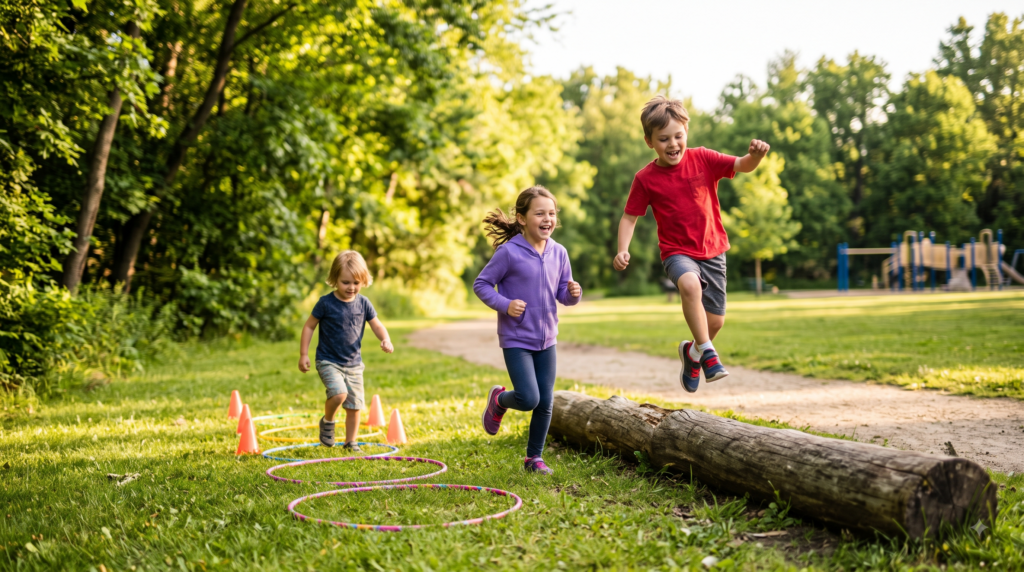
Obstacle courses are absolute gold for getting kids moving. You can create these anywhere—in your backyard, at a park, even inside on rainy days using furniture and household items. Set up stations where kids have to jump over pool noodles, crawl under chairs, balance on a line of tape, do jumping jacks, or toss beanbags into buckets. Time them as they complete the course, then let them try to beat their own record. Better yet, have them design their own obstacle courses, which engages their creativity while guaranteeing they’ll be excited to try it out.
Traditional games from your own childhood remain incredibly effective. Tag and its many variations—freeze tag, flashlight tag, TV tag—get kids sprinting and dodging. Hide and seek involves running, climbing, and squeezing into spaces. Red light, green light teaches body control while incorporating bursts of movement. Capture the flag promotes strategic thinking alongside cardiovascular activity. These games require no equipment, work with any number of kids, and can be adapted for any age or ability level.
Don’t underestimate the power of music and dance for motivating kids to move more. Create playlists of your children’s favorite songs and have regular dance sessions. Learn TikTok dances together (yes, really—many of them provide surprisingly good workouts). Try different styles like hip-hop, ballet, or even silly animal movements. Musical freeze dance, where everyone has to stop moving when the music stops, adds an element of challenge and anticipation. Dancing removes the “exercise” stigma while delivering serious physical benefits.
Choosing the Right Structured Activities
While unstructured play is crucial, many kids also thrive with organized sports and activities. The challenge is finding the right fit for your child’s personality, interests, and abilities. This might take some trial and error, and that’s okay. Give kids permission to try different activities and quit the ones that don’t resonate, at least while they’re young and exploring their options.
Team sports offer tremendous benefits beyond just physical activity. Soccer, basketball, volleyball, baseball, and hockey teach cooperation, communication, and how to be part of something larger than themselves. Kids learn to win graciously and lose with dignity. They develop friendships with teammates and learn to work toward common goals. However, team sports aren’t for everyone. Some children find the pressure overwhelming or struggle with the social dynamics. Others simply don’t enjoy the particular movements required by popular team sports.
Individual sports and activities might be better suited for kids who prefer to focus on personal achievement rather than team dynamics. Swimming, gymnastics, martial arts, dance, rock climbing, tennis, and track and field allow children to progress at their own pace while still potentially participating in group classes or meets. These activities often appeal to more introverted kids or those who find team dynamics stressful. They also tend to be skills that people can continue throughout their entire lives, unlike some team sports that become difficult to participate in as adults.
Non-Traditional Movement Options
If your child has tried mainstream sports without success, don’t give up. There are countless other ways to get moving that don’t involve conventional athletics. Skateboarding, parkour, ultimate frisbee, cycling, horseback riding, and even activities like geocaching or Pokemon Go get kids physically active while pursuing something they find genuinely interesting.
Consider activities that combine movement with other interests your child already has. A kid who loves animals might enjoy barn work at a stable or volunteering at an animal shelter (which involves lots of walking, lifting, and physical tasks). A nature enthusiast might take to bird watching, which involves hiking and outdoor exploration. An artistic child might enjoy sculpture or other physical art forms that involve standing, moving, and manipulating materials.
Virtual reality games and active video games occupy a controversial space, but they can serve as gateway activities for extremely sedentary kids. Games that require physical movement like Beat Saber, Ring Fit Adventure, or Just Dance certainly aren’t substitutes for outdoor play or sports, but they’re infinitely better than sitting completely still. You might use these as stepping stones, gradually introducing more traditional physical activities as your child becomes more comfortable with movement.
Setting Goals That Actually Motivate
When it comes to motivating kids to move more, goal-setting can be incredibly powerful—if done correctly. The key is making goals specific, achievable, and personally meaningful to your child rather than imposing arbitrary standards that feel overwhelming or pointless. A goal to “exercise more” is too vague and uninspiring. A goal to “learn to do a cartwheel by the end of the month” gives your child something concrete to work toward.
Help your kids set both process goals and outcome goals. Process goals focus on actions: “I’ll practice dribbling for ten minutes every day” or “I’ll go to the park three times this week.” These are largely within your child’s control and build consistent habits. Outcome goals focus on achievements: “I’ll make it across the monkey bars without falling” or “I’ll swim a full lap without stopping.” These provide exciting targets but shouldn’t be the only goals, since they’re sometimes affected by factors beyond effort alone.
Create visual tracking systems that make progress tangible and exciting. Younger kids love sticker charts where they earn a sticker for every active day, working toward a reward. Older kids might prefer tracking apps, fitness journals, or wall calendars where they mark off completed activities. Some families create paper chains where each link represents a day of movement, forming a growing visual reminder of their consistency. The act of marking progress provides its own small reward that reinforces the behavior.
Overcoming Common Obstacles
Even with the best strategies, you’ll encounter roadblocks when motivating kids to move more. Weather disrupts outdoor plans. Schedule conflicts pile up. Kids complain that they’re tired, bored, or “just not in the mood.” Having a toolkit of solutions ready for common obstacles helps you stay consistent even when circumstances aren’t ideal.
Bad weather doesn’t have to mean no movement. Develop a collection of indoor activities you can pull out when outdoor play isn’t possible. Indoor scavenger hunts get kids moving around the house. Hallway bowling using plastic bottles and a soft ball involves repeated bending and walking. Following along with kids’ yoga, dance, or exercise videos on YouTube requires no equipment. Building elaborate blanket forts involves physical work, and once built, they become spaces for active imaginative play.
Time constraints challenge busy families, but movement doesn’t require hour-long blocks. Short bursts of activity scattered throughout the day add up to substantial totals. Five minutes of jumping jacks before breakfast, a quick game of catch after school, a walk around the block before dinner, and some stretching before bed might total only 20-30 minutes, but that’s better than nothing. On particularly hectic days, even tiny movements count—parking farther away, taking stairs instead of elevators, or doing wall push-ups while waiting for the microwave.
Dealing With Genuine Dislike of Exercise
Some kids genuinely dislike physical activity, at least initially. They’re not being lazy or difficult—they simply haven’t found their movement groove yet. These children need extra patience and creativity. Start absurdly small if necessary. A five-minute walk might be the limit at first, and that’s okay. Gradual increases over weeks and months lead to real change without overwhelming resistance.
Separate movement from weight or appearance conversations entirely. Kids who hear that they need to exercise to “lose weight” or “look better” often develop unhealthy relationships with both movement and their bodies. Instead, focus on how activity makes them feel, what their bodies can do, and the fun they have while moving. Talk about getting stronger, having more energy for activities they enjoy, sleeping better, or feeling less stressed about school.
Consider whether underlying issues might be contributing to resistance. Some kids struggle with coordination or motor planning, making typical playground activities frustrating rather than fun. Others might have undiagnosed vision problems that make ball sports difficult. Some children find team environments overwhelming due to sensory processing differences or social anxiety. If you suspect something beyond simple preference is at play, talking with your pediatrician or a pediatric occupational therapist might uncover solutions.
Using Technology Strategically
Technology often gets blamed for kids’ sedentary habits, and that’s fair to some extent. However, you can also leverage technology as a tool for motivating kids to move more when used thoughtfully. Fitness trackers designed for kids turn activity into a game with step goals, achievement badges, and sometimes connectivity with friends for friendly challenges. Many kids love seeing their statistics and trying to beat previous records.
Apps like GoNoodle provide short, engaging movement breaks specifically designed for children. With dance videos, mindfulness exercises, and silly activities led by animated characters, these apps make movement feel like entertainment rather than exercise. They’re particularly useful for quick energy bursts between homework sessions or during TV commercial breaks. The variety prevents boredom, and the short duration makes them accessible even for kids with limited attention spans.
Family fitness challenges using shared apps or devices create accountability and motivation through social connection. Apps like Strava allow family members to share their activities, offer encouragement, and create group challenges. Some families use shared step-count trackers where everyone contributes to a collective goal. Others use apps like Charity Miles, where movement translates to charitable donations, helping kids understand that their activity can make a difference beyond themselves.
Video calling technology can extend physical activity’s social benefits even when friends or family live far away. Kids can do virtual dance parties with cousins in another state. They can follow along with the same workout video while video chatting with a friend, making it feel like they’re exercising together. This became especially valuable during pandemic lockdowns but remains useful for maintaining connections that support active lifestyles.
Creating an Environment That Encourages Movement
Your physical environment significantly impacts how much your kids move. Homes filled with active play equipment naturally promote more movement than those where such items are absent or difficult to access. You don’t need to transform your house into a gym, but strategic additions can make spontaneous activity more likely. Jump ropes hanging by the back door, a basketball hoop in the driveway, or a bin of balls and outdoor toys that’s easy to grab all lower the barriers to movement.
Arrange your spaces to encourage activity rather than sedentary behavior. If the comfiest seating and the TV dominate your main living area, kids will naturally gravitate toward sitting and watching. Creating spaces specifically for active play—even just clearing some floor space for tumbling or dancing—signals that movement belongs in your home. Some families establish rules like “TV only while standing or doing exercises” or “video games only after 30 minutes of outdoor play.”
Access to outdoor spaces matters tremendously for motivating kids to move more. If you have a yard, make it movement-friendly with equipment like swings, climbing structures, or simply open space for running games. If you don’t have private outdoor space, identify nearby parks, playgrounds, trails, or even just sidewalks suitable for biking or scootering. The easier you make it to get outside, the more likely your kids will spend time there. Keep a basket of outdoor essentials ready by the door—sunscreen, bug spray, water bottles, and sports equipment—so heading out doesn’t require extensive preparation.
Community resources extend your options beyond home. Many recreation centers offer open gym times, drop-in sports, or swimming hours specifically for families. Libraries increasingly offer passes to local attractions like trampoline parks or climbing gyms. Community sports leagues provide structured activity at various price points, with many offering scholarships or sliding-scale fees. Schools often open playgrounds and fields during non-school hours. Knowing what’s available in your area helps you take advantage of opportunities you might otherwise miss.
Building Social Connections Through Movement
Kids are inherently social creatures, and physical activity becomes exponentially more appealing when friends are involved. Play dates centered around active games rather than screen time naturally encourage movement. Instead of having kids over to watch movies, suggest going to a park, having a backyard water balloon fight, or organizing a neighborhood scavenger hunt. When movement is the basis of social time, it becomes associated with fun and friendship rather than obligation.
Organizing regular neighborhood games creates community while promoting physical activity. Designate a time each week when kids from surrounding houses gather for kickball, capture the flag, or whatever game emerges organically. Parents can take turns supervising while kids enjoy unstructured play with peers. This recreates some of the spontaneous outdoor play that was common in previous generations but has largely disappeared from modern childhood.
Family friends with similarly-aged children become natural exercise partners. Plan active outings together—hiking, biking, visiting parks with interesting playgrounds, going to trampoline parks, or trying new activities like paddleboarding or mini golf. Kids often try things with friends that they’d refuse alone, and the social motivation keeps them engaged longer. Parents benefit too, getting adult conversation while kids play.
Team Sports and Community Leagues
Beyond the physical benefits of team sports, they provide built-in social structures that keep kids coming back. Teammates become friends, and the social commitment to showing up for the team provides motivation beyond personal interest in the activity itself. Even kids who aren’t particularly skilled often continue with sports they enjoy because of the friendships they’ve formed.
When selecting teams and leagues, consider the culture carefully. Some organizations prioritize fun, skill development, and broad participation. Others focus intensely on competition and winning, often giving playing time primarily to the most skilled athletes. For most kids, especially younger ones, recreational leagues that emphasize enjoyment over competition provide better experiences. You want your child to associate movement with positive feelings, not pressure and anxiety.
Addressing Different Age Groups
Strategies for motivating kids to move more need to adapt as children grow and develop. Toddlers and preschoolers have natural energy and inclination toward movement—your job is mainly to provide safe spaces and opportunities while joining them in active play. They love games like “follow the leader” where you model different movements, dancing to music with simple actions, or playing on playground equipment under your supervision.
Elementary-aged children are developing more sophisticated motor skills and can handle structured activities with rules. This age group often loves organized sports, active games with clear objectives, riding bikes, swimming, and playground activities that challenge their growing capabilities. They respond well to achievement systems like earning badges or prizes for participation. Social motivations become increasingly important during these years, so friend-based activities grow more appealing.
Tweens and teens present unique challenges as self-consciousness increases and competing priorities multiply. Peer opinions matter more than ever, making some kids reluctant to try activities where they might look foolish or unskilled. Academics, social lives, and screen time compete more intensely for their attention. However, teens who find activities they genuinely enjoy often become quite self-motivated. Give older kids more autonomy in choosing their activities, even if their choices aren’t what you’d pick. A teen who loves skateboarding might skip traditional sports entirely, and that’s perfectly fine.
Teens might prefer activities that double as social time or transportation. Biking to meet friends, walking to nearby shops or restaurants, or joining gym classes with peers integrates movement into their existing interests. Some teens enjoy the mental challenge of activities like rock climbing or martial arts. Others might prefer solo activities like running or weight training where they can control their own experience. Respect their preferences while keeping conversations open about the importance of regular movement.
Connecting Movement to Other Interests
The most sustainable motivation comes from connecting physical activity to things your kids already care about. A child obsessed with dinosaurs might love hiking to hunt for fossils or visit natural history museums (which involve extensive walking). A kid who loves superheroes might enjoy obstacle courses framed as “training” to develop superhero abilities. A young person passionate about environmental issues might get involved with trail maintenance or beach cleanup activities that involve physical work.
Creative kids often respond to activities that blend artistry with movement. Dance obviously fits here, but so do activities like parkour (which involves creative problem-solving about moving through spaces), skateboarding (with its emphasis on style and innovation), or even activities like drumline or marching band that combine music with physical activity. For these children, the movement isn’t the main point—it’s a means to express themselves or pursue their primary interest.
Kids interested in science and nature might engage with movement through exploration-based activities. Geocaching combines technology, treasure hunting, and hiking. Tide pooling involves scrambling over rocks and kneeling to examine discoveries. Bird watching requires walking quietly through various terrains. Rock collecting often leads to climbing, hiking, and covering substantial distances in search of specimens. When movement serves a purpose beyond exercise itself, it stops feeling like something they “should” do and becomes something they “want” to do.
Making It a Lifestyle, Not a Requirement
The ultimate goal isn’t to force your kids to exercise—it’s to help them discover that movement can be enjoyable, rewarding, and valuable in its own right. This happens when you create experiences where physical activity is associated with fun, accomplishment, connection, exploration, and other positive feelings. It happens when you remove pressure, comparison, and judgment from movement.
Celebrate effort and participation rather than only outcomes and achievements. Notice when your child tries something new, perseveres through difficulty, or shows improvement. Comment on the joy you see on their face while playing rather than only their technical skill. Ask them how they felt during an activity rather than whether they won or how they ranked. This shifts the focus from external measures of success to internal experiences and growth.
Normalize movement as part of daily life rather than a separate, special activity that requires special clothes, locations, and time blocks. Walk or bike for transportation when possible. Take active breaks during homework sessions. Stretch while watching TV. Do physical chores together. The more seamlessly physical activity integrates into regular routines, the more natural it becomes. Kids who grow up with movement as a normal part of life are much more likely to remain active into adulthood.