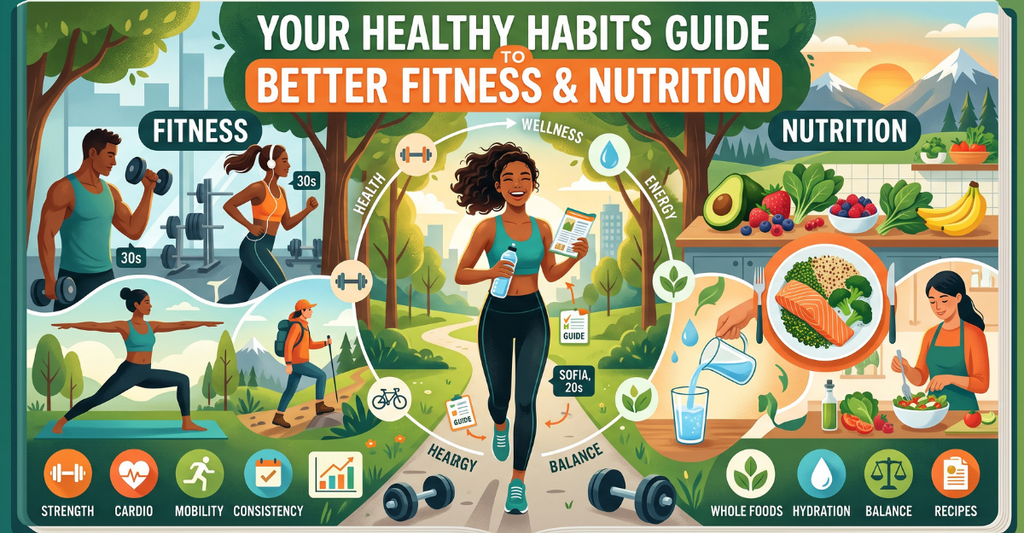
You’ve probably noticed how some people seem to effortlessly maintain their fitness levels and healthy eating patterns while juggling demanding careers, family responsibilities, and everything else life throws their way. The secret isn’t superhuman willpower or unlimited time—it’s about establishing sustainable healthy habits for better fitness and nutrition that work with your lifestyle, not against it. Whether you’re a busy parent trying to set a good example for your kids, an athlete looking to optimize performance, or someone who works with their hands all day and needs reliable energy, this comprehensive guide will help you build a foundation of habits that stick.
Understanding the Foundation of Lasting Health Changes
Before diving into specific strategies, it’s essential to recognize that healthy habits for better fitness and nutrition don’t develop overnight. Research shows that it takes an average of 66 days for a new behavior to become automatic, though this varies widely depending on the complexity of the habit and individual circumstances. The key is understanding that you’re not just changing what you do—you’re rewiring neural pathways in your brain that dictate your automatic behaviors. This process requires patience, consistency, and a willingness to view setbacks as learning opportunities rather than failures.
The most successful approach to developing lasting habits involves starting small and building momentum gradually. When you try to overhaul your entire lifestyle simultaneously—cutting out all processed foods, exercising two hours daily, sleeping eight hours religiously, and drinking a gallon of water—you’re setting yourself up for burnout and disappointment. Instead, focus on one or two keystone habits that create a ripple effect throughout other areas of your life. For instance, establishing a consistent sleep schedule naturally leads to better food choices because you’re not desperately reaching for sugar and caffeine to compensate for exhaustion.
Your environment plays a massive role in habit formation, often more than willpower alone. If you keep a bowl of candy on your kitchen counter, you’ll eat more candy—it’s that simple. Similarly, if your running shoes are by the door and your gym bag is packed the night before, you’re far more likely to actually exercise. By designing your surroundings to make healthy choices the path of least resistance, you remove the constant need for decision-making that depletes your mental energy throughout the day.
Building a Sustainable Exercise Routine
Creating healthy habits for better fitness and nutrition starts with movement patterns that you can maintain for years, not just weeks. The biggest mistake people make is choosing exercise based on what burns the most calories or what’s trending on social media, rather than what they actually enjoy. If you hate running, forcing yourself to run every morning because you think you “should” is a recipe for abandonment. Instead, experiment with different activities—swimming, cycling, hiking, dancing, strength training, martial arts, or group fitness classes—until you find something that feels more like recreation than obligation.
Your exercise routine should address multiple components of fitness to create a well-rounded foundation. Cardiovascular endurance, muscular strength, flexibility, and balance all contribute to overall health and functional fitness that serves you in daily life. For busy parents and working professionals, this doesn’t mean spending hours at the gym each day. A well-designed 30-minute workout can deliver significant benefits when performed consistently. Consider circuit training that combines strength and cardio, or high-intensity interval training (HIIT) that maximizes results in minimal time.
The timing of your workouts matters less than you might think—what matters most is consistency. Some people swear by morning exercise because it energizes them for the day and eliminates the risk of evening commitments derailing their plans. Others find that lunchtime or evening workouts provide essential stress relief and a mental break from work and family demands. Track your energy levels, schedule constraints, and personal preferences over several weeks to identify when you’re most likely to follow through. Once you establish that pattern, protect that time fiercely because consistency is what transforms exercise from a chore into a habit.
Nutrition Strategies That Actually Work Long-Term
Developing healthy habits for better fitness and nutrition requires moving beyond restrictive dieting toward a more intuitive, sustainable approach to eating. The diet industry has conditioned us to view food as the enemy, categorizing everything as “good” or “bad,” which creates an unhealthy relationship with eating. Instead of following rigid meal plans or eliminating entire food groups, focus on adding nutrient-dense foods to your diet rather than only restricting items. When you prioritize vegetables, fruits, lean proteins, whole grains, and healthy fats, you naturally consume less processed food simply because you’re satisfied and nourished.
Meal planning and preparation are game-changers for busy individuals and families. You don’t need to become a meal-prep perfectionist who spends entire Sundays cooking and portioning every meal for the week. Start simple:
- Choose one or two days weekly to prep basic ingredients like grilled chicken, roasted vegetables, cooked grains, and chopped fresh produce
- Batch-cook versatile base recipes like chili, soup, or casseroles that can be quickly reheated
- Prepare grab-and-go breakfast options like overnight oats, egg muffins, or smoothie packs
- Wash and portion snacks like fruit, vegetables with hummus, nuts, and cheese when you return from grocery shopping
- Keep a running list of quick, healthy meals that your family enjoys so you’re never starting from scratch when planning
The concept of mindful eating might sound abstract, but it’s incredibly practical for developing healthier nutrition habits. How often do you eat while scrolling through your phone, watching television, working at your computer, or driving? When you’re distracted during meals, you miss hunger and fullness cues, consume more food than you need, and don’t fully enjoy what you’re eating. Try designating meal times as device-free zones where you sit down, even if only for 10 minutes, and pay attention to your food’s taste, texture, and how it makes you feel. This simple practice helps you recognize when you’re satisfied rather than stuffed, reducing overeating without requiring calorie counting or portion control obsession.
Hydration Habits That Support Performance and Recovery
Water intake is one of the most overlooked elements of healthy habits for better fitness and nutrition, yet it impacts everything from exercise performance to mental clarity and hunger regulation. Your body is approximately 60% water, and even mild dehydration can impair physical performance, increase perceived effort during exercise, and reduce cognitive function. For people who work physically demanding jobs or exercise regularly, hydration needs are even higher than the often-cited “eight glasses a day” recommendation. A more accurate guideline is to consume half your body weight in ounces daily, adjusting upward for activity level, climate, and sweat loss.
Many people struggle with plain water consumption simply because they find it boring or forget to drink throughout the day. Creating systems that support hydration makes compliance much easier. Keep a reusable water bottle with you constantly—in your car, at your desk, in your gym bag—so drinking water requires no extra effort. If plain water doesn’t appeal to you, try infusing it with fresh fruit, cucumber, mint, or other natural flavors. Herbal teas, sparkling water, and water-rich foods like watermelon, cucumbers, and oranges also contribute to your daily hydration.
Pay attention to your urine color as a practical hydration indicator—pale yellow suggests adequate hydration, while dark yellow or amber indicates you need more fluids. During and after intense workouts or long days of physical work, you’re losing not just water but also electrolytes like sodium, potassium, and magnesium that are essential for muscle function and cellular hydration. For activities lasting longer than an hour or involving significant sweating, consider adding electrolyte supplements or consuming foods rich in these minerals to support optimal recovery and prevent cramping.
Sleep Optimization for Better Recovery and Results
No discussion of healthy habits for better fitness and nutrition is complete without addressing sleep, which is when your body repairs muscle tissue, consolidates learning, regulates hormones, and performs countless other essential functions. Chronic sleep deprivation sabotages your fitness goals by increasing hunger hormones, decreasing satiety hormones, reducing exercise performance, slowing recovery, and diminishing motivation. If you’re exercising regularly and eating well but not sleeping adequately, you’re essentially trying to fill a bucket with a hole in the bottom.
Creating a consistent sleep schedule is one of the most powerful health habits you can establish. Going to bed and waking up at the same times daily—yes, including weekends—helps regulate your circadian rhythm, making it easier to fall asleep and wake naturally without an alarm. This consistency improves sleep quality, not just quantity, meaning you’ll feel more rested even if your total sleep duration doesn’t increase dramatically. For parents whose children’s schedules dictate wake times, this might mean adjusting bedtime earlier rather than trying to sleep in on weekends.
Your pre-sleep routine significantly impacts how quickly you fall asleep and how well you sleep throughout the night. The hour before bed should be a wind-down period that signals to your body that sleep is approaching. Consider implementing these evidence-based practices:
- Dim lights throughout your home to encourage melatonin production
- Avoid screens or use blue-light filtering apps and glasses if screen time is unavoidable
- Keep your bedroom cool, ideally between 65-68°F, which facilitates the body temperature drop necessary for sleep onset
- Try gentle stretching, reading, journaling, or meditation rather than stimulating activities
- Avoid large meals, alcohol, and caffeine for several hours before bedtime
Stress Management and Mental Health Practices
The connection between stress management and healthy habits for better fitness and nutrition cannot be overstated. Chronic stress elevates cortisol levels, which increases appetite (particularly for high-calorie comfort foods), promotes fat storage around the midsection, disrupts sleep, reduces motivation for exercise, and compromises immune function. You can have perfect nutrition and exercise habits, but if stress is constantly triggering your body’s fight-or-flight response, you’ll struggle to see the results you’re working toward.
Regular physical activity itself is one of the most effective stress management tools available. Exercise reduces stress hormones like cortisol and adrenaline while stimulating production of endorphins, your brain’s natural mood elevators. You’ve probably experienced the mental clarity and mood boost that follows a good workout—that’s not coincidental. For maximum stress-reduction benefits, include a mix of moderate aerobic exercise and mind-body practices like yoga, tai chi, or even mindful walking where you focus on your breath and surroundings rather than your to-do list.
Beyond exercise, building regular stress-management practices into your daily routine prevents stress accumulation that leads to burnout. This doesn’t require hours of meditation or expensive spa treatments. Even five minutes of deep breathing exercises—try the 4-7-8 technique where you inhale for four counts, hold for seven, and exhale for eight—can activate your parasympathetic nervous system and reduce stress hormones. Other effective micro-practices include progressive muscle relaxation, spending time in nature, maintaining social connections, engaging in hobbies you enjoy, and setting boundaries around work and technology use.
Progressive Overload and Tracking Your Progress
Whether your fitness goals involve running faster, lifting heavier, or simply having energy to keep up with your kids, applying the principle of progressive overload is essential for continued improvement. Your body adapts to the demands you place on it, so doing the same workout at the same intensity indefinitely will eventually lead to a plateau. Progressive overload means gradually increasing the stress on your body through higher intensity, longer duration, increased frequency, or added complexity. For runners, this might mean adding distance or incorporating speed work; for strength training, it involves increasing weight, repetitions, or decreasing rest periods.
Tracking your progress provides invaluable feedback about what’s working and what needs adjustment. This doesn’t mean obsessing over every calorie or becoming a slave to your fitness tracker. Instead, identify a few meaningful metrics aligned with your goals. These might include workout performance markers like running pace, weights lifted, or repetitions completed; body composition measurements like how your clothes fit or progress photos; energy levels and sleep quality; or performance in daily activities like climbing stairs or playing with your children. Review these markers monthly rather than daily to avoid getting discouraged by normal fluctuations.
Many people abandon healthy habits for better fitness and nutrition because they don’t see immediate results and assume they’re doing something wrong. Understanding realistic timelines helps maintain motivation during the early stages when changes aren’t yet visible. Neurological adaptations from strength training occur within 2-4 weeks, though muscle growth takes 6-8 weeks to become noticeable. Cardiovascular improvements begin within 2-3 weeks of consistent aerobic exercise. Body composition changes typically become visible after 4-8 weeks of consistent effort. These timelines vary based on starting point, genetics, consistency, and intensity, but the common thread is that meaningful change requires patience and persistence.
Social Support and Accountability Systems
Your social environment profoundly influences your ability to maintain healthy habits for better fitness and nutrition. Research consistently shows that behaviors spread through social networks—if your friends prioritize health, you’re more likely to as well; if your social circle’s activities revolve around unhealthy habits, you’ll face constant challenges maintaining your own. This doesn’t mean abandoning friends or family who don’t share your health goals, but it does mean being intentional about building connections with people who support and share your values around wellness.
Finding an accountability partner or group dramatically increases your likelihood of sticking with new habits. This might be a workout buddy who meets you for morning runs, a meal-prep partner who shops and cooks with you weekly, an online community of people working toward similar goals, or a coach or trainer who provides structure and expertise. The key is that these relationships create positive social pressure and support rather than judgment or competition. When you know someone is counting on you to show up for a workout or will ask how your week went, you’re far more likely to follow through even when motivation is low.
For parents, involving your children in your health journey creates multiple benefits. You’re modeling behaviors that will influence their lifelong habits, spending quality time together, and building in accountability because your kids will notice and remind you when you’re skipping your usual routine. This might look like family bike rides, cooking together, playing active games, or even having your kids join age-appropriate strength training sessions. When fitness and nutrition are framed as fun family activities rather than solitary obligations or punishments, everyone benefits and the habits become embedded in your family culture.
Adapting Habits for Different Life Seasons
One crucial aspect of sustainable healthy habits for better fitness and nutrition is recognizing that your routine must evolve as your life circumstances change. The workout schedule that worked perfectly when you were single won’t necessarily fit when you have a newborn. The meal prep routine that served you well during a calm work period might need adjustment during deadline-intensive seasons. Rather than viewing these changes as failures or excuses, approach them as opportunities to develop flexibility and problem-solving skills that make your habits truly resilient.
During particularly demanding periods—new baby, major work project, family crisis, injury recovery—shift your focus to minimum viable habits that maintain your foundation without overwhelming your limited resources. This might mean reducing workout frequency from five days to three, simplifying meals to basic but nutritious options rather than elaborate recipes, or prioritizing sleep over early morning exercise for a period. The goal during these seasons isn’t optimization or progress—it’s maintenance and self-compassion. Many people abandon their health habits entirely during challenging periods because they can’t maintain their usual standards, when a scaled-back version would actually be sufficient and sustainable.
As you age, your body’s needs and capabilities change, requiring corresponding adjustments to your approach. Someone in their twenties might recover quickly from intense daily workouts, while someone in their fifties might need more recovery time between challenging sessions. Nutritional needs shift as metabolism changes, muscle mass naturally decreases with age, and hormonal changes affect everything from energy levels to body composition. Rather than comparing yourself to your younger self or others at different life stages, focus on what serves your body well right now. This might mean incorporating more flexibility work, adjusting macronutrient ratios, increasing protein intake to maintain muscle mass, or choosing lower-impact exercise options that protect joint health while still building fitness.
Overcoming Common Obstacles and Setbacks
Even with the best intentions and planning, you will face obstacles in maintaining healthy habits for better fitness and nutrition. Understanding common challenges and having strategies ready increases your resilience when they occur. One frequent obstacle is the all-or-nothing mindset that says if you can’t do something perfectly, you shouldn’t do it at all. This thinking leads to skipping workouts entirely because you only have 20 minutes instead of your planned hour, or binging on unhealthy food all day because you ate one cookie at lunch. Developing a good-enough mindset that values consistency over perfection is transformative—a 20-minute workout is infinitely better than no workout, and one cookie doesn’t have to derail your entire day.
Travel and schedule disruptions present another common challenge, but they also provide opportunities to practice flexibility. When traveling, research your accommodation and surrounding area in advance—does your hotel have a gym? Are there parks suitable for running? Can you find a grocery store to stock healthy snacks and simple meals? Pack resistance bands, a jump rope, or download bodyweight workout apps so you can exercise anywhere without equipment. For nutrition, bring portable protein sources like nuts, jerky, or protein powder, and don’t be afraid to request modifications at restaurants to better align with your goals. The goal isn’t maintaining your exact routine on the road, but rather adapting your habits to new circumstances.
Injuries and illnesses will inevitably interrupt your fitness routine at some point. How you handle these setbacks largely determines whether they become temporary pauses or permanent derailments. First, respect your body’s need for recovery—pushing through injury often extends healing time and can create chronic problems. Work with healthcare providers to understand what activities are safe during recovery. Many injuries allow modified training that maintains fitness while protecting the injured area—if you have a lower body injury, you might focus on upper body strength and core work; if you can’t run, perhaps you can swim or cycle. View recovery periods as opportunities to address fitness components you typically neglect, like flexibility, balance, or meditation practice.
Creating a Personalized Morning Routine
Your morning routine sets the tone for your entire day and is prime real estate for establishing healthy habits for better fitness and nutrition. While you don’t need an elaborate three-hour morning ritual, creating a consistent sequence of behaviors that support your goals provides structure and eliminates decision fatigue when willpower is fresh. The most successful morning routines include elements that address physical health, mental clarity, and preparation for the day ahead, all while being realistic given your actual available time.
Start by identifying your non-negotiable morning commitments and how much time you realistically have before them. If you need to be at work by 8 AM and require an hour to get ready, determine what time you need to wake up to fit in your desired morning practices without rushing or sacrificing sleep. For many people, this means going to bed earlier rather than waking up extremely early, since sleep deprivation undermines all your other health efforts. Even 15-30 minutes of intentional morning practice can be transformative when done consistently.
Consider incorporating these elements into your morning routine, customized to your preferences and schedule:
- Hydration immediately upon waking to rehydrate after hours without fluids
- Morning sunlight exposure, even for just a few minutes, which helps regulate circadian rhythm and boost mood
- Movement, whether that’s a full workout, yoga, stretching, or simply a short walk
- A nutritious breakfast that includes protein to stabilize blood sugar and prevent mid-morning energy crashes
- A few minutes of planning or reflection to prioritize your day and set intentions
- Mindfulness practice like meditation, gratitude journaling, or breathwork
The key is choosing practices that energize rather than stress you. Your morning routine should feel like a gift you give yourself, not another set of obligations to rush through. Start with one or two elements and gradually add others as they become habitual. Some people find that preparing everything the night before—laying out workout clothes, prepping breakfast ingredients, setting up the coffee maker—reduces morning friction and makes follow-through easier.
Understanding and Working With Your Motivation Cycles
Motivation naturally fluctuates, and expecting to feel equally enthusiastic about healthy habits for better fitness and nutrition every single day sets you up for disappointment. Understanding that motivation is a renewable but inconsistent resource helps you create systems that work even when motivation is low. Highly motivated periods are excellent times to establish new habits, sign up for races or challenges, and push yourself to new levels. During low-motivation periods, the goal shifts to maintenance and relying on the systems and routines you’ve established.
Discipline and habit automation bridge the gap when motivation wanes. Discipline is simply the practice of following through on commitments to yourself regardless of how you feel in the moment. It’s a skill that develops through practice, not an inherent personality trait. Each time you exercise despite not feeling like it, choose a healthy meal when you’d rather order takeout, or go to bed on time when you’d prefer to stay up scrolling, you strengthen your discipline muscle. Over time, these behaviors become increasingly automatic, requiring less conscious effort and willpower.
Give us a call today at 1-877-777-6086 or fill out our contact form to become a retail
distributor of our top-of-the-line safety lights.