
Paula CastroPaula.CEdit Profile
When you lace up your running shoes before dawn or head out for that evening workout after a long day, visibility might not be the first thing on your mind. You’re thinking about your pace, your route, or simply getting those miles in before the demands of work and family take over. But here’s something that should grab your attention: daylight safety lights: small gear, big impact on lives saved isn’t just a catchy phrase—it’s a reality that every outdoor athlete needs to understand. These compact devices, often no larger than a USB drive, have become essential equipment for runners, cyclists, and anyone who exercises in low-light conditions, transforming what could be a dangerous situation into a safe, visible activity.
The statistics paint a sobering picture that we can’t ignore. According to the National Highway Traffic Safety Administration, pedestrian fatalities have been climbing steadily, with a significant portion occurring during dawn and dusk hours when natural lighting creates dangerous visibility challenges. You might be an experienced runner with thousands of miles under your belt, but without proper visibility gear, you’re putting yourself at risk every single time you step onto a roadway in less-than-ideal lighting conditions. The good news? This risk is almost entirely preventable with the right safety equipment.
Understanding the Science Behind Visibility and Safety
Your eyes are remarkable organs, but they have limitations that become especially apparent during transitional lighting periods. The human eye struggles significantly during twilight hours, a phenomenon that scientists call the “Purkinje effect”—a shift in how we perceive colors and contrasts as light diminishes. During these times, drivers experience reduced depth perception, slower reaction times, and difficulty distinguishing objects from their backgrounds. This is precisely when most runners and walkers are out exercising, trying to squeeze in their fitness routine before or after their workday commitments.
Research published in the Journal of Safety Research demonstrates that pedestrians wearing reflective materials can be seen from approximately 500 feet away, compared to just 100 feet for those in dark clothing. However, active lighting sources like daylight safety lights increase visibility to over 2,000 feet—a distance that gives drivers critical extra seconds to recognize your presence and react appropriately. Those precious seconds can mean the difference between a close call and a tragedy. When you consider that a vehicle traveling at 45 mph covers 66 feet per second, you begin to understand why maximum visibility distance matters so profoundly.
The term “daylight” in daylight safety lights refers to their effectiveness even during daytime hours. Many people mistakenly believe that visibility is only a concern when it’s dark outside, but studies show that daylight hours present their own unique challenges. Shadows, sun glare, weather conditions, and distracted driving all contribute to reduced visibility even when the sun is up. Modern safety lights are designed with LEDs bright enough to be seen in full sunlight, addressing a gap in safety that traditional reflective gear simply cannot fill.
Types of Daylight Safety Lights for Different Activities
The market offers an impressive array of safety lighting options, each designed with specific activities and user preferences in mind. Clip-on lights represent perhaps the most versatile category, easily attaching to waistbands, shirt collars, backpack straps, or even shoelaces. These lightweight devices typically weigh less than an ounce and offer multiple flashing patterns to maximize visibility from various angles. For runners who prefer minimal gear, these clip-on options provide maximum safety with minimal bulk—a combination that’s hard to beat when you’re trying to maintain your natural stride and comfort.
Armband and wristband lights have gained popularity among fitness enthusiasts who want visibility without thinking about whether their gear might bounce or shift during vigorous movement. These lights wrap securely around your upper arm or wrist, staying put through high-intensity intervals, hill sprints, or those final kick moments when you’re pushing your limits. Many models offer rechargeable batteries and water-resistant construction, recognizing that serious athletes train in all weather conditions and need equipment that can keep up with their commitment.
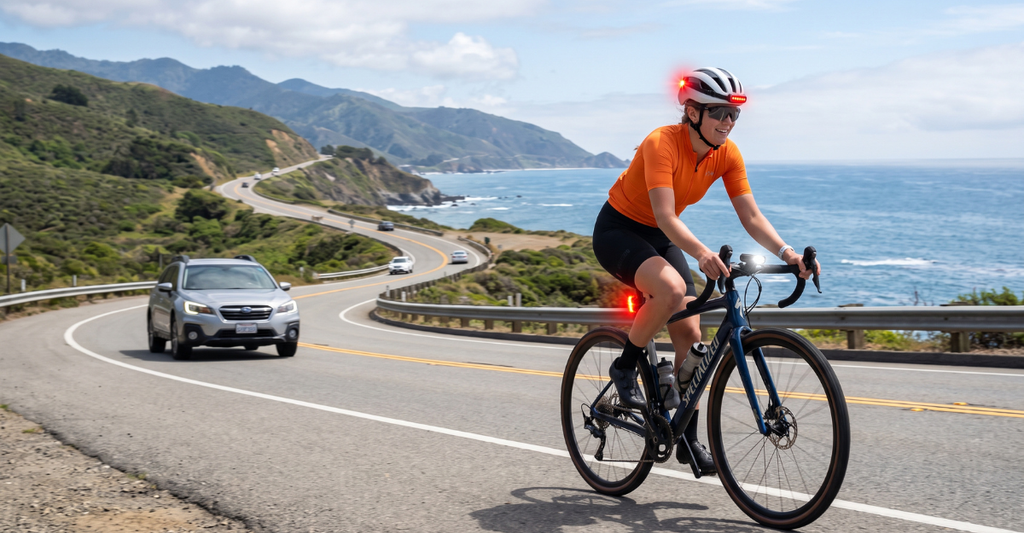
For cyclists, spoke lights and frame-mounted options create a moving circle of light that’s immediately recognizable as a bicycle, helping drivers understand not just that something is there, but what it is and how it’s likely to move. The circular motion of wheel-mounted lights creates a distinctive pattern that catches the eye far more effectively than static lights. Similarly, runners and walkers can benefit from chest lights and vest-integrated lighting systems that distribute light across a larger surface area, creating a human-shaped silhouette that’s instantly identifiable even from angles where smaller clip-on lights might be obscured.
Advanced Features Worth Considering
Modern safety lights have evolved far beyond simple on-off switches. Many now incorporate motion-activated technology that adjusts brightness based on your movement patterns and ambient lighting conditions. This smart functionality ensures optimal visibility while conserving battery life—a consideration that matters when you’re training for that marathon or building up your weekly mileage. Some devices sync with your smartphone, allowing you to check battery levels, adjust settings, and even track your usage patterns to ensure you’re never caught without power when you need it most.
Weather resistance has become a standard expectation rather than a premium feature. Look for lights rated IPX4 or higher, which indicates protection against splashing water from any direction. For those who run in truly challenging conditions—heavy rain, snow, or extremely humid environments—IPX7-rated devices offer submersion resistance up to one meter for 30 minutes. These ratings matter because your safety equipment needs to function reliably regardless of what Mother Nature throws at you during your scheduled training run.
Battery life varies dramatically across different models and usage patterns. Rechargeable lithium-ion batteries offer convenience and environmental benefits, typically providing 4-20 hours of continuous use depending on the brightness setting and flash pattern selected. Replaceable coin cell batteries, while less eco-friendly, can offer longer shelf life and the ability to swap in fresh power mid-run if necessary. Consider your typical workout duration, frequency, and whether you’ll reliably remember to recharge your devices when choosing between these power options.
The Psychology of Visibility: Why Drivers Still Don’t See You
Understanding why daylight safety lights: small gear, big impact on lives saved is such an important concept requires diving into driver psychology and behavior. Even the most attentive driver operates with something called “inattentional blindness”—the phenomenon where our brains fail to perceive unexpected objects in our visual field when we’re focused on something else. Drivers actively looking for other vehicles might completely miss a pedestrian or cyclist who isn’t actively drawing attention through movement or lighting. This isn’t about bad drivers or distracted driving (though those problems certainly exist); it’s about fundamental limitations in how human attention and perception work.
The “looked-but-failed-to-see” phenomenon accounts for a significant percentage of vehicle-pedestrian collisions. A driver may look directly at a runner or walker, their eyes registering the visual information, but their brain fails to process that information as relevant or important. Active lighting disrupts this perceptual failure by providing a stimulus that’s difficult for the brain to ignore. Flashing lights trigger a different neurological response than static visual information, essentially forcing the driver’s brain to acknowledge your presence even when they’re primarily focused on other vehicles or navigation.
Contrast plays a crucial role in visibility that goes beyond simple brightness. Your dark running tights and gray hoodie might feel perfectly appropriate for a morning run, but they blend seamlessly into the typical roadway environment, especially during those tricky twilight periods. Safety lights create stark contrast against any background, whether it’s a cloudy sky, tree-lined road, or urban streetscape. This contrast is what makes you pop out visually, transforming you from an easily-overlooked pedestrian into an obvious, unmissable presence that demands driver attention and response.
Real-World Impact: Stories That Drive Home the Importance
Sarah, a 42-year-old mother of three from suburban Minneapolis, never thought much about safety lights until a close call changed her perspective entirely. During her regular 5:30 AM run along her familiar neighborhood route, a car backing out of a driveway nearly struck her despite the driver later insisting he had looked both ways carefully. The incident occurred during that tricky pre-dawn period when streetlights are still on but natural light is beginning to emerge. After that morning, Sarah invested in multiple safety lights: one for her chest, two for her ankles, and a clip-on for her back. Three weeks later, a different driver stopped her mid-run to thank her for being so visible, mentioning that he almost didn’t see another runner (without lights) just moments before. Those small devices that cost less than a quality pair of running socks potentially saved her life.
The cycling community has embraced safety lighting with particular enthusiasm, partly because cyclists face unique visibility challenges. Moving at higher speeds than pedestrians but slower than vehicles, cyclists occupy a dangerous middle ground where drivers often misjudge their speed and distance. Tom, a 58-year-old triathlete who trains year-round regardless of season or weather, credits his comprehensive lighting setup with preventing multiple potential collisions. His bike features front and rear lights, spoke lights on both wheels, and he wears a lit vest during early morning rides. “The investment is minimal compared to what I spend on other gear,” he notes, “but the return on investment—potentially my life—is infinite.”
Community running groups have started making safety lights mandatory for group runs during low-light hours. The Road Runners Club of America now includes visibility guidelines in their safety recommendations, specifically calling out the superior effectiveness of active lighting compared to reflective materials alone. Race directors for early morning or evening events increasingly require participants to carry or wear safety lights, recognizing their responsibility for participant safety extends to getting runners safely to and from the starting line. These institutional changes reflect growing awareness that daylight safety lights: small gear, big impact on lives saved represents more than individual choice—it’s becoming a community standard for responsible outdoor exercise.
Integrating Safety Lights Into Your Fitness Routine
Making safety lights a habitual part of your workout preparation requires the same approach as any other gear consideration. Keep them with your running shoes or cycling equipment so you’ll see them when you’re getting ready to head out. Many runners find success by attaching lights to their regular workout clothes or storing them in jacket pockets where they’re always accessible. The key is removing any friction or decision-making from the process—your safety lights should be as automatic as putting on your shoes.
Charging routines matter more than you might initially think. Establish a regular schedule for recharging your devices, perhaps every Sunday evening or after every third run, depending on your usage patterns and the specific battery capacity of your lights. Some athletes keep their lights on the same charging station as their fitness tracker or smartphone, creating a centralized location where all their tech gets refreshed together. This systematic approach prevents the frustrating scenario where you’re ready to run but discover your safety lights are dead and you have to choose between waiting for a charge or heading out without proper protection.
Placement strategy can significantly impact both comfort and visibility. The front, back, and side visibility triangle represents best practice for comprehensive safety. Place one light where it’s visible from the front (chest, head, or upper body), one where it’s visible from behind (waist, back, or backpack), and consider side visibility through arm or ankle lights. This 360-degree approach ensures you’re visible regardless of the angle from which vehicles approach. For runners who vary their routes, this comprehensive coverage adapts to different road configurations and traffic patterns without requiring you to adjust your setup.
Teaching Kids About Visibility and Safety
As a parent, modeling good safety practices creates lasting impressions that extend far beyond your own personal safety. When your children see you consistently using safety lights for morning runs or evening walks, they internalize the message that visibility matters. This lesson carries over to their own activities, whether they’re biking to a friend’s house, walking home from sports practice, or eventually driving themselves and learning to watch for pedestrians and cyclists.
Making safety lighting fun rather than just another parental lecture increases buy-in dramatically. Let kids choose lights in their favorite colors or with patterns they find appealing. Many manufacturers offer child-specific designs featuring popular characters or playful shapes that transform safety equipment into accessories kids actually want to wear. Create family challenges around being visible, perhaps photographing each other from increasing distances to demonstrate how effective lights are compared to non-lit clothing. These experiential lessons stick far better than simply telling children “be safe out there.”
School routes present particular safety challenges during winter months when darkness coincides with arrival and dismissal times. Equipping your kids with safety lights for their backpacks, jackets, or bikes provides practical protection while teaching responsibility for their own safety. Some families establish a rule that lights must be visible and functional before anyone leaves for school on dark mornings—a simple requirement that creates a consistent safety habit. Your $15 investment in a child-sized safety light could prevent the unthinkable, making it one of the highest-value purchases you’ll ever make as a parent.
Comparing Safety Lights to Other Visibility Solutions
Reflective materials have served as the traditional approach to pedestrian and cyclist visibility for decades, and they certainly play an important role in a comprehensive safety strategy. Reflective vests, tape, and clothing details work by bouncing light back toward its source—effective when vehicle headlights strike them directly. However, this passive system has significant limitations that active lighting overcomes. Reflective materials provide minimal visibility from angles where headlights don’t hit them directly, and they offer almost no visibility during daylight hours or in areas without vehicle headlights, such as parking lots or trail approaches.
High-visibility clothing in fluorescent colors like lime green, orange, or yellow offers improved daytime visibility by providing contrast against typical backgrounds. These bright colors work by reflecting a higher percentage of available light, making you more noticeable even when the sun is out. However, their effectiveness diminishes dramatically as natural light fades, leaving you poorly protected during exactly those transition periods when visibility is most challenged. Combining high-visibility clothing with active lighting creates a layered safety approach where different technologies work together, providing comprehensive protection across all lighting conditions and viewing angles.
Some fitness enthusiasts question whether they need safety lights if they already have a headlamp or bike light. While these tools certainly improve your ability to see where you’re going, they primarily project light forward rather than making you visible from all angles. A runner with a headlamp remains poorly visible from behind or from the sides—exactly where overtaking vehicles approach. Similarly, cyclists with front and rear bike lights have improved visibility compared to unlit riders, but adding body-worn lights creates that crucial human silhouette that helps drivers understand they’re approaching a person, not just a vehicle. This distinction influences how drivers respond and the caution they exercise.
Cost-Benefit Analysis: The True Value of Safety Lighting
Budget-conscious fitness enthusiasts might hesitate at adding another line item to their gear expenses, especially when building up a proper running or cycling wardrobe already requires significant investment. However, the economics of safety lighting tell a compelling story. Basic clip-on safety lights start around $10-15 for a pair, with premium options featuring advanced functionality topping out around $40-50. Compare this to the cost of a single physical therapy session for a running injury ($75-150), a new pair of running shoes ($120-180), or a quality fitness tracker ($150-300), and safety lights represent one of the most affordable pieces of equipment you’ll purchase.
The potential costs of not using safety lights extend far beyond the purchase price of the devices themselves. Medical expenses from a pedestrian-vehicle collision can easily reach tens or hundreds of thousands of dollars, even with good health insurance. Lost work time during recovery, potential long-term disability, and the immeasurable impact on quality of life create costs that no amount of money can fully address. When you frame the decision this way, investing in comprehensive safety lighting isn’t really optional—it’s one of the smartest financial decisions you can make as an outdoor athlete.
Durability and lifespan factor into the value equation as well. Quality safety lights from reputable manufacturers typically last several years with proper care, weathering countless workouts, rain storms, and occasional drops without failing. Many companies offer warranty protection ranging from one to five years, demonstrating confidence in their product longevity. If a $20 safety light serves you reliably for three years across hundreds of runs, your cost per use drops to just pennies—an incredible return on investment for equipment that protects your life every single time you use it.
Weather Conditions and Visibility Challenges
Rain creates a perfect storm of visibility challenges that makes safety lighting especially critical. Water on windshields distorts vision, rain reduces overall visibility, and drivers naturally become more focused on controlling their vehicles in slippery conditions. These factors combine to make pedestrians and cyclists significantly harder to notice. Wet roads also reflect light in ways that can camouflage non-lit pedestrians against the general visual noise of a rainy environment. Active safety lights cut through these challenges, providing a clear signal that stands out even when weather conditions compromise normal visibility.
Fog presents similar challenges with the added complexity that headlights can actually reduce visibility by creating glare that reflects back toward drivers. In these conditions, safety lights positioned on your body create multiple points of reference that help drivers understand your position and trajectory even when they can’t clearly see your entire form. The flashing patterns offered by most modern safety lights prove especially effective in fog, creating temporal variation that attracts attention more reliably than static light sources.
Snow and winter conditions extend daylight visibility challenges beyond the simple presence of precipitation. Shorter days mean more training hours happen in darkness or near-darkness. Fresh snow creates a bright, reflective background that can make non-lit pedestrians appear as dark silhouettes that blend into shadows and darker elements of the landscape. Additionally, snow banks reduce road width and eliminate shoulders, forcing pedestrians and cyclists into closer proximity with vehicle traffic. Salt-crusted car windows further compromise driver visibility. All these factors make winter the season when daylight safety lights: small gear, big impact on lives saved becomes most apparent to those who train outdoors year-round.
Technology Trends and Future Innovations
The safety lighting industry continues evolving with innovations that enhance both functionality and user experience. Smart connectivity represents a growing trend, with lights that pair with smartphones to offer features like automatic on-off based on ambient light sensors, battery life notifications, and even integration with navigation apps to alert you when you’re entering areas with higher traffic density or accident rates. Some advanced systems can detect sudden stops or falls and automatically alert emergency contacts—a feature that extends safety benefits beyond visibility into overall security.
Solar charging capability has emerged in some premium models, addressing the battery maintenance challenge that some users find burdensome. These devices incorporate small photovoltaic panels that trickle-charge internal batteries during daytime storage, extending time between manual charging sessions. While not yet mainstream, this technology shows promise for reducing the friction that sometimes prevents consistent safety light use. The environmental benefits of solar charging also appeal to sustainability-minded athletes who try to minimize their carbon footprint across all aspects of their lifestyle.
Integrated wearable technology represents another frontier in safety innovation. Imagine running shorts with built-in LED strips powered by motion-harvesting technology, or shoes with heel lights that never need separate batteries because they draw power from your footstrike. These concepts remain largely in development, but several companies have released prototype products suggesting this integrated approach will become more common in coming years. The ultimate goal is removing all barriers to visibility by making it an inherent feature of standard athletic gear rather than something requiring separate purchase and maintenance.
Building a Complete Visibility Strategy
Effective safety requires thinking beyond individual devices to create a comprehensive visibility strategy that addresses multiple scenarios and risk factors. Your setup for urban running on well-lit streets might differ significantly from what you need for rural road cycling or trail running that includes road crossings. Context-specific approaches ensure you have appropriate protection regardless of where your training takes you. Consider maintaining different lighting configurations for different activities and routes, perhaps keeping a basic set with your regular running gear and a more extensive setup in your cycling bag.
Route selection plays an important role in overall safety that complements your lighting choices. Whenever possible, choose routes with dedicated pedestrian or cycling infrastructure—sidewalks, bike lanes, or shared-use paths that separate you from vehicle traffic entirely. When these protected routes aren’t available, favor roads with wide shoulders, lower speed limits, and good sightlines where drivers have maximum opportunity to see you regardless of lighting conditions. Your safety lights make you visible, but smart route planning reduces the number of situations where drivers need to see and avoid you in the first place.
Time-of-day flexibility offers another safety strategy, particularly for those with some control over their workout schedule. Running or cycling during mid-morning or early afternoon hours maximizes natural lighting and typically encounters less commuter traffic. However, many busy parents and working professionals simply can’t train during these optimal windows—work and family obligations dictate early morning or evening workouts. For these athletes, accepting the reality of low-light training and investing appropriately in safety equipment becomes essential rather than optional. Your safety lights essentially buy you the freedom to train on your schedule without accepting unacceptable risk levels.
Community Awareness and Advocacy
Individual safety decisions create personal protection, but community-wide adoption of safety lighting benefits everyone who exercises outdoors. When drivers in your area regularly encounter lit runners and cyclists, they develop heightened awareness and expectation to watch for pedestrians and cyclists. This collective conditioning improves safety even for those who don’t use proper lighting (though this shouldn’t excuse anyone from taking personal responsibility for their visibility). Consider yourself an ambassador for safety lighting, demonstrating best practices that might inspire others to protect themselves similarly.
Give us a call today at 1-877-777-6086 or fill out our contact form to become a retail
distributor of our top-of-the-line safety lights.