Getting your kids outside to play is one of the best gifts you can give them. Fresh air, sunshine, and physical activity combine to create the perfect recipe for healthy child development. But as any parent knows, outdoor play comes with its own set of challenges and potential hazards. Whether your children are running around the backyard, exploring local parks, or joining organized sports, understanding outdoor play safety tips can help you protect them while still allowing the freedom they need to grow, learn, and thrive.
The reality is that outdoor play doesn’t have to be dangerous if you take the right precautions. You’re already making excellent choices by encouraging your kids to be active outside rather than glued to screens indoors. Now it’s time to make sure those outdoor adventures are as safe as they are fun and beneficial for your children’s physical and mental wellbeing.
Understanding the Importance of Outdoor Play
Before diving into specific safety measures, it’s worth acknowledging why outdoor play matters so much. Physical activity outside helps children develop gross motor skills, build strength, improve coordination, and maintain a healthy weight. These benefits extend far beyond childhood, setting the foundation for an active lifestyle that can last a lifetime.
Beyond the physical advantages, outdoor play supports cognitive development and emotional resilience. When kids navigate playground equipment, climb trees, or organize games with friends, they’re problem-solving, taking calculated risks, and learning how to assess situations independently. This type of unstructured play time actually strengthens their decision-making abilities and builds confidence.
For busy moms juggling work, household responsibilities, and trying to maintain your own fitness routine, outdoor play also offers a practical solution. You can engage in your own workout while supervising kids at the park, or involve children in active family outings like hiking or cycling. The key is making these activities safe enough that everyone can enjoy them without unnecessary worry.
Creating a Safe Outdoor Play Environment at Home
Your backyard or outdoor space should be the safest place for your children to play. Start by conducting a thorough inspection of your yard from a child’s perspective—literally get down on their level to spot potential hazards you might miss from standing height. Remove or secure any sharp objects, toxic plants, standing water, or unstable structures that could pose risks.
Fencing is one of the most important outdoor play safety tips for younger children. A properly installed fence creates a defined boundary that keeps kids within a safe area and prevents them from wandering into streets, pools, or neighboring properties. Make sure gates have childproof locks and that there are no gaps or holes where small children could squeeze through or get stuck.
Regular maintenance of play equipment is absolutely essential. Swing sets, trampolines, climbing structures, and slides all require periodic inspection for rust, loose bolts, splintered wood, or worn materials. Tighten any loose hardware, sand down rough spots, and replace damaged components immediately. The U.S. Consumer Product Safety Commission reports that playground equipment causes over 200,000 injuries annually, many of which could be prevented through proper maintenance and supervision.
Surface Materials Matter
The ground surface under and around play equipment deserves special attention. Hard surfaces like concrete, asphalt, or packed dirt significantly increase injury severity when falls occur. Instead, install appropriate shock-absorbing materials such as:
- Wood chips or engineered wood fiber
- Rubber mulch designed for playgrounds
- Poured-in-place rubber surfacing
- Rubber tiles or mats
- Sand or pea gravel
These materials should extend at least six feet in all directions from stationary equipment and even further for swings. The recommended depth varies by material but generally ranges from 9 to 12 inches for wood chips and similar materials. Rake and maintain these surfaces regularly, as they can become displaced or compressed over time, reducing their protective qualities.
Supervision Strategies That Actually Work
Effective supervision doesn’t mean hovering over your children every second or preventing all risk-taking. It means maintaining age-appropriate awareness of what they’re doing while allowing them the independence to explore and test their capabilities. For toddlers and preschoolers, this means staying within arm’s reach, especially around climbing equipment or water features.
School-age children can handle more independence, but you should still maintain visual contact and stay close enough to intervene quickly if needed. This is where those outdoor play safety tips really come into play—when you’ve already created a safe environment and taught your kids proper behaviors, you can relax a bit more without compromising their safety. Position yourself strategically where you can observe all the areas where children are playing.
Older children and teens still need supervision, though it looks different. They can play with less direct oversight, but you should know where they are, who they’re with, and when they’ll be home. Establish clear boundaries about where they can go and require them to check in regularly. Teaching kids to use the buddy system and never play alone in isolated areas becomes increasingly important as they gain independence.
Balancing Safety with Independence
One of the most challenging aspects of implementing outdoor play safety tips is finding the right balance between protection and freedom. Children need opportunities to take reasonable risks, make mistakes, and learn from them. This is how they develop judgment and self-confidence. Your role is to create boundaries that protect them from serious harm while allowing minor bumps and scrapes that come with active play.
Consider establishing zones in your outdoor space with different supervision levels. A contained area for younger siblings might have constant adult presence, while an older child’s basketball court or bike path has more freedom. Communicate these boundaries clearly and adjust them as your children demonstrate responsible behavior and growing maturity.
Weather and Environmental Considerations
Temperature extremes pose significant risks during outdoor play that many parents underestimate. Heat-related illnesses can develop quickly in children because their bodies don’t regulate temperature as efficiently as adults. When temperatures climb above 80°F, especially with high humidity, you need to take extra precautions to keep kids safe outside.
Ensure children take frequent breaks in the shade, drink water every 15-20 minutes regardless of whether they feel thirsty, and watch for signs of heat exhaustion. These warning signs include excessive sweating, pale skin, fatigue, dizziness, headache, nausea, or muscle cramps. If you notice any of these symptoms, move the child to a cool location immediately, provide fluids, and apply cool compresses. Heat stroke is a medical emergency, so don’t hesitate to call for help if symptoms are severe or don’t improve quickly.
Cold weather requires equally important outdoor play safety tips. Dress children in layers that can be adjusted as they warm up from activity, and make sure extremities are protected with proper mittens, hats, and insulated boots. Watch for signs of frostbite or hypothermia, including shivering, clumsiness, slurred speech, or unusual fatigue. Bring kids inside periodically to warm up, even if they insist they’re fine—their judgment about cold tolerance isn’t reliable.
Sun Protection All Year Round
UV radiation damage is cumulative, meaning the sunburns and exposure your children experience now affect their skin cancer risk decades later. Apply broad-spectrum sunscreen with at least SPF 30 to all exposed skin, even on cloudy days, and reapply every two hours or after swimming or sweating. Don’t forget often-missed spots like ears, feet, and the back of the neck.
Sun-protective clothing offers excellent defense against harmful rays. Look for garments with UPF (Ultraviolet Protection Factor) ratings, which indicate how much UV radiation can penetrate the fabric. Wide-brimmed hats protect faces and necks better than baseball caps, and sunglasses with UV protection help prevent eye damage. Schedule outdoor activities before 10 AM or after 4 PM when possible, as UV rays are strongest during midday hours.
Teaching Kids About Stranger Danger and Boundaries
One of the most critical outdoor play safety tips involves preparing children to handle interactions with unfamiliar adults. This is a delicate topic because you want kids to be cautious without making them fearful or unable to seek help when needed. Teach them the difference between “safe strangers” like police officers, firefighters, or store employees in uniform, and unknown adults who approach them without reason.
Role-playing different scenarios helps children practice appropriate responses in a low-pressure setting. Practice what they should say if someone offers them candy, asks for help finding a lost pet, or tells them to go somewhere. The consistent message should be: adults don’t need help from children, and you should never go anywhere with someone without parent permission—even if the person seems nice or claims to know your family.
Establish a family code word that only you and your children know. If you ever need to send someone they don’t know well to pick them up, that person must know the code word. This simple strategy prevents children from being tricked by someone claiming an emergency or saying a parent sent them. Make sure kids understand they should never share this code word with anyone, including their friends.
Setting Clear Rules for Public Spaces
When kids play at parks, playgrounds, or other public areas, they need clear guidelines about boundaries. Define the area where they can play and establish check-in times if they’ll be moving between different sections. Point out landmarks or meeting spots where you’ll be and where they should go if separated from you.
Teach children to be aware of their surroundings and trust their instincts. If a situation or person makes them uncomfortable, they should leave immediately and find you or another trusted adult. Emphasize that their safety is more important than politeness—it’s okay to say no to adults, run away from uncomfortable situations, or yell for help if needed.
Equipment-Specific Safety Guidelines
Different types of play equipment require specific safety approaches. Trampolines, for instance, are incredibly popular but also responsible for numerous injuries each year. If you have a trampoline, implement strict rules: only one person at a time, no somersaults or flips, and supervision always. Safety nets and padding over springs are essential, and the trampoline should be placed away from trees, fences, or other structures.
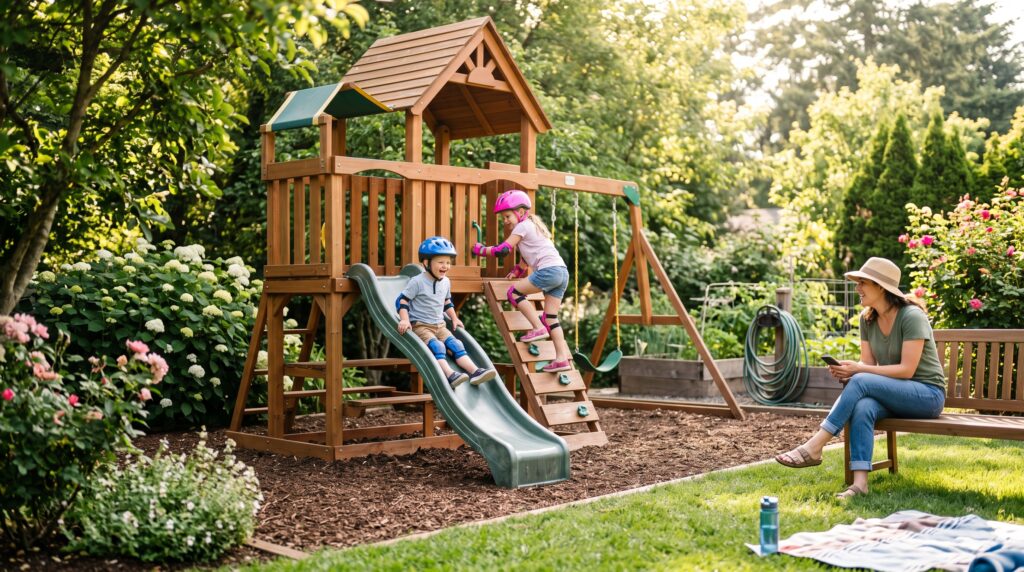
Bicycles, scooters, and skateboards demand proper protective gear every single time. Helmets should fit snugly with the front edge one to two finger-widths above the eyebrows, and the chin strap should be tight enough that you can only fit two fingers between the strap and chin. Knee pads, elbow pads, and wrist guards provide additional protection for activities with higher fall risk. Replace helmets after any significant impact, as internal damage may not be visible but can compromise protection.
Water play requires the most vigilant supervision of all outdoor activities. Whether it’s a backyard pool, inflatable kiddie pool, or sprinkler play, drowning can happen in seconds and silently. Never leave children unattended around water, even for a moment. Empty and store inflatable pools after each use, and install fencing and self-closing gates around permanent pools. Consider learning CPR—it’s one of those outdoor play safety tips that could truly save a life.
Playground Equipment Know-How
Public playgrounds offer wonderful opportunities for social interaction and physical challenge, but they also present unique hazards. Before allowing kids to play, scan the equipment for obvious problems like broken parts, sharp edges, or unsafe surface conditions. Check that the equipment is age-appropriate—equipment designed for older children can be dangerous for younger kids who may not have the size or coordination to use it safely.
Teach children proper equipment use. Slides are for sliding down feet-first while sitting, not climbing up or going headfirst. Swings are for sitting and swinging, not standing or twisting the chains. Monkey bars require careful hand placement and awareness of others to avoid collisions. These may seem like obvious rules, but kids often get creative in ways that increase injury risk.
Insect and Wildlife Safety
Outdoor play inevitably means encountering insects and possibly wildlife. Teaching kids to recognize and avoid potentially dangerous creatures is an important outdoor play safety tip. Most insects are harmless, but stinging insects like bees, wasps, and hornets can cause painful reactions and potentially life-threatening allergic responses in sensitive individuals.
If your child has known allergies to insect stings, keep an epinephrine auto-injector readily available and make sure caregivers know how to use it. For all children, teach them to stay calm and move away slowly if flying insects approach—swatting and sudden movements often trigger defensive stinging. Avoid playing near flowering plants where bees congregate, and check play areas for nests before allowing kids to play.
Ticks pose another significant concern, particularly in wooded areas or tall grass. These parasites can transmit serious diseases like Lyme disease and Rocky Mountain spotted fever. Prevention is your best defense: use insect repellent containing DEET or picaridin on exposed skin, tuck pants into socks when hiking, and stick to cleared paths. After outdoor play in tick-prone areas, conduct thorough tick checks on all family members, paying special attention to hairlines, behind ears, armpits, and other warm, hidden spots.
Dealing with Wildlife Encounters
Even in suburban settings, wildlife encounters can occur. Teach children to never approach or attempt to touch wild animals, no matter how cute or friendly they appear. This includes rabbits, squirrels, raccoons, and especially stray dogs or cats. Wild animals can carry rabies and other diseases, and they may bite or scratch when they feel threatened.
If your area has larger wildlife like deer, coyotes, or bears, educate kids about appropriate responses. Generally, this means making yourself appear large, backing away slowly without running, and making noise. Keep garbage secured and don’t leave pet food outside, as these attract wildlife to residential areas. Install motion-sensor lights around outdoor play areas to discourage nocturnal animals from entering the space.
First Aid Readiness for Outdoor Play
Despite your best prevention efforts, minor injuries will happen during active outdoor play—and that’s actually okay. Skinned knees and small bruises are normal parts of childhood that teach resilience and help kids learn their physical limits. What matters is being prepared to handle these incidents calmly and effectively when they occur.
Keep a well-stocked first aid kit easily accessible to outdoor play areas. Your kit should include adhesive bandages in various sizes, sterile gauze pads, medical tape, antiseptic wipes, antibiotic ointment, tweezers, scissors, disposable gloves, and instant cold packs. Include any medications your child might need, such as antihistamines for allergic reactions or an inhaler for asthma.
Know how to handle common outdoor injuries. For cuts and scrapes, clean the wound thoroughly with water, apply antibiotic ointment, and cover with a bandage. For suspected sprains or strains, remember RICE: Rest, Ice, Compression, and Elevation. For bee stings, remove the stinger by scraping it away rather than pinching (which can release more venom), then apply a cold compress. Trust your instincts about when professional medical care is needed—it’s better to err on the side of caution with head injuries, deep cuts, or anything that seems more serious than a typical childhood scrape.
Emergency Preparedness
Having a plan for emergencies is one of those outdoor play safety tips that hopefully you’ll never need but absolutely should have in place. Make sure your children know your phone number, address, and full names. Teach them how to call 911 and what information to provide in an emergency. Practice these skills periodically so they become automatic.
If you’re at a public park or playground, identify the location of emergency equipment like AED defibrillators and note the specific park name and entrance you’re using. This information is crucial for emergency responders who need to find you quickly. Keep your phone charged and with you—not locked in the car or buried in a bag—so you can call for help immediately if needed.
Age-Appropriate Outdoor Activities and Supervision
What’s safe and appropriate changes dramatically as children grow and develop. Toddlers need constant, hands-on supervision and age-appropriate equipment scaled to their size and abilities. Their outdoor play might involve simple activities like sandbox play, small slides, and push toys in a fully enclosed area where you can prevent them from accessing hazards.
Preschoolers are developing more sophisticated motor skills and can handle slightly more complex activities like swinging, climbing low structures, and riding tricycles. They still need close supervision because their judgment hasn’t caught up with their physical abilities—they might attempt things beyond their skill level or fail to recognize dangers. This age group benefits from clear, simple safety rules repeated often.
School-age children can engage in more adventurous activities like tree climbing, organized sports, and bike riding in the neighborhood. Your supervision can become less hands-on, but you still need to know where they are and set clear boundaries. This is an excellent age to involve kids in understanding outdoor play safety tips themselves, teaching them to assess risks and make good decisions independently.
Teenagers and Outdoor Independence
Teenagers want and deserve more freedom, but they still need guidance and structure. Their outdoor activities might include running or biking alone, hiking with friends, or participating in competitive sports. The safety focus shifts toward ensuring they have the knowledge, skills, and equipment to keep themselves safe without constant adult presence.
Establish clear expectations about communication, boundaries, and behavior. Require teens to share their locations (using phone tracking apps if appropriate), check in at predetermined times, and always tell you their plans. Discuss specific risks associated with their activities—traffic safety for runners, proper hydration for athletes, weather awareness for hikers—and make sure they know how to handle emergencies independently.
Teaching Safety Through Example and Practice
Children learn more from watching what you do than from hearing what you say. If you want them to take outdoor play safety tips seriously, model the behaviors yourself. Wear your helmet when cycling, apply sunscreen before going outside, stay hydrated during outdoor activities, and follow traffic rules. Your consistent example demonstrates that safety practices aren’t just arbitrary rules but sensible habits that everyone follows.
Make safety discussions positive rather than fear-based. Instead of constantly saying “don’t do that” or “you’ll get hurt,” frame conversations around making good choices that let everyone have fun safely. Ask questions that help kids think through risks: “What could happen if…?” or “How can we make this safer?” This approach builds critical thinking skills rather than just enforcing compliance.
Practice safety skills regularly so they become automatic. Have kids demonstrate how to cross the street safely, how to fall properly when losing balance, or how to get an adult’s attention in an emergency. Repetition builds muscle memory and confidence, making it more likely they’ll respond appropriately when it matters. Turn these practice sessions into games rather than drills to keep them engaging and age-appropriate.
Creating a culture of safety in your family means everyone looks out for each other. Encourage older siblings to help supervise younger ones and to speak up if they notice unsafe situations. Praise children when they make good safety decisions independently or remind others about safety rules. This positive reinforcement is far more effective than punishment for rule-breaking and helps kids internalize the values behind outdoor play safety tips.