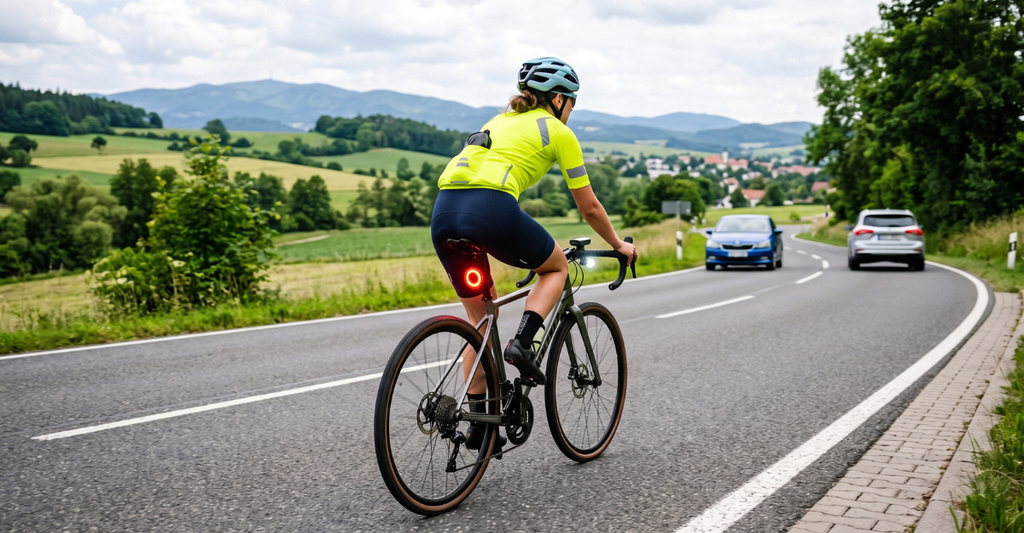
When most cyclists think about visibility lights, their minds immediately jump to nighttime riding scenarios—those dark evening commutes or early morning training sessions before the sun rises. However, visibility lights: cycling safety that goes beyond night riding represents a crucial concept that every rider needs to understand, regardless of when they typically hit the road or trail. The truth is, visibility challenges exist throughout the day, in countless situations you might not immediately consider dangerous.
As someone juggling family responsibilities, fitness goals, and daily commitments, you need to maximize safety during every ride. Whether you’re squeezing in a quick twenty-minute loop around the neighborhood or embarking on a weekend adventure with your kids in tow, understanding when and why to use visibility lights can literally save your life. This comprehensive guide will transform how you think about cycling safety equipment and help you make informed decisions that protect both you and your family.
Understanding Daytime Visibility Challenges
Your eyes might work perfectly well during daylight hours, but that doesn’t mean drivers can always see you clearly on your bicycle. Studies have consistently shown that cyclists are involved in collisions during broad daylight at alarming rates—sometimes even more frequently than during twilight or nighttime hours. The reasons are complex and multifaceted, involving human psychology, physics, and the limitations of human perception.
Drivers experience something called “inattentional blindness,” where their brains literally filter out objects they’re not actively looking for, even when those objects are directly in their line of sight. When someone behind the wheel is focused on looking for cars, trucks, and other large vehicles, their brain might completely miss a cyclist, even in full daylight. This phenomenon explains why drivers involved in accidents with cyclists often say, “I never saw them”—and they’re telling the truth as their brain experienced it.
Additionally, bright sunshine creates its own visibility problems. Glare from the sun can temporarily blind drivers or create harsh shadows that make it difficult to judge distances and speeds accurately. When you’re riding during those beautiful sunny days that seem perfect for cycling, you might actually be less visible than you realize. The contrast between bright sunlit areas and shadowed zones can cause you to disappear from a driver’s field of vision as you move through different lighting conditions.
How Visibility Lights Work During Daylight Hours
Modern cycling lights designed for daytime use operate on completely different principles than traditional nighttime illumination. Rather than simply lighting up the road ahead or making you visible in darkness, daytime running lights use specific flash patterns, brightness levels, and light colors scientifically proven to catch human attention even in bright conditions. These specialized lights penetrate through the visual noise of a busy daytime environment.
Daytime visibility lights typically operate at much higher lumen outputs than you might expect—often 500 lumens or more for rear lights and even higher for front lights. This intense brightness ensures they remain visible even when competing with direct sunlight. The flashing patterns are equally important, with researchers discovering that certain pulse rhythms trigger automatic attention responses in the human brain, causing drivers to notice cyclists they might otherwise overlook.
Your brain is hardwired to notice movement and changes in the environment as a survival mechanism. Quality daytime running lights exploit this neurological feature by creating dynamic, attention-grabbing patterns that register in a driver’s peripheral vision before their conscious mind even processes what they’re seeing. This gives drivers those critical extra seconds to recognize your presence and adjust their behavior accordingly.
Weather Conditions That Demand Visibility Lights
Fog, mist, and overcast conditions dramatically reduce visibility for everyone on the road, yet many cyclists fail to use lights during these situations because it’s technically “daytime.” This represents a dangerous miscalculation that puts you at significant risk. When atmospheric conditions reduce visibility, the contrast between you and your background diminishes, making you blend into the grey, murky environment.
Rain presents perhaps the most underestimated visibility challenge for cyclists. Beyond just making roads slippery and dangerous, rain creates multiple layers of visibility problems. Drivers’ windows get covered with water droplets, their windshield wipers create intermittent visual interruptions, and the overall reduction in light makes everything harder to see. Inside their vehicles, drivers are also dealing with fogged windows, reduced visibility through side mirrors, and the distraction of operating wipers and defrosters.
Snow and winter conditions amplify these challenges exponentially. Heavy snowfall can reduce visibility to just a few feet in extreme conditions, but even light flurries create visual confusion. Road spray from other vehicles mixes with snow, creating a grey-white cloud that obscures everything. When you’re cycling in these conditions—perhaps commuting to work or running errands—visibility lights transform from helpful accessories into essential safety equipment you absolutely cannot ride without.
Dawn and Dusk: The Most Dangerous Times
Those beautiful golden hour periods that photographers love represent some of the most hazardous times for cyclists. During dawn and dusk, light levels change rapidly, and drivers’ eyes struggle to adjust quickly enough to maintain full awareness of their surroundings. You might feel like there’s plenty of light to see by, but drivers may be experiencing temporary vision impairment as their eyes transition between lighting conditions.
The low angle of the sun during these times creates additional problems. Drivers heading toward the rising or setting sun can be effectively blinded, unable to see anything directly in front of them except blazing light. If you’re cycling in front of or near these vehicles, you’re essentially invisible unless you have bright, flashing lights that can penetrate through the glare. This situation is so dangerous that many cycling fatalities occur during these transitional periods.
Urban Riding and Visual Clutter
City cycling presents unique visibility challenges that have nothing to do with the time of day. Visibility lights: cycling safety that goes beyond night riding becomes especially relevant when you consider the overwhelming visual environment of urban areas. Drivers navigating city streets are bombarded with stimuli: traffic lights, neon signs, storefronts, pedestrians, other vehicles, road markings, and countless other visual elements competing for their attention.
In this chaos, a cyclist wearing normal clothing simply blends into the background noise. Your brain might register dozens or hundreds of objects in a single glance at a busy intersection, and a human-sized object moving at bicycle speeds can easily get lost in the shuffle. Bright, flashing lights create what researchers call “conspicuity”—they make you stand out from the visual clutter in a way that your physical size and shape cannot.
Consider your typical route through your neighborhood or town. Think about the intersections where cars emerge from side streets, the driveways where vehicles back out unexpectedly, and the parking lots where distracted drivers navigate while looking for spaces. Every one of these locations represents a potential collision point where enhanced visibility could make the difference between a close call and an actual impact. Running visibility lights throughout these areas gives you an extra layer of protection that costs nothing except battery power.
Construction Zones and Detours
Road construction creates some of the most hazardous conditions cyclists face. These areas feature unfamiliar traffic patterns, distracted drivers trying to navigate changes, heavy equipment, reduced lane widths, and often poor road surfaces that demand more attention from both cyclists and motorists. In these environments, anything you can do to increase your visibility provides crucial safety benefits.
Construction workers themselves wear high-visibility vests and often use flashing lights or flags for a reason—these areas are inherently dangerous. As a cyclist passing through, you’re at even greater risk because you’re moving through the space rather than working within it. Drivers don’t expect to see cyclists in construction zones, making you even more likely to suffer from inattentional blindness. Visibility lights help overcome this expectation gap.
Trail Riding and Off-Road Visibility
You might assume that visibility lights are only necessary for road cycling, but trail and off-road riding present their own visibility challenges. When you’re riding through wooded areas, especially during midday when the sun is high, the dappled light created by tree canopy produces constantly changing light and shadow patterns. Other trail users—hikers, runners, or fellow cyclists—can have difficulty spotting you until you’re very close.
Forest environments create situations where you emerge suddenly from dark, shadowed sections into bright clearings, or vice versa. This rapid transition can temporarily impair the vision of people you’re approaching, making collisions more likely. A bright front light, even in daytime mode, gives others advance warning of your approach, which is both courteous and safe. This becomes especially important on narrow, winding trails where sight lines are limited.
If you’re riding with your children or teaching them cycling skills on trails, equipping everyone with visibility lights sets a positive example and creates habits that will protect them throughout their cycling lives. Kids are naturally less visible than adults due to their smaller size, and they may lack the experience to anticipate dangerous situations. Adding lights to their bikes and yours creates an extra safety margin that costs little but provides enormous peace of mind.
The Psychology of Driver Behavior
Understanding how drivers perceive and react to cyclists helps explain why visibility lights work so effectively. Research into driver psychology reveals that motorists unconsciously assess risk and allocate attention based on perceived threats. Large vehicles like trucks and buses automatically command attention because they pose an obvious danger if a collision occurs. Bicycles, being smaller and less threatening, receive less automatic attention from drivers’ unconscious threat-assessment systems.
When you add bright, flashing lights to your bicycle, you essentially “upgrade” your threat level in drivers’ unconscious calculations. This isn’t about making drivers afraid of you—it’s about triggering their attention mechanisms so they process your presence and adjust their behavior accordingly. The movement and brightness of quality visibility lights activate the same neural pathways that respond to emergency vehicles, making drivers more likely to notice you and give you space.
The concept of “safety in numbers” applies to cycling, where drivers in areas with many cyclists become more accustomed to looking for and yielding to bikes. However, if you ride in areas with relatively little cycling traffic, drivers aren’t primed to expect you. Visibility lights compensate for this lack of expectation by forcing your presence into drivers’ awareness, even when they’re not actively looking for cyclists.
Speed and Distance Perception
Drivers notoriously struggle to accurately judge the speed and distance of approaching cyclists. Bicycles move faster than pedestrians but slower than cars, occupying an awkward middle ground that confuses the mental calculations drivers make when deciding whether to pull out from a side street or make a turn. This misjudgment causes many cycling accidents, even when drivers have actually seen the cyclist.
Visibility lights help address this problem by providing drivers with a clear point of reference that’s easier to track than a cyclist’s body alone. Particularly when using lights with consistent flash patterns, drivers can more accurately gauge your approach speed by observing the rhythm of the flashes. This improved perception leads to better decision-making about whether there’s sufficient time to complete a maneuver before you arrive at an intersection.
Visibility Lights for Group Rides and Family Cycling
When you’re riding with others, whether it’s your weekly cycling group, your family, or just you and a friend, visibility lights provide benefits beyond individual safety. A group of cyclists using lights creates a larger, more noticeable presence on the road that’s harder for drivers to overlook. This collective visibility helps protect everyone in your group, especially if some riders are children or less experienced cyclists who might be more vulnerable.
Family cycling adventures require extra attention to safety because you’re responsible for protecting your children while also managing your own riding. Equipping every bike in your family with front and rear visibility lights ensures that everyone remains visible to traffic, regardless of your formation or spacing. If you’re riding with very young children on balance bikes or with training wheels, their proximity to the ground makes them especially difficult for drivers to see—lights help compensate for their low profile.
Group rides also present situations where riders need to see each other, not just be seen by drivers. On shared-use paths or trails where your cycling club meets for training rides, lights help riders maintain awareness of others’ positions, making the group safer and more coordinated. This becomes particularly valuable during those early morning start times that many cycling groups favor, when light levels are changing rapidly.
Choosing the Right Visibility Lights
Not all bicycle lights are created equal, and understanding the key features that make lights effective during daytime conditions helps you make smart purchasing decisions. Lumen output represents the first critical specification—for daytime visibility, you need lights substantially brighter than basic nighttime lights. Rear lights should produce at least 50-100 lumens for daytime use, while front lights benefit from 200 lumens or more, with many cyclists opting for lights producing 500-1000 lumens.
Flash patterns matter tremendously for daytime visibility. Look for lights offering multiple flash modes, including patterns specifically designed for daytime use. The most effective patterns combine different rhythms and intensities to maximize attention-grabbing potential. Some premium lights feature “pulse” modes that gradually brighten and dim rather than simply flashing on and off, creating a breathing effect that registers strongly in peripheral vision.
Battery life becomes a practical consideration when you plan to run lights during all daytime rides, not just nighttime. Daytime flash modes typically consume less power than full-brightness steady modes, but you’ll still want lights that can run for several hours without recharging. Many modern lights use USB rechargeable batteries, making it easy to top up the charge at home or work. Consider buying lights with battery indicators so you’re never caught off guard by a dead light.
Mounting Options and Light Positioning
Where and how you mount your visibility lights affects their effectiveness significantly. Rear lights work best when mounted at seat post height or on your helmet, positioning them at drivers’ eye level rather than low near your wheel where they might be blocked by your body or bike frame. Some cyclists use multiple rear lights to ensure visibility from various angles—one on the seat post and one on a helmet or backpack.
Front lights deserve equally careful consideration regarding placement. While helmet mounting provides great visibility and allows you to direct light where you’re looking, frame-mounted lights create a clear position marker that helps drivers judge your width and location on the road. Using both positions—a bright light on your helmet and another on your handlebars—provides optimal visibility from multiple angles and distances.
Integration With Other Safety Practices
Visibility lights: cycling safety that goes beyond night riding represents one component of a comprehensive approach to cycling safety, not a complete solution by itself. Combining lights with high-visibility clothing, reflective elements, proper lane positioning, and defensive riding techniques creates layers of protection that work together. Think of safety equipment and practices as a system where each element supports and enhances the others.
High-visibility clothing in fluorescent yellow, orange, or green provides passive visibility that works in any lighting condition without batteries or switches to worry about. Reflective strips and panels add another layer, bouncing light back toward its source. When you combine these clothing elements with active lighting, you create a visibility profile that’s far greater than any single element alone could provide.
Your riding behavior matters just as much as your equipment. Predictable, confident riding that follows traffic laws helps drivers anticipate your movements and respond appropriately. Using proper lane positioning rather than hugging the edge of the road often increases visibility by placing you directly in drivers’ sight lines. Visibility lights make you more noticeable, but smart riding practices ensure that visibility translates into actual safety.
Teaching Children About Visibility
If you’re introducing your children to cycling or working to help your family become more active and healthy, incorporating visibility lights from the beginning establishes good habits that will serve them throughout their lives. Kids often find lights exciting and fun, making them more enthusiastic about using safety equipment. Let them help choose their lights and take responsibility for ensuring they’re charged and functioning before rides.
Use concrete examples your children can understand to explain why lights matter. Point out situations during car trips where cyclists are hard to see, and discuss how lights would help. Practice in safe environments like empty parking lots or quiet streets, teaching them to check that their lights are visible and functioning before every ride. This hands-on approach to safety education empowers children to take ownership of their own protection.
Maintenance and Reliability
The best visibility lights in the world provide no protection if they’re sitting in your garage with dead batteries or buried in a drawer because the mounting system broke. Incorporating light checks into your pre-ride routine takes just seconds but ensures your safety equipment actually functions when you need it. Develop a habit of turning your lights on and checking their operation before you roll out, every single time, regardless of conditions or time of day.
Modern LED lights are remarkably durable and long-lasting, but they’re not indestructible. Regularly inspect your lights for cracks, water infiltration, or damage to mounting systems. Clean the lenses periodically, as dirt and grime reduce light output and effectiveness. If you notice your lights seem dimmer than usual, check the battery status and recharge or replace batteries as needed—don’t wait until they’re completely dead.
Keep spare lights or backup batteries available, especially if you depend on your bike for commuting or regular transportation. Having a backup means a forgotten charge or unexpected failure doesn’t leave you riding without protection. Some cyclists keep inexpensive backup lights permanently mounted on their bikes, providing redundancy in case primary lights fail or are forgotten.
Weather-Specific Visibility Strategies
Different weather conditions demand different approaches to visibility, and understanding these nuances helps you adapt your safety strategy to current circumstances. During heavy rain, for instance, constant-on modes sometimes work better than flash patterns because they penetrate through the visual noise of rainfall more effectively. The steady light creates a continuous reference point that drivers can track more easily than intermittent flashes.
Fog presents unique challenges because light can scatter and diffuse through moisture droplets, sometimes creating a glowing halo effect that obscures rather than reveals your position. In dense fog, consider using lower light settings combined with increased attention to other safety practices. The goal shifts from being visible from great distances to ensuring drivers can see you in time to react at the reduced speeds appropriate for foggy conditions.
Winter riding with its early darkness, frequent precipitation, and challenging road conditions requires the most comprehensive visibility approach. Combine lights with reflective elements, consider adding spoke lights or wheel reflectors for additional visibility from the side, and adjust your riding schedule when possible to avoid the most dangerous times. Your winter visibility strategy should represent your maximum-protection approach that you can scale back during better conditions, not the minimum acceptable standard.
Cost-Benefit Analysis of Quality Lights
You might hesitate at the price tags on premium visibility lights, especially when basic models cost a fraction of the amount. However, understanding the value proposition helps justify the investment. Quality lights provide brighter output, longer battery life, more reliable weather resistance, better mounting systems, and longer overall lifespan than budget options. When you calculate cost per year of use, premium lights often prove more economical than repeatedly replacing cheap alternatives.
Consider also the value of your safety and wellbeing. How much is it worth to significantly reduce your risk of being hit by a vehicle? What value do you place on returning home safely to your family after every ride? While these questions have no precise dollar amount, they provide important context for evaluating whether spending $100 or $150 on excellent lights represents good value. For most cyclists, the answer is obviously yes.
Many cyclists find that starting with one high-quality light and gradually building their visibility system works better than buying complete but mediocre setups all at once. Perhaps begin with an excellent rear light, since that’s what following traffic sees most. Add a quality front light next, then consider supplementary lights for additional visibility. This approach spreads the cost over time while ensuring every component you add truly enhances your safety.
Real-World Application and Habit Formation
Knowing intellectually that visibility lights improve safety means nothing if you don’t actually use them consistently. The key to making lights part of your regular cycling routine involves removing friction and creating automatic habits. Store your lights somewhere you’ll see them when preparing to ride—attached to your bike, in your cycling bag, or on a hook by the door where you keep your helmet.
Some cyclists develop a pre-ride checklist similar to pilots’ pre-flight checks: helmet secured, lights on and functioning, tires properly inflated, quick bike systems check. Running through this routine before every ride, whether it’s a five-minute trip to the corner store or a two-hour weekend adventure, builds habits that become automatic. Eventually, you’ll feel uncomfortable starting a ride without lights, the same way you now feel uncomfortable riding without a helmet.
For your family’s health and cycling activities, make light checks a group responsibility. Have children check their own lights and report status before family rides begin. This collaborative approach to safety creates teachable moments and reinforces the importance of visibility while building autonomy and responsibility in your kids. It also ensures that if you forget, someone else in the family might remember.
Your cycling visibility doesn’t have to wait for darkness to matter. Every ride, regardless of time or conditions, presents visibility challenges that proper lighting helps address. By expanding your understanding of when and why visibility lights enhance safety, you protect yourself and your family while enjoying all the physical and mental health benefits that cycling provides. Make visibility lights a non-negotiable part of your cycling routine, and you’ll ride with greater confidence knowing you’ve taken important steps to ensure drivers can see and respond to your presence on the road.
Give us a call today at 1-877-777-6086 or fill out our contact form to become a retail
distributor of our top-of-the-line safety lights.