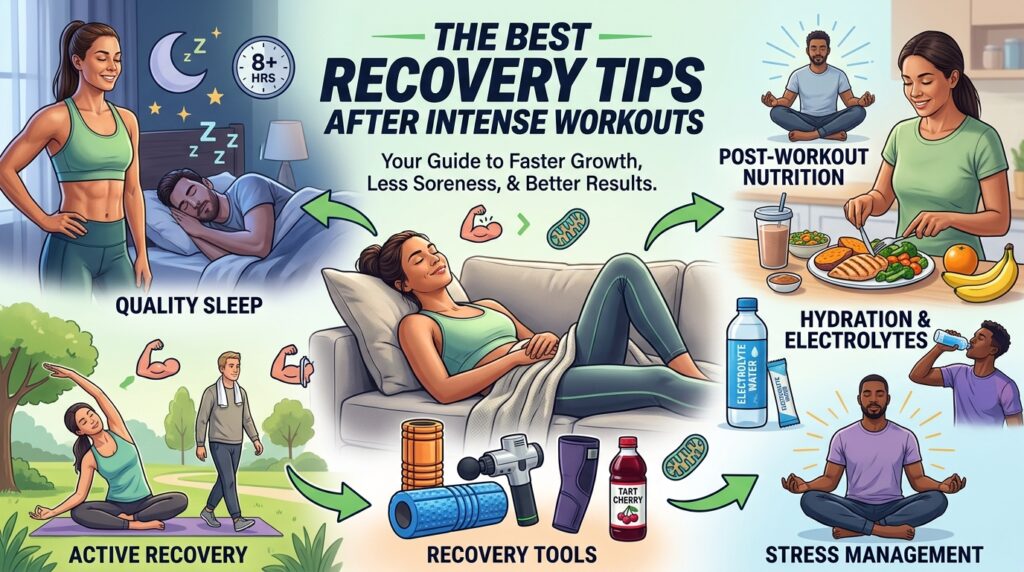
When you push your body to its limits during an intense workout, you’re not actually building strength in that moment—you’re creating the conditions for growth that happens afterward. The real magic of fitness occurs during recovery, when your muscles repair, your energy stores replenish, and your body adapts to become stronger and more resilient. Whether you’re a competitive athlete training for your next race, a busy parent squeezing in early morning workouts, or someone working a physically demanding job, understanding and implementing the best recovery tips after intense workouts can make the difference between consistent progress and frustrating plateaus.
Recovery isn’t just about sitting on the couch and doing nothing, though rest certainly plays a role. It’s an active, intentional process that requires the same dedication you bring to your training sessions. Your body needs specific nutrients, particular movement patterns, adequate sleep, and strategic recovery techniques to bounce back stronger after you’ve pushed it hard. The athletes who progress fastest aren’t necessarily those who train the hardest—they’re the ones who recover the smartest.
In this comprehensive guide, you’ll discover evidence-based recovery strategies that fit into your busy lifestyle. These aren’t theoretical concepts from sports science journals that require expensive equipment or hours of free time. Instead, you’ll find practical, actionable tips you can implement immediately, whether you’re recovering from a grueling HIIT session, a long run, a heavy lifting day, or a demanding shift that left your body exhausted.
Understanding Why Recovery Matters More Than You Think
Your workout is actually a destructive process. When you lift weights, you create microscopic tears in your muscle fibers. When you run hard, you deplete glycogen stores and stress your cardiovascular system. When you perform high-intensity intervals, you accumulate metabolic waste products and stress hormones throughout your body. This might sound alarming, but it’s exactly how fitness improvements happen—your body responds to these stresses by adapting and becoming stronger.
However, this adaptation only occurs if you give your body the resources and time it needs to recover. Without proper recovery, you’re simply breaking down your body over and over without allowing the rebuilding phase to complete. This leads to overtraining syndrome, where your performance actually decreases despite continued hard work. You’ll feel constantly fatigued, irritable, and more susceptible to illness and injury.
For busy moms juggling family responsibilities and fitness goals, or tradesmen whose jobs already place significant physical demands on their bodies, inadequate recovery can quickly lead to burnout. The best recovery tips after intense workouts aren’t luxuries—they’re necessities that protect your health and ensure your fitness efforts actually produce results. When you prioritize recovery, you’ll notice improvements in performance, mood, sleep quality, and overall well-being that extend far beyond the gym.
Nutrition Strategies That Accelerate Recovery
What you eat after your workout might be even more important than what you eat before it. Your post-workout meal or snack sets the tone for your entire recovery process, providing the raw materials your body needs to repair damaged tissue and replenish depleted energy stores. The timing, composition, and quality of your post-exercise nutrition directly impact how quickly and completely you recover.
The Critical Post-Workout Window
You’ve probably heard about the “anabolic window”—that magical period after exercise when your muscles are supposedly primed to absorb nutrients. While recent research suggests this window is longer than previously thought (several hours rather than just 30 minutes), consuming quality nutrition within two hours of finishing your workout remains one of the best recovery tips after intense workouts. During this time, your muscles are particularly receptive to glucose uptake, and protein synthesis rates are elevated.
Your ideal post-workout meal should include both high-quality protein and easily digestible carbohydrates. Aim for approximately 20-40 grams of protein, depending on your body size and the intensity of your workout. Chicken breast, Greek yogurt, eggs, protein powder, or fish all provide excellent protein sources that supply the amino acids necessary for muscle repair. Don’t skimp on this—protein is literally the building block your body uses to reconstruct stronger muscle tissue.
Pair your protein with carbohydrates in a ratio of approximately 3:1 or 4:1 carbs to protein for endurance activities, or 2:1 for strength training. Sweet potatoes, rice, fruit, oatmeal, or whole grain bread help replenish glycogen stores that fuel your muscles. If you’re a busy parent who needs something quick, a banana with peanut butter and a protein shake works perfectly. The key is consistency—making post-workout nutrition a non-negotiable habit rather than something you do when it’s convenient.
Hydration Beyond Just Water
Proper hydration is fundamental to recovery, but many people think simply drinking water is enough. While water is certainly important, intense workouts cause you to lose electrolytes—sodium, potassium, magnesium, and calcium—through sweat. These minerals are crucial for muscle contraction, nerve function, and fluid balance. If you only replace lost fluids with plain water, you can actually dilute your electrolyte concentration, leading to muscle cramps, fatigue, and impaired recovery.
For workouts lasting less than an hour at moderate intensity, water alone is usually sufficient. But for intense sessions, particularly in hot conditions or if you’re a heavy sweater, you need to replace electrolytes as well. You don’t necessarily need expensive sports drinks loaded with sugar and artificial colors. Coconut water provides natural electrolytes, or you can add a pinch of sea salt and squeeze of citrus to your water. Some athletes prefer electrolyte tablets or powders that dissolve in water.
A practical hydration strategy involves drinking approximately 16-24 ounces of fluid for every pound of body weight lost during exercise. Weigh yourself before and after intense workouts occasionally to understand your typical fluid losses. Your urine color provides another useful indicator—pale yellow suggests adequate hydration, while dark yellow indicates you need more fluids. For busy professionals and parents, keeping a large water bottle with you throughout the day and sipping consistently helps maintain the hydration status that supports optimal recovery.
Anti-Inflammatory Foods That Fight Soreness
Intense exercise triggers inflammation in your body, which is actually part of the normal adaptation process. However, excessive inflammation can slow recovery and increase muscle soreness. Incorporating anti-inflammatory foods into your regular diet represents one of the most powerful best recovery tips after intense workouts that many people overlook. These foods don’t just help you feel better—they actually modulate the biochemical processes that determine how quickly your body heals.
Omega-3 fatty acids found in fatty fish like salmon, sardines, and mackerel are among the most potent natural anti-inflammatory compounds available. If you don’t eat fish regularly, a high-quality fish oil supplement can provide similar benefits. Aim for at least two servings of fatty fish per week, or take a supplement providing 1-2 grams of combined EPA and DHA daily.
Colorful fruits and vegetables contain antioxidants and phytonutrients that combat oxidative stress from intense exercise. Tart cherry juice has become particularly popular among athletes for its documented ability to reduce muscle soreness and accelerate recovery. Blueberries, strawberries, beets, leafy greens, and turmeric all possess significant anti-inflammatory properties. Try adding a handful of berries to your morning oatmeal, including a salad with your lunch, or roasting vegetables with dinner. These small, consistent habits accumulate into significant recovery benefits over time.
Sleep: The Most Underrated Recovery Tool
If you could only implement one recovery strategy, sleep would deliver the biggest return on investment. During deep sleep, your body releases growth hormone, which drives muscle repair and growth. Sleep is when your nervous system recovers from the stress of training, when memories consolidate, and when countless cellular repair processes occur throughout your body. Shortchanging sleep is like trying to build a house without giving the concrete time to set—your foundation remains weak no matter how much effort you put into construction.
Research consistently shows that athletes who sleep less than seven hours per night have significantly higher injury rates, slower recovery times, and impaired performance compared to those getting eight or more hours. For parents waking up early for workouts or staying up late to complete household tasks, and for tradesmen starting work before dawn, insufficient sleep creates a recovery deficit that compounds over time. You simply cannot out-train poor sleep habits.
Quality matters as much as quantity when it comes to recovery sleep. Your bedroom environment should be cool (around 65-68°F is ideal for most people), completely dark, and quiet. Investing in blackout curtains, a white noise machine, or a quality mattress pays dividends in improved sleep quality. Establishing a consistent sleep schedule—going to bed and waking up at the same time even on weekends—helps regulate your circadian rhythm and improves sleep quality. One of the truly best recovery tips after intense workouts is to plan your training schedule around your sleep needs rather than sacrificing sleep to fit in more training.
Strategic Napping for Recovery
While nothing replaces a full night’s quality sleep, strategic napping can provide supplemental recovery benefits, especially for people with demanding schedules. A 20-30 minute nap in the early afternoon can help reduce fatigue, improve cognitive function, and support physical recovery without interfering with nighttime sleep. Longer naps (60-90 minutes) allow you to complete a full sleep cycle, including the deep sleep stages where physical recovery predominantly occurs.
For busy moms, a short nap during a child’s naptime can provide much-needed recovery. For tradesmen with physically demanding jobs followed by training sessions, a brief nap between work and the gym can improve workout quality and subsequent recovery. The key is keeping naps relatively short (under 30 minutes) or long enough to complete a full cycle (90 minutes) to avoid waking during deep sleep, which leaves you feeling groggy and disoriented.
Active Recovery Techniques That Keep You Moving
Complete rest certainly has its place, but moving your body in gentle, low-intensity ways often accelerates recovery more effectively than total inactivity. Active recovery promotes blood flow to tired muscles, helping deliver nutrients and remove metabolic waste products. It maintains mobility and reduces the stiffness that often accompanies intense training. The trick is keeping the intensity genuinely low—active recovery should feel easy and refreshing, never challenging or exhausting.
Low-Intensity Cardio for Circulation
An easy 20-30 minute walk, leisurely bike ride, or gentle swim the day after an intense workout can significantly reduce muscle soreness and speed recovery. This low-intensity movement increases circulation without adding additional training stress. Keep your heart rate in Zone 1 or low Zone 2—you should be able to hold a comfortable conversation throughout. If you’re breathing hard or feeling challenged, you’re going too hard and creating additional fatigue rather than promoting recovery.
For parents, active recovery can serve double duty as family time. Taking your kids to the park, going for a nature walk, or playing catch in the backyard keeps you moving while spending quality time together. For tradesmen whose jobs already involve significant physical activity, active recovery might mean ensuring you take breaks to move throughout the day rather than adding additional exercise. The principle remains the same: gentle movement that promotes circulation without adding stress.
Yoga and Stretching for Mobility
Incorporating yoga or dedicated stretching sessions into your recovery routine addresses the mobility limitations and muscle tightness that intense training can create. A gentle yoga flow improves flexibility, promotes relaxation, and includes breathing practices that activate your parasympathetic nervous system—the rest-and-digest mode that facilitates recovery. You don’t need an hour-long class; even 15-20 minutes of focused stretching provides significant benefits.
Focus on dynamic stretching where you move through ranges of motion rather than holding static positions. Cat-cow stretches, leg swings, arm circles, and gentle twists all promote mobility without overtaxing your system. If you do hold stretches, aim for 30-60 seconds and breathe deeply throughout. This combination of movement and breathing represents one of the best recovery tips after intense workouts that requires no equipment and minimal time—perfect for busy schedules.
Recovery Modalities and Techniques
Beyond nutrition, sleep, and movement, various recovery modalities can enhance your body’s ability to bounce back from intense training. While some require special equipment or facilities, others can be implemented at home with minimal investment. The key is finding techniques that fit your lifestyle and that you’ll use consistently.
The Power of Contrast Therapy
Alternating between hot and cold exposure has been used for recovery by athletes for generations. This contrast therapy stimulates circulation, reduces inflammation, and may decrease muscle soreness. The simplest version involves alternating between hot and cold water in the shower—two minutes hot followed by 30 seconds cold, repeated 3-4 times. The contrast creates a pumping effect that flushes metabolic waste from muscles while delivering fresh, oxygenated blood.
If you have access to a sauna and cold plunge, or even a hot tub and cold pool, you can create more dramatic contrasts. Spend 10-15 minutes in heat followed by 2-3 minutes in cold water, repeating 2-3 times. Always end on cold to reduce inflammation. If you’re implementing this at home, you can use ice baths or even bags of frozen vegetables applied to particularly sore muscles. While not the most comfortable experience, contrast therapy is among the best recovery tips after intense workouts supported by both scientific research and anecdotal reports from elite athletes.
Compression Garments and Elevation
Compression clothing isn’t just a fashion statement—these garments can genuinely support recovery when used appropriately. Compression socks, tights, or sleeves apply graduated pressure that promotes blood flow from your extremities back toward your heart. This can reduce swelling, decrease muscle soreness, and speed recovery, particularly after long runs or leg-intensive workouts. Wearing compression garments for several hours after intense exercise provides the most benefit.
Elevation works on similar principles. Lying on your back with your legs elevated above heart level for 15-20 minutes after a hard workout helps fluid drain from your lower extremities, reducing inflammation and promoting circulation. You can do this while watching TV, reading, or scrolling through your phone—it requires no additional time commitment. This simple practice becomes especially valuable for people on their feet all day, whether from a physically demanding job or chasing after active children.
Foam Rolling and Self-Massage
Self-myofascial release through foam rolling or massage tools has become standard practice among athletes and fitness enthusiasts. While the exact mechanisms remain debated, evidence suggests foam rolling reduces muscle soreness, improves range of motion, and may enhance performance when used as part of a regular routine. The key is rolling slowly (about one inch per second) and pausing on particularly tender spots for 30-60 seconds while breathing deeply.
Focus on major muscle groups that took the brunt of your workout—quads, hamstrings, calves, and back for runners; chest, lats, and legs for lifters. You don’t need to foam roll until you’re grimacing in pain; moderate pressure that feels like a “good hurt” is sufficient. Spending just 10-15 minutes foam rolling while watching TV or before bed provides significant recovery benefits without requiring dedicated time. For targeted work on particularly stubborn knots, massage balls or handheld massage guns offer more focused pressure than standard foam rollers.
Managing Stress for Better Recovery
Your body doesn’t distinguish between physical stress from exercise and psychological stress from work deadlines, financial worries, or family challenges. All stress triggers similar hormonal responses, primarily through cortisol release. When you’re chronically stressed, your body remains in a heightened sympathetic state (fight-or-flight mode) that actively interferes with recovery processes. Managing psychological stress isn’t just good for mental health—it’s essential for physical recovery.
Breathing Practices That Shift Your Nervous System
One of the most accessible yet powerful recovery tools costs nothing and requires just minutes per day: intentional breathing practice. Deep, slow breathing activates your parasympathetic nervous system, lowering heart rate, reducing cortisol, and shifting your body into recovery mode. Box breathing—inhaling for four counts, holding for four, exhaling for four, and holding empty for four—is a simple technique you can practice anywhere.
Try spending just five minutes before bed doing deep breathing exercises. Lie on your back, place one hand on your chest and one on your belly, and breathe deeply enough that your belly hand rises more than your chest hand. This diaphragmatic breathing maximizes oxygen exchange and triggers relaxation responses. For busy parents, you can do this during your child’s bedtime routine. For professionals, a few minutes of breathing practice during lunch breaks can significantly impact your recovery capacity. Among the best recovery tips after intense workouts, breathing practices offer perhaps the highest benefit-to-effort ratio.
Meditation and Mindfulness
Meditation isn’t just for monks and yoga instructors—it’s a practical recovery tool backed by extensive research. Regular meditation practice reduces cortisol levels, improves sleep quality, decreases inflammation markers, and enhances overall recovery. You don’t need to sit in lotus position for an hour; even 10 minutes of simple meditation provides measurable benefits.
Start with guided meditation apps that walk you through the process. Focus on your breath, notice when your mind wanders (it will—constantly), and gently return your attention to breathing without judgment. The practice of repeatedly redirecting attention builds mental resilience while promoting physiological recovery. Morning meditation sets a calm tone for your day, while evening practice helps transition into quality sleep. For skeptics who think they “can’t meditate,” remember that meditation isn’t about clearing your mind completely—it’s about noticing thoughts without getting swept away by them.
Periodization and Recovery Planning
Perhaps the ultimate recovery strategy involves planning your training to include intentional recovery periods. Rather than pushing hard every single workout, strategic periodization alternates between high-intensity training blocks and easier recovery periods. This approach allows you to push intensely when it matters while providing adequate recovery to prevent overtraining and sustain long-term progress.
Weekly Training Structure
Most people benefit from 2-3 truly intense workouts per week, with other days devoted to moderate training, active recovery, or complete rest. If you’re doing high-intensity interval training, heavy lifting, or long runs on Monday, Wednesday, and Friday, then Tuesday, Thursday, and Saturday should be lighter days—perhaps easy cardio, yoga, or skill work that doesn’t tax your system. Sunday might be complete rest or gentle active recovery.
This structure ensures you’re fresh for your hard days, allowing you to train with the intensity needed to drive adaptation. It also provides adequate recovery between intense sessions, allowing the adaptation to actually occur. Many people make the mistake of trying to go hard every day, which leads to mediocre workouts when you’re never fully recovered. Strategic recovery days aren’t laziness—they’re smart training that produces better results than constant intensity.
Deload Weeks
Beyond daily and weekly recovery planning, incorporating regular deload weeks—where you reduce training volume and intensity by approximately 40-50%—represents one of the best recovery tips after intense workouts for long-term success. Every 3-4 weeks of progressive training, take a week where you still exercise but at significantly lower intensity and duration. This allows accumulated fatigue to dissipate and gives your body a chance to fully adapt to recent training stress.
Many people resist deload weeks, fearing they’ll lose fitness or momentum. The opposite actually occurs—you often come back stronger and more motivated after giving your body and mind a break from constant intensity. For busy parents and working professionals, deload weeks can align with family vacations, work demands, or seasonal life changes. Rather than stressing about missing workouts, plan for these lighter periods and recognize them as essential components of a sustainable, long-term fitness program.
Supplements That May Support Recovery
While whole foods should always form the foundation of your nutrition strategy, certain supplements have research supporting their ability to enhance recovery. Quality matters enormously with supplements—cheap products often contain fillers, contaminants, or ineffective forms of nutrients. Look for third-party tested products when possible, particularly if you’re subject to drug testing.
Protein Powder for Convenience
Protein powder isn’t necessary if you consistently meet your protein needs through whole foods, but it offers convenience that’s hard to beat for busy schedules. Whey protein digests quickly and contains high levels of leucine, the amino acid that signals muscle protein synthesis. For those avoiding dairy, plant-based options like pea, hemp, or rice protein (or blends combining multiple plant sources) provide quality alternatives.
A protein shake immediately after a workout, especially if you won’t have time for a full meal for several hours, ensures your body gets the amino acids needed for recovery during that critical post-exercise period. Mix your powder with milk or a milk alternative, add fruit and perhaps nut butter, and you have a complete recovery meal in minutes. This convenience makes protein powder particularly valuable for parents heading straight from the gym to school pickup, or workers grabbing post-workout nutrition before a shift.
Creatine for Recovery and Performance
Creatine monohydrate is among the most researched and effective supplements available, with hundreds of studies documenting its safety and efficacy. While most people think of creatine primarily for building strength and muscle, it also plays important roles in recovery.