When you pull up to a local playground with your kids after a morning run or weekend family outing, you’re probably thinking about giving them a chance to burn off energy while you catch your breath. But before you unleash them onto the equipment, there’s an important question every parent should ask: Is the playground appropriate for my child’s age? This seemingly simple consideration can make the difference between a fun, developmentally beneficial experience and a potentially dangerous situation that could result in injury or frustration.
Playground safety isn’t just about checking for broken equipment or sharp edges. Age-appropriateness encompasses everything from the height of platforms to the complexity of challenges, the spacing between bars, and even the developmental skills required to navigate different structures safely. As someone who values fitness and physical development for both yourself and your children, understanding these distinctions will help you make informed decisions that support your child’s growth while minimizing risks.
Understanding Playground Age Designations
Most modern playgrounds feature clear signage indicating the recommended age ranges for different areas or pieces of equipment. These designations aren’t arbitrary—they’re based on extensive research into child development, physical capabilities, and injury prevention data collected over decades. The Consumer Product Safety Commission (CPSC) provides guidelines that most playground designers and municipalities follow when creating these spaces.
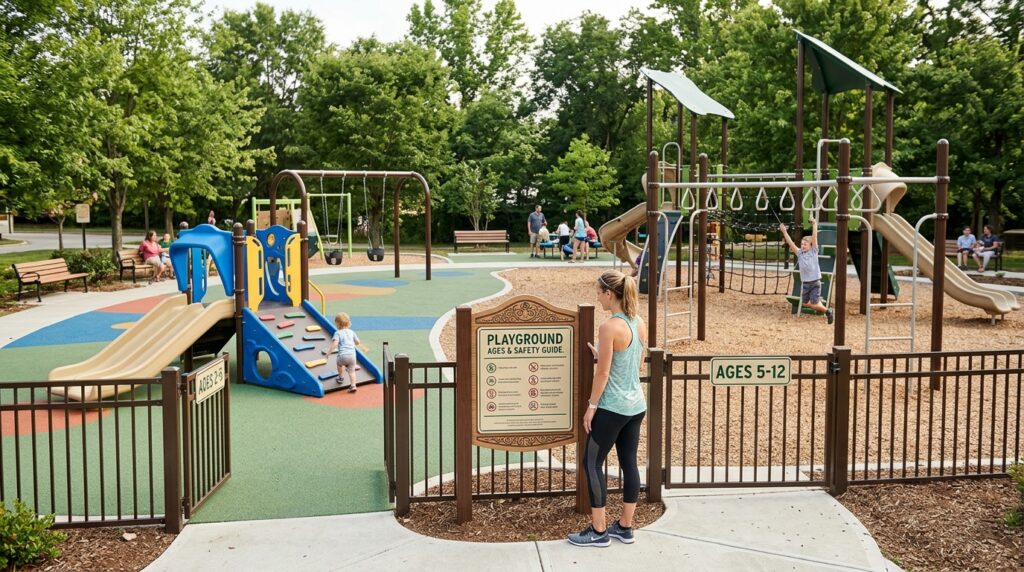
Typically, you’ll find playgrounds divided into two main age categories: toddlers and preschoolers (ages 2-5) and school-age children (ages 5-12). Some larger playground complexes even include separate areas for younger toddlers (6-23 months), recognizing that even within the preschool category, developmental differences are significant. When evaluating whether a playground suits your child, these age designations should be your first checkpoint.
The physical differences between age groups are substantial and impact how children interact with equipment. A three-year-old’s center of gravity, grip strength, and spatial awareness differ dramatically from those of an eight-year-old. Equipment designed for older children often features higher platforms, greater gaps between rungs, and more complex navigation requirements that can overwhelm or endanger younger children.
Why Age-Appropriate Equipment Matters for Development
As a fitness enthusiast, you understand how progressive overload works in your own training—you don’t jump from a 5K straight to an ultramarathon. The same principle applies to playground equipment and child development. Age-appropriate playground structures provide the right level of challenge to promote physical development without creating overwhelming obstacles that lead to discouragement or injury.
When children play on equipment suited to their developmental stage, they build confidence alongside physical skills. A four-year-old successfully navigating a climbing structure designed for their abilities experiences achievement that motivates continued physical activity. Conversely, that same child struggling on equipment meant for eight-year-olds might develop anxiety around physical challenges or, worse, attempt maneuvers beyond their capability and get hurt.
The physical benefits of age-appropriate play equipment are substantial. Climbing, swinging, balancing, and sliding at the right difficulty level develop gross motor skills, strengthen core muscles, improve coordination, and enhance spatial awareness. These foundational movement patterns support everything from sports participation to injury prevention as children grow. When you’re asking yourself “Is the playground appropriate for my child’s age?” you’re really asking whether the equipment will support optimal development or present unnecessary risks.
Specific Safety Considerations for Toddlers and Preschoolers
If you have children between two and five years old, you need to look for specific features that indicate a playground section is designed for their use. Equipment for this age group should have platforms no higher than 32 inches from the ground, with protective barriers to prevent falls. The spacing between rungs, bars, and railings should be less than 3.5 inches or greater than 9 inches to prevent head entrapment—a serious safety concern for young children.
Toddler and preschool areas should include:
- Low, wide slides with gradual slopes
- Bucket or full-support swings rather than traditional belt swings
- Ramps with non-slip surfaces instead of steep stairs
- Play panels at appropriate heights for shorter children
- Smaller-scale climbing structures with closely-spaced handholds
- Ground-level or very low play equipment that doesn’t require advanced climbing skills
The surface material in these areas deserves your attention as well. Since younger children are still developing balance and coordination, they fall more frequently. Appropriate protective surfacing—whether engineered wood fiber, rubber tiles, or poured-in-place rubber—should extend at least six feet in all directions from stationary equipment and much further from swings and slides. When evaluating whether a playground works for your preschooler, get down to their eye level and observe what challenges they’d face; this perspective often reveals hazards you might miss from your adult height.
Equipment Considerations for School-Age Children
Once your child reaches school age, their physical capabilities expand dramatically, and so do the appropriate playground challenges. Equipment designed for children ages 5-12 can include platforms up to 96 inches high, more complex climbing structures, challenging overhead equipment like monkey bars, and swings that require greater balance and coordination. The increased height and complexity support continued physical development while maintaining safety standards appropriate for these older children.
School-age playground areas often feature:
- Traditional belt swings that require core strength and balance
- Extended monkey bars and overhead climbing equipment
- Taller, faster slides with multiple twists or tube sections
- Complex climbing structures including rock walls, cargo nets, and arch climbers
- Rotating and spinning equipment
- Balance beams and wobbly bridges
- More challenging stairs and ladder configurations
For fitness-minded parents, these structures offer excellent opportunities for whole-body workouts that build the strength, coordination, and endurance young athletes need. However, just because your child falls within the 5-12 age range doesn’t mean all equipment in this category is appropriate. A newly-turned five-year-old typically can’t handle the same challenges as a twelve-year-old, so use the age guidelines as starting points rather than absolute rules.
The Transition Period: When Your Child Is Between Ages
One of the trickiest situations parents face is when their child is right at the boundary between age designations. Your mature four-and-a-half-year-old might be ready for some school-age equipment, or your cautious six-year-old might prefer the less intimidating toddler area. Is the playground appropriate for my child’s age? becomes a more nuanced question when your child doesn’t fit neatly into one category.
During these transition periods, observe your child’s individual capabilities rather than relying solely on age markers. Consider their physical size, coordination level, risk assessment abilities, and previous playground experience. A child who’s been regularly active and developing gross motor skills may be ready for more advanced equipment sooner than a same-aged peer who hasn’t had as many physical challenges.
Supervision becomes especially critical during these transition phases. Stay close enough to provide assistance if needed without hovering so much that you prevent your child from testing their limits. This balance allows them to develop the independence and physical confidence that playground play is meant to foster. Watch how they approach new challenges—do they assess risks reasonably, or do they rush into situations without consideration? Their behavior provides clues about their readiness for more advanced equipment.
Physical Size Versus Age: When They Don’t Match
Many parents encounter situations where their child’s physical size doesn’t match their chronological age. Perhaps you have a tall three-year-old who can reach equipment designed for older children, or a petite seven-year-old who still fits comfortably on toddler equipment. Size can be deceiving when determining appropriate playground equipment, and it’s crucial to remember that age designations are based on developmental capabilities, not just physical dimensions.
A tall preschooler who can reach school-age climbing equipment may lack the grip strength, core stability, and spatial reasoning to use it safely. Conversely, a smaller school-age child might have the cognitive and physical skills for more advanced equipment even if they look younger. The key factors to consider include grip strength, upper body strength, ability to follow multi-step directions, understanding of cause and effect, and risk assessment capabilities.
When your child’s size and age capabilities don’t align, focus on their developmental readiness rather than what they can physically reach. A three-year-old shouldn’t use high platforms just because they’re tall enough to climb the ladder—they likely lack the balance, coordination, and judgment to navigate those heights safely. Similarly, don’t restrict your seven-year-old to toddler equipment just because they’re small; if they have the skills and confidence, they should have access to age-appropriate challenges.
Assessing Your Individual Child’s Capabilities
Beyond general age guidelines, evaluating whether a playground suits your specific child requires honest assessment of their individual abilities. Just as you wouldn’t follow someone else’s marathon training plan without considering your own fitness level, you shouldn’t assume all children of the same age have identical playground readiness. Individual assessment involves looking at physical, cognitive, and emotional factors that affect how a child interacts with playground equipment.
Physical factors to consider include:
- Upper body strength and ability to support their own weight
- Core stability and balance
- Coordination and ability to plan movements
- Grip strength and hand-eye coordination
- Overall fitness level and endurance
- Previous experience with similar equipment
Cognitive and emotional readiness matters just as much as physical capability. Can your child understand and follow safety rules? Do they recognize dangerous situations and make reasonable decisions about risk? Can they wait their turn and navigate social interactions with other children? These factors significantly impact playground safety and appropriateness.
If your child has any developmental delays, physical disabilities, or special needs, age designations become even less relevant than individual capability. Many modern playgrounds include adaptive equipment and features that make play accessible to children with various abilities, but you’ll need to make individual assessments about what works for your child’s specific situation.
Common Playground Hazards That Cross Age Groups
Even on age-appropriate equipment, certain hazards can affect children of any age. Being able to identify these concerns helps you make better decisions about playground safety regardless of your child’s age. Universal playground hazards include inadequate surfacing, equipment in disrepair, and design flaws that weren’t caught during installation or have developed over time.
Watch for these warning signs at any playground:
- Hard surfaces like concrete, asphalt, or packed dirt under equipment
- Insufficient depth of protective surfacing materials
- Exposed concrete footings or hardware
- Rust, splinters, or deteriorating materials
- Sharp edges or protrusions
- Missing or damaged protective barriers
- Equipment spacing that creates crush or pinch points
- Poor visibility that prevents adequate supervision
Temperature extremes create hazards that affect all ages. Metal slides and platforms can become hot enough to cause burns during summer months, while metal equipment can be dangerously cold in winter. Dark-colored rubber surfacing absorbs heat and may be uncomfortable or unsafe on very hot days. As someone who understands how environmental factors affect athletic performance, you’ll recognize how temperature impacts children’s play safety as well.
Crowding presents another age-independent risk factor. Even perfectly maintained, age-appropriate equipment becomes more dangerous when too many children use it simultaneously. Children running in different directions, using equipment for unintended purposes, or not watching where other kids are playing can lead to collisions and injuries. If a playground is overcrowded, it might be appropriate to wait for a less busy time, regardless of whether the equipment suits your child’s age.
The Role of Supervision in Age-Appropriate Play
When asking “Is the playground appropriate for my child’s age?” you must also consider your supervision role in making any playground work safely. The level and type of supervision needed varies with age, but even older children benefit from adult presence. For toddlers and preschoolers, supervision means staying within arm’s reach, ready to provide physical support. For school-age children, it means maintaining visual contact and being available if needed.
Active supervision involves more than just being physically present while you check your phone or chat with other parents. It requires watching your child’s interactions with equipment, noticing when they’re attempting something beyond their skills, and being ready to intervene if necessary. This doesn’t mean hovering or preventing all risk—appropriate risk-taking is essential for development—but rather providing a safety net that allows exploration within reasonable bounds.
Your fitness background gives you an advantage in understanding the physical demands of playground equipment. You can recognize when your child is fatiguing and more likely to make mistakes, similar to how form breaks down during your own workouts when you’re tired. You understand the importance of proper technique—whether it’s running form or how to safely hang from monkey bars. Use this knowledge to coach your child in safe playground practices.
Benefits of Age-Appropriate Playground Time for Active Families
For families committed to health and fitness, playground time offers numerous benefits beyond simple entertainment. When children use age-appropriate equipment, they develop fundamental movement skills that support athletic activities as they grow. Playground play builds strength, coordination, balance, and confidence—all essential foundations for sports participation and lifelong physical activity.
The physical literacy developed through varied playground experiences translates directly to other athletic pursuits. Climbing builds upper body and grip strength needed for rock climbing, gymnastics, and even swimming. Swinging develops core strength and rhythmic timing. Balancing on playground equipment improves proprioception that benefits everything from soccer to skiing. By ensuring your child plays on age-appropriate equipment, you’re setting them up for broader athletic success.
Playground time also provides opportunities for you to stay active. While your toddler explores appropriate equipment, you can do bodyweight exercises like squats, lunges, or step-ups on low platforms. With older children who need less hands-on supervision, you might jog around the playground perimeter or do pull-ups on appropriate bars. This models healthy behavior while keeping you within appropriate supervision distance.
Social Development and Age-Appropriate Play Spaces
Beyond physical development, age-appropriate playground spaces support crucial social and emotional growth. When children play with peers at similar developmental levels, they engage in more meaningful interactions and cooperative play. Mixed-age play has benefits, but age-separated spaces allow children to interact with peers facing similar challenges and operating at comparable skill levels.
For younger children, toddler-specific areas create environments where they won’t be overwhelmed or endangered by older, faster-moving children. They can explore at their own pace, practice emerging social skills like sharing and turn-taking, and build confidence without intimidation. This protected space supports the social-emotional development that’s just as important as physical growth.
Older children benefit from areas where they can engage in more complex cooperative play, test their abilities without worrying about smaller children, and develop more sophisticated social dynamics. School-age playground equipment often encourages group activities that require cooperation, communication, and problem-solving—skills that translate far beyond the playground.
How Weather and Seasons Affect Playground Appropriateness
The question of playground appropriateness extends beyond fixed equipment features to include environmental conditions. Weather and seasonal changes can make otherwise age-appropriate equipment unsafe or uncomfortable, requiring you to adjust your playground decisions based on current conditions. As someone who likely adjusts your own workout routines for weather, you’ll appreciate how environmental factors affect playground safety.
Winter weather creates specific concerns including ice on equipment and walking surfaces, metal components cold enough to cause frostbite with prolonged contact, and reduced mobility from bulky winter clothing. Even age-appropriate equipment becomes more challenging when children are bundled in coats and snow pants that restrict movement. Surfaces that provide adequate fall protection when dry may become compacted and hard when frozen, reducing their protective value.
Summer heat presents different challenges. Metal slides and platforms can reach temperatures high enough to burn skin within seconds. Plastic components may become brittle and crack with prolonged UV exposure. Dehydration becomes a concern during extended play sessions, especially for active children who don’t always recognize their own thirst cues. Check equipment temperature before allowing your child to use it, ensure adequate hydration, and consider early morning or evening playground visits during heat waves.
Rain and wet conditions make equipment slippery and increase fall risks on even the most age-appropriate structures. What your child navigates easily when dry becomes significantly more challenging when wet. Protective surfacing materials like engineered wood fiber may become displaced or compacted when saturated, reducing their effectiveness. Use extra caution or skip the playground entirely during and immediately after precipitation.
Recognizing When Your Child Has Outgrown a Playground
Just as you progress to more challenging workouts as your fitness improves, children eventually outgrow previously appropriate playground equipment. Recognizing when this transition occurs helps you find spaces that continue supporting your child’s development rather than boring them with challenges they’ve long since mastered. Signs of outgrowing a playground include consistent lack of engagement, using equipment in unintended ways because nothing provides adequate challenge, and expressed desire for more difficult activities.
Physical indicators that your child needs more advanced equipment include easily completing obstacles that once challenged them, showing frustration with equipment limitations, and creating their own more difficult ways to use structures. If your eight-year-old is bored at a playground they loved at five, it’s time to seek out facilities with more appropriate challenges for their current abilities.
However, don’t rush this process. Some children enjoy returning to familiar, easier equipment occasionally, and that’s perfectly fine. Confidence-building through mastery has value, and not every playground session needs to push boundaries. The key is ensuring your child has regular access to appropriately challenging equipment rather than exclusively using spaces they’ve outgrown.
Finding Age-Appropriate Playgrounds in Your Community
Armed with knowledge about what makes a playground appropriate for your child’s age, you’ll need strategies for locating suitable options in your area. Not all playgrounds are created equal, and finding the right ones requires some research and exploration. Many communities offer playground guides or maps showing locations and indicating age appropriateness, sometimes available through parks and recreation departments or parent organizations.
Online resources can help identify playgrounds before you visit. Many municipalities maintain websites with playground information including age recommendations, equipment types, and accessibility features. Parent forums and local social media groups often share recommendations and reviews. Some families even create informal playground reviews noting which facilities work best for different age groups, similar to how runners share favorite trail routes.
When exploring new playgrounds, visit during less busy times for your initial assessment. This allows you to examine equipment without crowds, test surfaces and structures, and determine whether the facility meets your standards before bringing your child during peak hours. Take photos or notes about equipment types, age designations, and any concerns you notice. Building a personal database of suitable playgrounds means you’ll always have options when planning outings.
Consider expanding your radius beyond immediate neighborhood parks. A fifteen-minute drive to a playground perfectly suited to your child’s age and abilities often proves more valuable than repeatedly visiting an inadequate facility around the corner. Just as you might drive to a better running trail or fitness facility, seeking out quality playgrounds is worth the extra effort.
Making the Most of Multi-Age Playground Visits
Parents with children spanning different age ranges face the challenge of finding playgrounds that accommodate everyone simultaneously. When you have both a three-year-old and an eight-year-old, asking “Is the playground appropriate for my child’s age?” becomes more complicated because you’re really asking about multiple children with different needs. Large playground complexes with distinct areas for different age groups offer ideal solutions, but aren’t always available.
At playgrounds without clear age separations, establish ground rules that keep everyone safe. Older children should understand they need to watch for younger kids and moderate their play accordingly. Younger children need clear boundaries about which equipment they can use independently versus which requires you to be immediately beside them. This approach requires more active supervision but allows families to play together.
Consider tag-team strategies where parents take turns focusing on different children. While one adult supervises the toddler in an appropriate area, the other can watch the older child on more challenging equipment. Then switch, ensuring each child gets adequate supervision on equipment suited to their abilities. This also gives each parent variety in their own movement and positioning throughout the playground visit.
Some families designate specific days or times for each child to visit their ideal playground, ensuring everyone gets regular access to appropriately challenging equipment. Your toddler might visit their perfect playground on Tuesday mornings, while your older child gets to explore a more advanced facility on Thursday afternoons. This approach requires more planning but ensures each child’s developmental needs receive appropriate attention.
Teaching Children to Self-Assess Playground Appropriateness
As children mature, teaching them to evaluate whether equipment suits their abilities becomes increasingly important. This skill supports independence while maintaining safety, similar to how you’ve learned to recognize when a workout is appropriately challenging versus dangerous. Children who can self-assess playground appropriateness make better decisions and develop important judgment skills that extend beyond play equipment.